Geomechanics.io

  • Free Tools
Sign UpLog In
Built byBoxcut Studio

Geomechanics.io

Geomechanics, Streamlined.

© 2026 Geomechanics.io. All rights reserved.

Geomechanics.io

CMRR-ioGEODB-ioHYDROGEO-ioQCDB-ioFree Tools & CalculatorsBlogLatest Industry News

Industries

MiningConstructionTunnelling

Company

Terms of UsePrivacy PolicyLinkedIn
    Standard/Guideline

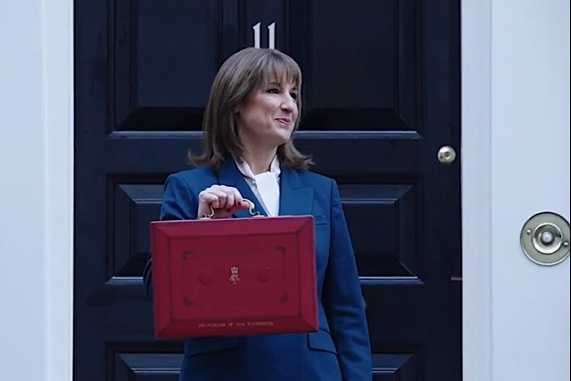
    Reeves puts brakes on employee ownership: tax changes explained for contractors

    November 27, 2025|

    Reviewed by Tom Sullivan

    Reeves puts brakes on employee ownership: tax changes explained for contractors

    First reported on The Construction Index

    30 Second Briefing

    Chancellor Rachel Reeves will cut capital gains tax relief on disposals to employee ownership trusts from 100% to 50%, targeting a scheme now projected to cost £2bn in foregone revenue since its 2013 launch and affecting recent EOT conversions at firms such as Gilbert-Ash, Conlon Group, Cheetham Hill Construction and Martin-Brooks Roofing. The change is expected to save £900m a year, alongside frozen income tax and employer NIC thresholds from 2028/29 projected to raise £8bn through fiscal drag. Salary-sacrifice pension contributions will become taxable, adding £4.7bn, with a 2-point rise on dividend, property and savings tax rates raising a further £2.1bn.

    Technical Brief

    • Capital gains tax relief reduction applies specifically to disposals into Employee Ownership Trust (EOT) structures.

    Our Take

    For UK contractors such as Gilbert-Ash and Cheetham Hill Construction, the cut in employee ownership trust (EOT) relief and the 2028/29–2030/31 tax threshold freeze together mean succession planning now has to be weighed directly against higher ongoing payroll and dividend tax leakage in financial models.

    The Treasury’s projected £900m per year saving from the EOT change is modest compared with the £8bn expected from freezing income tax and NIC thresholds, signalling that labour cost pressures, rather than ownership structures, will be the dominant tax driver in UK construction pricing over the next Parliament.

    Within our Policy coverage, this is one of the few pieces where construction SMEs like Conlon Group and Martin-Brooks Roofing are directly exposed to overlapping tax levers (capital gains, income, dividends and pensions), which is likely to accelerate moves toward alternative exit routes such as trade sales or management buyouts instead of EOTs.

    Geotechnical Software for Modern Teams

    Centralise site data, logs, and lab results with GEODB-io, CMRR-io, and HYDROGEO-io.

    No credit card required.

    • Save and export unlimited calculations
    • Advanced data visualisation
    • Generate professional PDF reports
    • Cloud storage for all your projects

    Prepared by collating external sources, AI-assisted tools, and Geomechanics.io’s proprietary mining database, then reviewed for technical accuracy & edited by our geotechnical team.

    Related Articles

    Conservatives to scrap Environment Agency and Natural England: risk lens for engineers
    Policy
    1 day ago

    Conservatives to scrap Environment Agency and Natural England: risk lens for engineers

    Conservative Party leaders are preparing an election pledge to abolish the Environment Agency and Natural England, removing the current statutory regulators for flood risk management, main river consents, environmental permits and protected habitats. Scrapping these bodies would affect technical approvals for flood defences, reservoir safety oversight, abstraction licences and environmental impact assessments on major road, rail and energy schemes. Engineers could face a restructured or entirely new permitting regime, with uncertainty over design standards, programme risk and long-term asset maintenance responsibilities.

    ORR cuts third party rail charges: project delivery implications for engineers
    Policy
    4 days ago

    ORR cuts third party rail charges: project delivery implications for engineers

    The Office of Rail and Road has reduced the charges that third parties pay to fund upgrades and maintenance on the UK rail network, aiming to cut project costs for developers and investors. Lower access and investment charges are expected to make it more viable for ports, freight terminals and property-led schemes to finance track, signalling and station enhancements tied to their own developments. For civil and rail engineers, the change could unlock more privately backed schemes and require closer early-stage coordination on asset standards, possession planning and long-term maintenance responsibilities.

    Space miners’ Earth-sized tax problem: policy design notes for project teams
    Policy
    5 days ago

    Space miners’ Earth-sized tax problem: policy design notes for project teams

    Space mining ventures could face a UN-style global tax regime, with Petr Zimčík of NEWTON University proposing a Space Resources Tax Authority linked to COPUOS and a three-stage levy: a small extraction fee, a larger tax at sale or consumption, and final settlement if material enters Earth markets. The core tax would target economic rent only after recovery of capital and operating costs, with thresholds set in a basket-based international accounting unit to neutralise inflation and currency swings. A fixed share of revenue would fund a Global Space Resource Dividend and a separate Global Development Fund, using population, development gaps and space-sector contributions to allocate proceeds without conferring property rights over celestial bodies.

    Related Industries & Products

    Construction

    Quality control software for construction companies with material testing, batch tracking, and compliance management.

    Mining

    Geotechnical software solutions for mining operations including CMRR analysis, hydrogeological testing, and data management.

    QCDB-io

    Comprehensive quality control database for manufacturing, tunnelling, and civil construction with UCS testing, PSD analysis, and grout mix design management.

    AllGeotechnicalInfrastructureHazardsEnvironmental