Geomechanics.io

  • Free Tools
Sign UpLog In

Geomechanics.io

Geomechanics, Streamlined.

© 2026 Geomechanics.io. All rights reserved.

Geomechanics.io

CMRR-ioGEODB-ioHYDROGEO-ioQCDB-ioFree Tools & CalculatorsBlogLatest Industry News

Industries

MiningConstructionTunnelling

Company

Terms of UsePrivacy PolicyLinkedIn
    Product
    Projects

    Sany telehandler leadership changes: platform strategy and UK–Ireland focus for fleets

    April 9, 2026|

    Reviewed by Joe Ashwell

    Sany telehandler leadership changes: platform strategy and UK–Ireland focus for fleets

    First reported on The Construction Index

    30 Second Briefing

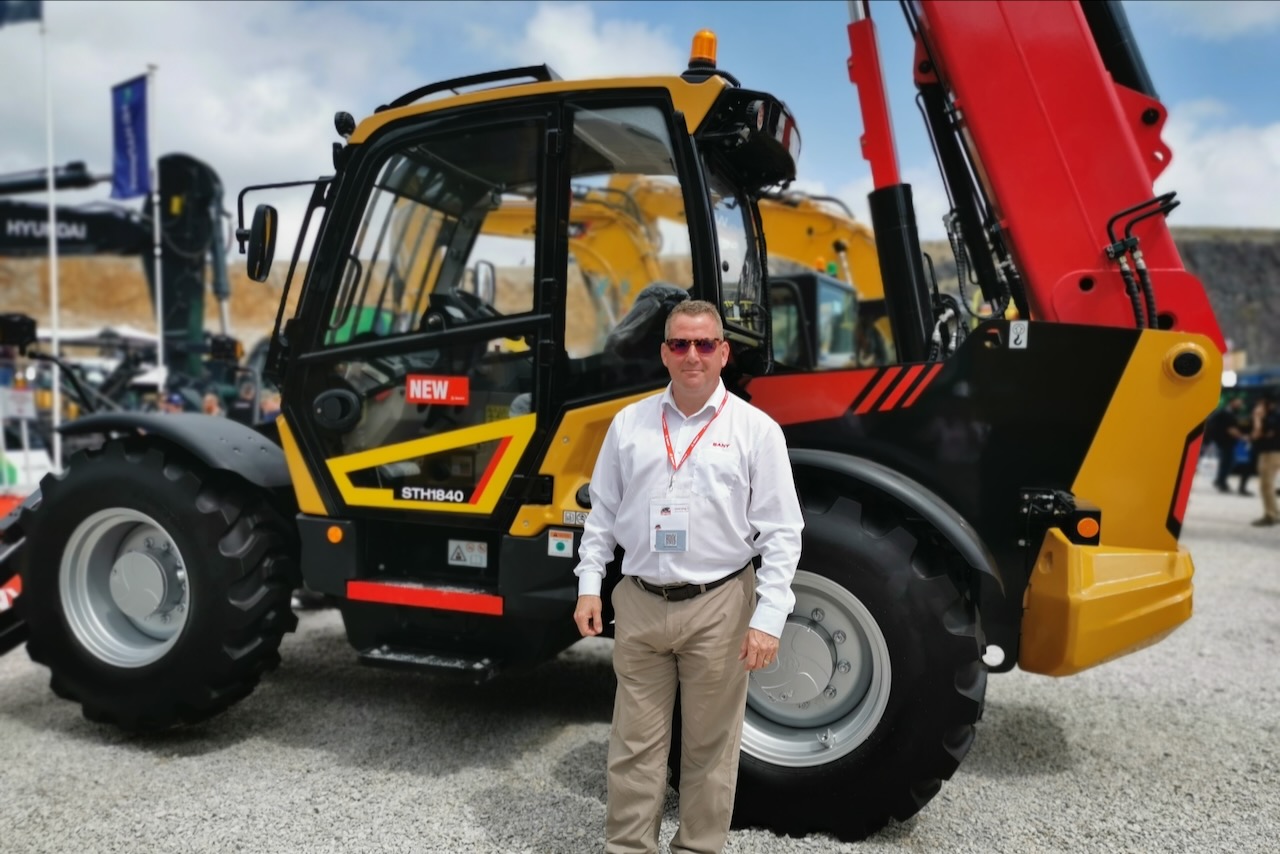
    Sany has promoted Philip Boddy to global product director for telehandlers, moving him up from his previous Europe-focused product manager role to steer worldwide platform strategy and specification. Christopher Jarvis has been appointed head of telehandler sales for the UK and Ireland, taking responsibility for dealer networks and regional market growth. The moves signal a push to standardise Sany’s telehandler offering across markets while sharpening commercial focus in key rental and construction segments in Britain and Ireland.

    Technical Brief

    • Role shift enables unified engineering oversight of boom geometry, load charts and stability envelopes across ranges.
    • Centralised product direction should harmonise hydraulic, drivetrain and attachment specifications between European and non-European telehandler lines.
    • Dealer feedback loops on duty cycles, lift heights and cycle times can now feed a single global design authority.
    • Standardised platforms simplify parts stocking, boom/auxiliary hydraulics maintenance and telematics retrofits for multinational contractors.
    • For tunnelling and civils, consistent global spec aids method statements where telehandlers substitute for small cranes.

    Our Take

    Sany’s appointment in the United Kingdom and Ireland comes as our database shows the company pushing hard into higher-spec segments globally, from a 100-strong electrified fleet framework with Holcim to AI-enabled support for large excavators and rigid trucks at CONEXPO 2026, signalling a coordinated move up the value chain rather than just volume growth.

    Recent coverage of Sany in copper haulage with Codelco and in autonomous mining trucks suggests that any telehandler strategy for the UK and Ireland is likely to lean on the same electrification and automation roadmap, which could appeal to contractors under tightening emissions and labour-availability constraints.

    The cluster of Sany stories in our Infrastructure category—ranging from road machinery expansion via Putzmeister Oceania to CEA’s new Queensland distribution sites—indicates that the new telehandler leadership role is being created against a backdrop of aggressive dealer-network build-out and product-line diversification, not a stand-alone personnel change.

    Geotechnical Software for Modern Teams

    Centralise site data, logs, and lab results with GEODB-io, CMRR-io, and HYDROGEO-io.

    No credit card required.

    • Save and export unlimited calculations
    • Advanced data visualisation
    • Generate professional PDF reports
    • Cloud storage for all your projects

    Prepared by collating external sources, AI-assisted tools, and Geomechanics.io’s proprietary mining database, then reviewed for technical accuracy & edited by our geotechnical team.

    Related Articles

    National Grid TBM under the Thames: tunnelling design and risk notes for engineers
    Infrastructure
    in 8 months

    National Grid TBM under the Thames: tunnelling design and risk notes for engineers

    A 271.5‑tonne Herrenknecht Mixshield TBM, Caroline, has started driving a 2.2km electricity cable tunnel with a 4m internal diameter beneath the River Thames in Essex for National Grid’s Grain to Tilbury project, delivered by the Ferrovial BEMO joint venture. The drive will pass through variable Thames estuary ground conditions between 35m‑deep launch and reception shafts of 15m and 12m diameter, with tunnelling continuing into 2026 and overall scheme completion targeted for 2029. The new tunnel will replace the 1969 Thames Cable Tunnel and carry new high‑voltage circuits between Grain and Tilbury substations.

    Panama Canal Mixshield undercrossing: design and tunnelling lessons for engineers
    Infrastructure
    in 8 months

    Panama Canal Mixshield undercrossing: design and tunnelling lessons for engineers

    A 13.46m diameter Herrenknecht Mixshield TBM has broken through into the future Balboa station on Panama Metro Line 3 after completing the first-ever TBM undercrossing of the Panama Canal at depths exceeding 60m below sea level. The 5,600kW, 26,616kNm machine, fitted with an accessible cutterhead and more than 4,500 sensors linked via the Herrenknecht.Connected platform, has achieved peak advance of 150 segment rings (about 300m) per month through mixed sandstone, tuff, breccias and basalt. Around 1.5km of the 4.5km twin-track tunnel remains to final breakthrough.

    Hudson Tunnel funding deadline: schedule and risk takeaways for project teams
    Infrastructure
    in 7 months

    Hudson Tunnel funding deadline: schedule and risk takeaways for project teams

    Federal funding for New York’s US$16bn Hudson Tunnel Project has been frozen, forcing the Gateway Development Commission to suspend works from 6 February after spending over US$1bn and employing about 1,000 site workers. A Manhattan federal judge has issued a temporary restraining order, giving the administration until 5 p.m. on 12 February to restore reimbursements or appeal, while contractors warn that demobilisation, resequencing and remobilisation will add cost and delay. Sites are now in “safe-pause” mode, with dewatering, ground support and environmental monitoring maintained, and assembly of two Herrenknecht TBMs in New Jersey likely to slip beyond the planned spring 2026 launch without funding certainty.

    Related Industries & Products

    Construction

    Quality control software for construction companies with material testing, batch tracking, and compliance management.

    Mining

    Geotechnical software solutions for mining operations including CMRR analysis, hydrogeological testing, and data management.

    CMRR-io

    Streamline coal mine roof stability assessments with our cloud-based CMRR software featuring automated calculations, multi-scenario analysis, and collaborative workflows.

    QCDB-io

    Comprehensive quality control database for manufacturing, tunnelling, and civil construction with UCS testing, PSD analysis, and grout mix design management.

    HYDROGEO-io

    Comprehensive hydrogeological testing platform for managing, analysing, and reporting on packer tests, lugeon values, and hydraulic conductivity assessments.

    AllGeotechnicalMiningInfrastructureMaterialsHazardsEnvironmentalSoftwarePolicy