Geomechanics, Streamlined.
© 2026 Geomechanics.io. All rights reserved.
Komatsu has opened a new Surface Haulage Headquarters and Customer Experience Center in Peoria, Illinois, consolidating engineering and support for its large mining truck and haulage product lines. The facility is positioned as a hub for surface mining haulage solutions, bringing together design, testing and customer interface functions that were previously distributed across multiple sites. A ceremonial tree planting at the opening signalled a focus on sustainable growth, with the campus intended to support future development of lower-emission haulage technologies.
FLSmidth has launched the KREBS® OSA, an online particle size analyser that measures particle size distribution continuously and in real time directly in the process stream, rather than via manual sampling and lab assays. Installed on the grinding circuit, the unit gives immediate feedback on mill and cyclone performance, allowing operators to adjust variables such as feed rate, water addition and classification cut size without waiting for batch results. For plant metallurgists, this supports tighter control of grind size, more stable circulating loads and reduced risk of off-spec flotation feed.
PYBAR, a Thiess company, has secured new underground development contracts at Southern Cross Gold’s Sunday Creek gold‑antimony project and Agnico Eagle’s Fosterville gold mine in Victoria, plus a contract extension at MMG’s Rosebery polymetallic mine in Tasmania. The work packages centre on decline and level development, ground support installation and associated services for high‑grade narrow‑vein orebodies, including gold‑antimony and zinc‑lead‑copper mineralisation. For geotechnical and mining teams, the awards signal continued demand for specialist underground contractors capable of managing complex ground conditions in mature brownfield mines and emerging critical minerals projects.
Hägglunds has introduced the CA280 radial piston hydraulic motor from Bosch Rexroth as a compact, high-torque drive for heavy-duty mining duties where envelope and mass are constrained, such as mobile crushers, apron feeders and belt drives. The CA280 extends the existing CA series architecture, retaining the same low-speed, high-torque behaviour and direct-drive capability while reducing overall package size compared with larger Hägglunds CB and CBM units. For designers, the motor targets retrofits on crowded structures and frames, enabling higher installed power without major steelwork or gearbox changes.
The New South Wales Government has allocated an extra $190 million in its state budget to upgrade Windsor Road at Rouse Hill, a key Western Sydney arterial currently carrying more than 30,000 motorists per day. The funding targets capacity and safety improvements on this constrained corridor, which links rapidly densifying residential areas to major centres such as Norwest and Parramatta. For civil and pavement engineers, the scale of spend signals upcoming design and construction packages involving lane additions, intersection upgrades and associated drainage and utility relocations.
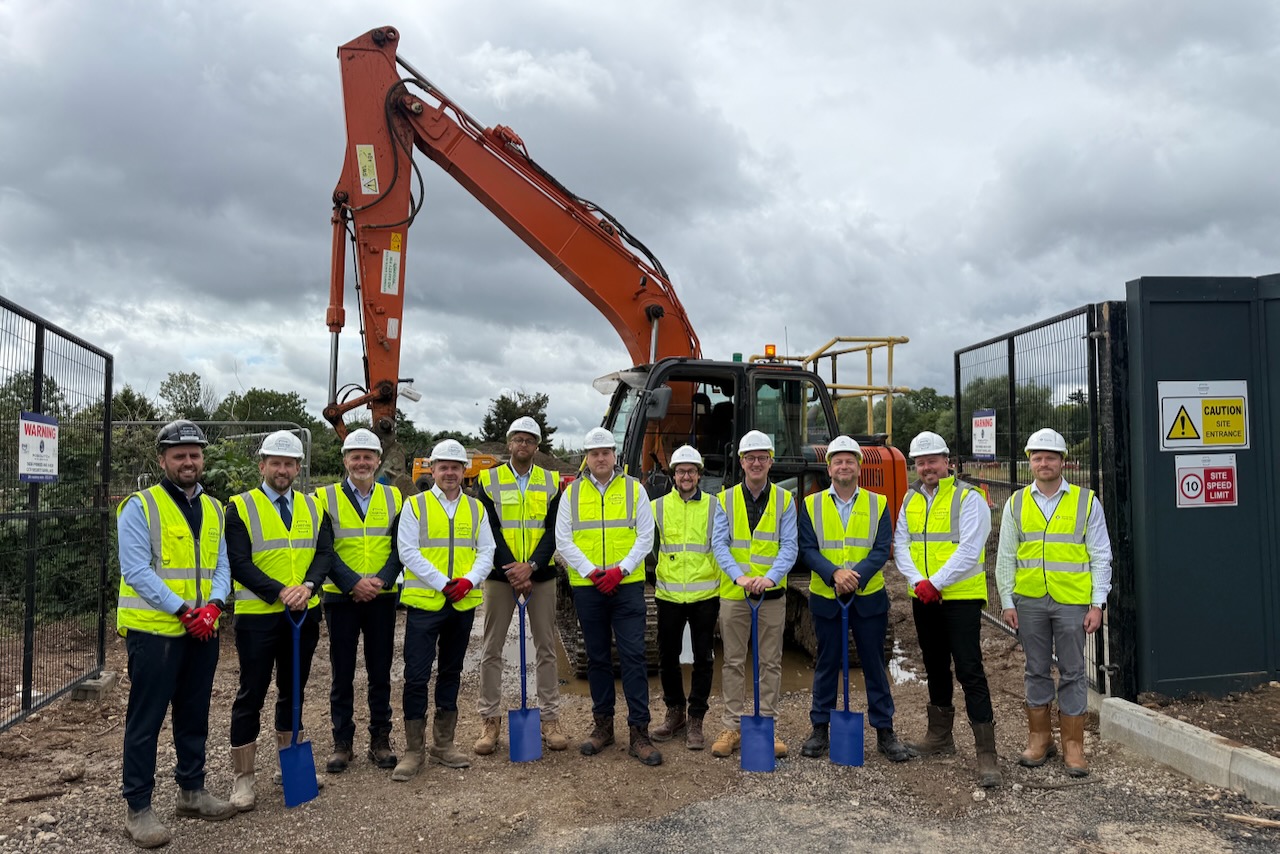
Work has started on a 67-home affordable housing scheme on a 2.23-acre site in Sunbury-on-Thames, delivered by Chartway Partnerships Group in partnership with Metropolitan Thames Valley Housing (MTVH). The scheme will provide a mix of one to four-bedroom properties and forms part of MTVH’s programme to build around 1,000 new homes a year, adding to its existing stock of 57,000 homes for more than 120,000 residents. For contractors and consultants, the project signals continuing pipeline demand for medium-density residential schemes across Surrey and the wider South East.
Temporary works for the 7m-deep, triangular basement at 30 Marsh Wall in Canary Wharf are being delivered using Groundforce Shorco modular hydraulic props, supporting a secant piled wall and capping beam installed by Murphy Group on a highly confined site. Phase 1 uses five MP250 props up to 18.4m long, including 813mm-diameter extension tubes and remote load monitoring on the longest members, plus MP150 knee braces, all stiffness-matched to a Plaxis 3D model to meet tight deflection limits. Phase 2 adds four 6.3m-long MP375 raking props at 45°, each rated to 375 tonnes and fixed into 1,200mm-deep stub columns in the slab and capping beam, enabling progressive removal of flying shores as the concrete core and slabs advance.
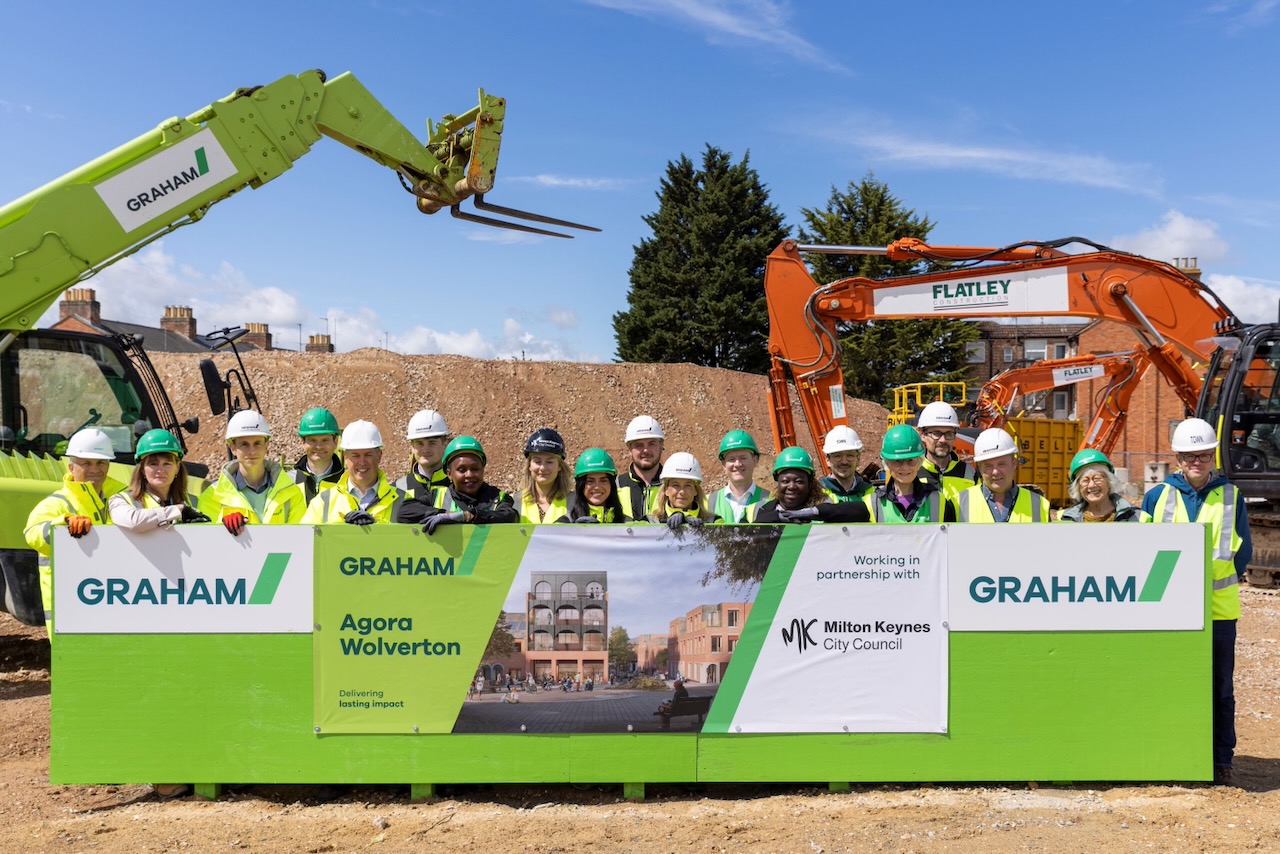
Graham has broken ground on a £76.8m redevelopment of a Milton Keynes market site into 115 new homes for Milton Keynes City Council and developer Town, procured via Pagabo’s Major Works Framework. The scheme converts a brownfield urban plot, implying significant ground remediation, buried services management and tight logistics around an active city-centre environment. Contractors and consultants can expect framework-driven standardisation of specifications and procurement, with early contractor involvement likely influencing foundation solutions and utility diversions.
Donaldson Timber Systems has appointed James Lund-Lack, current chair of the Chartered Institute of Building (CIOB) for Bristol and South West, as regional and quality manager to tighten process control across its timber frame operations. With over 15 years’ senior management experience, including as managing director of iHus Annexe, he brings a background in governance, legal compliance and sustainable performance for a CIOB membership of more than 6,200. He will coordinate estimating, design, procurement, manufacturing and project delivery teams, with a core remit to strengthen quality management systems and continuous improvement.
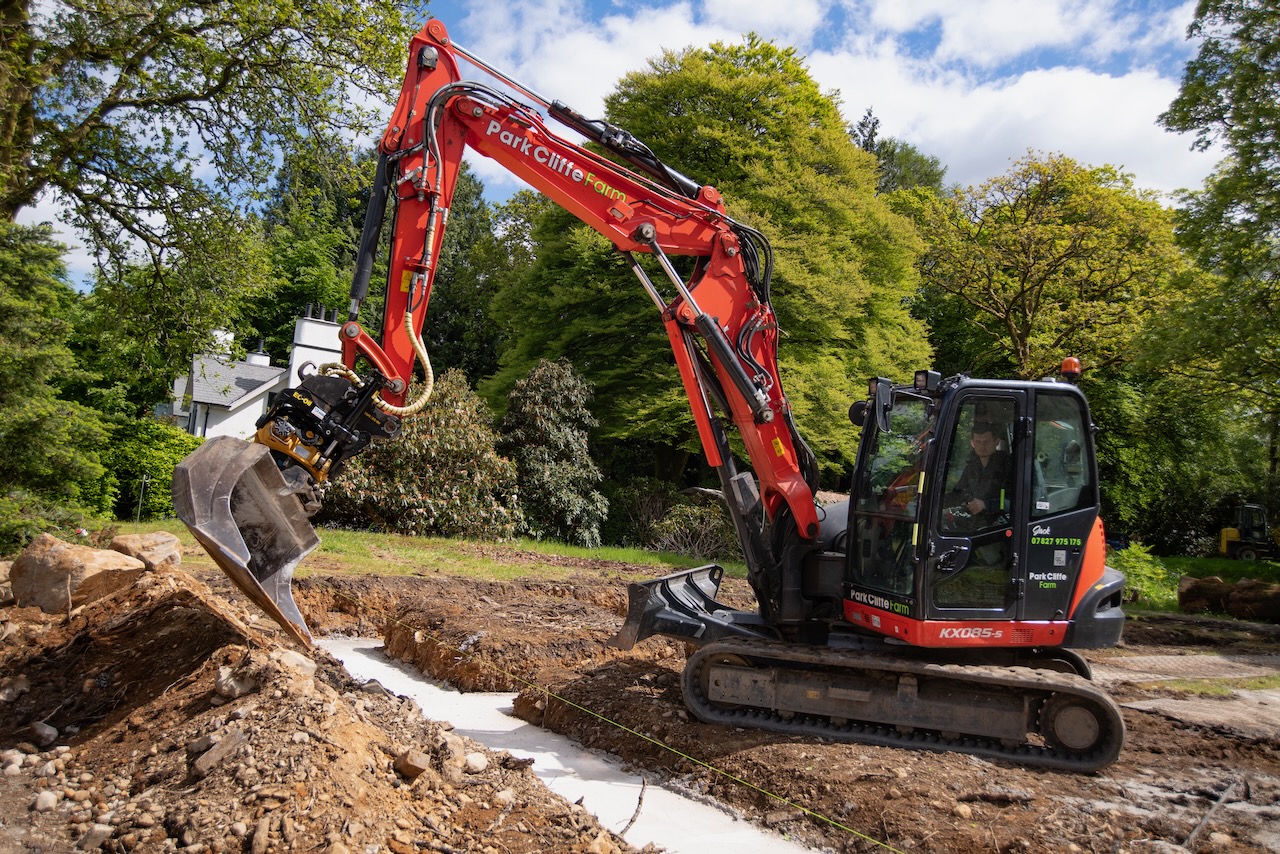
Kubota’s new U145 reduced-tailswing excavator is entering service with Park Cliffe Farm Ltd, a small Cumbrian plant business that already runs an 8.5‑tonne KX085‑5, a KX080 and a U18‑5, all supplied by dealer P.V. Dobson. The 14–15.2‑tonne U145, specified with a two-piece boom, Engcon tilt-rotator and twin proportional auxiliary circuits, will work with grabs, shears, grapples and buckets to maximise utilisation on larger projects. Powered by a 76.4kW Stage V engine, it offers three operating modes plus Boom Down Energy Saving, Auto Idle and Auto Shut Down for fuel-efficient site work.
South West Water has extended Kier’s Network Services Alliance contract by two years, worth about £140m, to continue reactive and planned maintenance, leakage activity, network reliability schemes, metering and developer services across its network. Over the past year Kier has delivered more than 25,000 repair and maintenance jobs, including over 18,000 leak repairs and 32,000 metering optant and maintenance jobs, with over 97% of priority jobs attended within the two-hour target and average peak response around one hour. The deal secures workload into AMP8 and reinforces Kier’s water portfolio alongside Anglian Water, Severn Trent, Southern Water, Thames Water, United Utilities and Yorkshire Water.
Tower Hamlets Council has appointed Guildmore Group to deliver the next phase of the St George’s Leisure Centre redevelopment, covering demolition, site preparation and detailed design ahead of main construction. The new BREEAM Excellent-targeted facility will include a 25-metre pool, learner pool, splash pad, multi-court sports hall, fitness suite with women-only area and multiple studios. The scheme also adds 30 council-owned homes, including three fully accessible units, with demolition set for autumn 2026, construction from early 2027 and completion expected in 2029.
BHP has signed a Global Framework Agreement with Chinese conveyor specialist BOTON to co-develop intelligent conveyor systems and support lower-carbon operations across BHP’s global portfolio. The deal extends BOTON’s role from supplying conveyor products to joint work on technology development, sustainability initiatives and lifecycle support, including global service coverage for existing and future installations. For mine planners and maintenance teams, this signals more integrated conveyor design, condition monitoring and energy-optimised materials handling solutions being trialled at BHP sites.
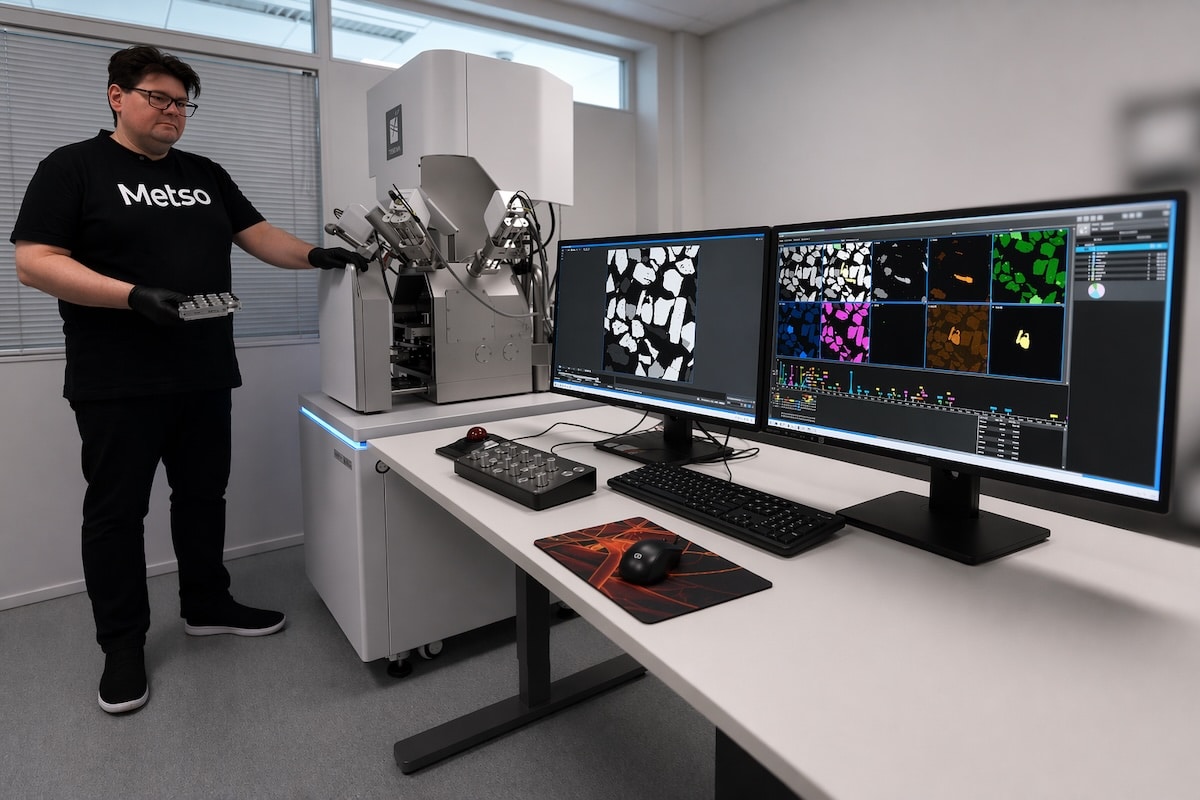
Metso has expanded its Pori, Finland Research Center with a TESCAN TIMA automated mineralogy analyser, combining high‑resolution field emission scanning electron microscopy with energy‑dispersive X‑ray spectroscopy for rapid, quantitative ore characterisation. The system can generate mineral liberation, grain size and textural data across thousands of particles per sample, supporting flowsheet design, reagent selection and variability testing. Faster turnaround on mineralogical datasets is aimed at tightening decision cycles for greenfield and brownfield concentrator projects, particularly in comminution and flotation circuit optimisation.
Exploration activity across Australia remains strong, with Alkane Resources, Artemis Resources and Ark Mines progressing gold, copper and rare earths prospects via drilling, project funding and metallurgical test work. Alkane is advancing targets around its Boda–Kaiser porphyry deposits in the Northern Molong Belt, New South Wales, using recent diamond drilling and geophysical surveys to refine copper–gold mineralisation trends. Artemis and Ark are pushing early-stage programmes that will influence near-term resource definition drilling strategies and metallurgical flowsheet options for complex ore types.
Larvotto Resources has agreed to acquire Hammer Metals via a binding scheme of arrangement, aiming to build a district-scale copper hub in Queensland’s Mt Isa region anchored by Larvotto’s Hillgrove critical minerals project. The transaction will see about $54 million raised, with Hammer shareholders to receive one Larvotto share for every 22 Hammer shares held. The enlarged group will consolidate copper and broader critical minerals tenure in Mt Isa, potentially enabling larger-scale resource definition, shared processing options and more coordinated regional exploration.
Western Australia has completed a major overhaul of its digital environmental approvals system for mining and petroleum, with the final release of the Resources Online platform now live. Core environmental lodgements have been migrated from the legacy Environmental Assessment and Regulatory System, consolidating submissions, tracking and regulator interactions into a single online interface. Operators can now lodge and manage mining proposals, environmental plans and compliance reports digitally, which should shorten approval timelines and give project teams clearer visibility of assessment status and information requests.
Industry leaders and decision makers will convene at the 15th Victorian Transport Infrastructure Conference at Melbourne Convention and Exhibition Centre on 17–18 June 2026 to examine major road, rail and port projects across the state. Senior representatives from government, contractors, consultants and operators will focus on delivery models, funding structures and construction methodologies for large-scale upgrades to metropolitan and regional networks. Sessions are expected to address project staging, interface risks and whole‑of‑life asset performance, giving designers and contractors early insight into upcoming procurement and technical requirements.
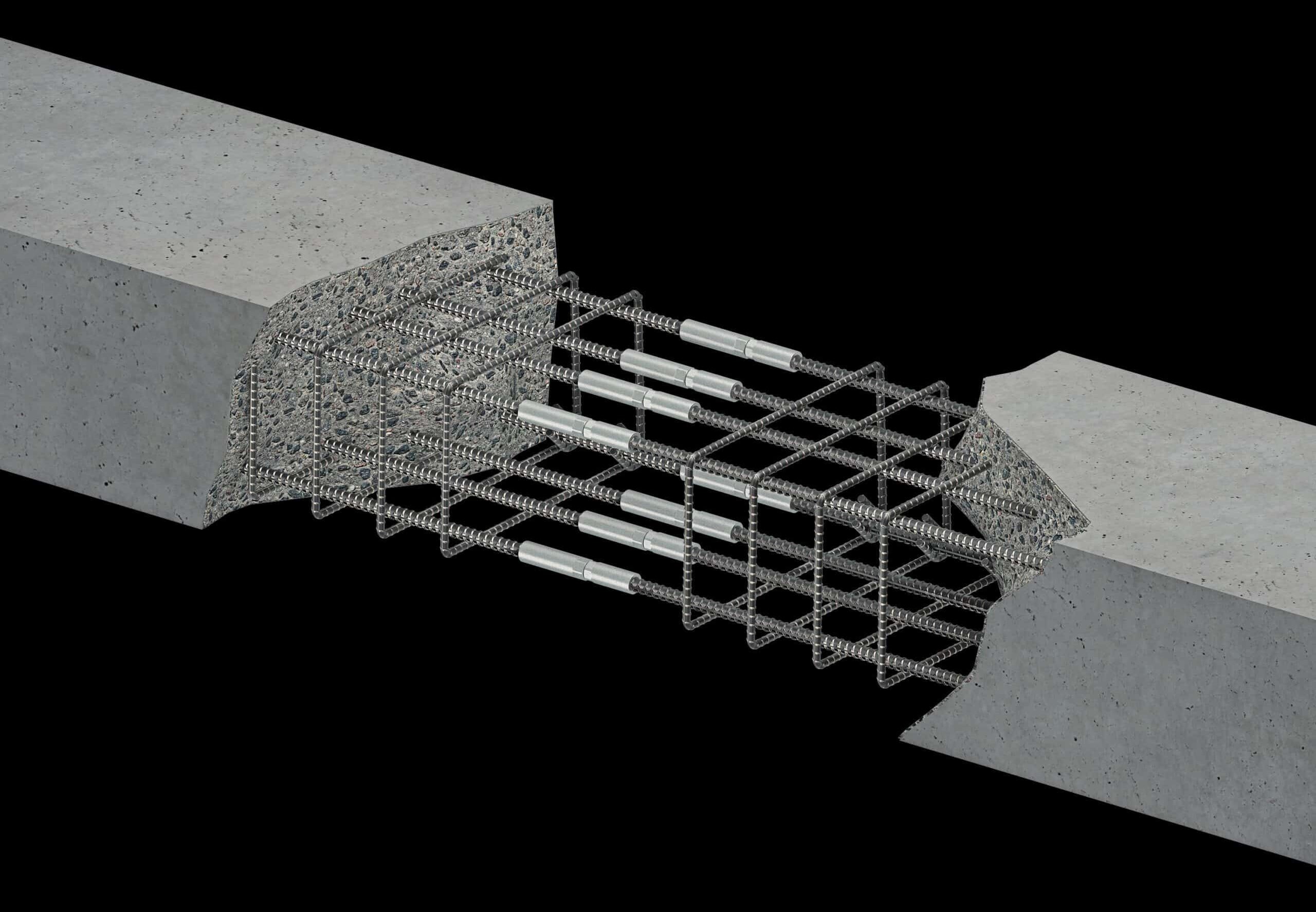
Reid has launched the ReidBar™ TX Coupler, a mechanical reinforcing bar splice system designed to cut installation time and improve constructability on bridge projects while meeting some of Australia’s strictest state road authority specifications. The coupler is engineered for high-strength threaded bar connections, enabling faster bar fixing, reduced congestion at pier and abutment zones, and simplified detailing for heavily reinforced bridge decks. For civil contractors and designers, the system offers a standardised, certifiable alternative to lap splices and site welding, with clear compliance pathways for major infrastructure works.
United Utilities has announced a £30M programme to retrofit sustainable drainage across Liverpool, aiming to make the city “spongier” by intercepting and attenuating rainfall before it reaches combined sewers. Measures are expected to include permeable paving, rain gardens and other SuDS features on highways and public realm to cut surface runoff volumes and peak flows during intense storms. For civil and drainage engineers, the scheme signals more retrofit SuDS design in dense urban streetscapes, with a premium on hydraulic modelling, utility coordination and constructability in constrained corridors.
NMITE has secured a new UK government award announced on 11 June to expand defence-focused engineering education, funding additional student places and new specialist facilities in Hereford. The institute plans to equip more young engineers with skills aligned to defence-sector needs, including systems engineering, advanced manufacturing and secure infrastructure design. For civil and infrastructure professionals, this signals a growing pipeline of graduates with capabilities tailored to defence projects, from hardened structures and critical national infrastructure to complex systems integration.
Greenbase’s Envago platform is being deployed to help mining companies comply with Australia’s new mandatory climate reporting regime under AASB S2, which requires disclosure of climate-related risks, Scope 1–3 emissions and governance alongside financial statements. Envago replaces spreadsheet-based workflows by integrating data from site operations, energy meters and procurement systems into a single emissions and ESG reporting environment. For mine operators, this means earlier alignment with AASB S2 assurance expectations and reduced manual reconciliation effort across multiple assets and joint ventures.
SIMEX has launched the ART 1000 Gen II asphalt regeneration system and an updated TF Drum Cutter range, targeting road repair and surface conditioning in mines, quarries and underground works. The ART 1000 Gen II is designed to mill, heat and remix existing asphalt in situ, enabling patch repairs without full pavement removal, while the latest TF cutters offer higher torque and improved pick layouts for hard rock and reinforced concrete. For operators, the key gains are reduced haulage of spoil, fewer hot-mix deliveries and tighter control of surface geometry around plant and haul roads.
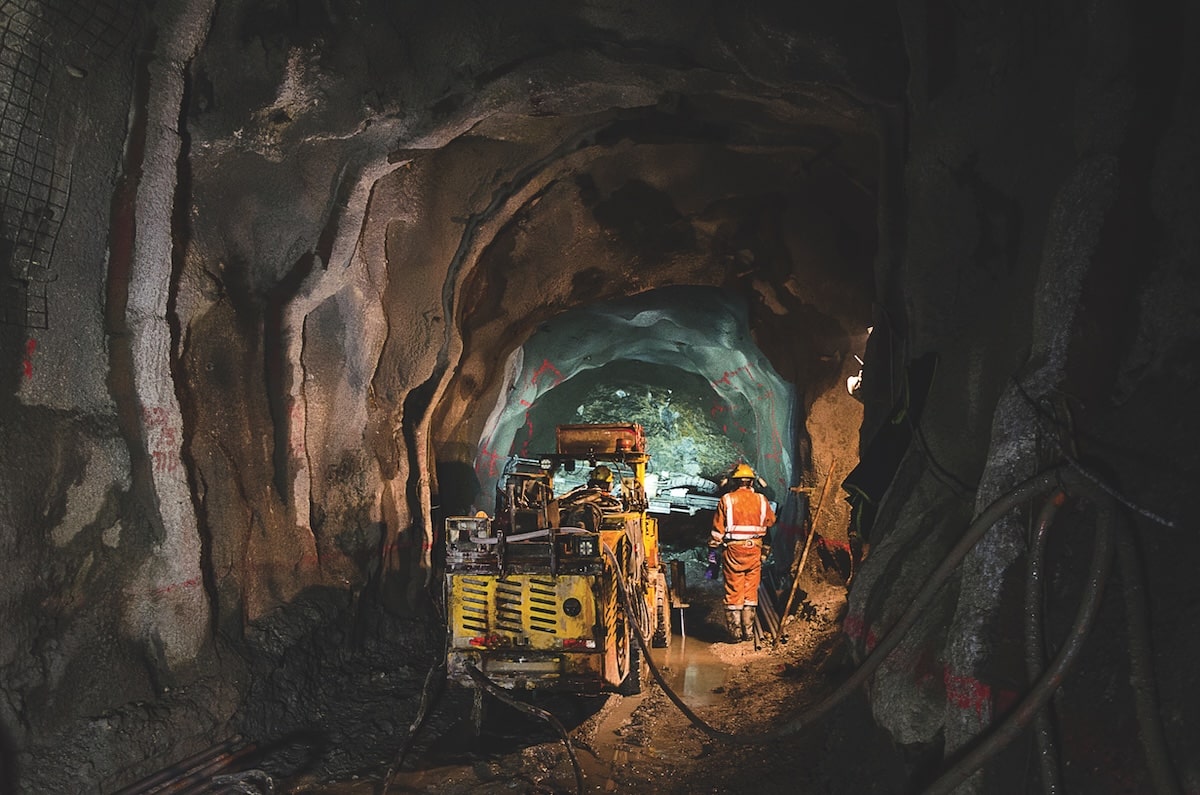
ESG pressure in underground mining is pushing operators to prove real-time performance gains directly at the development face, where ventilation, ground control and water management risks are highest. The piece points to digital instrumentation at headings – such as continuous gas monitoring, geotechnical convergence sensors and real-time dust sampling – feeding live dashboards that link face conditions to ESG metrics. For engineers, this means designing headings, support patterns and services to accommodate dense sensor networks, data cabling or wireless nodes, and rapid-response controls rather than periodic inspections.