Borders Railway electrification piling: geotechnical risk notes for engineers
Reviewed by Tom Sullivan
First reported on New Civil Engineer
30 Second Briefing
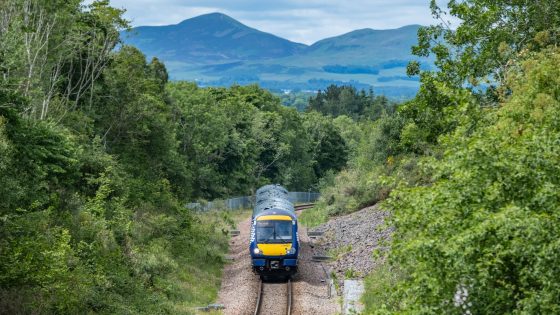
Piling works for the electrification of the Borders Railway are due to start this week on sections of the 49km route between Edinburgh and Tweedbank, preparing foundations for overhead line equipment masts. The programme will focus on installing steel piles adjacent to the existing single‑ and double‑track formation, with works sequenced to maintain rail operations under possession constraints. Geotechnical teams will need to manage vibration, settlement risk and limited access along embankments and cuttings typical of this former Waverley Route corridor.
Technical Brief
- Proximity to operational tracks will require continuous track geometry monitoring to manage settlement and alignment tolerances.
- Vibration limits will be governed by lineside structure and asset protection requirements, not just passenger comfort.
- Access along narrow embankment crests will constrain rig size, crane outrigger layout and spoil handling logistics.
- Night and weekend possessions increase reliance on pre-task briefings, exclusion zones and plant–people interface controls.
- Environmental controls will need to address noise at rural communities and potential disturbance to heritage earthworks.
- Similar UK rail electrification schemes show piling-induced track movements are a key safety-critical design and monitoring focus.
Prepared by collating external sources, AI-assisted tools, and Geomechanics.io’s proprietary mining database, then reviewed for technical accuracy & edited by our geotechnical team.
Related Articles


Related Industries & Products
Construction
Quality control software for construction companies with material testing, batch tracking, and compliance management.
CMRR-io
Streamline coal mine roof stability assessments with our cloud-based CMRR software featuring automated calculations, multi-scenario analysis, and collaborative workflows.
HYDROGEO-io
Comprehensive hydrogeological testing platform for managing, analysing, and reporting on packer tests, lugeon values, and hydraulic conductivity assessments.
GEODB-io
Centralised geotechnical data management solution for storing, accessing, and analysing all your site investigation and material testing data.