Niger’s 1,000t yellowcake stockpile: security and supply risks for mine planners
Reviewed by Tom Sullivan
First reported on MINING.com
30 Second Briefing
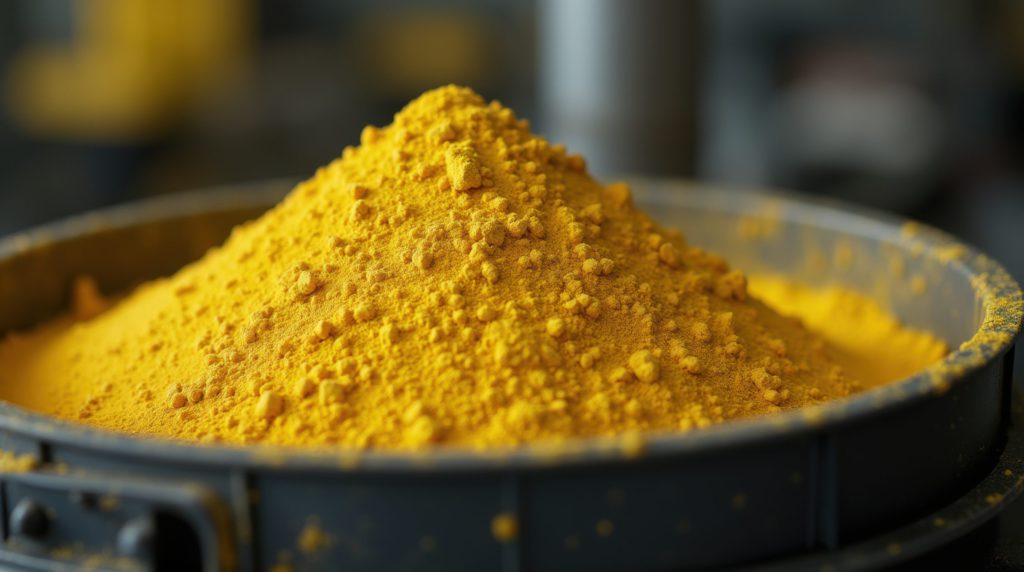
Niger’s junta has moved an estimated 1,000 tonnes of uranium concentrate from Orano’s seized Somaïr open-pit mine to Air Base 101 beside Niamey’s main airport, where it remains unsold despite talks with potential buyers from Russia, China, the US and the UAE. The stockpile is subject to an ICSID order prohibiting sale or transfer without Orano’s consent, while the French state-owned company threatens “any and all actions” to block third-party acquisition. Security analysts warn the base location is highly exposed after Islamic State-linked militants approached the capital in a recent attack.
Technical Brief
- Uranium concentrate originated from Orano’s Somaïr open-pit mine, previously 63.4% Orano and 36.6% Sopamin owned.
- Russian agency TASS referenced discussions over roughly 2,000 tonnes of Somaïr-produced yellowcake, double the moved volume.
- Military government’s forced takeover of Somaïr in late 2024 converted a foreign-operated mine into a state-controlled asset.
- ICSID arbitration order explicitly prohibits sale or transfer of the mined uranium without Orano’s prior consent.
- Orano has publicly committed to “any and all actions” to prevent third-party acquisition of the seized material.
- Niger has reportedly indicated willingness to return about 95,000 tonnes of uranium concentrates to Orano, suggesting wider inventory entanglement.
- Islamic State-linked militants mounted an attack on Niamey in January, coming “dangerously close” to the yellowcake stockpile.
Our Take
In our uranium- and yellowcake-tagged coverage, Niger is one of the few African suppliers where state entities like Sopamin have moved from minority positions (36.6% in Somaïr) towards tighter control, which typically complicates long-term offtake security for utilities reliant on legacy French-linked contracts.
The Somaïr dispute going to ICSID puts Orano in a similar arbitration posture to several other European operators in Africa in our database, signalling that contract sanctity for uranium assets in the Sahel is now a material legal risk rather than just a political one for project financiers.
The contrast between Niger’s uranium tensions and the long-life (25-year) Vicuna copper–gold–silver project in Argentina, which also appears in our projects-tagged set, underlines why some majors are reallocating growth capital from African uranium towards large-scale South American base and precious metals districts with more predictable permitting regimes.
Prepared by collating external sources, AI-assisted tools, and Geomechanics.io’s proprietary mining database, then reviewed for technical accuracy & edited by our geotechnical team.
Related Articles

Related Industries & Products
Mining
Geotechnical software solutions for mining operations including CMRR analysis, hydrogeological testing, and data management.
CMRR-io
Streamline coal mine roof stability assessments with our cloud-based CMRR software featuring automated calculations, multi-scenario analysis, and collaborative workflows.
HYDROGEO-io
Comprehensive hydrogeological testing platform for managing, analysing, and reporting on packer tests, lugeon values, and hydraulic conductivity assessments.
GEODB-io
Centralised geotechnical data management solution for storing, accessing, and analysing all your site investigation and material testing data.