Geomechanics, Streamlined.
© 2026 Geomechanics.io. All rights reserved.
Leeds City Council has appointed multiple contractors to the YORbuild Major Works 2 framework, a £1.5bn programme covering two lots for major public sector schemes across northern and central England. The framework is expected to procure large-scale building and infrastructure works, including complex civic, education and health facilities, via a prequalified supply chain rather than standalone OJEU/Find a Tender competitions. For civil and structural teams, this signals a steady pipeline of major projects where early contractor involvement and standardised NEC-based contracts are likely to dominate procurement and design coordination.
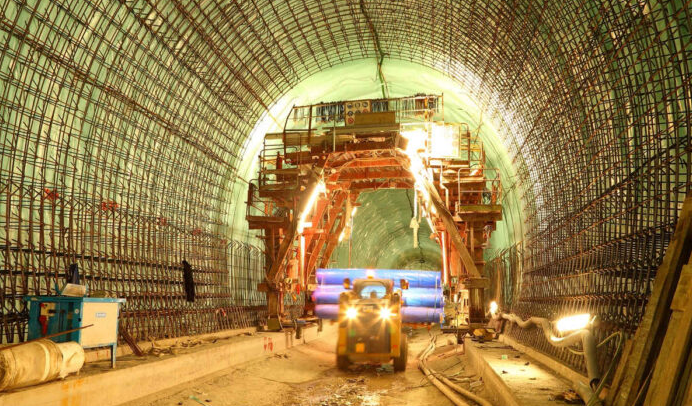
Excavation has been completed on the 2 km Polcevera ventilation tunnel, a key underground element of Italy’s Terzo Valico dei Giovi and Genoa Junction high-speed rail scheme between Genoa and the Milan–Turin corridor. Driven in complex Ligurian geology with multiple faulted rock masses and urban overburden, the tunnel will provide ventilation, emergency access and smoke extraction for the adjacent base tunnel system. Completion of this drive allows consolidation grouting, lining works and M&E installation to proceed on the critical northern section of the cross-Alps rail link.
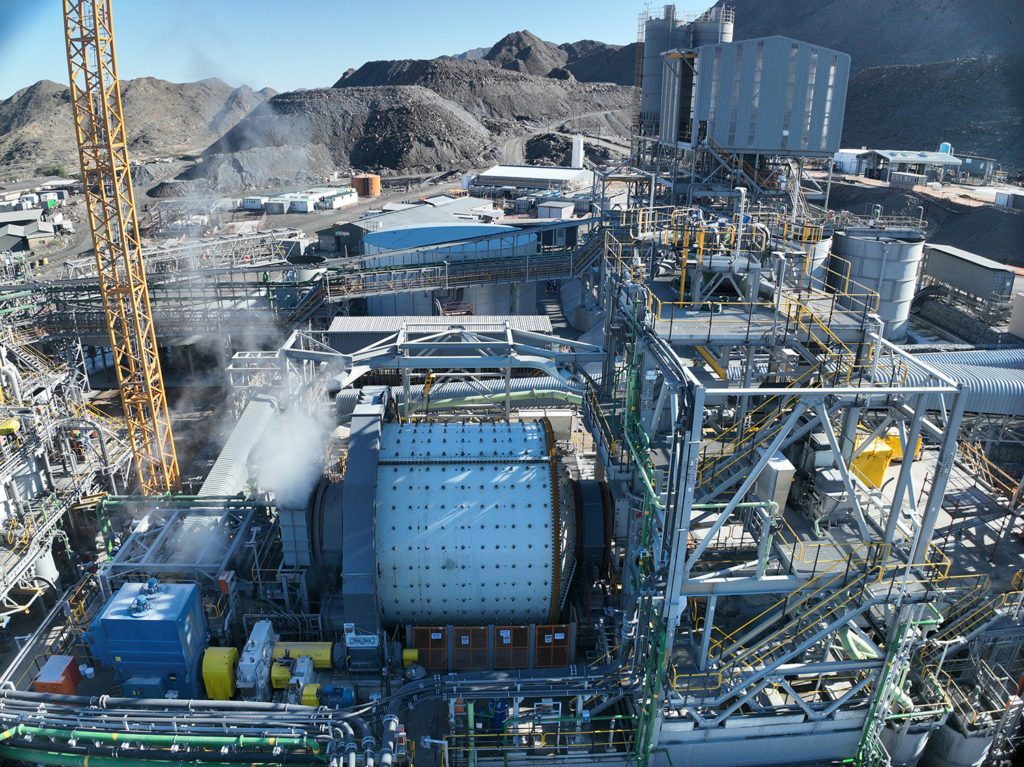
Rosh Pinah Zinc in Namibia and Appian Capital Advisory have commissioned a new 7 m diameter Metso SAG mill, replacing the existing ball mill as the final major processing component of the RP2.0 expansion. The mill’s start-up completes the core plant upgrade, enabling a shift to single-stage SAG grinding and simplifying the comminution circuit. For process engineers, the change should allow higher throughput and coarser primary grind, with knock-on effects for downstream flotation performance and energy use.
Fortescue has hit a record 200 Mt of iron ore shipped in a single year from Port Hedland, compared with its first year of exports in 2008 when 140 vessels carried its output. Annual traffic has now grown to more than 1,000 ore carriers departing the port, signalling sustained high utilisation of Fortescue’s rail, stockyard and shiploading infrastructure. For mining engineers and planners, the milestone points to continued pressure on berth allocation, channel dredging, and materials handling reliability across the Pilbara export chain.
Central Asia Metals has begun upgrading the underground haulage fleet at its Sasa zinc-lead mine in North Macedonia with a new 32 t payload Epiroc MT436B truck, replacing ageing 20 t MT2000/MT2200 units. A second MT436B is scheduled for delivery, signalling a shift to higher-capacity, fewer-unit haulage on the existing ramp and orepass system. The change increases tonnes moved per cycle and may require revised ground support and traffic management to handle larger truck dimensions and higher axle loads.
EACON Group has launched the global offering for its Hong Kong H-share listing, planning to issue 26,132,000 shares and raise about HK$2.12–2.30 billion. The company positions itself as the world’s largest autonomous driving solutions provider for mining and reports a 55.5% share of China’s mining autonomous haulage system (AHS) market. For mine operators, the listing signals further capital for scaling AHS deployments, potentially accelerating fleet automation and related infrastructure such as high-precision positioning, V2X communications and control centres in Chinese open-pit operations.
Lhoist North America and Martin Marietta Materials have agreed a definitive merger that will combine Lhoist’s lime and limestone operations with Martin Marietta’s aggregates and heavy building materials portfolio into a single North American minerals group. The deal brings together Lhoist’s industrial lime plants and kiln assets with Martin Marietta’s quarry network and rail-linked distribution terminals, creating a larger integrated platform for construction aggregates, chemical-grade limestone and lime products. For geotechnical and civil contractors, the combined entity is likely to influence regional pricing and availability of aggregates, armourstone and stabilisation lime on major infrastructure and mining projects.
LiuGong’s DR50CE made its UK debut at Hillhead 2026 as the show’s first fully battery-electric rigid haul truck, signalling OEMs’ push to extend electrification from loaders and excavators into 50 t-class quarry and small mine haulage. The DR50CE targets typical rigid applications currently dominated by diesel units in the 45–60 t range, offering zero tailpipe emissions and lower noise for face haul and short-cycle quarry runs. For mine planners and quarry operators, its appearance suggests battery haulage is moving beyond underground and ultra-class pilots into mainstream mid-size fleets.
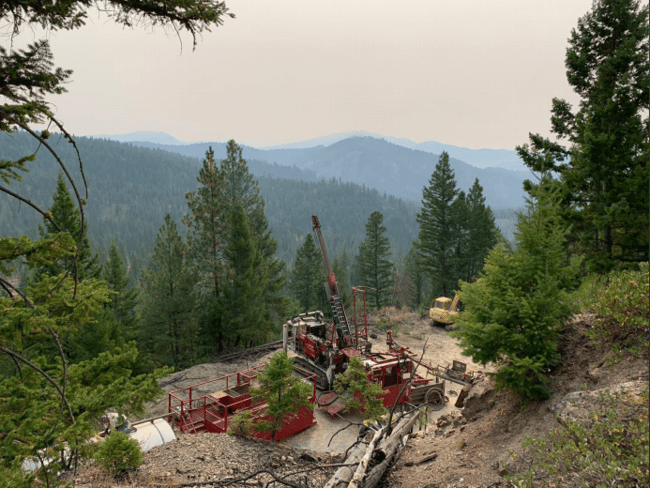
Freeman Gold’s Lemhi open pit project in Idaho now carries a post-tax NPV5 of US$696 million and a 34% IRR, with a 15-year mine life and 1 million oz of gold reserves, tripling value versus its 2023 PEA as higher gold price assumptions and mine plan changes take effect. The feasibility study outlines life-of-mine production of 972,000 oz at all-in sustaining costs of US$1,718.95/oz and initial capex of US$329.7 million, following 92,696 metres of drilling and upgraded crushing and grinding capacity. Freeman plans to seek FAST-41 federal permitting fast-track status, while its shares rose nearly 20% to C$0.34, valuing the company at about C$93 million.
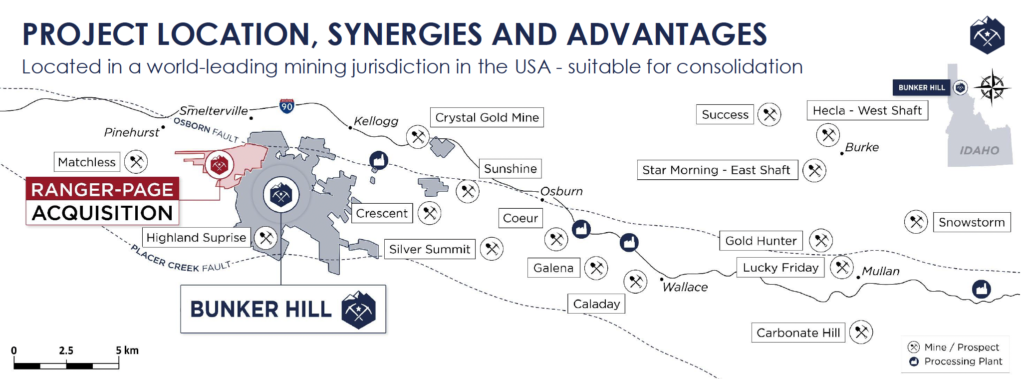
Bunker Hill Mining has begun feeding ore through its rebuilt Idaho mill, drawing down a 20,000-ton stockpile as it ramps towards 1,800 tons per day and about nine concentrate truckloads daily to Teck’s Trail smelter 210 km away. CEO Sam Ash is positioning the historic zinc-lead operation as a future primary silver mine, targeting the Cate-8 zone, estimated conceptually at 50,000–168,000 tons grading 5.75–9.32 oz silver-equivalent per ton, with drilling such as 28.6 ft at 3.02 oz/t Ag, 7.44% Pb and 0.85% Zn. The main constraint is underground haulage, with a proposed “Bunker Hill 2.0” expansion adding a new portal and 10,000-ft decline, backed by a US EXIM Bank letter of intent for up to $150 million.
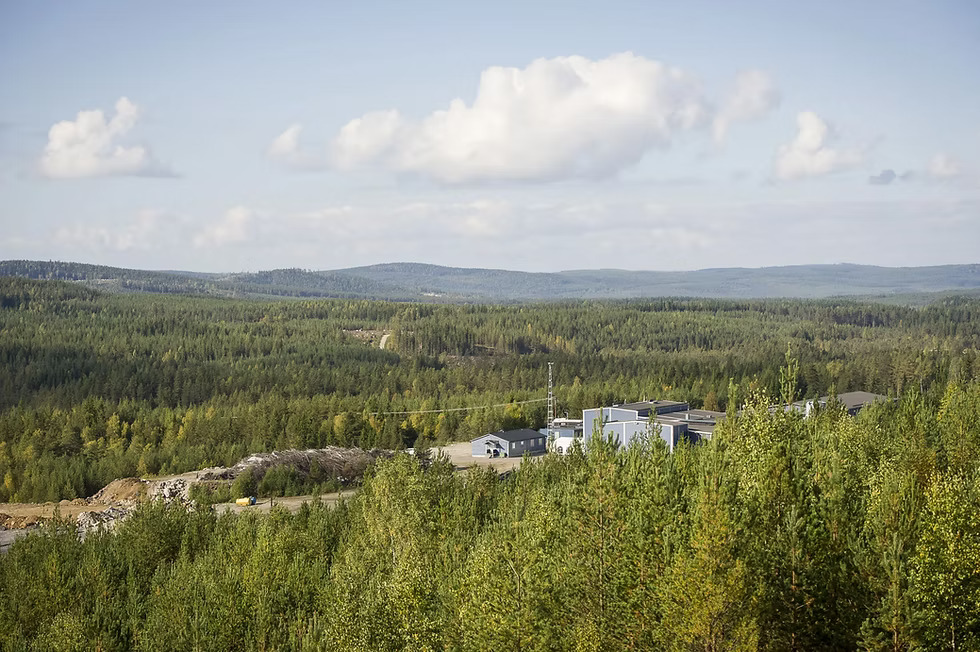
Sweden has granted Leading Edge Materials a 25-year mining lease for the Norra Kärr heavy rare earth project in southern Sweden, reversing a 2016 revocation after the project footprint was cut by 65%. A 2021 PEA outlines a 26-year operation producing about 5,340 t/y of mixed rare earth oxides from 110 Mt at 0.5% TREO, with a rare heavy-to-light ratio of 2.5:1, yielding 0.4 kg DyTb per kg NdPr. The study estimated a post-tax NPV10 of US$762 million and 26.3% IRR, with updated PFS, permitting and offtake talks now planned.
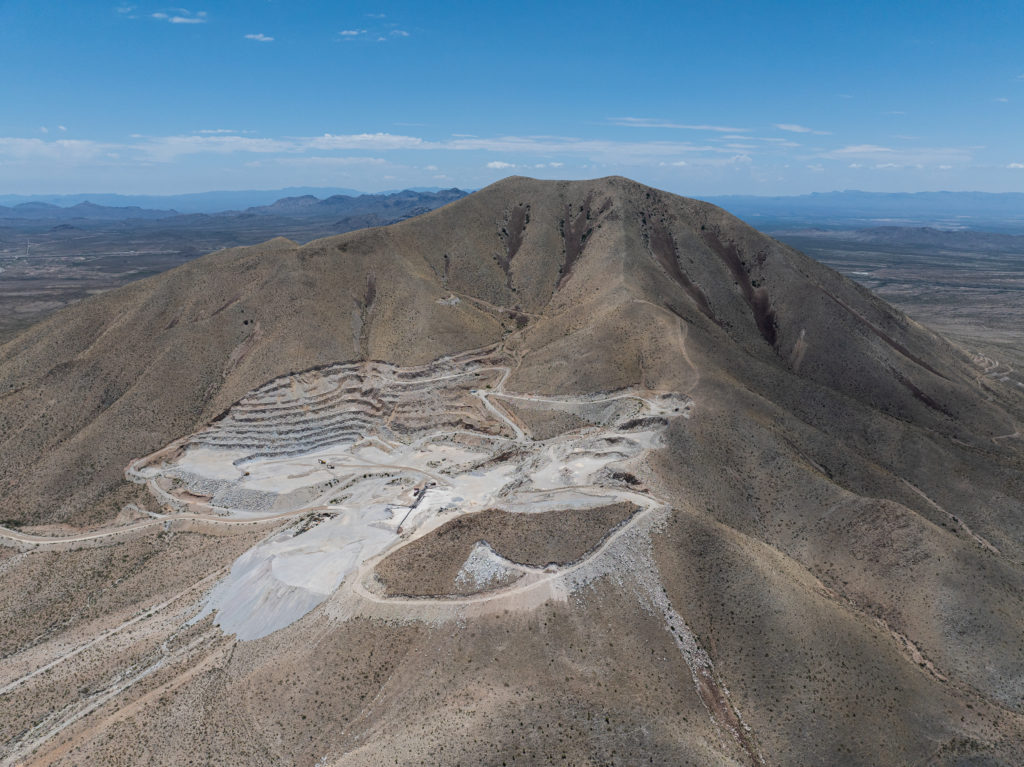
Tactical Resources is pursuing a Nasdaq listing via a SPAC merger with Plum Acquisition Corp. III as it advances the Peak rare earths project in West Texas, built around ~4 million tonnes of REE-bearing tailings at the Sierra Blanca quarry. The company has now acquired the underlying quarry, including land, mineral rights, existing power, water, rail and crushing infrastructure, enabling a feedstock-first strategy with no new mining or primary permits. Development centres on a pilot and then modular demonstration plant for direct-leach extraction and separation of heavy rare earths such as dysprosium, terbium and yttrium.
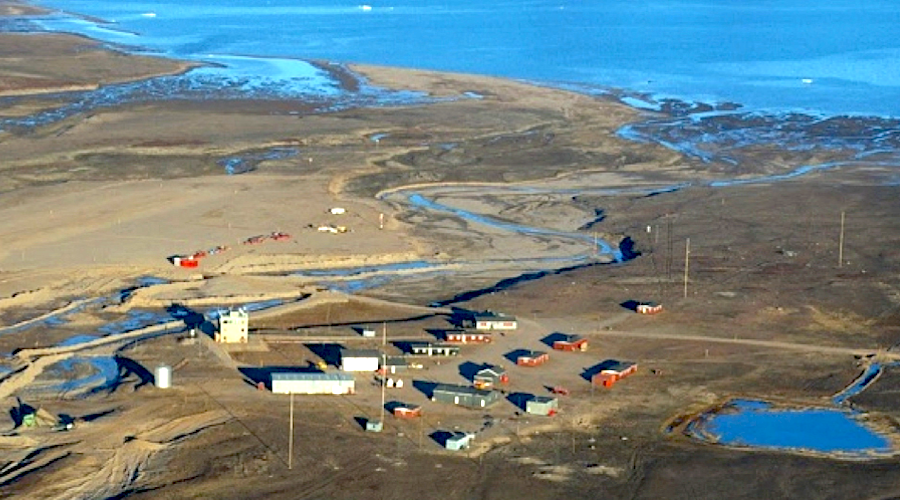
Canada has committed C$7 million through Natural Resources Canada’s Critical Minerals Research, Development and Demonstration programme to Greenland Resources’ open-pit Malmbjerg molybdenum project in east Greenland, the first G7 investment in Greenland mining. The funding supports metallurgical work to test flotation of primary molybdenum using both saline and fresh water and to assess recovery of magnesium and rare earth elements from the orebody and process water, with the programme running to March 2028. Malmbjerg, 20 km from Mestersvig airport, is designed to produce 32.8 million lb/y of molybdenum metal for 10 years within a 20-year mine life, backed by a long-term offtake with Outokumpu.
Gold fell as much as 1.8% on Monday to just above $4,000/oz, extending a decline of more than 22% since the Middle East war began in late February amid surging energy prices and expectations of higher interest rates. The metal has erased its 2026 gains and now sits about 6% down for the year, reversing part of the 60% surge seen in 2025. Analysts at Goldman Sachs, UBS and Global X ETFs still see $4,000/oz as key technical support and project higher year-end prices on continued central bank buying.
Rosh Pinah zinc mine in southwestern Namibia has commissioned a new SAG mill that replaces the existing ball mill and is designed to double processing throughput from 700,000 t/y to 1.4 Mt/y while handling progressively harder ore. The SAG mill brings the RP2.0 flowsheet into full operation as an integrated system, tying in the new WF3 underground portal and decline, paste backfill plant, water treatment plant, and an entirely new zinc flotation, thickening and filtration circuit. Appian Capital Advisory, which owns 90% of the operation, reports construction is over 95% complete, on schedule and on budget.
Liebherr-Australia has delivered three PR 776 G8 dozers to MACA, a Thiess company, for deployment at Regis Resources’ Duketon gold project in Western Australia, marking the first Liebherr dozers in MACA’s mining fleet. The PR 776 G8 is a 70‑t class mining dozer typically used for bulk push, stockpile management and haul-road maintenance, giving MACA an alternative to its existing Caterpillar and Komatsu-heavy fleets. Liebherr-Australia is scheduled to supply two R 9300 mining excavators later this year, signalling deeper standardisation on Liebherr primary loading and dozing assets at Duketon.
Metso is expanding its mill lining Life Cycle Services (LCS) footprint in Asia Pacific, securing two new long-term mill lining agreements in the first half of 2026 and building a pipeline of further contracts. The deals formalise multi-year commitments around liner design, supply and shutdown planning, with performance and reliability targets and transparent wear monitoring built into the scope. For concentrator operators, this signals more outsourced responsibility for liner life, mill availability and reline scheduling, rather than transactional liner purchases.
Hawk Measurement Systems has launched the Senator H80 Radar Series, an 80 GHz FMCW radar level transmitter range targeting liquid, slurry and bulk solids measurement in mining and process plants. The high-frequency 80 GHz signal improves resolution and narrow beam focusing, allowing reliable level measurement in tall, narrow vessels, dusty silos and agitated slurry tanks where 6–26 GHz radars often struggle. For operators, the series offers a single radar platform that can standardise level control across thickeners, sumps, reagent tanks and ore bins, simplifying spares and calibration practice.
Metso will supply an additional secondary crushing package to Grupo Mexico’s La Caridad copper concentrator in Nacozari, Sonora, building on the high-capacity Nordberg MP800 cone crushers ordered in 2025 as the next phase of the plant’s expansion. The integrated secondary crushing solution is designed to materially raise concentrator throughput, with the MP800 units providing high power draw and large feed opening suited to La Caridad’s hard copper ore. For plant and process engineers, the upgrade centres on debottlenecking downstream grinding and improving overall comminution circuit efficiency.
PYBAR Mining Services, a Thiess company, has fired the first cut on an exploration decline portal at Southern Cross Gold’s Sunday Creek gold–antimony project in Victoria, marking the first new decline development in the state in about 20 years. The decline will provide underground access for close-spaced drilling of high-grade gold–stibnite veins rather than relying solely on surface drilling. For geotechnical and mine planning teams, this signals a shift towards underground evaluation of Victorian narrow-vein systems after a long hiatus in new decline development.
Contractors McIlwain Civil Engineering and SEE Civil Joint Venture have secured the next stage of early works for Queensland’s Mooloolah River Interchange, a key connection for the Sunshine Motorway and Nicklin Way on the Sunshine Coast. The package centres on large-scale earthworks and embankment construction to build up formation levels and stabilise ground conditions ahead of the full interchange upgrade. Geotechnical focus will be on settlement control and embankment performance in a coastal, flood-prone corridor before major bridge and traffic-switching works proceed.
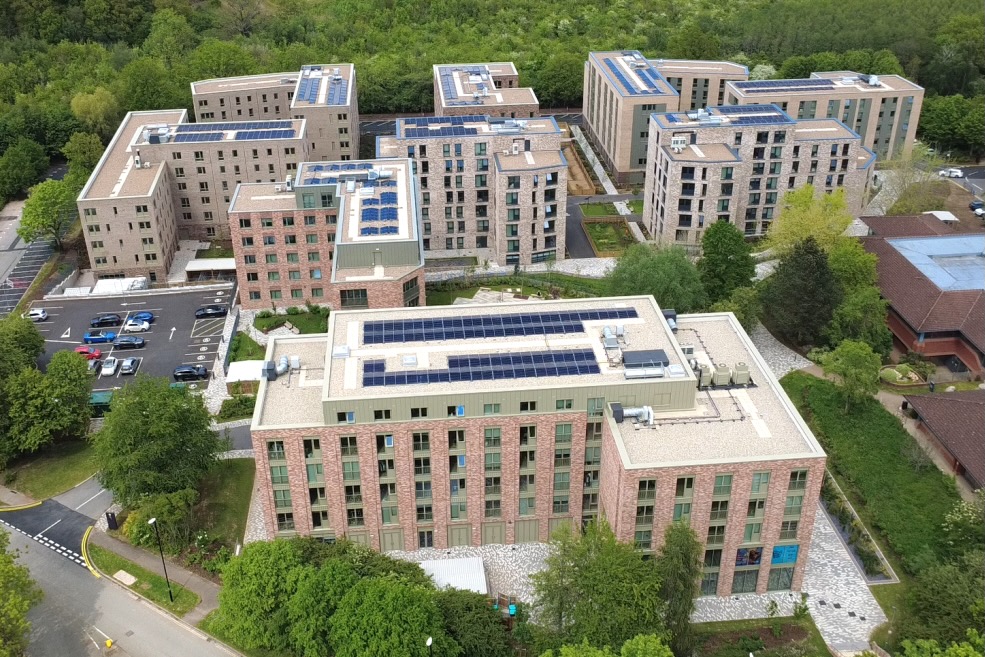
McLaren Construction Midlands & North has completed the second phase of iQ Longwood Place near the University of Warwick, delivering a total of 1,209 student rooms across nine new residential blocks and replacing Avon House, Swift House and a former multi-storey car park on an underused business park. The latest phase adds 637 beds to the 572 completed in 2025, with on-site crushing and reuse of bricks, stone and concrete from demolished structures to cut waste and imported fill. Across Longwood Place, plus schemes in Nottingham and Manchester, McLaren has now delivered 2,870 student beds in the region.
Southern Construction Framework’s sixth-generation procurement vehicle (SCF6) has gone to tender from Hampshire and Devon County Councils, expanding for the first time from its South West, South East and London base to offer England-wide coverage for major and complex programmes. The framework, which has already supported £10bn of public sector construction since 2006 and typically channels about £500m of projects annually, will be split into 10 lots with value bands from local schemes up to £30m and major/mega projects from £10m to over £100m. SCF6 will run for a fixed four-year term from 1 May 2027, providing continuity as the current framework expires and locking in a managed two-stage procurement route that contractors and public clients will need to align with in pipeline planning.
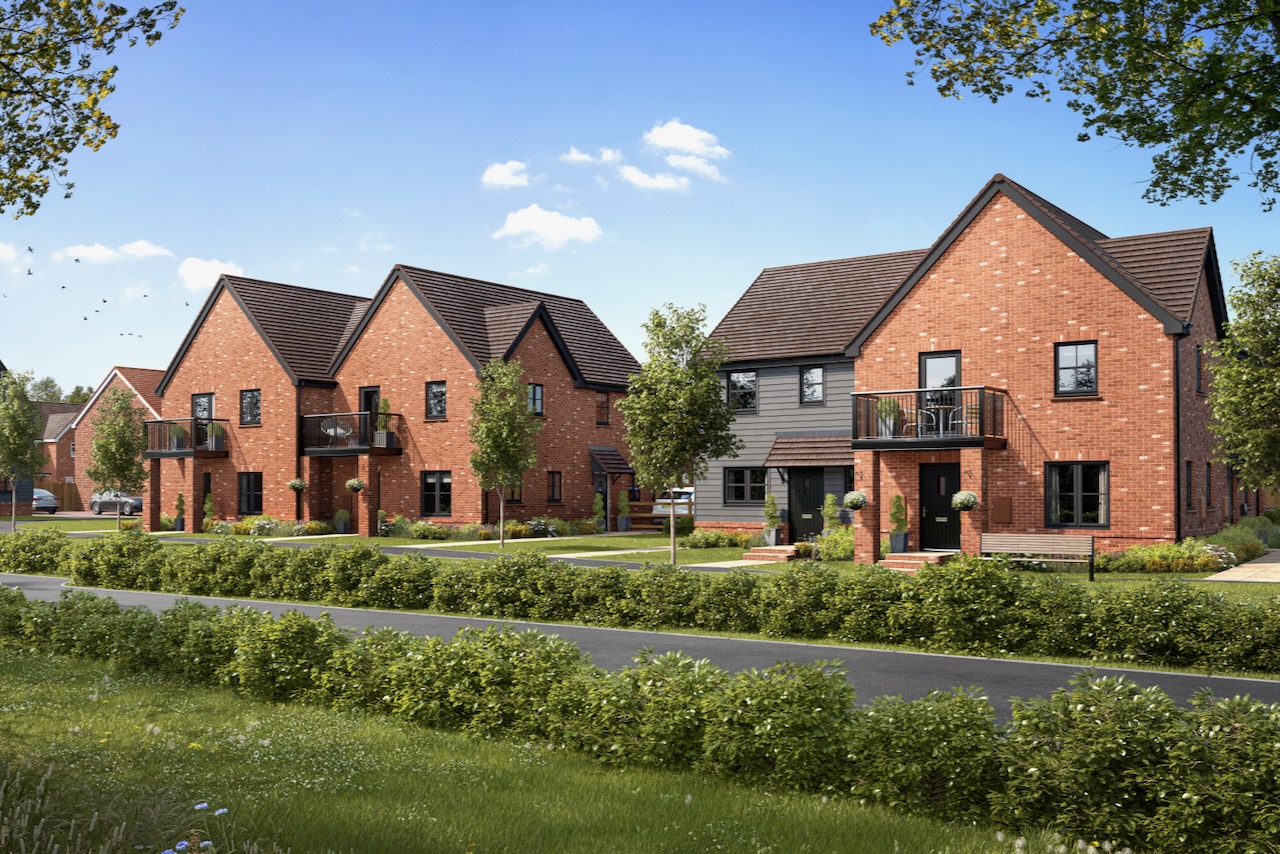
Guildford Borough Council has approved Persimmon’s 65‑home scheme off Ockham Road, West Horsley, comprising one-bedroom maisonettes, two-bedroom bungalows and larger family houses, with 26 units designated as affordable for below-market rent and shared ownership. All dwellings are specified as “zero‑carbon ready”, using air source heat pumps, roof‑mounted solar PV and EV charging points as standard, signalling full electrification of space and water heating. The layout incorporates extensive green open space, a children’s play area, walking routes, biodiversity habitats, wildflower grassland and retention of the existing orchard.