Geomechanics.io

  • Free Tools
Sign UpLog In

Geomechanics.io

Geomechanics, Streamlined.

© 2026 Geomechanics.io. All rights reserved.

Geomechanics.io

CMRR-ioGEODB-ioHYDROGEO-ioQCDB-ioFree Tools & CalculatorsBlogLatest Industry News

Industries

MiningConstructionTunnelling

Company

Terms of UsePrivacy PolicyLinkedIn
    AllGeotechnicalMiningInfrastructureMaterialsHazardsEnvironmentalSoftwarePolicy
    Projects
    Contract Award

    Rio Tinto Rincon lithium first shipment and $1.175bn loan: project notes for engineers

    March 10, 2026|

    Reviewed by Tom Sullivan

    Rio Tinto Rincon lithium first shipment and $1.175bn loan: project notes for engineers

    First reported on MINING.com

    30 Second Briefing

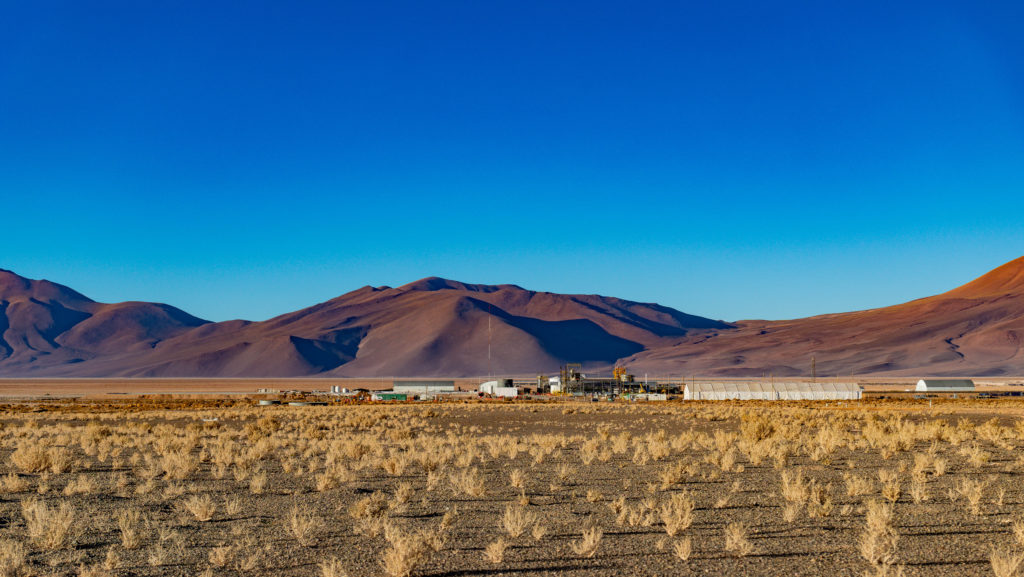
    Rio Tinto has shipped its first 200 tonnes of lithium carbonate from the Rincon brine project in Salta, Argentina, to Shanghai, marking the start of exports from a planned 60,000 t/y battery-grade operation. The project will ramp from a 3,000 t/y starter plant to a 57,000 t/y expanded plant due online in 2028, with full capacity targeted within three years and an expected 40-year life at about 53,000 t/y. Rio has secured a US$1.175 billion loan package from IFC, IDB Invest, Export Finance Australia and JBIC towards the US$2.5 billion expansion capex.

    Technical Brief

    • First commercial cargo comprised 200 tonnes of lithium carbonate trucked to the Port of Buenos Aires.
    • Rincon is a lithium brine operation in Salta province, within the high-altitude “lithium triangle” basin.
    • Rio Tinto acquired Rincon in March 2022 as part of its battery materials growth strategy.
    • Rincon has become Rio Tinto’s flagship lithium asset after shelving the Jadar hard‑rock project in Serbia.
    • Long‑term mine plan targets about 53,000 t/y lithium carbonate over a 40‑year operating life.
    • Construction of the main expanded plant, budgeted at US$2.5 billion, is already in progress.
    • Rio has applied for Argentina’s RIGI incentive scheme to secure tax and legal stability for the project.
    • Project financing package totals US$1.175 billion from IFC, IDB Invest, Export Finance Australia and JBIC.

    Our Take

    Among the 108 lithium- and lithium carbonate–tagged pieces in our database, Rincon’s 40‑year project life and 2028 expansion timeline put Rio Tinto at the long-duration, late-decade end of the pipeline, contrasting with several shorter-life spodumene projects now commissioning in Australia and Africa.

    The presence of multilaterals such as IFC, IDB Invest and Export Finance Australia on Rincon’s $2.5 billion expansion signals that, in Latin America, large brine projects backed by Tier‑1 sponsors like Rio Tinto are currently the ones able to secure structured financing despite softer lithium prices.

    With Jadar in Serbia stalled and Rincon now advancing in Salta, our coverage suggests Rio Tinto is effectively rebalancing its lithium growth options away from hard‑rock in Europe towards brine in Argentina, which could influence how other majors prioritise between EU permitting risk and South American brine development.

    Geotechnical Software for Modern Teams

    Centralise site data, logs, and lab results with GEODB-io, CMRR-io, and HYDROGEO-io.

    No credit card required.

    • Save and export unlimited calculations
    • Advanced data visualisation
    • Generate professional PDF reports
    • Cloud storage for all your projects

    Prepared by collating external sources, AI-assisted tools, and Geomechanics.io’s proprietary mining database, then reviewed for technical accuracy & edited by our geotechnical team.

    Related Articles

    Gold and silver price weakness: planning implications for mine project teams
    Mining
    about 10 hours ago

    Gold and silver price weakness: planning implications for mine project teams

    Gold slipped below $5,100/oz on Friday, touching about $5,020 and heading for a second straight weekly loss as the Middle East war drives up oil and gas prices and keeps interest rate cut expectations low. The metal has traded in a tight $5,000–$5,200/oz range since an early-month spike after the US-Israeli strike on Iran, and is now almost 9% off its late-January record near $5,600/oz, though still 17% higher year-to-date. Silver fell almost 5% to just above $80/oz, with only a 10% gain so far in 2026.

    Rio Tinto’s Nemaska lithium plant slowdown: schedule and feed risks for mine planners
    Mining
    about 12 hours ago

    Rio Tinto’s Nemaska lithium plant slowdown: schedule and feed risks for mine planners

    Rio Tinto is slowing construction of the Nemaska lithium hydroxide conversion plant at Bécancour, Quebec, cutting its contractual workforce by about 50% while keeping several hundred workers on site, but still targets commissioning this decade and first production in 2028. The plant is roughly 70% complete, designed for 32,000 tonnes per year of lithium hydroxide, with Rio planning US$300 million of investment alongside a C$200 million commitment from the Quebec government, which retains 46.1%. Nemaska’s integrated project is based on a 26‑year Whabouchi open‑pit/underground mine producing 200,000 tonnes of spodumene concentrate annually, though Rio is reassessing feed against its Galaxy hard rock project, with a decision due in H2 2026.

    Oil shock and mining costs: BMO sensitivities unpacked for project teams
    Mining
    about 17 hours ago

    Oil shock and mining costs: BMO sensitivities unpacked for project teams

    Rising Brent crude above $100/bbl could lift iron ore cash costs by about 20%, copper by 16% and gold by 9% if prices hold near that level, BMO Capital Markets estimates from Wood Mackenzie data. Historical sensitivities show iron ore costs rising ~4.2% for every 10% oil increase, versus 3.5% for copper and 1.9% for gold, with diesel now only ~5% of copper site costs but higher energy feeding through power, consumables, labour and equipment. Africa and the Americas appear less exposed than Europe and Asia, while sulphur and ammonia flows via the Strait of Hormuz threaten acid and explosives input costs.

    Related Industries & Products

    Mining

    Geotechnical software solutions for mining operations including CMRR analysis, hydrogeological testing, and data management.

    Construction

    Quality control software for construction companies with material testing, batch tracking, and compliance management.

    CMRR-io

    Streamline coal mine roof stability assessments with our cloud-based CMRR software featuring automated calculations, multi-scenario analysis, and collaborative workflows.

    HYDROGEO-io

    Comprehensive hydrogeological testing platform for managing, analysing, and reporting on packer tests, lugeon values, and hydraulic conductivity assessments.

    GEODB-io

    Centralised geotechnical data management solution for storing, accessing, and analysing all your site investigation and material testing data.