Geomechanics, Streamlined.
© 2026 Geomechanics.io. All rights reserved.
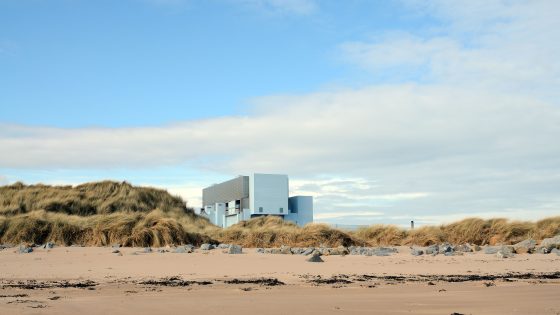
Several sites in Scotland have been flagged as technically suitable for new nuclear power stations in a UK Government-commissioned siting study, despite the Scottish Government’s current opposition to new nuclear build. The assessment focuses on factors such as coastal locations with access to large-volume cooling water, seismic stability and low flood risk, and proximity to the existing 400kV transmission network. For civil and geotechnical teams, the work signals where future detailed site investigations, coastal defence design and grid-connection studies may be requested if policy barriers ease.
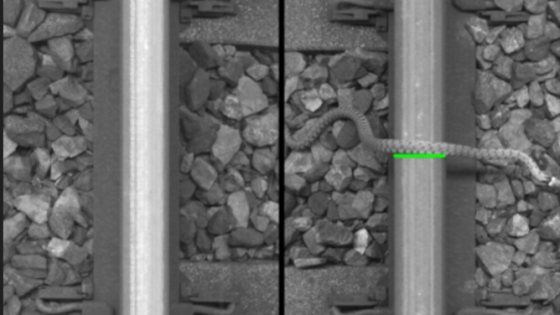
An artificial intelligence-powered inspection system on a London North Eastern Railway (LNER) service incorrectly flagged a snake lying across the line as a track defect, triggering an alert to LNER and Network Rail. The vision-based tool, mounted on in-service rolling stock to scan rails and trackbed for faults, treated the moving object as an infrastructure anomaly. The incident exposes the need for more robust training data and validation for AI defect-recognition models to distinguish transient obstructions from genuine rail geometry or component failures.
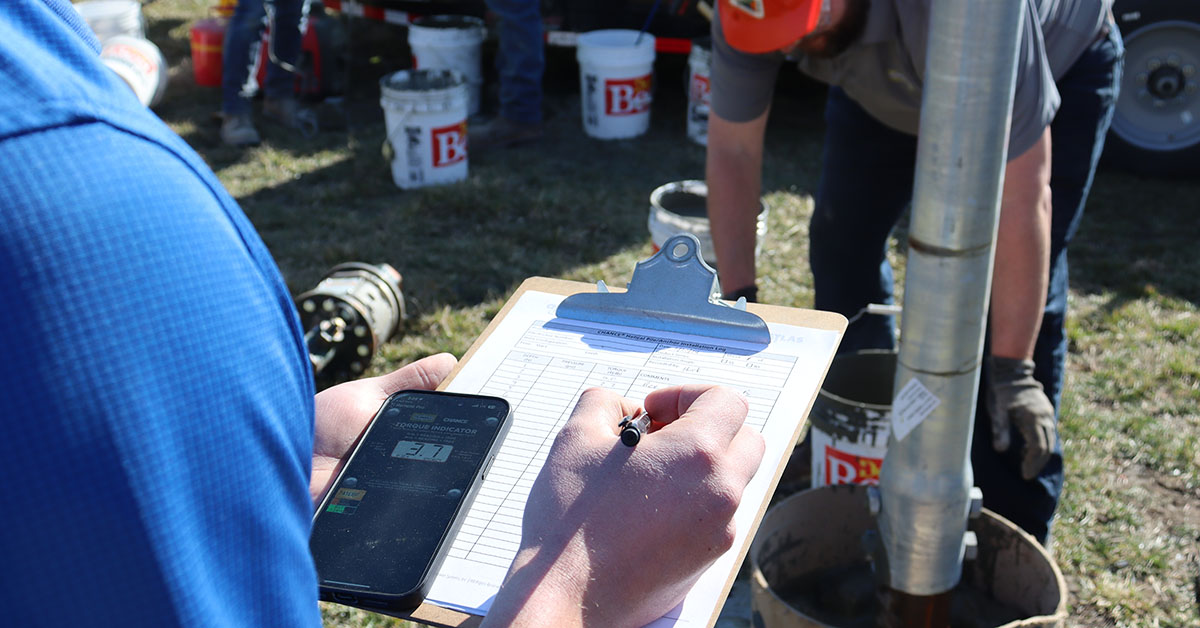
Helical piles and anchors are presented as displacement deep foundations whose performance depends on correctly specifying helix geometry (diameter, pitch, spacing), shaft type (solid square vs hollow round), and corrosion protection for the design life. The guide stresses matching installation torque to required axial capacity, using torque correlation factors (Kt) appropriate to soil type, and defining minimum embedment depth and number of helices rather than leaving these to contractors. Engineers are urged to state load cases (tension, compression, lateral), serviceability criteria, and testing requirements such as proof and pre-production load tests.
LiuGong has delivered its 200 t class 9200F ultra-large hydraulic excavator, its largest mining unit to date, to Jiangxi Copper Group for frontline deployment in open-pit metallic mining. The 9200F targets high-end hard-rock operations traditionally dominated by foreign OEMs, signalling Chinese manufacturers’ push into larger-size classes for primary loading fleets. For mine planners and maintenance teams, the move widens options for domestic sourcing of ultra-large excavators, with potential implications for fleet standardisation, parts logistics, and lifecycle support in Chinese copper pits.
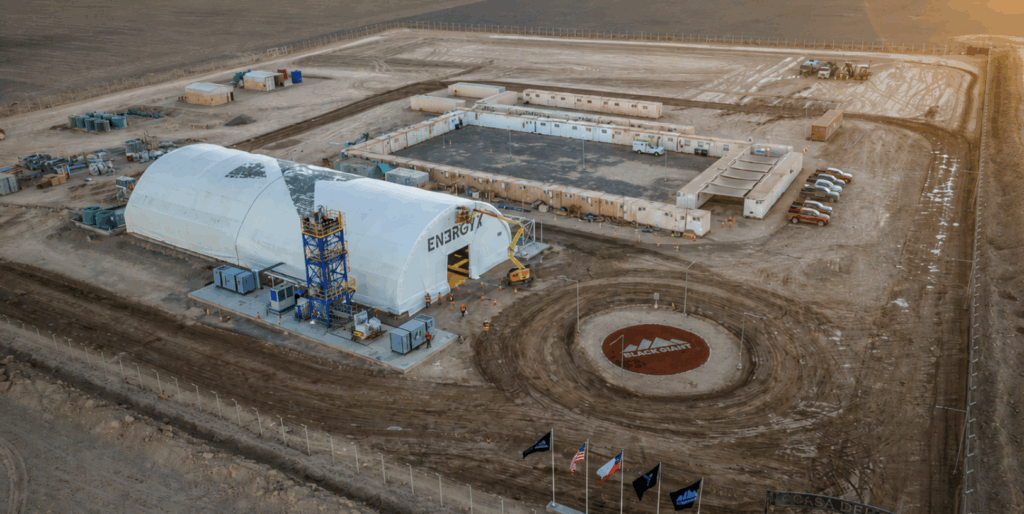
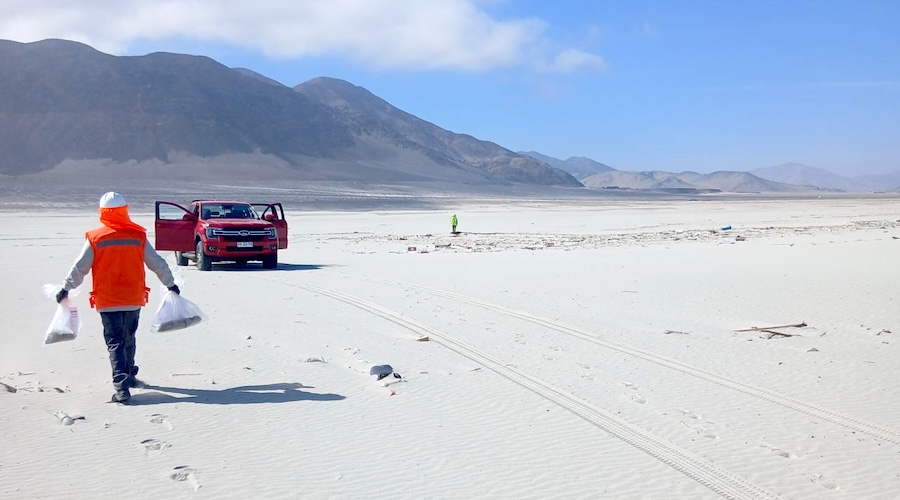
EnergyX has secured a $225 million investment from Eni SpA for a minority stake in the Black Giant lithium project in Chile’s Antofagasta Region, giving Eni rights to about 25% of future output. Black Giant is designed to produce up to 52,500 tpa of lithium carbonate in its first two phases, with total capex just under $1 billion and projected annual gross revenue of $1.3 billion at May 2026 prices of $25,000/t. The 100,000+ acre project near Salar de Punta Negra is underpinned by a 9.8 Mt in-situ lithium resource from 22 wells and nearly 10,000 hours of pilot work using EnergyX’s GET Lit DLE platform, plus a 170 tpa demonstration plant nearing operation.
Genesis Minerals has trumped Regis Resources’ agreed all‑stock merger with Vault Minerals with a A$5.6 billion cash‑and‑scrip bid, offering 0.7629 Genesis shares plus A$0.475 in cash per Vault share, a 14.5% premium that won unanimous board support. The combined group, centred on Western Australia’s Goldfields, would control five producing mines including Vault’s King of the Hills and Genesis’ Leonora‑district assets, targeting roughly 700,000 oz/y of gold with shared processing infrastructure. Regis has five business days to match, as Vault shares jumped 11.6% to A$5.09 and Genesis fell 4.1% to A$6.03.
GoldStone Resources’ share price jumped 36% to 0.75p after Hong Kong-listed Persistence Gold Group agreed a £3.51 million subscription for 351.6 million new shares at 1p, taking a 20.96% stake to fund the Homase gold project in Ghana. The cash will support an enlarged JORC drilling campaign, mine planning and technical studies, as well as working capital across GoldStone’s Ghanaian licence portfolio. Persistence can nominate one director while holding at least 15%, with executive director Jeff Malaihollo expected to join the board under a governance agreement protecting minority shareholders.
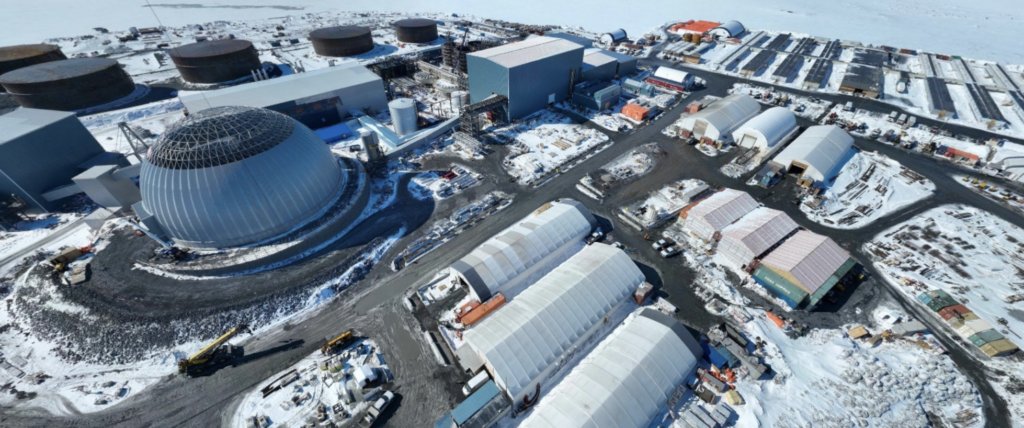
B2Gold’s new CEO Mike Cinnamond faces an immediate technical test at the Goose mine in Nunavut, where a 16 April crusher fire forced a switch to mobile crushing and a C$7 million repair and upgrade programme to reach 3,200 tonnes per day by September and 4,000 tonnes per day in 2025. Goose holds 10.9 million tonnes of probable reserves grading 6.79 g/t for 2.38 million oz., with a C$51 million 2026 exploration budget across the Back River district and studies on a potential SAG mill to lift capacity to 6,000 t/d. Company-wide, B2Gold targets 820,000–970,000 oz. gold this year at all-in sustaining costs of $2,400–$2,580/oz, while Fekola Regional satellite ore in Mali is expected to add 60,000–80,000 oz. once permitting allows trucking to the existing mill.
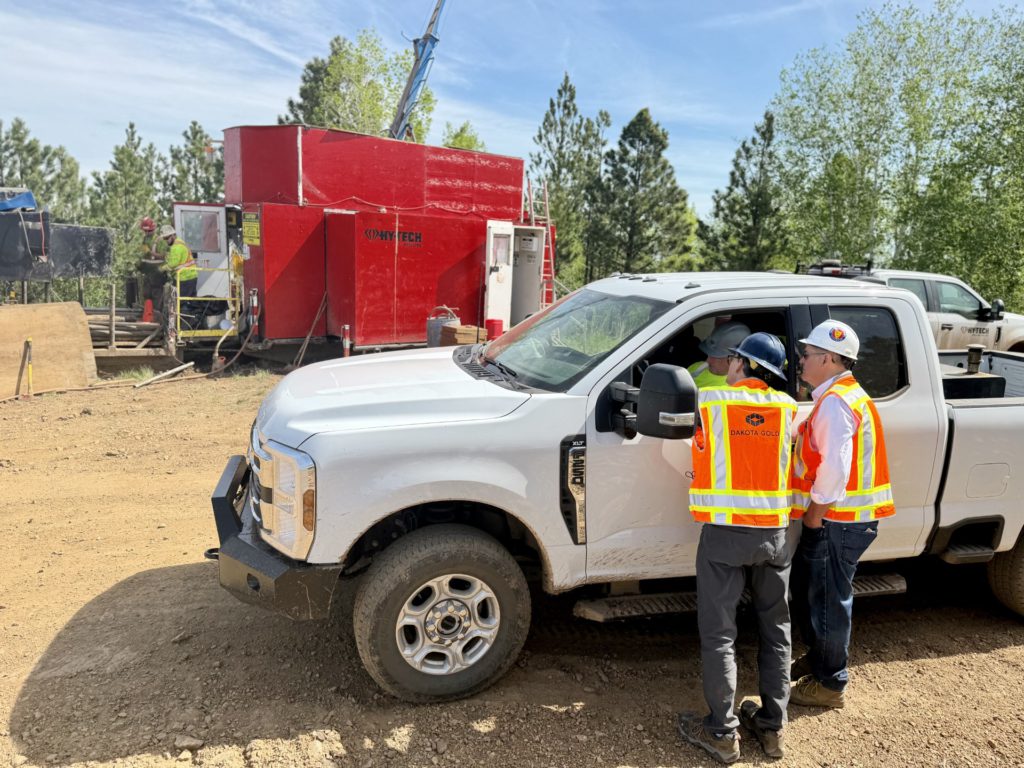
New drilling at Dakota Gold’s Richmond Hill project in South Dakota has returned high-grade intercepts inside the planned open pit, including 26 metres at 11.36 g/t gold and 14.92 g/t silver from ~75 metres in hole RH26C-432 and 38 metres at 2.89 g/t gold and 8.18 g/t silver from ~145 metres in RH26C-437. The 2026 programme totalled 17,273 metres across 112 infill, expansion and geotechnical holes, with assays from 350+ holes feeding a prefeasibility study due by 31 December and long-lead items such as an electrical substation already queued with Black Hills Energy. Richmond Hill, a large oxide gold system amenable to open-pit and heap leach, carries 244.7 Mt measured and indicated at 0.46 g/t Au and 4.83 g/t Ag (3.6 Moz Au, 38 Moz Ag), with an S-K 1300 Initial Assessment outlining 2.6–3.9 Moz Au production over 28 years and a post-tax NPV of $1.6–2.1 billion at a 55–59% IRR.
Copper tailings reprocessing is framed as a near‑term supply solution, with S&P Global projecting demand rising from 28 million tonnes in 2025 to 42 million tonnes by 2040 while new copper mines take an average 17.9 years to reach production and are expected to meet only about 70% of 2035 demand. Andrew Dennan, CEO of Halo Minerals, points to advances in flotation, leaching and fine‑particle recovery and to projects such as Halo’s Playa Verde in Chile, where 250 million tonnes of historic Potrerillos and El Salvador tailings at Chañaral could be reworked. With an estimated 282 billion tonnes of tailings globally, he argues that above‑ground material, already blasted and crushed, can be rapidly mobilised using existing infrastructure while also remediating legacy arsenic‑rich pollution.
Central banks bought a net 41 tonnes of gold in May 2026, led by Poland’s 18 tonnes and China’s 10 tonnes, with China now holding 2,331 tonnes and 89% of surveyed reserve managers expecting global official gold holdings to rise further. In China’s domestic market, the Huaan Yifu Gold ETF has become the country’s largest ETF at about 90 billion yuan, overtaking the Huatai-PineBridge CSI 300 equity fund on 83 billion amid weak equities and constrained capital outflows. In London, Citi has joined HSBC, ICBC Standard Bank, JPMorgan and UBS as the fifth clearing member of London Precious Metals Clearing Limited, gaining Loco London settlement access to the roughly $160‑billion‑a‑day OTC bullion market.
Molybdenum’s price surge to about $65,500/t in May 2026, nearly $30/lb and up 48.9% year-on-year, signals a shift from simple by-product tightness to a security premium on alloying metals as China’s February 2025 export controls on tungsten, tellurium, bismuth, indium and molybdenum inject licensing risk into defence, aerospace and tooling supply chains. Partial substitution away from tungsten via molybdenum carbides, Mo-bearing steels and superalloys is driving small absolute but material demand gains in a roughly 300,000 t/y market, where supply is constrained by copper mine plans. Chile and Peru already export about US$2.48 billion and US$1.65 billion of molybdenum respectively, with higher prices materially improving copper by-product credits and project economics.
Wildfire seasons in Western Canada are intensifying, with 2023 seeing more than 2,240 fires burning 2.84 million hectares in B.C. and insured losses of $720 million in the Okanagan/Shuswap and $1.3 billion from the 2024 Jasper fire, forcing repeated evacuations at sites such as Artemis Gold’s Blackwater and Cameco’s Cigar Lake. Operators and insurers are now treating wildfire as a core business-interruption risk, driving investment in backup generation for long transmission corridors, detailed continuity planning, and stricter underwriting. Engineers are also redesigning mine layouts and buildings for fire, favouring sites on ridge tops, wider building separation, non-combustible steel roofing and use of natural and linear infrastructure firebreaks.
Integrated Pump Technology will use Electra Mining Africa 2026 to showcase specialist mine dewatering capability alongside its pump hardware, giving visitors direct access to one of Africa’s most experienced dewatering teams. The company, a long-standing high-impact exhibitor at the Johannesburg expo, is expected to focus on solving high-solids, high-abrasion and high-lift groundwater problems typical of deep and open-pit operations. For engineers, the value lies in on-stand technical consultation on pump selection, sump design and duty-point optimisation rather than a purely catalogue-style display.
Thiess has set a claimed world record for a Liebherr R 9600 excavator at MACH Energy’s Mount Pleasant Operation in the Hunter Valley, moving 17 million bank cubic metres in 6,840 operating hours over 12 months. The performance equates to roughly 2,485 bank cubic metres per operating hour, signalling sustained high mechanical availability and consistent truck–shovel match on a single ultra-class hydraulic excavator. For mine planners and maintenance teams, the figures provide a real-world productivity benchmark for R 9600 fleets in large overburden and coal operations.
Regis Resources ended FY26 with $1.21 billion in cash and bullion after delivering 379,000oz of gold, at the top end of its 350,000–380,000oz guidance. June quarter output rose 12 per cent on the March quarter, signalling stronger performance from its Western Australian operations and improved plant throughput. The enlarged cash position gives Regis greater flexibility for pit cutbacks, reserve development drilling and potential brownfields expansion without immediate reliance on debt or equity.
HVME, a new Hunter Valley Mining Expo, will launch in 2027 to serve one of Australia’s highest‑output coal regions in New South Wales. Organisers are targeting local open‑cut and underground operators with a focus on haulage fleets, CHPP optimisation and mine rehabilitation technologies tailored to the Hunter’s thick coal seams and closely spaced communities. For suppliers of drilling, blasting, dust control and tailings management solutions, the event offers a concentrated platform to engage directly with site engineers and maintenance teams from the valley’s major mines.
Catalyst Metals has lifted output at the 40km Plutonic Gold Belt in Western Australia to 31,812oz in the June quarter and 104,000oz for the 2025–26 financial year, the strongest performance since 2013. Production comes from four underground and open-pit mines feeding a single central processing plant, simplifying metallurgical control and maintenance planning. The step-up in throughput and grade stability signals renewed life for a mature orogenic gold system and may justify further infill drilling, underground development and plant debottlenecking studies.
Genesis Minerals has lodged a binding $5.6 billion proposal to merge with Vault Minerals, which Vault’s board has deemed superior to its existing scheme with Regis Resources, setting up a contested takeover. The deal would create a $12.6 billion Australian gold producer targeting 600,000–700,000 ounces per year, anchored by Genesis’ Ulysses operation in Western Australia and Vault’s development pipeline. For engineers and planners, a combined portfolio of multiple mid-scale open pits and underground assets could reshape regional contracting, processing plant utilisation and infrastructure investment across WA goldfields.
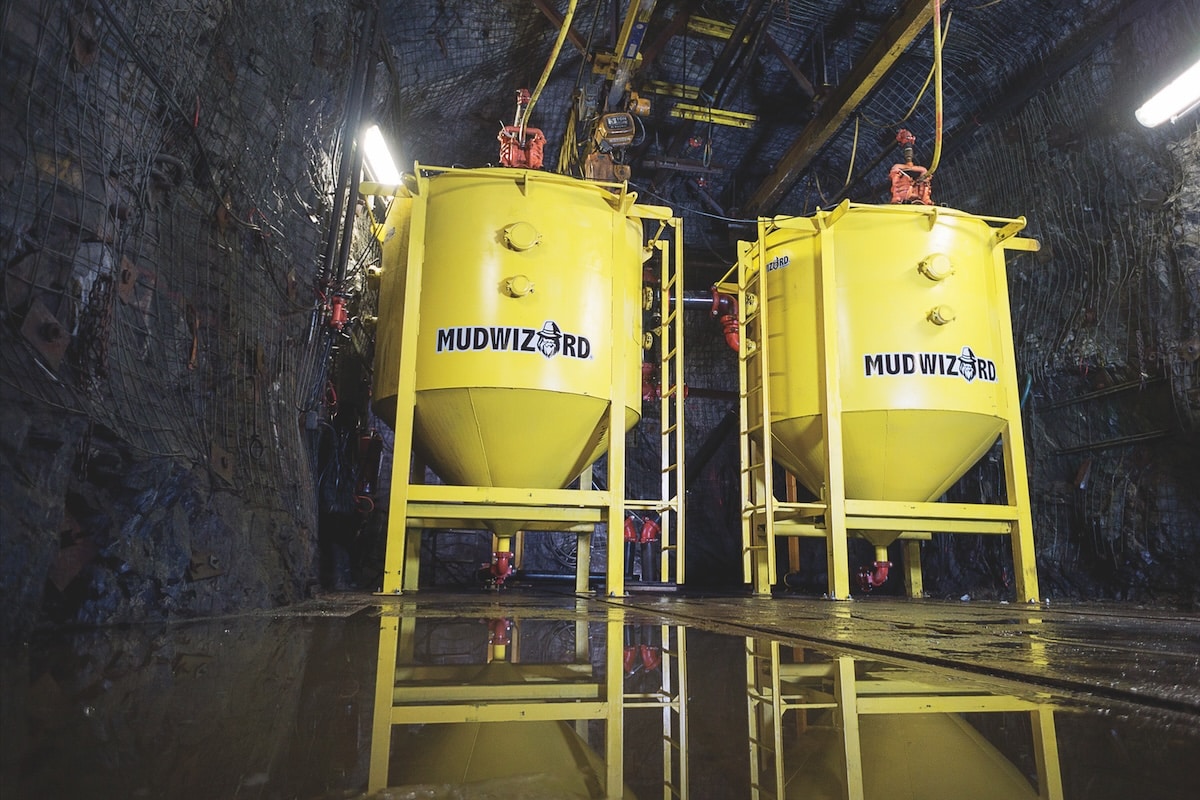
Dowdens Group is leveraging global partnerships to deploy site-specific water, waste and dewatering solutions for Queensland mines, integrating pumping systems, water treatment plants, industrial products and pneumatic equipment with local field services. Recent deployments include MudWizard sludge treatment units for underground and surface operations, which separate fines and recover process water in compact, modular packages that can be retrofitted to existing sumps and clarifiers. For engineers, the model is a single provider handling design, supply, installation and maintenance, reducing interface risk on brownfield water-management upgrades.
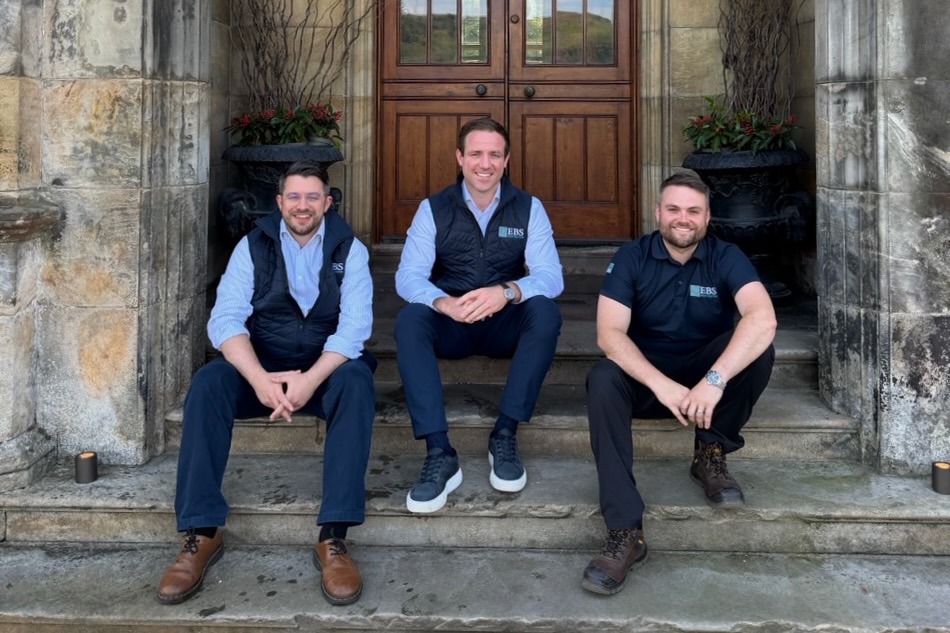
Specialist conservation contractor EBS Construction has completed integration into the M Squared group after its April 2025 acquisition and installed a new management team led by operations manager Connor Kennedy, commercial manager Fraser Shields and project manager Craig Kennedy. The business has already secured stone and fabric restoration work in Strathbungo, Kelvinside, Garnethill and Calton, and is now bidding for complex projects on Sauchiehall Street in Glasgow and George Street in Edinburgh. M Squared will maintain EBS’s intake of two to three apprentices per year to sustain pre‑1919 traditional building repair skills across Scotland’s Central Belt.
Hill Group has reported 2025/26 revenue of £1.164bn and profit before tax of £92.5m, delivering 3,329 new homes and increasing net assets to £493.1m with net cash of £129.1m and no drawings on its revolving credit facility. Land and work-in-progress rose to £733.9m as the company reinvested most profits, including £54.6m in new land and commitments for a further £44.1m. The controlled development pipeline now totals 42,600 homes with potential revenue above £14.5bn, alongside a £5.6bn contracting pipeline, signalling sustained demand for groundworks, infrastructure and materials supply.
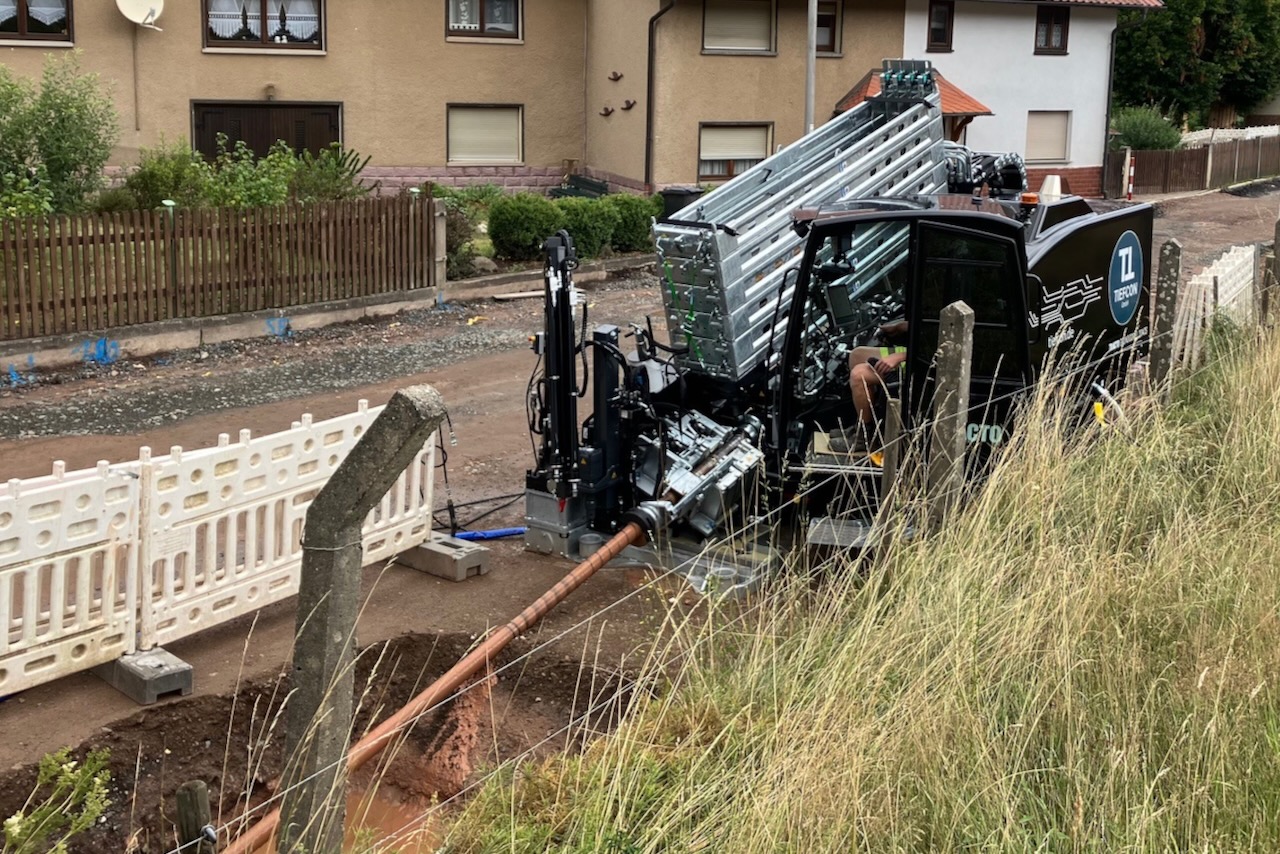
Tracto has introduced the Grundodrill 20 ACS horizontal directional drill, upgrading the previous 18ACS with 200 kN thrust/pullback, 9,000 Nm outer-rod torque, a 123 kW diesel engine and a high-capacity Bentonite pump, with the first unit sold to a Tier 1 contractor. The rig offers fully automated drilling, rod changing and lubrication, and can carry up to 144 m of Elicon twin-rod tubes with rod types selected via the operator interface. Cable-guided bores in difficult ground, an upgraded undercarriage for stability and an optional anchoring system target demanding utility and trenchless crossings.
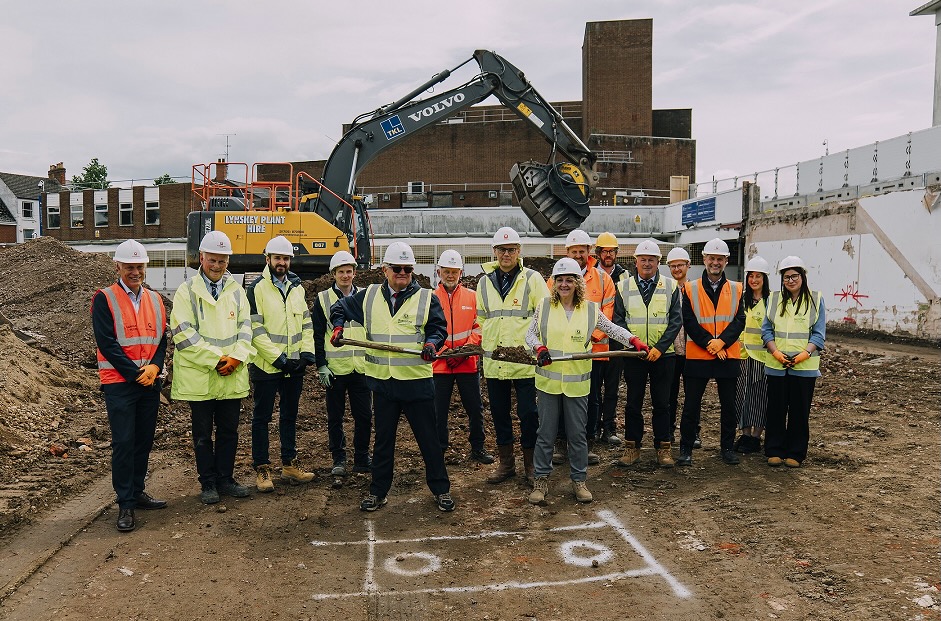
Work has started on G F Tomlinson’s £19.9m levelling up redevelopment of the Priory Shopping Centre in Worksop for Bassetlaw District Council, procured via Pagabo’s Medium Works Framework. The scheme will overhaul the existing retail complex into a mixed-use town centre asset, with construction phasing and logistics likely constrained by live urban surroundings and existing utilities. Contractors and consultants should note the framework route and value band, signalling further medium-scale regeneration opportunities under Pagabo for similar district-centre sites.