Geomechanics.io

  • Free Tools
Sign UpLog In
Built byBoxcut Studio

Geomechanics.io

Geomechanics, Streamlined.

© 2026 Geomechanics.io. All rights reserved.

Geomechanics.io

CMRR-ioGEODB-ioHYDROGEO-ioQCDB-ioFree Tools & CalculatorsBlogLatest Industry News

Industries

MiningConstructionTunnelling

Company

Terms of UsePrivacy PolicyLinkedIn
    Sustainability
    Projects

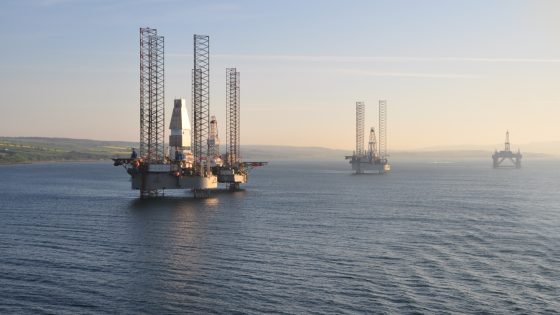
    North Sea drilling vs green grid: capex reallocation insights for UK engineers

    March 19, 2026|

    Reviewed by Joe Ashwell

    North Sea drilling vs green grid: capex reallocation insights for UK engineers

    First reported on New Civil Engineer

    30 Second Briefing

    Continuing North Sea oil and gas extraction will cost the UK more than building a fully decarbonised electricity grid, according to new analysis comparing long-term offshore drilling expenditure with system-wide renewables and grid upgrade investment. RenewableUK chief executive Dan McGrail nonetheless calls for a balanced approach, arguing that offshore wind, grid-scale storage and interconnectors must grow alongside a managed decline in North Sea production. For civil and grid engineers, the findings point to major capital reallocation towards transmission reinforcement, subsea cabling and flexible generation assets rather than new offshore hydrocarbon infrastructure.

    Technical Brief

    • Offshore engineering capacity (vessels, fabrication yards, subsea contractors) is implicitly contestable between hydrocarbons and renewables.

    Our Take

    Because New Civil Engineer appears across multiple UK-focused infrastructure items in our coverage, its platform tends to frame these North Sea discussions in terms of whole-life cost and delivery risk for major projects, which is likely to influence how civil contractors and grid planners interpret the ‘balance’ RenewableUK is calling for.

    Geotechnical Software for Modern Teams

    Centralise site data, logs, and lab results with GEODB-io, CMRR-io, and HYDROGEO-io.

    No credit card required.

    • Save and export unlimited calculations
    • Advanced data visualisation
    • Generate professional PDF reports
    • Cloud storage for all your projects

    Prepared by collating external sources, AI-assisted tools, and Geomechanics.io’s proprietary mining database, then reviewed for technical accuracy & edited by our geotechnical team.

    Related Articles

    Greenland seabed mining ban to 2029: project siting implications for engineers
    Policy
    about 21 hours ago

    Greenland seabed mining ban to 2029: project siting implications for engineers

    Greenland’s parliament has unanimously backed a resolution to ban seabed mineral extraction until at least the end of 2029, with possible two‑year extensions, directly countering US plans for “massive oil, gas and mineral exploration” announced by President Trump. The ban will cover prospective deep-sea mining of polymetallic nodules and other seabed resources, even as the US moves towards permitting such operations in international waters. For miners eyeing Greenland’s 28.2 Mt TREO Tanbreez rare earth project and wider critical mineral endowment, the decision sharply narrows options to land-based developments.

    Canada’s new foreign investment rules: financing impacts for critical minerals projects
    Policy
    about 21 hours ago

    Canada’s new foreign investment rules: financing impacts for critical minerals projects

    Canada’s 2024 Investment Canada Act amendments will, from early 2027, impose mandatory pre-closing filings on certain non-control foreign investments in “prescribed” sensitive sectors, expected to include critical minerals, where investors gain access to material non-public technical information, key assets or governance rights. Critical minerals juniors relying on strategic minority investors for exploration, feasibility and project build-out may face at least a 45-day national security screening, with some reviews extending to 200 days, forcing longer financing timelines and more complex deal structuring, such as staged tranches. Ottawa’s aim is to vet sensitive deals before closing and avoid repeat divestiture orders like the 2022 forced exits of Sinomine, Chengze Lithium and Zangge Mining from Canadian lithium and rare metals projects.

    Parliamentary inquiry on critical minerals: land access and project impacts for engineers
    Policy
    1 day ago

    Parliamentary inquiry on critical minerals: land access and project impacts for engineers

    A national parliamentary inquiry into critical minerals will hold a public hearing in Melbourne on Monday 21 October, with the House of Representatives Standing Committee on Primary Industries taking evidence from mining companies, industry experts and regional communities. The inquiry will examine the economic potential of Australia’s critical minerals sector and how project development interacts with existing land uses, including agriculture and regional townships. Outcomes could influence future approvals, land access frameworks and infrastructure planning for Victorian and national critical minerals projects.

    Related Industries & Products

    Construction

    Quality control software for construction companies with material testing, batch tracking, and compliance management.

    Mining

    Geotechnical software solutions for mining operations including CMRR analysis, hydrogeological testing, and data management.

    CMRR-io

    Streamline coal mine roof stability assessments with our cloud-based CMRR software featuring automated calculations, multi-scenario analysis, and collaborative workflows.

    HYDROGEO-io

    Comprehensive hydrogeological testing platform for managing, analysing, and reporting on packer tests, lugeon values, and hydraulic conductivity assessments.

    GEODB-io

    Centralised geotechnical data management solution for storing, accessing, and analysing all your site investigation and material testing data.

    AllGeotechnicalInfrastructureHazardsEnvironmental