Geomechanics, Streamlined.
© 2026 Geomechanics.io. All rights reserved.
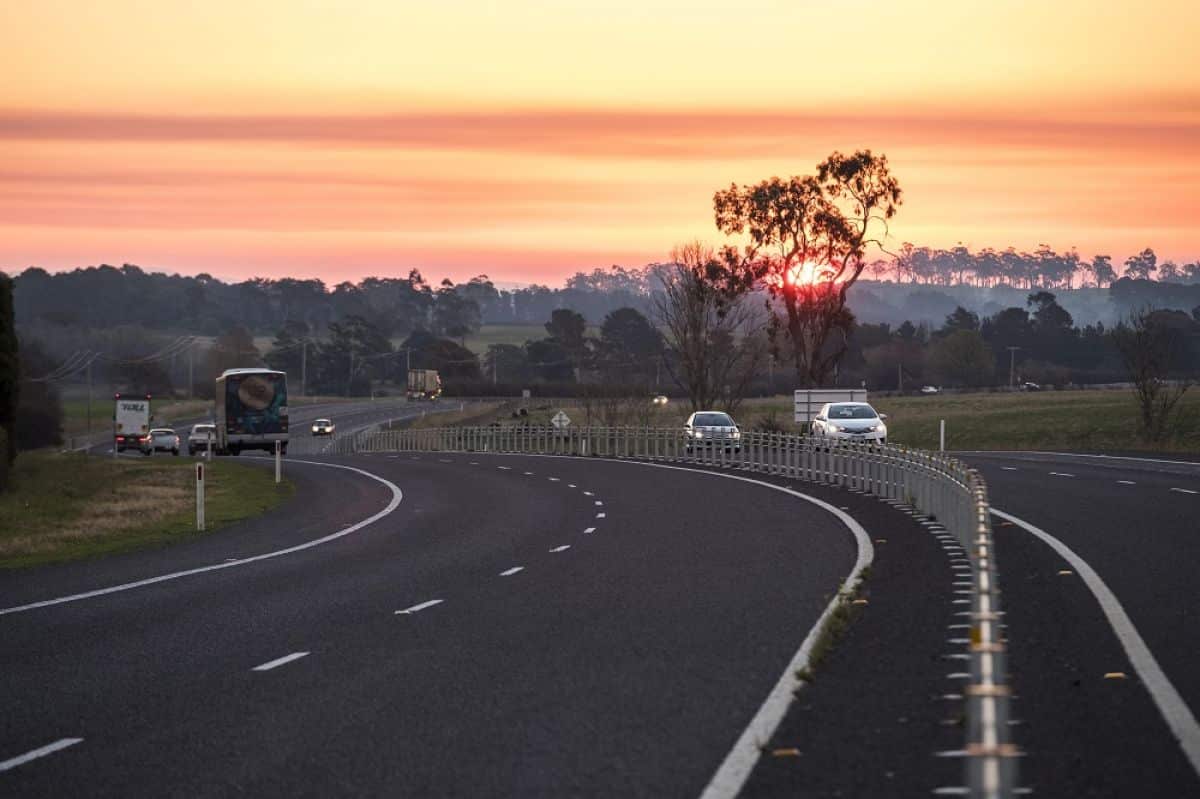
New South Wales has released the final Central West and Orana Strategic Regional Integrated Transport Plan, a 20‑year framework for a 13‑million‑hectare region with about 290,000 residents. The plan follows extensive consultation with local councils, industry and communities, and sits alongside a $437.3 million joint NSW–Federal investment in 230 road safety projects targeting fatal and serious‑injury crash reductions. For civil and geotechnical practitioners, the strategy signals sustained demand for regional highway upgrades, intersection treatments and corridor planning across a vast, low‑density network.
Cyngor Gwynedd has let a £3.8M Gwynedd and Anglesey Structures & Coastal Maintenance Framework 2026 covering general maintenance of bridges, retaining walls and coastal defences, alongside major works and specialist geotechnical engineering services. The framework consolidates routine inspections, structural repairs and coastal asset upkeep for both mainland and island sites into a single multi-year procurement vehicle. Contractors can expect packages involving scour protection, slope stabilisation and structural strengthening on existing assets rather than large new-build schemes.
WSP and KPMG have been appointed to provide technical and advisory support to National Highways as it develops strategic electric vehicle charging infrastructure across England’s Strategic Road Network for the Office for Zero Emission Vehicles (OZEV). The work will focus on planning and delivering high-capacity charging hubs at motorway service areas and key A-road junctions, addressing grid connection constraints and demand forecasting. For civil and electrical engineers, this signals upcoming programmes involving substation upgrades, high-power cabling, pavement and bay reconfiguration, and integration with existing roadside assets.
Amey has secured a one-year extension to its facilities management contract with National Highways, covering operational support for England’s strategic road network of motorways and major A-roads. The deal keeps Amey responsible for maintaining critical roadside assets and buildings that support control centres and maintenance depots, directly affecting uptime of traffic management systems and incident response. For civil and asset engineers, the extension signals continuity in existing inspection, planned maintenance and reactive repair regimes rather than a near-term shift to a new FM delivery model.
The AustStab Pavement Recycling and Stabilisation Conference will convene Australia’s road and pavement stabilisation sector to push wider adoption of in situ recycling, foamed bitumen and cementitious stabilisers in road construction and maintenance. Delegates from contractors, materials suppliers and road agencies will examine whole-of-life pavement performance, heavy vehicle loading, and cost–carbon trade-offs versus conventional full-depth reconstruction. Outcomes are expected to influence future specifications and procurement for stabilised basecourses and recycled granular pavements across state and local road networks.
Tender has been released for a major upgrade of Pirlangimpi Road on Melville Island, part of a $75 million joint road infrastructure package funded by the Australian Federal and Northern Territory governments. The project targets improved all‑weather access to support industrial and economic activity across the Tiwi Islands, where existing unsealed links are frequently constrained by wet‑season flooding and pavement deterioration. A construction contract is expected to be awarded in early 2025, signalling upcoming demand for geotechnical investigation, drainage design and pavement reconstruction expertise in remote tropical conditions.
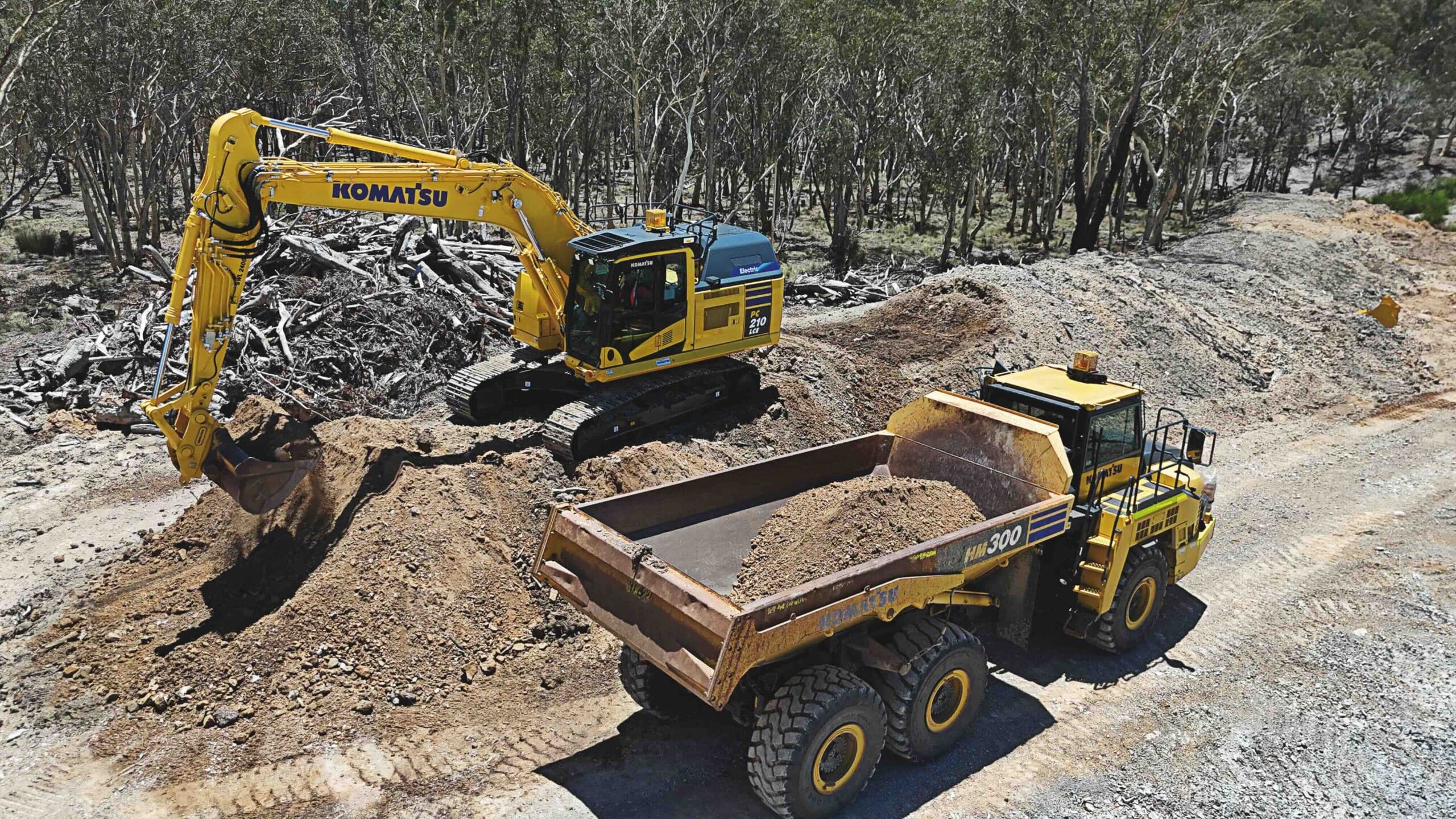
Divalls Earthmoving has expanded from its first Komatsu excavator to a 75‑unit fleet, most recently adding the PC220LCi‑12 excavator equipped with Komatsu’s intelligent Machine Control for automated digging and grade control. The Goulburn-based contractor has consistently adopted Komatsu’s latest tech packages, using factory-integrated machine guidance rather than bolt‑on aftermarket systems to improve accuracy on bulk earthworks and road projects. For plant managers, the case points to reduced rework, tighter tolerances and stronger OEM support as key criteria in fleet renewal decisions.
Public consultation has opened on concept designs for future upgrades to Tasmania’s Arthur Highway between Sorell and Port Arthur, a key 80‑kilometre tourist and freight corridor. The Federal and Tasmanian governments are examining options to improve capacity and safety on this two‑lane route, including overtaking opportunities, junction treatments and better access to heritage sites such as Port Arthur. Designers and contractors should expect staged works with constrained geometry, high seasonal traffic peaks and tight environmental and heritage interfaces.
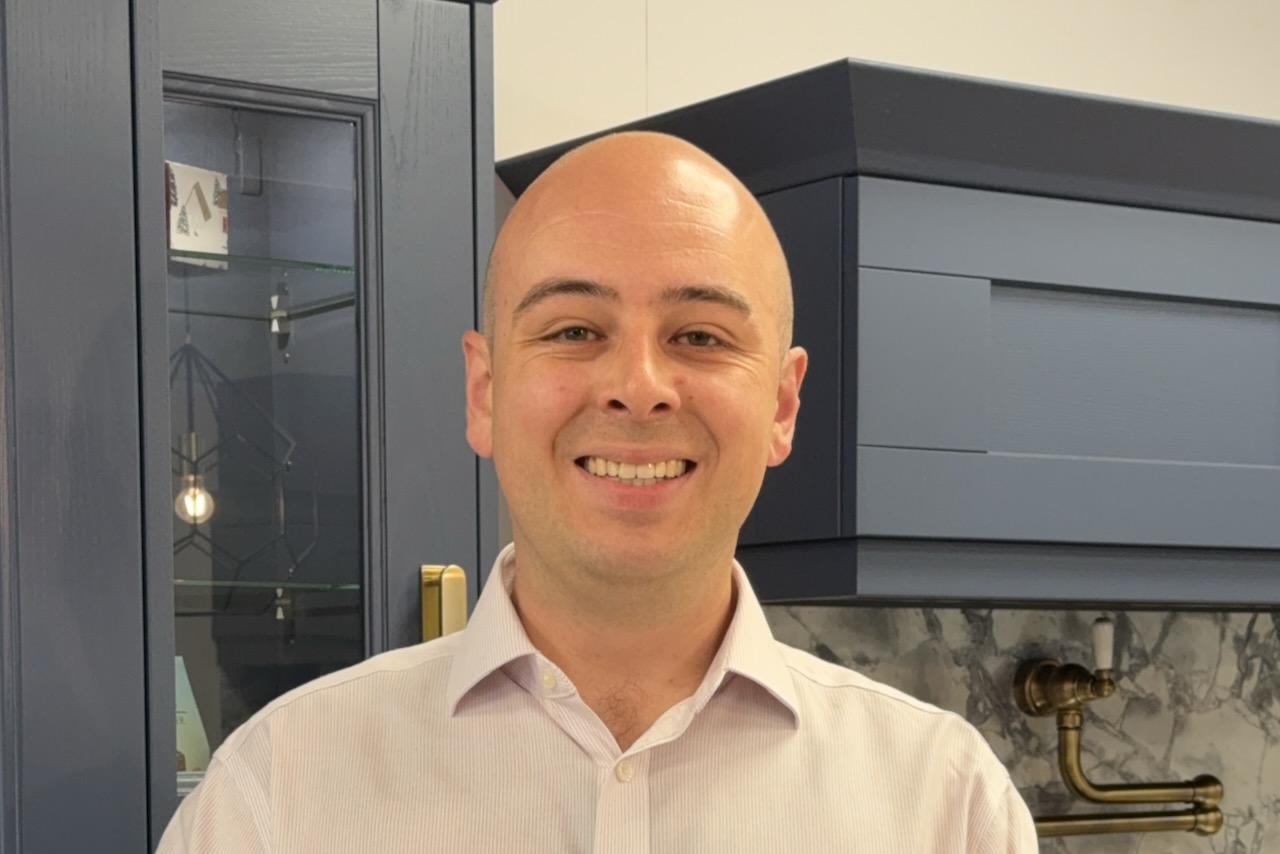
Huws Gray has appointed Jamie Davis as its first showrooms director to drive customer experience across its UK branch network, after refurbishing 80% of its kitchen and bathroom showrooms in the past year. Davis brings prior retail and trade showroom experience from Homebase, Magnet and Benchmarx, signalling a push towards more design-led, specification-focused sales. The company reports that its upgraded showrooms are outperforming the wider market on Builders Merchant Building Index (BMBI) sector survey metrics, reinforcing the value of branch-based display and consultative selling.
Select Plant Hire has placed a £5m order with JCB via dealer Greenshields JCB for new heavy plant, including JCB 370X tracked excavators, 245XR and 145XR reduced tailswing excavators, 9-tonne dual-drive site dumpers and JCB Loadall telehandlers. The investment targets major UK construction and infrastructure projects where reduced tailswing machines and dual-drive dumpers are needed for constrained, high-cycling sites. JCB will support the fleet with after-sales service aimed at maximising uptime and lifecycle value under intensive hire utilisation.
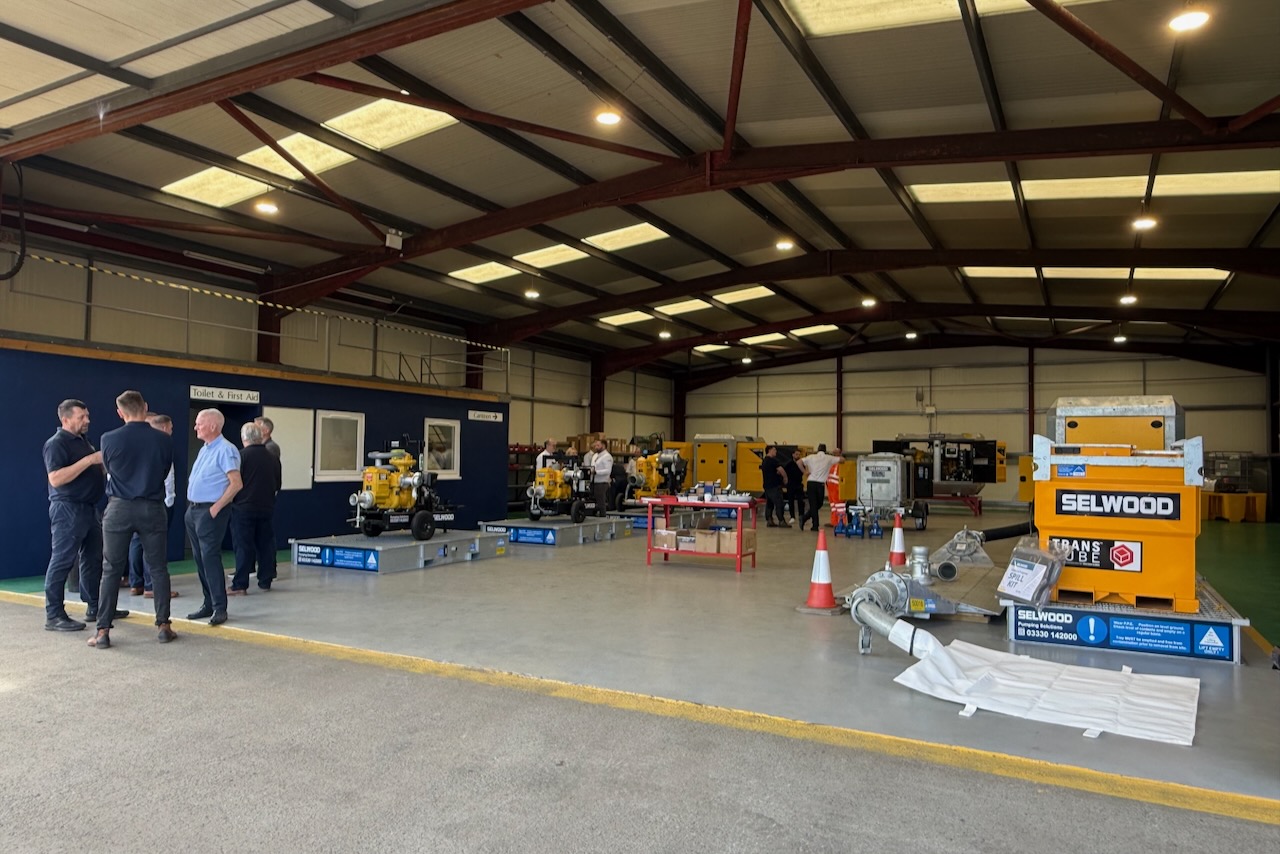
Selwood has opened a new Inverness branch to serve the Highlands and north of Scotland, expanding coverage beyond its existing Aberdeen, Edinburgh and Glasgow locations. The facility provides rapid access to Selwood’s pump and storage rental fleet and Siltbuster modular waste water treatment units for water utilities, infrastructure works and industrial clients. Closer deployment of equipment and engineering teams should shorten response times for overpumping, temporary bypass, dewatering and treatment on remote pipeline, reservoir and road schemes.
Sir Robert McAlpine has reported a 33% cut in carbon emissions over its 2020–2025 strategy period, with 98% of waste diverted from landfill, 92% of electricity on renewable tariffs and 45% of concrete specified as lower embodied carbon mixes against a 30% target. The contractor baselined Scope 1–3 emissions, introduced project carbon benchmarking, rolled out Carbon Literacy training and became the first Tier 1 to secure PAS 2080 certification across its entire business. At 1 Broadgate, a large-scale materials passport enabled tracking and reuse of 27% of materials, diverting over 13,000 tonnes of non-hazardous demolition waste from landfill.
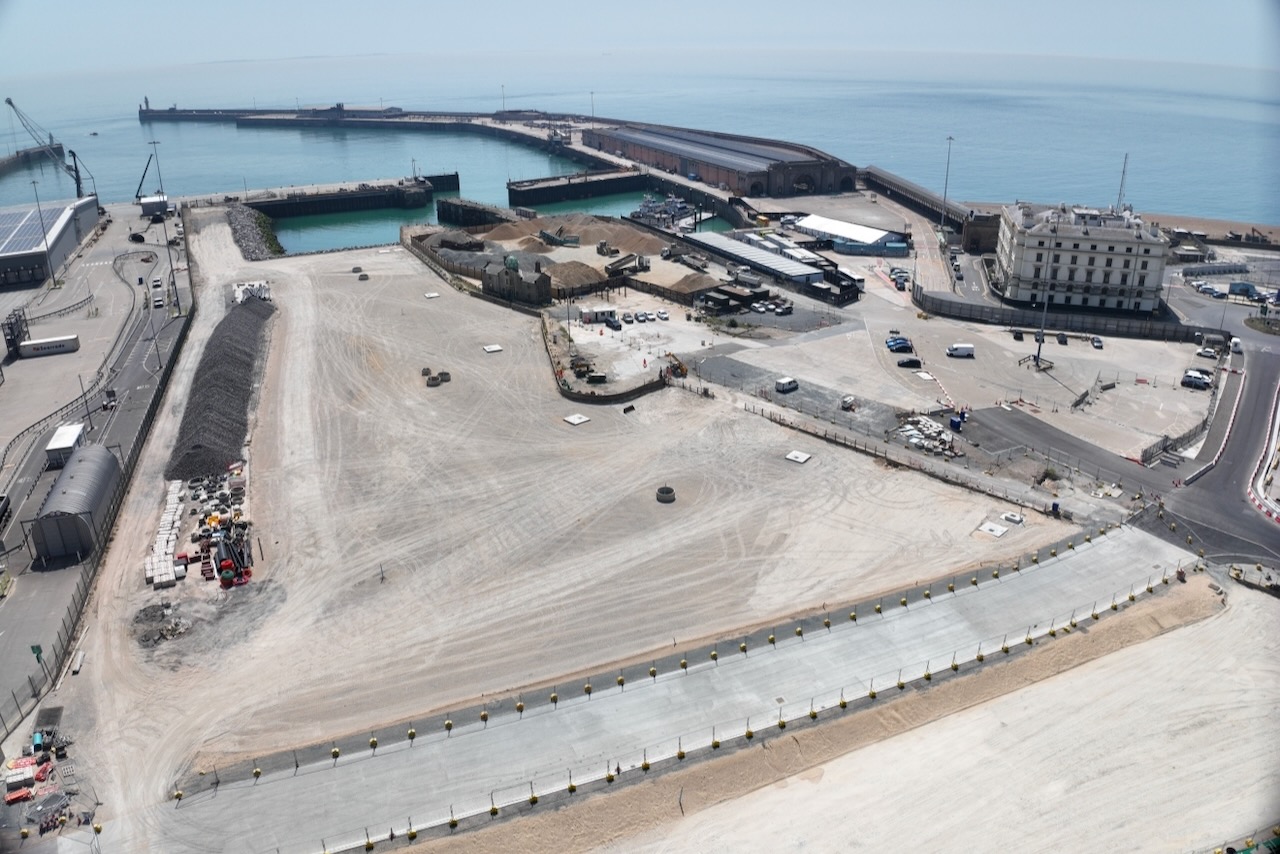
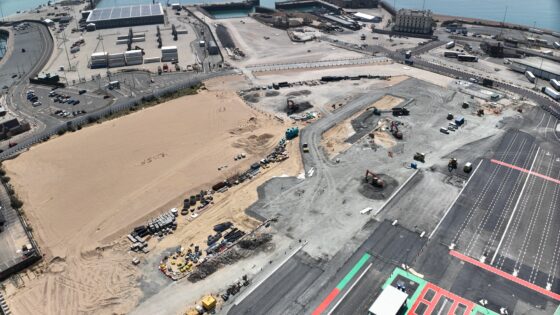
A McLaughlin & Harvey–Boskalis Westminster joint venture has completed the £53m Dover Western Docks Revival Stage 3B, reclaiming 10 hectares of new port land within the Wick Channel, Tidal Basin marinas and Granville Dock. The works placed nearly 900,000m³ of infill to raise the dock bed to about 0.5m below existing quay levels, following demolition of structures including the North Pier and Ferry Jetty and removal of all marina pontoons and gangways. New utilities, internal roads, substantial drainage and a complex stormwater pumping station were installed to service the reclaimed platform.
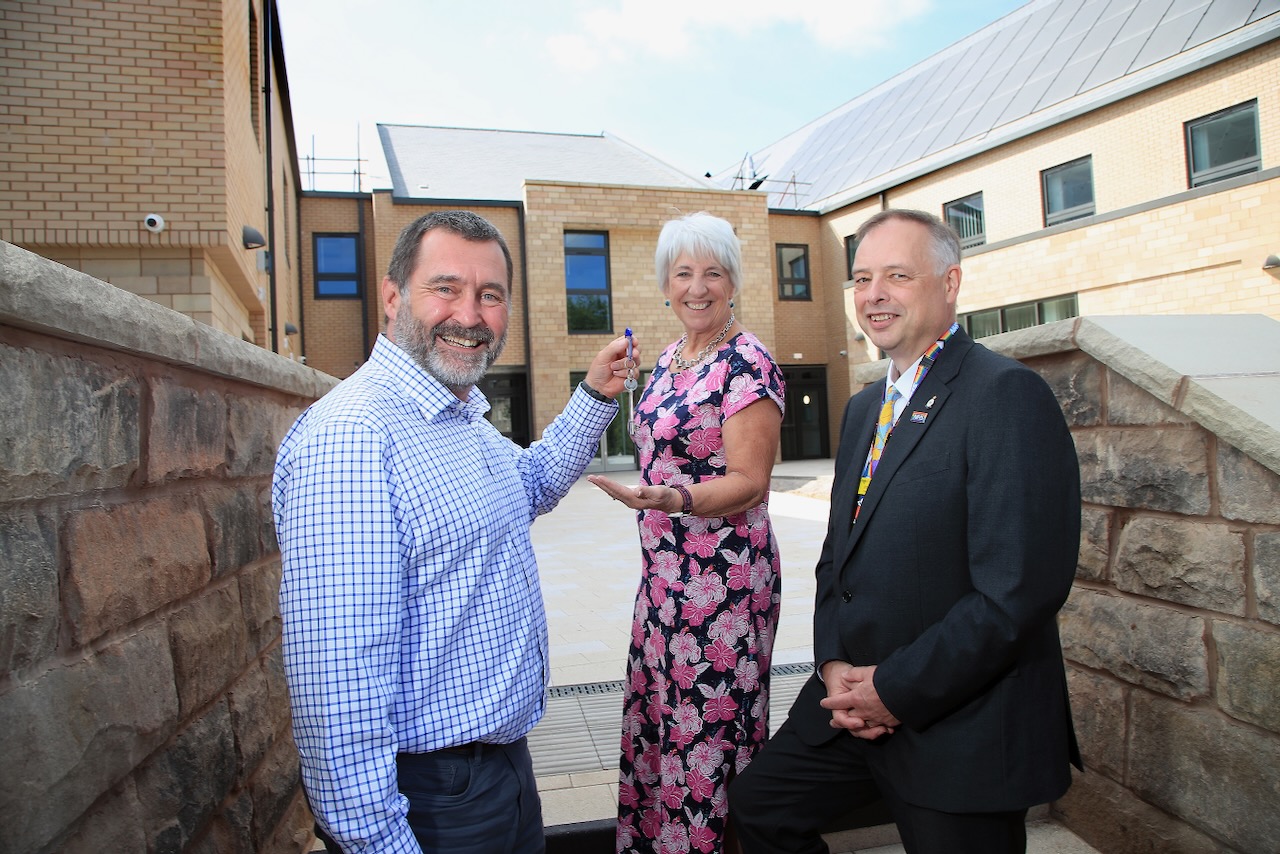
Henry Brothers has completed a £15.2m community health centre in Belper for Derbyshire Community Health Services NHS Foundation Trust, replacing the former Belper Clinic on the Babington Hospital site and consolidating all existing outpatient and clinical services. The Race Cottam Associates-designed hub provides 15 consulting rooms, six treatment rooms and a health education group room, supporting services from community nursing and phlebotomy to physiotherapy and podiatry. Built to BREEAM standards, it incorporates photovoltaic roof panels, certified timber and reuse of locally sourced recycled materials from demolished buildings.
Network Rail will renew overhead line equipment and associated structures on the Weaver line between Bethnal Green and Cheshunt/Enfield Town over two consecutive September weekends, targeting ageing electrification assets on this intensively used commuter corridor. Works are expected to focus on replacing life-expired masts, wiring and structural components to improve electrical clearances and resilience under higher service frequencies. Engineers should anticipate temporary possession constraints, altered access arrangements and close coordination with London Overground operations during the short blockade windows.
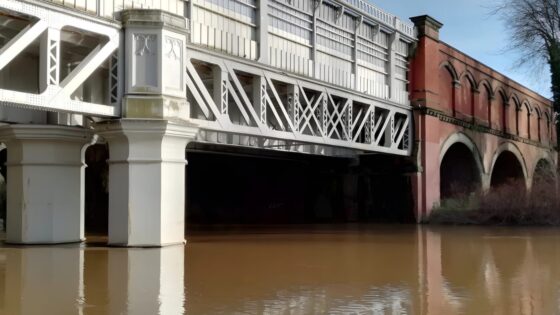
Computational fluid dynamics (CFD) modelling is being rolled out across Network Rail’s bridge portfolio to refine scour risk assessments and cut unnecessary physical interventions. By simulating site-specific hydraulics around piers and abutments under multiple flood scenarios, engineers can better define foundation exposure, armour stone extents and required toe depths instead of relying on conservative empirical envelopes. The approach is enabling more targeted scour protection schemes, reducing over-design and construction spend while supporting compliance with flood resilience and asset management requirements.
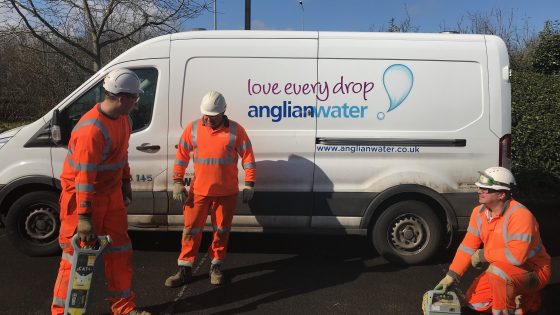
Anglian Water has renewed 145km of potable water mains in the first year of its £348M AMP8 programme, its largest mains renewal effort in more than two decades. The work targets ageing distribution mains across the East of England, where historic leakage rates and ground movement in shrink–swell clays have driven frequent bursts. Delivery teams are expected to rely heavily on sliplining and pipe bursting to minimise open-cut excavation, with implications for trench support design, service crossings and reinstatement in constrained urban corridors.
Engineers on the latest Engineers Collective podcast debate whether the UK’s ageing infrastructure—much of it Victorian-era water, sewer and rail assets—can withstand more frequent extreme rainfall and heatwaves driven by climate change. Discussion centres on retrofitting existing embankments, culverts and combined sewers for higher design storms, versus wholesale replacement, and how to prioritise limited capital under AMP8 and similar funding cycles. Speakers also examine the implications for asset condition monitoring, geotechnical resilience of slopes and earthworks, and updating design standards beyond historic return-period assumptions.
VolkerRail has completed a 22-day engineering blockade on the main route into central London, allowing Charing Cross and Waterloo East stations to reopen to passenger services. The intensive possession enabled track, signalling and railway systems works to be carried out without live traffic, compressing what would normally be multiple weekend closures into a single continuous window. The programme’s completion restores a key commuter corridor, with asset condition and reliability improvements likely to reduce future unplanned possessions and maintenance interventions.
Thames Water is deploying AI analytics, satellite imagery and more than 75,000 acoustic loggers across its buried distribution network to pinpoint leaks as prolonged heat and low rainfall increase mains failure risk. The system combines continuous acoustic monitoring on cast iron and plastic pipes with remote sensing of soil moisture anomalies to prioritise repair crews and reduce non‑revenue water. For civil and water engineers, this signals wider adoption of large‑scale sensor arrays and data fusion to manage ageing pressurised pipework under climate‑driven stress.
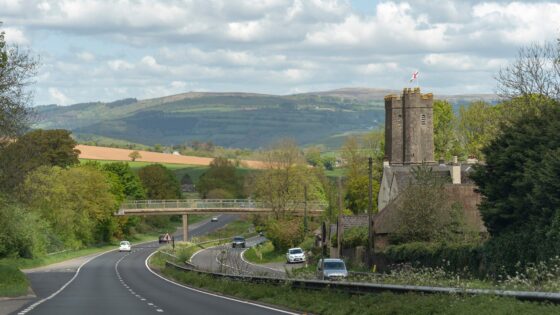
More than £10M of National Highways works will start next month on the A38 in Devon, targeting a series of upgrades over the coming months on this key dual carriageway between Exeter and Plymouth. Although detailed scope is not yet published, schemes of this scale on the A38 typically include resurfacing high‑skid‑risk sections, renewing safety barriers and drainage, and strengthening structures at junctions and overbridges. Contractors and designers should expect night-time possessions, lane closures and tight work windows to maintain strategic traffic flows.
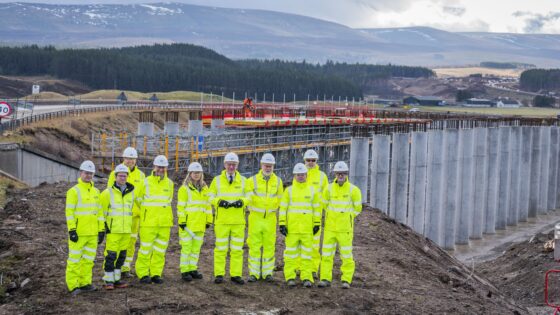
Value engineering on the A9 Tomatin to Moy dualling scheme between Inverness and Perth has driven major redesigns to cut cost, embodied carbon and programme length while maintaining DMRB standards. Key changes reportedly include rationalising structures on the 9.6km section, optimising earthworks and rock cut profiles, and revising drainage and pavement build-ups to reduce imported aggregates and asphalt tonnage. For geotechnical and civil teams, the work shows how early contractor involvement and iterative optioneering can materially reshape alignment, structures strategy and material quantities on trunk road upgrades.
A joint venture between McLaughlin & Harvey and Boskalis Westminster has completed the £53M Dover Western Docks Revival (DWDR) Stage 3B works at the Port of Dover, finalising the latest phase of the port’s western expansion. The marine-focused package follows earlier DWDR stages that created new berths and quay walls to handle larger Ro-Ro and cargo vessels, reshaping the harbour basin and associated land reclamation. Completion signals full handover of upgraded dock infrastructure, with implications for future quay strengthening, pavement design and heavy freight yard layouts as traffic volumes grow.
Polish billionaire Michał Sołowow’s group SGE is proposing a financing structure to deploy 14 small modular reactors in the UK, signalling a privately led route to expand nuclear capacity beyond Hinkley Point C and Sizewell C. The plan centres on multiple identical SMR units, which could simplify civil works, standardise nuclear island design and compress construction schedules compared with bespoke gigawatt-scale plants. For UK infrastructure contractors and geotechnical specialists, a fleet build-out of 14 sites or units would mean repeatable foundation, seismic qualification and cooling-water interface designs, with bankability hinging on predictable capex and delivery risk.