Sizewell B 20-year life extension: design and risk notes for civil engineers
Reviewed by Tom Sullivan
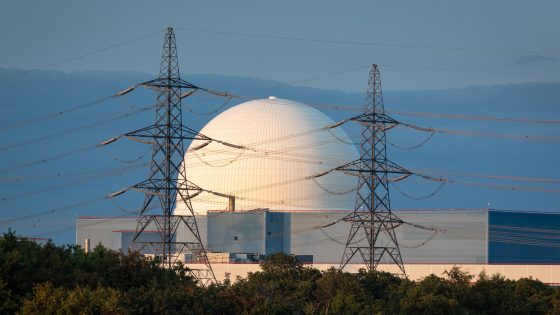
First reported on New Civil Engineer
30 Second Briefing
Sizewell B nuclear power station in Suffolk has secured regulatory approval to extend operations by 20 years to 2055, maintaining its single 1.2GW pressurised water reactor as a key baseload asset on the UK grid. The government says the life extension will support thousands of jobs in operations, maintenance and outage contracting, while providing long-term price certainty by locking in low‑carbon generation with minimal new fuel-cycle investment. For civil and structural engineers, the decision implies continued inspection, life‑extension works and potential upgrades to primary containment, seismic resilience and cooling water systems.
Technical Brief
- Long-term operation will require enhanced inspection regimes for civil structures, containment liner and buried nuclear island services.
- Life-extension typically drives targeted replacement of safety-class mechanical components rather than wholesale civil reconstruction.
- Extended operation horizon increases importance of through-life monitoring of concrete degradation, prestress losses and tendon corrosion.
- Seismic and external hazards reassessment is likely, reflecting updated probabilistic hazard data and post-Fukushima regulatory expectations.
- Cooling water intake and outfall structures face prolonged marine exposure, demanding robust inspection, cathodic protection and scour management.
Our Take
For operators and contractors, a 20‑year extension at an existing nuclear asset typically shifts capital planning from greenfield build to large‑scale mid‑life refurbishment and safety upgrades, which can be more financeable and less planning‑risk‑intensive than new nuclear projects in our recent Infrastructure coverage.
With this decision tagged under Safety and Sustainability, Sizewell B’s extended horizon to 2055 aligns with other long‑dated UK infrastructure assets in our database where regulators are trading higher upfront inspection and upgrade requirements for longer operating lives, rather than pushing for immediate replacement builds.
Prepared by collating external sources, AI-assisted tools, and Geomechanics.io’s proprietary mining database, then reviewed for technical accuracy & edited by our geotechnical team.
Related Articles


Related Industries & Products
Construction
Quality control software for construction companies with material testing, batch tracking, and compliance management.
Mining
Geotechnical software solutions for mining operations including CMRR analysis, hydrogeological testing, and data management.
QCDB-io
Comprehensive quality control database for manufacturing, tunnelling, and civil construction with UCS testing, PSD analysis, and grout mix design management.