DESNZ greenlights One Earth Solar Farm: design and ground risks for engineers
Reviewed by Joe Ashwell
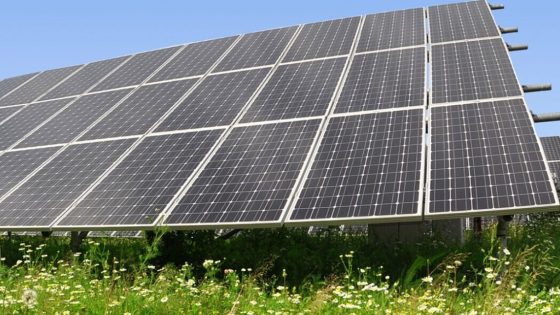
First reported on New Civil Engineer
30 Second Briefing
Development consent has been granted by the Department for Energy Security and Net Zero for the One Earth Solar Farm, a nationally significant project spanning the Lincolnshire–Nottinghamshire area. The Development Consent Order approval clears the way for detailed design of grid connection infrastructure, access roads and foundations for large-scale photovoltaic arrays, with associated drainage and earthworks. Civil and geotechnical teams will now move towards discharge of requirements, ground investigation and construction planning under the nationally significant infrastructure project regime.
Technical Brief
- Grid connection design must now align with transmission interface standards and regional capacity constraints.
- Access road layouts will need to accommodate abnormal loads for PV modules, inverters and substation transformers.
- Foundation solutions for PV tables will be selected following targeted ground investigation under the consent framework.
- Surface water management and drainage will be designed to satisfy flood risk and runoff controls.
- Earthworks design must manage settlement and bearing for long PV strings over variable agricultural ground conditions.
Our Take
DESNZ’s backing for the One Earth Solar Farm in Lincolnshire–Nottinghamshire sits alongside its parallel work on gigawatt‑scale nuclear at Wylfa and new gas storage/FSRU options, signalling a UK energy security strategy that deliberately mixes large‑scale renewables with firm and flexible capacity.
In our infrastructure database, DESNZ appears frequently across 922 Infrastructure stories not just as a policymaker but as a de facto programme sponsor, which suggests that planning and consenting for assets like One Earth Solar Farm will be tightly coupled to evolving central government resilience objectives.
The same department is piloting non‑pipeline CO₂ transport and supporting hydrogen‑fuelled asphalt production, so solar build‑out in regions like Lincolnshire and Nottinghamshire is likely to be planned with an eye to future integration with CCUS and hydrogen supply chains rather than as stand‑alone generation islands.
Prepared by collating external sources, AI-assisted tools, and Geomechanics.io’s proprietary mining database, then reviewed for technical accuracy & edited by our geotechnical team.


