Barhale picked for Stockport water quality project: shaft design and AMP8 lessons for engineers
Reviewed by Joe Ashwell
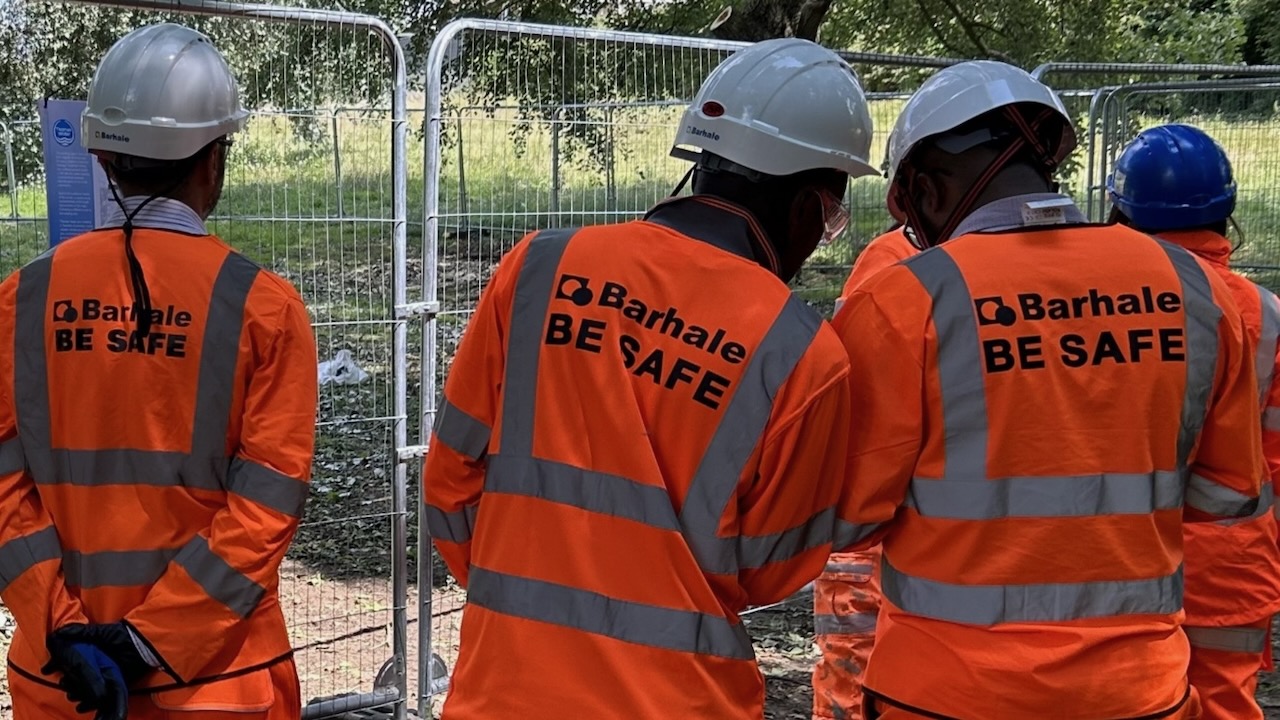
First reported on The Construction Index
30 Second Briefing
United Utilities has appointed Barhale to build a 1,000m³ detention shaft tank at Bramhall Precinct car park in Stockport, diverting an 825mm diameter sewer at 4m depth into a 12.5m diameter segmented caisson sunk to 13.3m invert to cut storm overflow discharges to Micker Brook. The high water table demands careful temporary works and groundwater control, with Barhale also delivering full MEICA fit-out, dual rising mains and new telemetry and power supplies. The scheme, due to complete in summer 2027, supports United Utilities’ AMP8 goal of a 60% reduction in storm overflow spills by 2030.
Technical Brief
- Detention shaft is located within an operational town-centre car park, driving stringent public interface and exclusion controls.
- High groundwater in the Bramhall area necessitates robust temporary works design to prevent flotation, basal heave and inflow.
- Interception of the Briarlands CSO requires live sewer working protocols, confined space procedures and odour/gas monitoring.
- MEICA scope (pumps, kiosks, panels, telemetry, power) demands coordinated electrical isolation, earthing and ATEX-compliant equipment selection.
- Dual rising main connection upstream of the CSO introduces surge, overpressure and cross-contamination risks needing hydraulic and integrity checks.
- Targeting spills rarer than one-in-ten-year events links hydraulic performance directly to downstream flood and pollution risk management.
Our Take
The 12.5m caisson and 13.3m invert depth at Micker Brook put this scheme at the larger, more complex end of current UK CSO upgrades in our database, implying significant temporary works and interface risk around Bramhall Precinct car park and tight urban constraints.
Taken with United Utilities’ natural flood management work at the Stubbins Estate and peatland restoration across its catchments, this Stockport scheme shows the operator pairing grey infrastructure on the River Mersey system with upstream nature-based measures, which is likely to be attractive to regulators scrutinising whole-catchment spill performance before 2030.
Prepared by collating external sources, AI-assisted tools, and Geomechanics.io’s proprietary mining database, then reviewed for technical accuracy & edited by our geotechnical team.
Related Articles


Related Industries & Products
Mining
Geotechnical software solutions for mining operations including CMRR analysis, hydrogeological testing, and data management.
Construction
Quality control software for construction companies with material testing, batch tracking, and compliance management.
CMRR-io
Streamline coal mine roof stability assessments with our cloud-based CMRR software featuring automated calculations, multi-scenario analysis, and collaborative workflows.
HYDROGEO-io
Comprehensive hydrogeological testing platform for managing, analysing, and reporting on packer tests, lugeon values, and hydraulic conductivity assessments.
GEODB-io
Centralised geotechnical data management solution for storing, accessing, and analysing all your site investigation and material testing data.