Geomechanics.io

  • Free Tools
Sign UpLog In

Geomechanics.io

Geomechanics, Streamlined.

© 2026 Geomechanics.io. All rights reserved.

Geomechanics.io

CMRR-ioGEODB-ioHYDROGEO-ioQCDB-ioFree Tools & CalculatorsBlogLatest Industry News

Industries

MiningConstructionTunnelling

Company

Terms of UsePrivacy PolicyLinkedIn
    AllGeotechnicalMiningInfrastructureMaterialsHazardsEnvironmentalSoftwarePolicy
    Projects
    Research
    Sustainability

    University of Arizona mine waste project: key processing insights for engineers

    January 9, 2026|

    Reviewed by Tom Sullivan

    University of Arizona mine waste project: key processing insights for engineers

    First reported on MINING.com

    30 Second Briefing

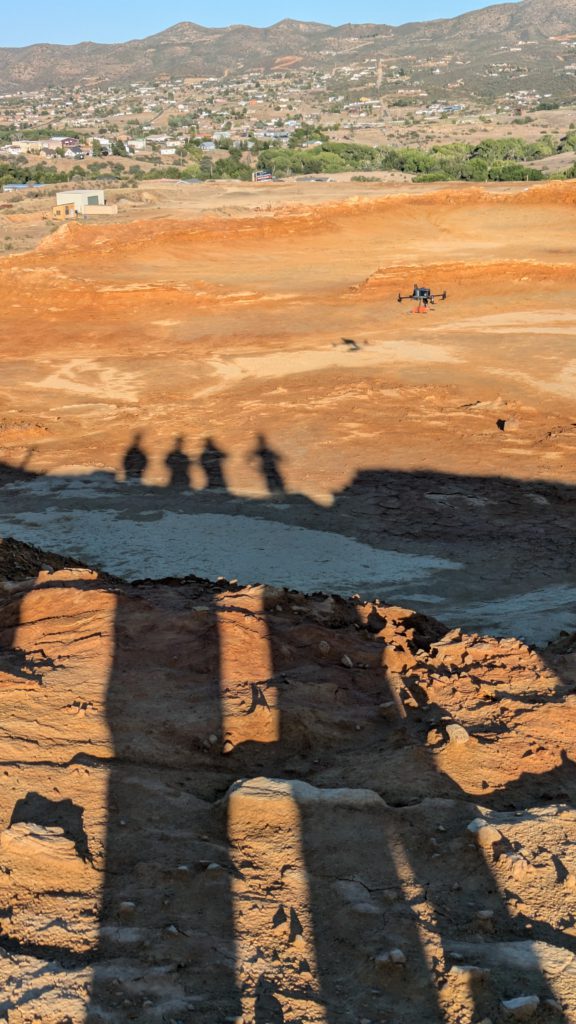
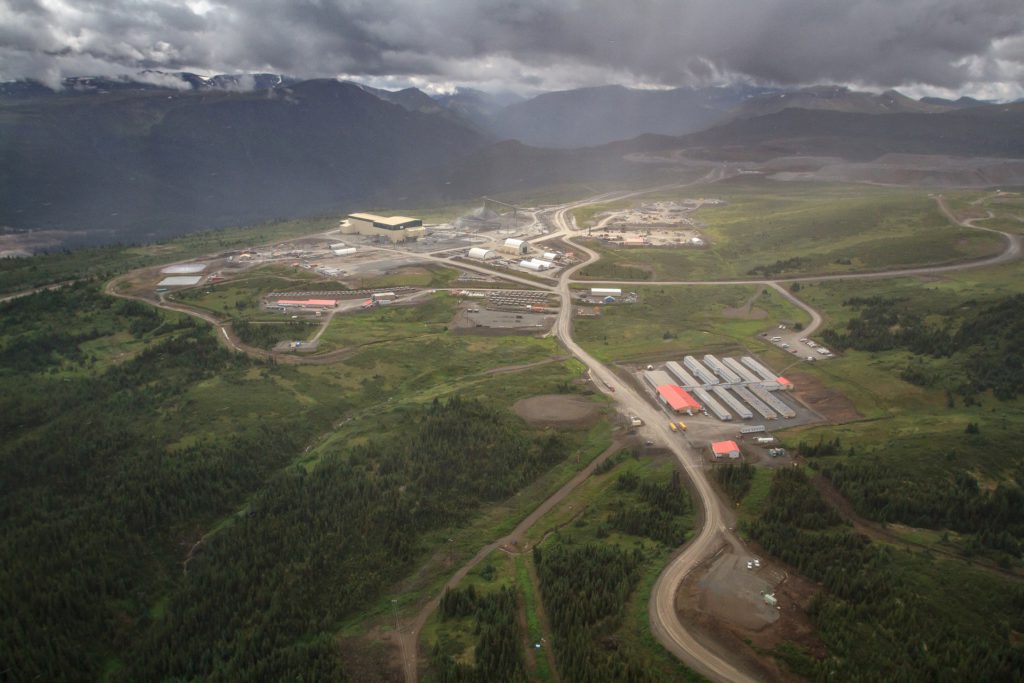
    A $3.6 million Arbor-funded University of Arizona Tailings Center project, led by mining engineer Dr Isabel Barton, is evaluating whether 17.5 billion tons of historic copper tailings in Arizona—growing by ~100 million tonnes per year—can be reprocessed to recover critical minerals and reduce environmental risk. The team is combining statewide and UAV-based remote sensing, industry tailings datasets, drilling and surface sampling, mineralogical characterisation and techno-economic analysis using magnetic separation and basic leaching. Early work has identified unexpected mineral occurrences, including arsenic, zinc and possibly tungsten, which could justify flowsheet changes to keep these elements out of future tailings.

    Technical Brief

    • Statewide satellite remote sensing is combined with UAV-based high-resolution mapping of individual tailings facilities.
    • Historical lack of 20th‑century tailings characterisation means many facilities are effectively “unknown ore bodies” with active geochemical alteration.

    Our Take

    The US$3.6 million Arbor-funded work on tailings in Arizona sits at the low end of critical-minerals funding in our database compared with the multi‑billion‑dollar “One Big Beautiful Bill”, suggesting this is being treated as a strategic technology pilot rather than a volume play.

    With an estimated 17.5 billion tons of mine waste in play and a 100 million tonne per year accumulation rate, even modest recovery factors for copper, rare earths or gallium-bearing phases could materially extend the life of existing US operations without new greenfield disturbance.

    In our coverage of US critical minerals, most capital has so far flowed to new lithium, nickel and rare earth projects; this University of Arizona tailings work signals that policymakers and funders are beginning to treat legacy waste as a parallel domestic resource base rather than just a closure liability.

    Geotechnical Software for Modern Teams

    Centralise site data, logs, and lab results with GEODB-io, CMRR-io, and HYDROGEO-io.

    No credit card required.

    • Save and export unlimited calculations
    • Advanced data visualisation
    • Generate professional PDF reports
    • Cloud storage for all your projects

    Prepared by collating external sources, AI-assisted tools, and Geomechanics.io’s proprietary mining database, then reviewed for technical accuracy & edited by our geotechnical team.

    Related Articles

    Top 50 mining companies add $250bn in 2026: capital and project signals for engineers
    Mining
    about 11 hours ago

    Top 50 mining companies add $250bn in 2026: capital and project signals for engineers

    Global mining majors added $250 billion in value in early 2026, lifting the MINING.COM Top 50 to a combined $2.41 trillion despite the US–Iran war and volatile gold at about $4,700/oz and silver above $70/oz, both off record spikes. BHP briefly exceeded a $200 billion market capitalisation, copper contributed $7.95 billion to its half‑year operating earnings, and six miners – including Agnico Eagle, Zijin Mining, Southern Copper and Newmont – now sit in the $100‑billion club. At the other end, Amman Minerals fell 27% on Indonesian smelter delays and Ivanhoe Mines cut Kamoa‑Kakula 2026 copper guidance to 290,000–330,000 tonnes, dropping it below the $18 billion Top 50 cut‑off.

    pH7 Technologies’ closed-loop PGM and chalcopyrite leaching: key notes for mine planners
    Mining
    2 days ago

    pH7 Technologies’ closed-loop PGM and chalcopyrite leaching: key notes for mine planners

    Canadian processor pH7 Technologies is expanding its Vancouver facility, backed by up to C$4 million from NRC IRAP, to scale its organo-electrochemical platform that recovers platinum, palladium and rhodium from secondary materials without toxic reagents or tailings wastewater. The commercial plant already processes spent catalytic converters, producing 30,000–40,000 oz of platinum-equivalent PGMs per year under a tolling and offtake model involving partners such as Mitsubishi. pH7 is now piloting electrochemically generated oxidants to heap leach chalcopyrite and other sulphide ores without cyanide, targeting on-site mine deployment within 1–2 years across South America, Africa and Australia.

    Dellner Bubenzer mining brakes: integrated drivetrain design notes for engineers
    Mining
    2 days ago

    Dellner Bubenzer mining brakes: integrated drivetrain design notes for engineers

    Dellner Bubenzer is supplying a wide range of industrial brakes and couplings for mining hoists, slewing drives and belt conveyors, developed in long-term collaboration with OEMs. The company focuses on both service and emergency braking solutions tailored to heavy-duty mining duty cycles and harsh environments, addressing controlled hoisting, precise slewing and high-tension conveyor stopping. For engineers, the key point is an integrated approach to drivetrain and braking design, rather than bolt-on safety systems, across multiple critical mining applications.

    Related Industries & Products

    Mining

    Geotechnical software solutions for mining operations including CMRR analysis, hydrogeological testing, and data management.

    CMRR-io

    Streamline coal mine roof stability assessments with our cloud-based CMRR software featuring automated calculations, multi-scenario analysis, and collaborative workflows.

    HYDROGEO-io

    Comprehensive hydrogeological testing platform for managing, analysing, and reporting on packer tests, lugeon values, and hydraulic conductivity assessments.

    GEODB-io

    Centralised geotechnical data management solution for storing, accessing, and analysing all your site investigation and material testing data.