Triton Uranium’s Saskatchewan Atlas project: schedule and PEA lens for mine planners
Reviewed by Tom Sullivan
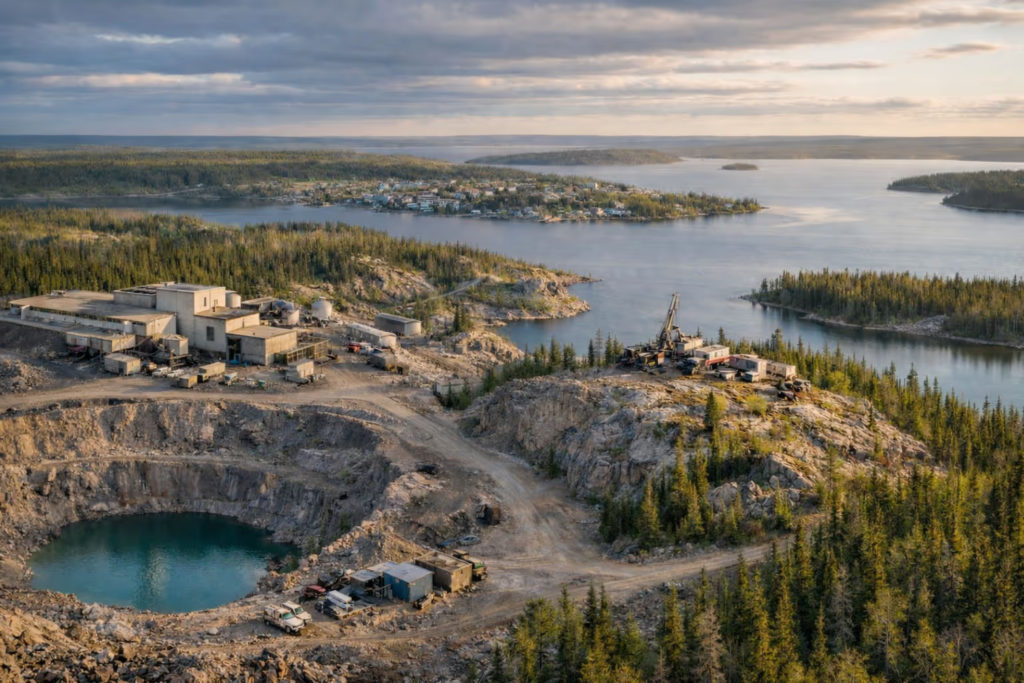
First reported on MINING.com
30 Second Briefing
Triton Uranium has started on-site development at its Atlas project in Uranium City, Saskatchewan, aiming to fast-track a near-surface, infrastructure-ready open-pit operation and is weighing a 2026 US stock exchange listing via SPAC, backed by nearly US$16 million in private funding. A 10,000-metre drill programme beginning June 2026 will test four priority zones, feeding resource estimates and a preliminary economic assessment later that year. The strategy targets compressed permitting and construction timelines versus typical decade-long uranium developments, leveraging historic workings and modern extraction and processing technologies.
Technical Brief
- Development has moved from planning to active on-site works at the Atlas uranium project in Uranium City.
- Triton has raised nearly US$16 million in private funding specifically to underwrite pre-listing exploration.
- A June 2026, 10,000 m drilling campaign will test four priority zones defined from historic data.
- Drill results are scheduled to feed both a maiden resource estimate and a preliminary economic assessment in late 2026.
- Near-surface mineralisation and existing regional infrastructure are being used to avoid greenfield-style access and services construction.
- Historic mining in the Uranium City district is being leveraged to target remaining mineralised zones with modern extraction methods.
- Triton’s management is evaluating a 2026 US stock exchange listing via SPAC to fund subsequent development phases.
- Policy focus on North American critical mineral security is opening potential equity partnerships with US or Canadian public entities.
Our Take
Uranium projects in Saskatchewan and the wider Uranium City belt appear relatively under-represented in our recent uranium coverage compared with assets in the US and Australia, so Triton Uranium’s Atlas project could attract disproportionate attention from North American utilities looking for jurisdictionally diverse supply.
Targeting four priority zones at Atlas during 2026 suggests Triton Uranium is trying to rapidly define a resource envelope, a pattern seen in other uranium juniors in our database that later pursued US listings or strategic offtake talks once initial drilling grids were established.
With iron ore also flagged in the article facts and peers like BHP and Fortescue appearing in the same coverage set, investors may benchmark Triton Uranium’s valuation and capital discipline against larger diversified miners, even though Atlas is a pure-play uranium project in Canada rather than a bulk commodity asset.
Prepared by collating external sources, AI-assisted tools, and Geomechanics.io’s proprietary mining database, then reviewed for technical accuracy & edited by our geotechnical team.
Related Articles


Related Industries & Products
Mining
Geotechnical software solutions for mining operations including CMRR analysis, hydrogeological testing, and data management.
Construction
Quality control software for construction companies with material testing, batch tracking, and compliance management.
CMRR-io
Streamline coal mine roof stability assessments with our cloud-based CMRR software featuring automated calculations, multi-scenario analysis, and collaborative workflows.
HYDROGEO-io
Comprehensive hydrogeological testing platform for managing, analysing, and reporting on packer tests, lugeon values, and hydraulic conductivity assessments.
GEODB-io
Centralised geotechnical data management solution for storing, accessing, and analysing all your site investigation and material testing data.