Thailand crane collapse on passenger train: engineering lessons for rail projects
Reviewed by Tom Sullivan
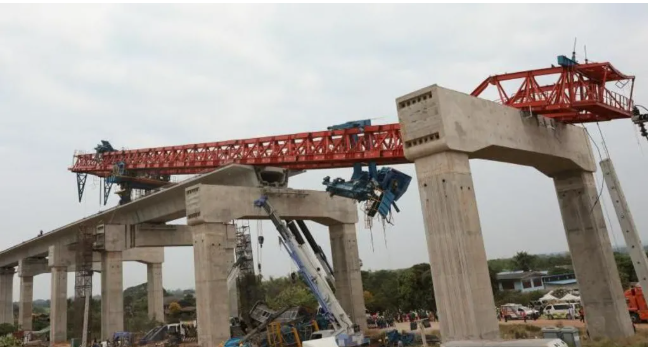
First reported on Geoengineer.org – News
30 Second Briefing
A construction crane collapsed onto a moving passenger train in northeastern Thailand on Wednesday morning, killing at least 32 people and injuring more than 60. The crane, operating on an adjacent construction site, failed and toppled across active railway tracks, striking multiple carriages at speed and causing extensive structural damage and derailment. Investigators are expected to focus on crane foundation design, ground conditions near the rail corridor, lift planning, exclusion zones and compliance with Thai standards for plant operating beside live transport infrastructure.
Technical Brief
- Failure mechanism under investigation includes possible overturning due to outrigger support loss or structural boom failure under load.
- Rail engineers are inspecting track geometry, ballast disturbance and subgrade condition where carriages derailed and were impacted.
- Monitoring and remediation considerations include temporary speed restrictions, enhanced visual inspections and possible installation of physical plant–track barriers.
- For similar construction interfaces with rail, regulators are likely to tighten exclusion zones and independent lift-plan approvals.
Our Take
Among the 31 Hazards stories in our coverage, very few involve such a high single-incident death toll as this Thailand event, which places it at the extreme end of recent construction and rail-related failures.
With Thailand appearing only sporadically in our Hazards database, a 32-fatality crane–rail interaction will likely sharpen scrutiny of temporary works and lifting operations near live transport corridors in Southeast Asian project planning.
Across the 1204 tag-matched Projects/Failure/Safety pieces, crane and lifting collapses often trigger rapid revisions to contractor selection, lift planning, and exclusion-zone design, so operators working in Thailand can expect tighter oversight and more conservative risk allowances on future works adjacent to rail lines.
Prepared by collating external sources, AI-assisted tools, and Geomechanics.io’s proprietary mining database, then reviewed for technical accuracy & edited by our geotechnical team.
Related Articles

Related Industries & Products
Construction
Quality control software for construction companies with material testing, batch tracking, and compliance management.
Mining
Geotechnical software solutions for mining operations including CMRR analysis, hydrogeological testing, and data management.
QCDB-io
Comprehensive quality control database for manufacturing, tunnelling, and civil construction with UCS testing, PSD analysis, and grout mix design management.