Scottish plumbers scale back on apprentices: skills and safety risks for projects
Reviewed by Tom Sullivan
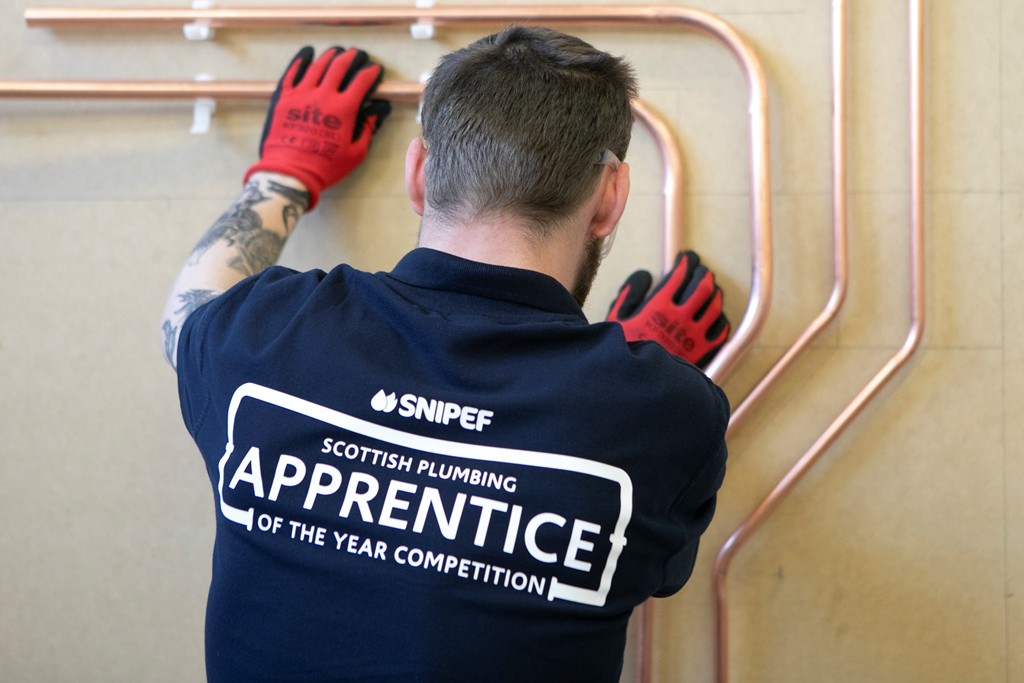
First reported on The Construction Index
30 Second Briefing
One in three Scottish plumbing firms plans to stop taking apprentices over the next three years, with a SNIPEF survey citing limited funding support (67%), high wage costs (65%) and supervision costs (47%) as key barriers. SNIPEF’s Apprenticeships Under Pressure report warns this could leave Scotland short of plumbing and heating skills needed for public safety and building decarbonisation work. The move contrasts with England’s new £725m package for 50,000 extra apprenticeships and removal of the 5% co-investment for SMEs training under‑25s.
Technical Brief
- SNIPEF’s Apprenticeships Under Pressure report is based on employer feedback across Scotland’s plumbing and heating sector.
- Employers report college contribution rates in Scotland have been frozen for almost a decade, eroding real support.
- More than three quarters of surveyed firms (77%) rate current Scottish Government apprenticeship support as poor or inadequate.
- Almost all respondents (93%) identify increased public funding as the single change needed to make recruitment viable.
- A majority (62%) want apprenticeship costs split 50:50 between employers and government, mirroring previous funding practice.
- In England, technical apprenticeship funding is already in some cases more than double Scotland’s contribution levels.
Our Take
With 77% of Scottish & Northern Ireland Plumbing Employers’ Federation members rating Scottish government support as poor or inadequate, the risk is a medium‑term skills gap that could constrain delivery of building safety upgrades and low‑carbon retrofit work flagged in other Safety and Sustainability policy pieces in our coverage.
The contrast between Scotland’s stance and the UK government’s £725 million apprenticeship reform package in England signals that plumbing and M&E contractors operating across the United Kingdom may increasingly route apprentice training and early‑career recruitment through English operations where the 5% co‑investment cost has been removed.
Given that 65% of employers cite high wage costs and 47% cite supervision costs as barriers, SNIPEF‑aligned firms may pivot towards shorter upskilling courses for existing staff rather than full apprenticeships, which can affect long‑term competency pipelines for complex building services projects in Scotland.
Prepared by collating external sources, AI-assisted tools, and Geomechanics.io’s proprietary mining database, then reviewed for technical accuracy & edited by our geotechnical team.
Related Articles


Related Industries & Products
Mining
Geotechnical software solutions for mining operations including CMRR analysis, hydrogeological testing, and data management.
Construction
Quality control software for construction companies with material testing, batch tracking, and compliance management.
CMRR-io
Streamline coal mine roof stability assessments with our cloud-based CMRR software featuring automated calculations, multi-scenario analysis, and collaborative workflows.
HYDROGEO-io
Comprehensive hydrogeological testing platform for managing, analysing, and reporting on packer tests, lugeon values, and hydraulic conductivity assessments.
GEODB-io
Centralised geotechnical data management solution for storing, accessing, and analysing all your site investigation and material testing data.