Geomechanics.io

  • Free Tools
Sign UpLog In
AllGeotechnicalMiningInfrastructureMaterialsHazardsEnvironmentalSoftwarePolicy

Geomechanics.io

Geomechanics, Simplified.

© 2025 Geomechanics.io. All rights reserved.

Geomechanics.io

CMRR-ioGEODB-ioHYDROGEO-ioQCDB-ioFree Tools & CalculatorsBlogLatest Industry News

Industries

MiningConstructionTunnelling

Company

Terms of UsePrivacy PolicyLinkedIn
    Projects
    Contract Award

    Brazil delays critical minerals areas auction: project pipeline risks for mine planners

    December 18, 2025|

    Reviewed by Joe Ashwell

    Brazil delays critical minerals areas auction: project pipeline risks for mine planners

    First reported on MINING.com

    30 Second Briefing

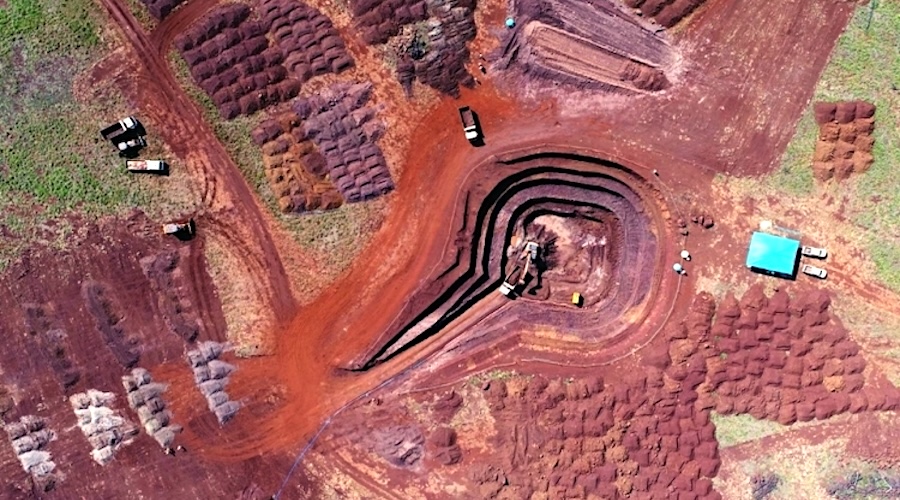
    Brazil has indefinitely postponed a planned March 2026 auction of mineral exploration areas rich in critical minerals after the National Mining Agency (ANM) said it lacks funds to cover embedded auction costs. The tender was to be the first mining round run jointly with B3, the São Paulo stock exchange operator, using a bidding model already applied in power and oil and gas, and would have addressed a backlog of roughly 100,000 areas awaiting auction. The delay jars with Brazil’s push to market its 94% share of global niobium reserves and significant graphite, nickel, lithium and rare earth potential.

    Technical Brief

    • Brazil’s rare earth oxide output has fallen from 2,200 t in 2016 to ~20 t in 2024.
    • Analysts link the rare earth decline to China’s dominant production capacity and associated price suppression.
    • Brazil holds ~22% of global graphite, 16% of nickel and 17% of rare earth reserves.
    • Around 100,000 mineral areas remain pending auction at ANM, according to mining lawyer Adriano Drummond Trindade.
    • Previous mining auctions run by the Geological Survey of Brazil and ANM were criticised for delays and technical issues linked to staff shortages.

    Our Take

    Brazil’s very high reserve shares in niobium, graphite, nickel and rare earth elements, contrasted with the tiny 20 t rare-earth oxide output in 2024, signal that permitting and auction bottlenecks rather than geology are the binding constraint for critical minerals project pipelines in Latin America.

    In our Policy coverage, Brazil’s critical minerals stance now sits alongside work on lithium governance models in Chile, Argentina, Brazil, Bolivia and Mexico (Jeonbuk National University study, December 2025), suggesting investors will increasingly benchmark Brazilian auction and licensing stability against more state-led frameworks in the Southern Cone.

    For operators like Horizonte Minerals and Zonda Metals, delays to ANM/B3 auction processes effectively extend pre-development timelines toward at least March 2026, which can complicate financing for assets such as Araguaia and San Jorge that are already exposed to nickel and copper price cyclicality.

    Geotechnical Software for Modern Teams

    Centralise site data, logs, and lab results with GEODB-io, CMRR-io, and HYDROGEO-io.

    No credit card required.

    • Save and export unlimited calculations
    • Advanced data visualisation
    • Generate professional PDF reports
    • Cloud storage for all your projects

    Prepared by collating external sources, AI-assisted tools, and Geomechanics.io’s proprietary mining database, then reviewed for technical accuracy & edited by our geotechnical team.

    Related Articles

    Ontario–Ottawa ‘one project, one review’ deal: permitting lens for mine planners
    Policy
    about 10 hours ago

    Ontario–Ottawa ‘one project, one review’ deal: permitting lens for mine planners

    Ontario and Canada have signed a “one project, one review” agreement to coordinate federal and provincial environmental and impact assessments, targeting long-delayed mining and infrastructure schemes in the Ring of Fire and other critical mineral districts. The deal dovetails with Ontario’s One Project, One Process (1P1P) framework, which aims to cut mine approval timelines from up to 15 years to a maximum of two years, with Frontier Lithium’s PAK project the first pilot. For geotechnical and mining teams, the move signals materially shorter permitting horizons for cobalt, lithium, nickel and copper projects backed by a C$500 million processing fund.

    Planning and Infrastructure Act: key consenting changes for project engineers
    Policy
    about 12 hours ago

    Planning and Infrastructure Act: key consenting changes for project engineers

    The Planning and Infrastructure Act has received Royal Assent, bringing into force a wide package of reforms aimed at accelerating housing delivery and major infrastructure consenting across the UK. Measures include streamlining Development Consent Order processes for nationally significant projects and tightening statutory timescales for planning decisions, with the intention of reducing multi‑year delays on large transport, energy and water schemes. For engineers, the changes signal pressure to front‑load design, environmental assessment and geotechnical risk work to meet shorter pre‑construction and examination windows.

    Quarry firms slam planning reforms: NPPF mineral supply risks for project teams
    Policy
    about 21 hours ago

    Quarry firms slam planning reforms: NPPF mineral supply risks for project teams

    Quarry operators warn that proposed revisions to the National Planning Policy Framework published on 16 December strip out references to maintaining a “steady and adequate supply” of aggregates and no longer describe mineral supply as “essential”. The Mineral Products Association says this weakens long‑standing minerals policy just as permitted aggregate reserves are already in long‑term decline despite historically low sales. Executive director Mark Russell argues the NPPF should include a clear national statement of need for construction aggregates, industrial sands and building stone, with consultation running until March 2026.

    Related Industries & Products

    Mining

    Geotechnical software solutions for mining operations including CMRR analysis, hydrogeological testing, and data management.

    CMRR-io

    Streamline coal mine roof stability assessments with our cloud-based CMRR software featuring automated calculations, multi-scenario analysis, and collaborative workflows.

    HYDROGEO-io

    Comprehensive hydrogeological testing platform for managing, analysing, and reporting on packer tests, lugeon values, and hydraulic conductivity assessments.

    GEODB-io

    Centralised geotechnical data management solution for storing, accessing, and analysing all your site investigation and material testing data.