Rio Tinto’s Nemaska lithium plant slowdown: schedule and feed risks for mine planners
Reviewed by Tom Sullivan
First reported on MINING.com
30 Second Briefing
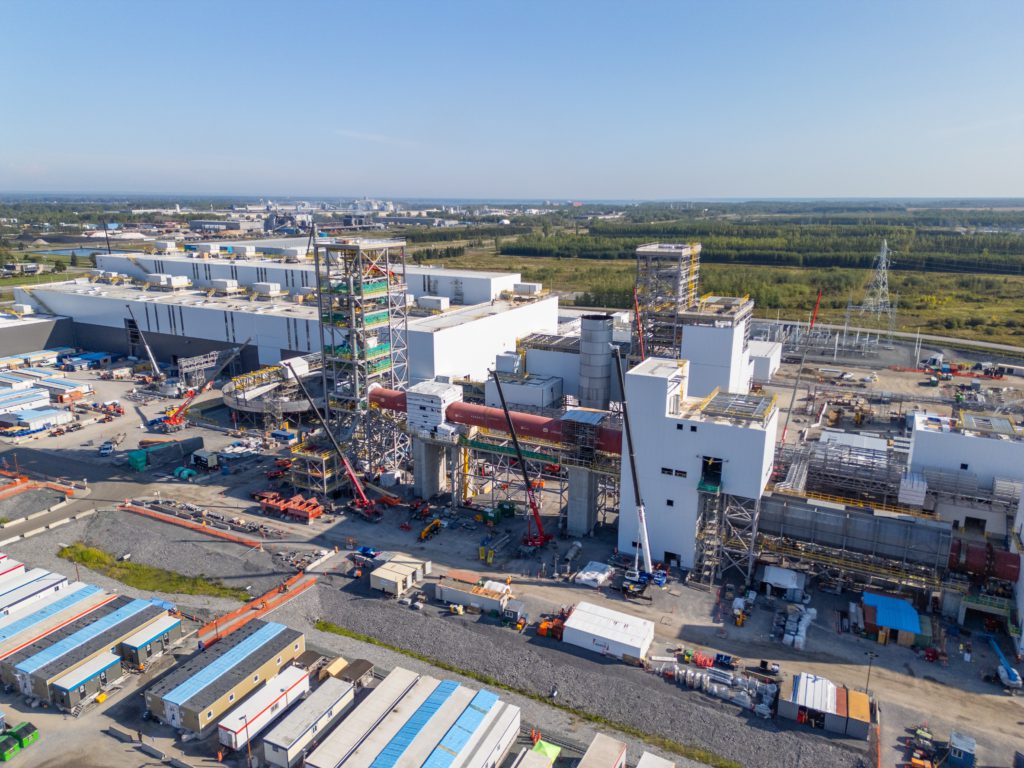
Rio Tinto is slowing construction of the Nemaska lithium hydroxide conversion plant at Bécancour, Quebec, cutting its contractual workforce by about 50% while keeping several hundred workers on site, but still targets commissioning this decade and first production in 2028. The plant is roughly 70% complete, designed for 32,000 tonnes per year of lithium hydroxide, with Rio planning US$300 million of investment alongside a C$200 million commitment from the Quebec government, which retains 46.1%. Nemaska’s integrated project is based on a 26‑year Whabouchi open‑pit/underground mine producing 200,000 tonnes of spodumene concentrate annually, though Rio is reassessing feed against its Galaxy hard rock project, with a decision due in H2 2026.
Technical Brief
- Construction pace at Bécancour is being reduced specifically to complete process and plant optimisation work.
- Contractual workforce on site will be cut by about 50%, leaving “several hundred” workers active.
- Some construction and installation activities will continue, while others are explicitly paused or deferred to later phases.
- Rio Tinto became Nemaska’s majority owner in mid‑February, lifting its stake to 53.9%.
- The Quebec government retains 46.1% of Nemaska and has pledged C$200 million alongside Rio’s spend.
- A Bloomberg-sourced timeline suggests full construction restart at Bécancour is now expected in 2027.
- Whabouchi is planned as a 26‑year combined open‑pit/underground operation producing 200,000 t/y of concentrate.
- Rio is formally benchmarking Whabouchi feed against its Galaxy hard‑rock lithium project in James Bay, decision due H2 2026.
Our Take
With Rio Tinto already prominent across several recent Top 50 and Power Rankings pieces in our database, the Nemaska Bécancour lithium hydroxide plant in Québec strengthens its positioning in ‘critical minerals’ alongside its traditional iron ore and copper base, rather than as a one-off battery metals play.
The 53.9%/46.1% Rio Tinto–Québec government ownership split at Nemaska is unusually balanced for a major’s upstream lithium asset in our coverage, which likely gives the province greater leverage over pacing and localisation of the Whabouchi–Bécancour value chain than in more typical incentive-only regimes.
Designing Whabouchi for a 26‑year open-pit and underground life aligns with other long-life lithium entries in the 109 lithium/lithium hydroxide keyword-matched pieces, signalling that Rio Tinto is planning Nemaska as a structural, not opportunistic, supplier into North American and European battery chains even through price cycles.
Prepared by collating external sources, AI-assisted tools, and Geomechanics.io’s proprietary mining database, then reviewed for technical accuracy & edited by our geotechnical team.
Related Articles
Related Industries & Products
Mining
Geotechnical software solutions for mining operations including CMRR analysis, hydrogeological testing, and data management.
Construction
Quality control software for construction companies with material testing, batch tracking, and compliance management.
CMRR-io
Streamline coal mine roof stability assessments with our cloud-based CMRR software featuring automated calculations, multi-scenario analysis, and collaborative workflows.
HYDROGEO-io
Comprehensive hydrogeological testing platform for managing, analysing, and reporting on packer tests, lugeon values, and hydraulic conductivity assessments.
GEODB-io
Centralised geotechnical data management solution for storing, accessing, and analysing all your site investigation and material testing data.