Geomechanics.io

  • Free Tools
Sign UpLog In
AllGeotechnicalMiningInfrastructureMaterialsHazardsEnvironmentalSoftwarePolicy

Geomechanics.io

Geomechanics, Streamlined.

© 2026 Geomechanics.io. All rights reserved.

Geomechanics.io

CMRR-ioGEODB-ioHYDROGEO-ioQCDB-ioFree Tools & CalculatorsBlogLatest Industry News

Industries

MiningConstructionTunnelling

Company

Terms of UsePrivacy PolicyLinkedIn
    Projects
    Product
    Sustainability

    Rio Tinto Nuton copper cathode at Gunnison: heap leach lessons for mine engineers

    December 4, 2025|

    Reviewed by Tom Sullivan

    Rio Tinto Nuton copper cathode at Gunnison: heap leach lessons for mine engineers

    First reported on MINING.com

    30 Second Briefing

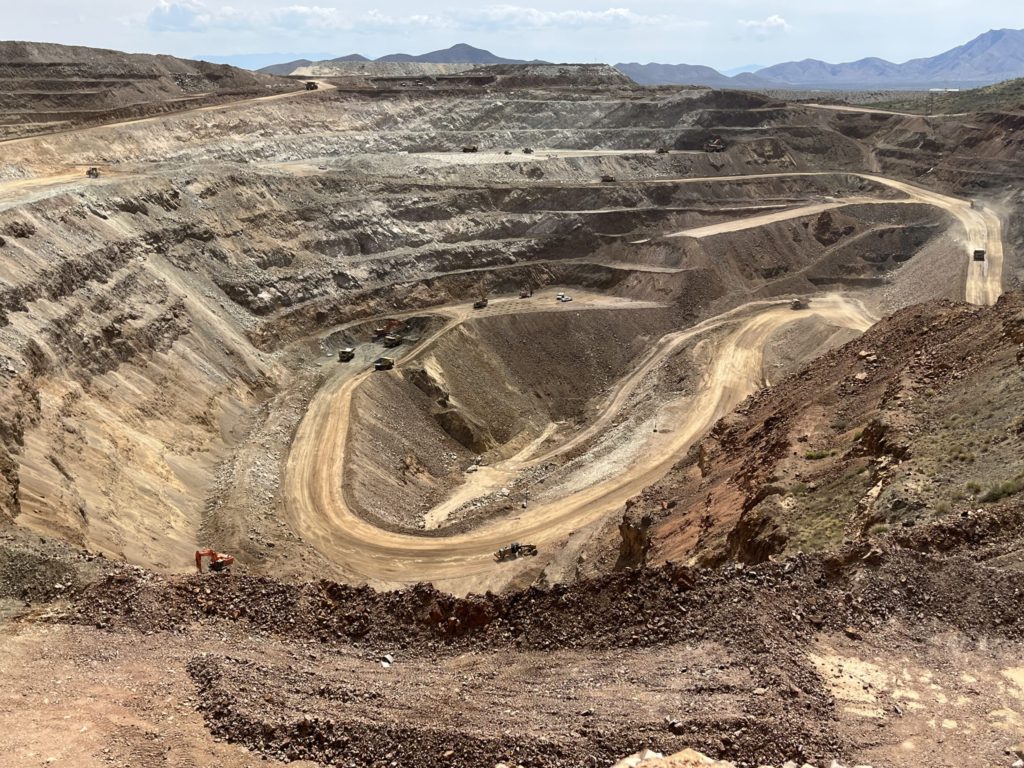
    Rio Tinto’s Nuton venture has produced its first 99.99% copper cathode using proprietary sulphide bioleaching at Gunnison Copper’s Johnson Camp Mine in Arizona, just 18 months after starting work on site. The four-year demonstration aims to deliver about 30,000 tonnes of refined copper from the existing heap leach pad, with Nuton’s microorganisms in bioreactors achieving up to 85% recovery while eliminating milling, tailings, smelting and off-site refining. Gunnison’s 25-million-lb-per-year operation, with a 15–20-year mine life, is now focused on multi-year technical validation, third-party verification and Rio Tinto internal review.

    Technical Brief

    • Nuton’s natural microorganisms are cultured in proprietary bioreactors, then applied to sulphide ore heaps.
    • Microbes accelerate sulphide oxidation, generating heat and enhancing copper dissolution into the heap leach solution.
    • The process removes milling, tailings storage, smelting and off-site refining from the flowsheet at Johnson Camp.
    • Water consumption is projected to fall by up to 80% versus conventional concentrator–smelter routes.
    • Gunnison reports potential carbon emission reductions of up to 60% compared with traditional copper concentration.

    Our Take

    With a post-tax IRR of 30% and initial capex of $58.9 million for Johnson Camp Mine, Gunnison Copper sits in the more competitive cost tier of the copper projects in our database, which may make the 51/49 JV split with Nuton easier to finance without heavy equity dilution.

    The ability of Nuton’s leach technology to reach 85% recovery on 0.31–0.32% copper grades at JCM is strategically significant, as many of the copper projects in our 152 Mining stories struggle to justify development at similar grades without higher metal prices or by-product credits.

    The four-year demonstration period at Johnson Camp Mine, contrasted with the 18‑month concept-to-production claim for Nuton, signals that regulators and financiers in Arizona are likely to treat new in-situ or novel leach deployments conservatively, even when backed by a major like Rio Tinto.

    Geotechnical Software for Modern Teams

    Centralise site data, logs, and lab results with GEODB-io, CMRR-io, and HYDROGEO-io.

    No credit card required.

    • Save and export unlimited calculations
    • Advanced data visualisation
    • Generate professional PDF reports
    • Cloud storage for all your projects

    Prepared by collating external sources, AI-assisted tools, and Geomechanics.io’s proprietary mining database, then reviewed for technical accuracy & edited by our geotechnical team.

    Related Articles
    MetalQuest’s Lac Otelnuk iron project: economics and infrastructure lens for engineers
    Mining
    2 days ago

    MetalQuest’s Lac Otelnuk iron project: economics and infrastructure lens for engineers

    MetalQuest Mining’s Lac Otelnuk project in northern Quebec hosts 4.9 billion tonnes of proven and probable reserves grading 28.7% Fe, with a 2015 feasibility study outlining an 11.6 km by 2.8 km open pit, post-tax NPV of US$5.24 billion (8% discount), IRR of 13% and capital costs of about US$14.2 billion. The study forecasts 68.5% Fe concentrate with 0.02% P and 2.95% SiO₂, positioning it for DRI-based low-emission steelmaking using Quebec hydro power. Infrastructure remains the critical constraint, with a previously proposed 755 km concentrate slurry pipeline to Sept-Îles now likely to be replaced by road and rail, and MetalQuest seeking a major partner ahead of a new feasibility targeted for 2030.

    Mining
    2 days ago

    XCMG–Codelco MoU: haul fleet competition and design notes for Andean copper mines

    XCMG has signed a memorandum of understanding with Chilean copper major Codelco in Santiago on 3 March, following Codelco Chairman Máximo Pacheco’s visit to XCMG’s Xuzhou manufacturing base in February. The agreement, signed by XCMG Vice President Liu Jiansen and Codelco Chief Procurement Officer Mauricio Acuña, centres on expanding supply of large-scale mining equipment and support services to Codelco’s open-pit and underground copper operations. For engineers, the deal signals intensifying competition with established OEMs on haul trucks, loaders and drilling fleets in high-altitude Andean conditions.

    Oklahoma critical minerals refining push: infrastructure and power notes for engineers
    Mining
    3 days ago

    Oklahoma critical minerals refining push: infrastructure and power notes for engineers

    Oklahoma is positioning itself as a critical minerals processing hub rather than a mining state, anchored by Emirates Global Aluminium’s proposed US$4 billion primary aluminium smelter at the Port of Inola on the McClellan–Kerr Arkansas River system and backed by surplus low‑cost power from wind and natural gas. USA Rare Earth is building a vertically integrated rare earth magnet plant in Stillwater with about US$1.6 billion in public and private funding, while Stardust Power (NASDAQ: SDST) is advancing a lithium refinery in Muskogee with Sumitomo offtake and key permits secured. The cluster targets defence and aerospace demand around Tinker Air Force Base and other installations, aiming to plug the “missing middle” between raw mineral supply and finished components.

    Related Industries & Products

    Mining

    Geotechnical software solutions for mining operations including CMRR analysis, hydrogeological testing, and data management.

    CMRR-io

    Streamline coal mine roof stability assessments with our cloud-based CMRR software featuring automated calculations, multi-scenario analysis, and collaborative workflows.

    HYDROGEO-io

    Comprehensive hydrogeological testing platform for managing, analysing, and reporting on packer tests, lugeon values, and hydraulic conductivity assessments.

    GEODB-io

    Centralised geotechnical data management solution for storing, accessing, and analysing all your site investigation and material testing data.