Geomechanics.io

  • Free Tools
Sign UpLog In

Geomechanics.io

Geomechanics, Streamlined.

© 2026 Geomechanics.io. All rights reserved.

Geomechanics.io

CMRR-ioGEODB-ioHYDROGEO-ioQCDB-ioFree Tools & CalculatorsBlogLatest Industry News

Industries

MiningConstructionTunnelling

Company

Terms of UsePrivacy PolicyLinkedIn
    AllGeotechnicalMiningInfrastructureMaterialsHazardsEnvironmentalSoftwarePolicy
    Projects
    Sustainability

    Oklahoma critical minerals refining push: infrastructure and power notes for engineers

    March 6, 2026|

    Reviewed by Tom Sullivan

    Oklahoma critical minerals refining push: infrastructure and power notes for engineers

    First reported on MINING.com

    30 Second Briefing

    Oklahoma is positioning itself as a critical minerals processing hub rather than a mining state, anchored by Emirates Global Aluminium’s proposed US$4 billion primary aluminium smelter at the Port of Inola on the McClellan–Kerr Arkansas River system and backed by surplus low‑cost power from wind and natural gas. USA Rare Earth is building a vertically integrated rare earth magnet plant in Stillwater with about US$1.6 billion in public and private funding, while Stardust Power (NASDAQ: SDST) is advancing a lithium refinery in Muskogee with Sumitomo offtake and key permits secured. The cluster targets defence and aerospace demand around Tinker Air Force Base and other installations, aiming to plug the “missing middle” between raw mineral supply and finished components.

    Technical Brief

    • State strategy explicitly prioritises refining, magnet manufacturing, recycling and smelting over primary extraction to capture mid‑stream margins.
    • Federal incentives linked to the CHIPS and Science Act and similar programmes are a key part‑funding mechanism for these plants.
    • For other US states, Oklahoma’s model illustrates how power‑rich, non‑mining regions can anchor mid‑stream critical‑minerals capacity.

    Our Take

    Oklahoma’s push into refining for lithium, rare earths and aluminium sits within a cluster of recent ‘critical minerals’ coverage that is otherwise dominated by upstream projects in Latin America and major miners like Rio Tinto and BHP, signalling that midstream US capacity remains relatively sparse in our database.

    The state’s roughly 65% energy surplus and natural gas base positions facilities at the Port of Inola and along the McClellan–Kerr Arkansas River Navigation System to compete with Gulf and Mississippi River industrial hubs, especially as power-intensive aluminium and magnet plants seek lower-cost, lower-volatility power in the United States.

    With USA Rare Earth and Stardust Power both targeting magnets and batteries, this Oklahoma build-out complements the security-focused critical minerals themes flagged in our January 27, 2026 piece on US-backed supply chains, and likely strengthens the case for offtake-linked support from defence-related users around Tinker Air Force Base and other military installations in the state.

    Geotechnical Software for Modern Teams

    Centralise site data, logs, and lab results with GEODB-io, CMRR-io, and HYDROGEO-io.

    No credit card required.

    • Save and export unlimited calculations
    • Advanced data visualisation
    • Generate professional PDF reports
    • Cloud storage for all your projects

    Prepared by collating external sources, AI-assisted tools, and Geomechanics.io’s proprietary mining database, then reviewed for technical accuracy & edited by our geotechnical team.

    Related Articles
    Mining
    about 9 hours ago

    Thiess Global Summit at Mulgarrie AHS trial: retrofit autonomy lens for mine planners

    Thiess, together with MACA and RTL Mining and Earthworks, has visited Norton Gold Fields’ Mulgarrie operation near Kalgoorlie, where an autonomous haulage system (AHS) trial using EACON Mining Technology’s retrofitted trucks is under way. The trial, run with Norton Gold Fields (owned by Zijin Mining Group), is testing retrofit autonomy on an existing truck fleet rather than deploying factory-built autonomous units. For mine operators, successful validation would support lower‑capex conversion of conventional haul trucks to AHS across similar Australian gold and bulk operations.

    Luca’s 14 g/t gold hits at Tahuehueto: mine growth and design notes for engineers
    Mining
    about 10 hours ago

    Luca’s 14 g/t gold hits at Tahuehueto: mine growth and design notes for engineers

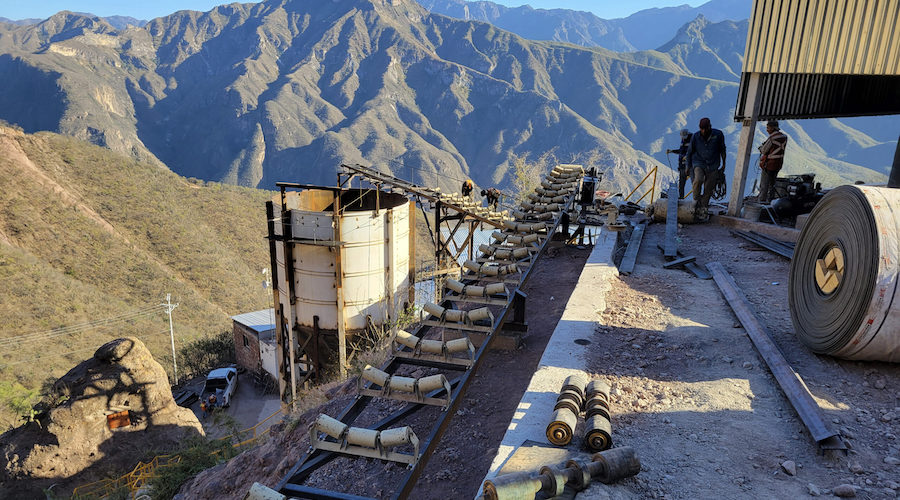
    Luca Mining has intersected high-grade mineralisation below existing workings at its Tahuehueto underground mine in Durango, with DDH26-SU-01 cutting 7.6 m at 14.27 g/t gold, 46.64 g/t silver, 0.33% Cu, 2.57% Pb and 1.19% Zn from 80.9 m, and DDH26-SU-03 returning 13.2 m at 6.66 g/t gold from 42.7 m. The new zones lie about 30 m below Level 23, which already hosts underground infrastructure, and grades are several times the current ~4 g/t AuEq head grade from the 1,000 t/d mill commissioned in 2025. Luca has increased the 2026 exploration budget at Tahuehueto by 40% to $3.5 million, with 47 drill holes totalling roughly 10,400 m completed so far across the Creston and Santiago vein targets, where brecciated quartz–sulphide veins remain open down plunge.

    United States Antimony NYSE move: capacity, funding and supply-chain notes for engineers
    Mining
    about 11 hours ago

    United States Antimony NYSE move: capacity, funding and supply-chain notes for engineers

    United States Antimony has secured approval to uplist from NYSE American to the New York Stock Exchange under ticker UAMY, with trading to start on 11 March and its share price jumping about 10%, valuing the company at US$1.4 billion. The Texas-based producer has also received US$27 million in US Defense Department funding to expand antimony extraction and refining, centred on a Montana smelter rated at 5 million lb/year of antimony metal. The company plans a fully integrated supply chain by adding ore extraction in Alaska for defence, battery and flame-retardant markets.

    Related Industries & Products

    Mining

    Geotechnical software solutions for mining operations including CMRR analysis, hydrogeological testing, and data management.

    Construction

    Quality control software for construction companies with material testing, batch tracking, and compliance management.

    CMRR-io

    Streamline coal mine roof stability assessments with our cloud-based CMRR software featuring automated calculations, multi-scenario analysis, and collaborative workflows.

    QCDB-io

    Comprehensive quality control database for manufacturing, tunnelling, and civil construction with UCS testing, PSD analysis, and grout mix design management.

    HYDROGEO-io

    Comprehensive hydrogeological testing platform for managing, analysing, and reporting on packer tests, lugeon values, and hydraulic conductivity assessments.