Geomechanics.io

  • Free Tools
Sign UpLog In

Geomechanics.io

Geomechanics, Streamlined.

© 2026 Geomechanics.io. All rights reserved.

Geomechanics.io

CMRR-ioGEODB-ioHYDROGEO-ioQCDB-ioFree Tools & CalculatorsBlogLatest Industry News

Industries

MiningConstructionTunnelling

Company

Terms of UsePrivacy PolicyLinkedIn
    AllGeotechnicalMiningInfrastructureMaterialsHazardsEnvironmentalSoftwarePolicy
    Projects
    Sustainability
    Product

    Rio Tinto gallium R&D funding: process-stream recovery insights for engineers

    March 2, 2026|

    Reviewed by Tom Sullivan

    Rio Tinto gallium R&D funding: process-stream recovery insights for engineers

    First reported on MINING.com

    30 Second Briefing

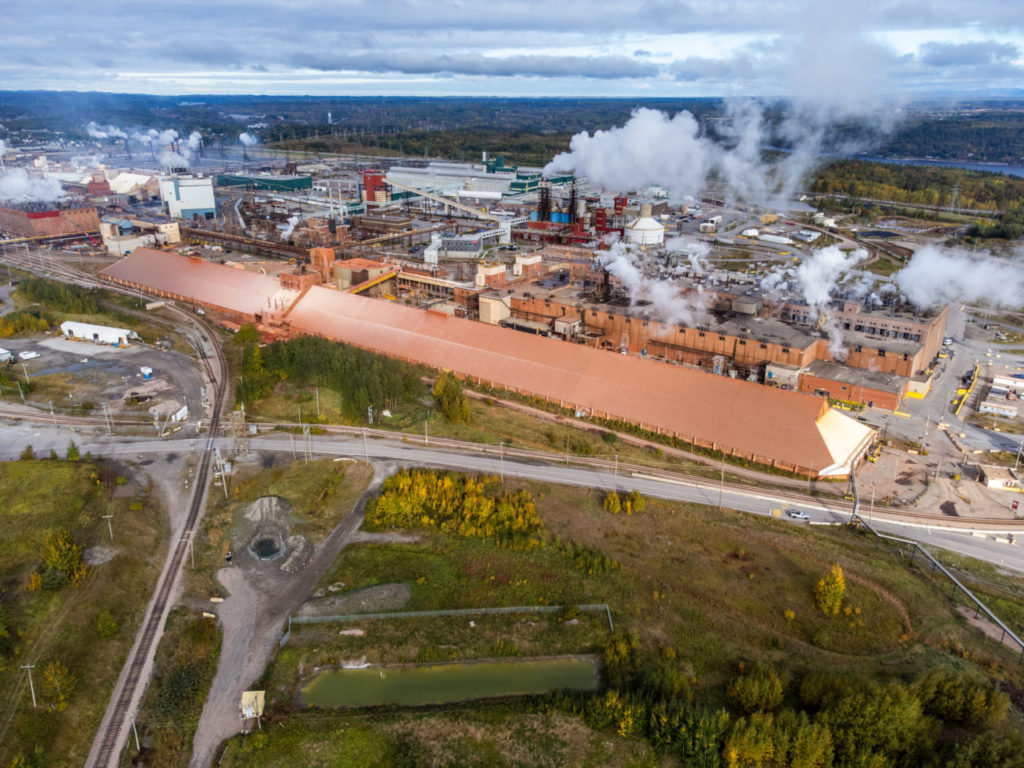
    Rio Tinto has secured conditional approval for a C$18.95 million non‑repayable contribution from Natural Resources Canada’s Global Partnerships Initiative, adding to C$7 million from Quebec, to advance primary gallium extraction at its 1 Mt/y Vaudreuil alumina refinery in Saguenay–Lac‑Saint‑Jean. Working with Indium Corporation, Rio has already produced first gallium and plans a demonstration plant targeting up to 4 tonnes per year from 2027. A subsequent commercial‑scale plant could reach 40 tonnes annually, about 5% of current global output, creating a new North American gallium source from refinery process streams.

    Technical Brief

    • First primary gallium was produced in May 2025 in partnership with New York-based Indium Corporation.
    • Vaudreuil refinery, operating since 1936, supplies about 70% of alumina needs for Rio’s regional smelters.
    • The refinery has a nominal alumina production capacity of 1 Mt per year from bauxite feed.
    • Located in Arvida within the Jonquière Complex, Vaudreuil is Canada’s only bauxite-to-alumina refinery.
    • Current global primary gallium output is quoted at “more than 700 t/y”, entirely outside North America.
    • Gallium output is targeted for high-speed, high-efficiency electronics: radars, smartphones, EVs and laptops.

    Our Take

    With global gallium output a little above 700 t/y, a 40 t/y commercial plant at the Vaudreuil alumina refinery in Québec would put Rio Tinto among the very small group of non-Chinese suppliers, which is strategically significant for North American and US supply-chain policies referenced in our other critical-mineral coverage.

    Leveraging a 1 Mt/y alumina operation that already supplies about 70% of Rio’s regional smelter needs suggests this gallium project is essentially a process-intensification and by-product recovery play, which typically carries much lower technical and permitting risk than a greenfield gallium mine.

    Within our 16 keyword-matched pieces on gallium and aluminium, most focus on downstream electronics or decarbonisation; this is one of the few where public financing (Natural Resources Canada plus Québec) is explicitly backing upstream recovery technology, signalling that similar bauxite–alumina complexes in Canada and Australia may be next candidates for by-product critical mineral extraction.

    Geotechnical Software for Modern Teams

    Centralise site data, logs, and lab results with GEODB-io, CMRR-io, and HYDROGEO-io.

    No credit card required.

    • Save and export unlimited calculations
    • Advanced data visualisation
    • Generate professional PDF reports
    • Cloud storage for all your projects

    Prepared by collating external sources, AI-assisted tools, and Geomechanics.io’s proprietary mining database, then reviewed for technical accuracy & edited by our geotechnical team.

    Related Articles

    MetalQuest’s Lac Otelnuk iron project: economics and infrastructure lens for engineers
    Mining
    1 day ago

    MetalQuest’s Lac Otelnuk iron project: economics and infrastructure lens for engineers

    MetalQuest Mining’s Lac Otelnuk project in northern Quebec hosts 4.9 billion tonnes of proven and probable reserves grading 28.7% Fe, with a 2015 feasibility study outlining an 11.6 km by 2.8 km open pit, post-tax NPV of US$5.24 billion (8% discount), IRR of 13% and capital costs of about US$14.2 billion. The study forecasts 68.5% Fe concentrate with 0.02% P and 2.95% SiO₂, positioning it for DRI-based low-emission steelmaking using Quebec hydro power. Infrastructure remains the critical constraint, with a previously proposed 755 km concentrate slurry pipeline to Sept-Îles now likely to be replaced by road and rail, and MetalQuest seeking a major partner ahead of a new feasibility targeted for 2030.

    Mining
    2 days ago

    XCMG–Codelco MoU: haul fleet competition and design notes for Andean copper mines

    XCMG has signed a memorandum of understanding with Chilean copper major Codelco in Santiago on 3 March, following Codelco Chairman Máximo Pacheco’s visit to XCMG’s Xuzhou manufacturing base in February. The agreement, signed by XCMG Vice President Liu Jiansen and Codelco Chief Procurement Officer Mauricio Acuña, centres on expanding supply of large-scale mining equipment and support services to Codelco’s open-pit and underground copper operations. For engineers, the deal signals intensifying competition with established OEMs on haul trucks, loaders and drilling fleets in high-altitude Andean conditions.

    Oklahoma critical minerals refining push: infrastructure and power notes for engineers
    Mining
    2 days ago

    Oklahoma critical minerals refining push: infrastructure and power notes for engineers

    Oklahoma is positioning itself as a critical minerals processing hub rather than a mining state, anchored by Emirates Global Aluminium’s proposed US$4 billion primary aluminium smelter at the Port of Inola on the McClellan–Kerr Arkansas River system and backed by surplus low‑cost power from wind and natural gas. USA Rare Earth is building a vertically integrated rare earth magnet plant in Stillwater with about US$1.6 billion in public and private funding, while Stardust Power (NASDAQ: SDST) is advancing a lithium refinery in Muskogee with Sumitomo offtake and key permits secured. The cluster targets defence and aerospace demand around Tinker Air Force Base and other installations, aiming to plug the “missing middle” between raw mineral supply and finished components.

    Related Industries & Products

    Mining

    Geotechnical software solutions for mining operations including CMRR analysis, hydrogeological testing, and data management.

    CMRR-io

    Streamline coal mine roof stability assessments with our cloud-based CMRR software featuring automated calculations, multi-scenario analysis, and collaborative workflows.

    HYDROGEO-io

    Comprehensive hydrogeological testing platform for managing, analysing, and reporting on packer tests, lugeon values, and hydraulic conductivity assessments.

    GEODB-io

    Centralised geotechnical data management solution for storing, accessing, and analysing all your site investigation and material testing data.