RAIB landslip monitor alert: rapid failure lessons for rail geotechnical teams
Reviewed by Tom Sullivan

First reported on The Construction Index
30 Second Briefing
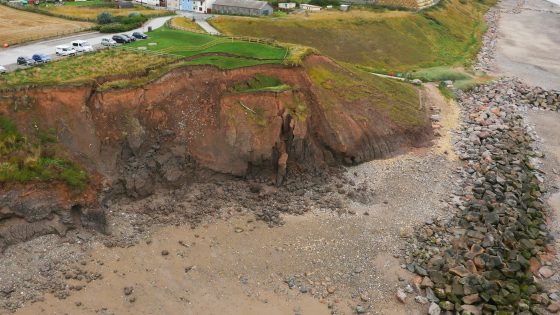
Railway managers have been warned by the Rail Accident Investigation Branch that Network Rail’s lineside slope monitoring systems may fail to give usable alerts during rapid failures, after an Avanti West Coast train derailed at around 83 mph near Shap Summit on 3 November 2025 when it struck landslip debris. Remote sensors on steel spikes at 2 m spacing recorded sub‑10 mm movements—below the 10–30 mm “green” alert threshold—before being rapidly buried, losing wireless signal and generating no alarm to control. The landslip followed heavy, sustained rainfall that overwhelmed a cutting‑slope drainage channel, and RAIB has urged duty holders to urgently review and, where needed, mitigate these monitoring limitations.
Technical Brief
- Remote tilt sensors were installed on steel spikes at 2 m centres along the cutting toe.
- Monitoring logic used four displacement bands: 10–30 mm (green), 30–60 mm (amber), 60–90 mm (red), >90 mm (black).
- At Shap the system was physically recording and uploading data but not commissioned to send control-room alerts.
- Failure mechanism: drainage channel across the upper cutting face lacked capacity, causing saturation and shear failure of the downslope material.
Our Take
RAIB’s involvement here, as in the recent Gloucestershire heritage footbridge collapse investigation, signals that UK rail regulators are increasingly scrutinising how temporary works, monitoring systems and operational controls interact, not just the immediate failure mechanism.
The relatively fine 2 m spacing of steel spike sensors and the multi‑band alert thresholds (10–90 mm) suggest Network Rail is already using comparatively high‑resolution instrumentation on the Shap Summit–Oxenholme corridor, so the key learning is likely to be around alarm logic, response protocols and integration with operations rather than sensor density alone.
Within our 20 Hazards stories, Network Rail and RAIB feature frequently, indicating that UK mainline infrastructure in areas like the Lake District is generating a disproportionate share of safety‑critical case studies that other asset owners can mine for lessons on earthwork monitoring and risk tolerability at line‑speed operations.
Prepared by collating external sources, AI-assisted tools, and Geomechanics.io’s proprietary mining database, then reviewed for technical accuracy & edited by our geotechnical team.
Related Articles

Related Industries & Products
Mining
Geotechnical software solutions for mining operations including CMRR analysis, hydrogeological testing, and data management.
Construction
Quality control software for construction companies with material testing, batch tracking, and compliance management.
CMRR-io
Streamline coal mine roof stability assessments with our cloud-based CMRR software featuring automated calculations, multi-scenario analysis, and collaborative workflows.
HYDROGEO-io
Comprehensive hydrogeological testing platform for managing, analysing, and reporting on packer tests, lugeon values, and hydraulic conductivity assessments.
GEODB-io
Centralised geotechnical data management solution for storing, accessing, and analysing all your site investigation and material testing data.