Padeswood carbon capture project: design and embodied carbon lens for engineers
Reviewed by Joe Ashwell
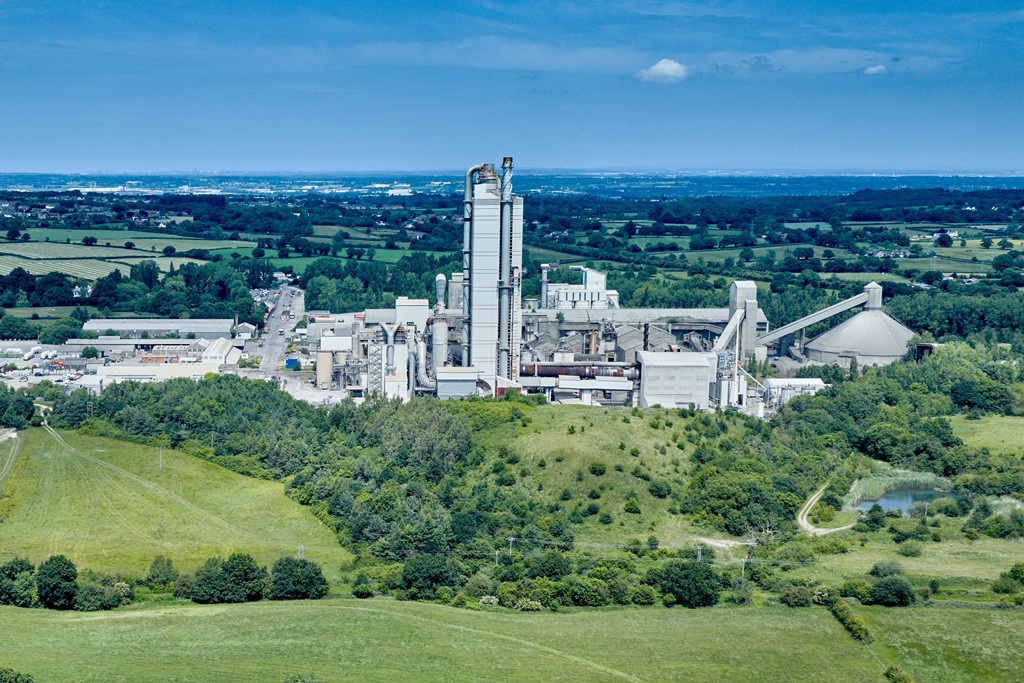
First reported on The Construction Index
30 Second Briefing
Heidelberg Materials UK has awarded Mitsubishi Heavy Industries and Worley an EPCM contract to deliver a carbon capture facility at the Padeswood cement works in north Wales, following completion of FEED and a final investment decision with the UK government in September. Using MHI’s Advanced KM CDR Process, the plant is designed to capture about 800,000 tonnes of CO₂ per year from the existing kiln line, with commissioning targeted for 2029. The project will enable industrial-scale production of evoZero carbon captured near-zero cement, directly affecting embodied carbon specifications for UK infrastructure and building projects.
Technical Brief
- EPCM scope is split: MHI supplies capture technology; Worley leads delivery, integration and commissioning.
- Worley’s remit includes wider CCS infrastructure development, not just the capture plant inside the works.
- Front-end engineering design was already completed by the same MHI–Worley team before EPCM award.
Our Take
Among the 461 tag-matched ‘Sustainability’ and ‘Projects’ pieces in our database, very few involve UK cement assets, so the Padeswood cement works stands out as one of the first large-scale decarbonisation case studies for the domestic materials sector rather than for power or hydrocarbons.
With the Padeswood facility targeted to be operational by 2029, Heidelberg Materials UK is effectively locking in a medium-term compliance and licence-to-operate strategy ahead of tighter UK and EU carbon regimes that are expected to bite in the early 2030s, which could give it a cost and permitting advantage over lagging competitors.
Mitsubishi Heavy Industries and Worley appearing together on this UK project signals that international EPC and technology providers are now actively chasing cement decarbonisation work in Europe, which in turn may raise expectations from regulators and investors that other UK and EU cement plants follow a similar CCUS route.
Prepared by collating external sources, AI-assisted tools, and Geomechanics.io’s proprietary mining database, then reviewed for technical accuracy & edited by our geotechnical team.
Related Articles


Related Industries & Products
Construction
Quality control software for construction companies with material testing, batch tracking, and compliance management.
Mining
Geotechnical software solutions for mining operations including CMRR analysis, hydrogeological testing, and data management.
CMRR-io
Streamline coal mine roof stability assessments with our cloud-based CMRR software featuring automated calculations, multi-scenario analysis, and collaborative workflows.
HYDROGEO-io
Comprehensive hydrogeological testing platform for managing, analysing, and reporting on packer tests, lugeon values, and hydraulic conductivity assessments.
GEODB-io
Centralised geotechnical data management solution for storing, accessing, and analysing all your site investigation and material testing data.