Geomechanics.io

  • Free Tools
Sign UpLog In

    Geomechanics.io

    Geomechanics, Streamlined.

    © 2026 Geomechanics.io. All rights reserved.

    Geomechanics.io

    CMRR-ioGEODB-ioHYDROGEO-ioQCDB-ioFree Tools & CalculatorsBlogLatest Industry News

    Industries

    MiningConstructionTunnelling

    Company

    Terms of UsePrivacy PolicyLinkedIn
    Projects
    Sustainability

    Latin America’s critical minerals push: IDB funding and MET lens for mine planners

    December 2, 2025|

    Reviewed by Tom Sullivan

    Latin America’s critical minerals push: IDB funding and MET lens for mine planners

    First reported on MINING.com

    30 Second Briefing

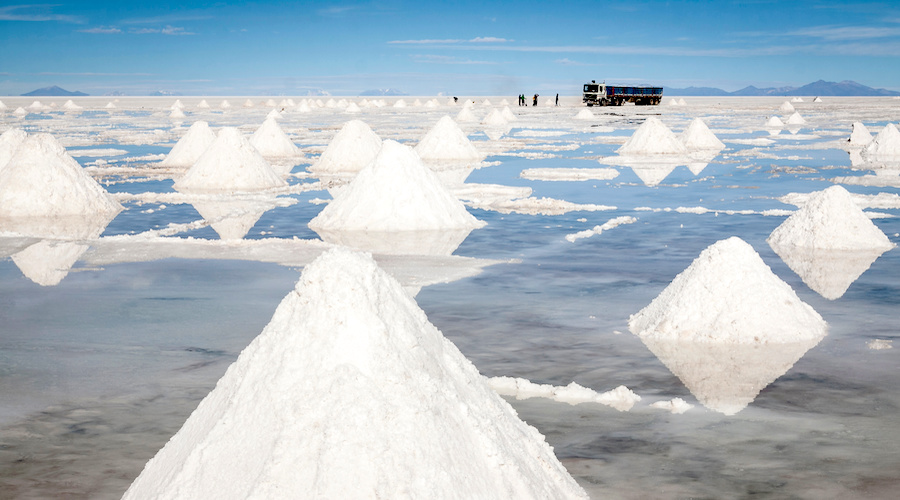
    Latin America is accelerating critical mineral value-chain development as the Inter-American Development Bank (IDB) and EU deploy a €6.3 million grant to unlock about €120 million in IDB funding for lithium, copper and rare earths projects in Argentina, Bolivia, Brazil, Chile and Ecuador. The IDB’s Mining for the Energy Transition (MET) programme is targeting regulatory reform, improved geological data and low‑carbon mining, while Washington signals a preference for sourcing and processing within the hemisphere. IDB is also financing extraction, including a $100 million loan into Rio Tinto’s $2.5 billion battery‑grade lithium project in Salta, Argentina.

    Technical Brief

    • IDB’s €6.3m EU grant leverages roughly 19x additional IDB capital for mineral projects.
    • Latin America currently holds ~60% of identified global lithium reserves, heavily concentrating upstream resource risk.
    • The region produces about 46% of world copper, with Chile and Peru dominating red metal output.
    • Brazil hosts the world’s second-largest rare earths reserves, but production is constrained by technical and commercial barriers.
    • Argentina exports ~70% of its lithium to China, then re-imports processed product at 8–9x the price.
    • IDB is extending a $100m loan into Rio Tinto’s $2.5bn battery-grade lithium project in Salta, Argentina.
    • Long-term offtake, exemplified by a 20-year Chile–Germany green hydrogen contract, is cited as critical to closing processing cost gaps with Asia.

    Our Take

    With Latin America already accounting for 46% of global copper production and 60% of identified lithium reserves, the EU–IDB ‘Mining for the Energy Transition’ financing push effectively positions the region as the swing supplier in many of the critical-mineral market scenarios tracked across our 113 Mining stories.

    The €6.3 million EU grant unlocking about €120 million of IDB funding signals that multilateral lenders are moving towards relatively high leverage ratios for critical minerals, which could lower the cost of capital for projects like Rio Tinto’s $2.5 billion Salta lithium development compared with standalone commercial debt.

    Argentina sending 70% of its lithium exports to China, while Chile signs a 20‑year green hydrogen deal with Germany, underscores how Latin America’s critical minerals and energy offtake is bifurcating between Asian and European buyers, a pattern that will likely influence how new IDB-backed projects structure long-term sales and processing agreements.

    Geotechnical Software for Modern Teams

    Centralise site data, logs, and lab results with GEODB-io, CMRR-io, and HYDROGEO-io.

    No credit card required.

    • Save and export unlimited calculations
    • Advanced data visualisation
    • Generate professional PDF reports
    • Cloud storage for all your projects

    Prepared by collating external sources, AI-assisted tools, and Geomechanics.io’s proprietary mining database, then reviewed for technical accuracy & edited by our geotechnical team.

    Related Articles
    Trilogy’s Arctic project FAST-41 entry: permitting and schedule notes for mine planners
    Mining
    about 18 hours ago

    Trilogy’s Arctic project FAST-41 entry: permitting and schedule notes for mine planners

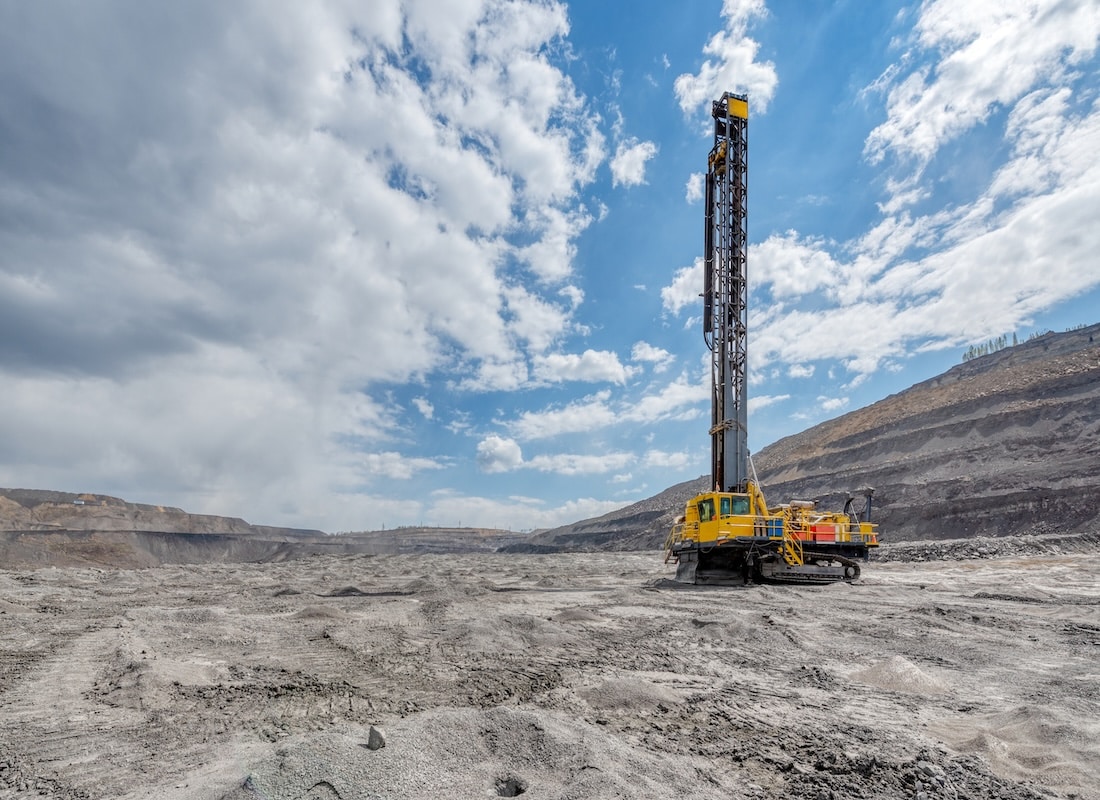
    Trilogy Metals’ Arctic copper-zinc project in Alaska’s Ambler Mining District has been accepted into the US federal FAST-41 permitting programme, shortly after filing its Clean Water Act Section 404 application with the US Army Corps of Engineers. The 50/50 joint venture with South32 covers an indicated 35.7 million tonnes grading 2.98% copper and 4.09% zinc, with a 2023 technical report outlining a 13-year mine producing 149 million lb. Cu and 173 million lb. Zn per year plus lead, gold and silver. TD Securities forecasts construction could start in 2029 with first production in 2031, while the nearby Bornite deposit could extend district copper output beyond 30 years.

    MAX Power Mining–Moose Jaw hydrogen MOU: subsurface and capex notes for engineers
    Mining
    3 days ago

    MAX Power Mining–Moose Jaw hydrogen MOU: subsurface and capex notes for engineers

    MAX Power Mining has signed an MOU with the City of Moose Jaw, Saskatchewan, to advance natural hydrogen commercialisation in the Regina–Moose Jaw Industrial Corridor, centred on the Lawson Natural Hydrogen system near Central Butte, about 80 km northwest of the city. Core desorption tests from nine samples in Cambrian Basal sands above the Basement Complex discovery returned helium values up to 8.7%, averaging 4.4%, indicating a potentially valuable hydrogen–helium system. The partners aim to leverage existing regional infrastructure and policy support to move the project towards commercial validation.

    Water shortages and mining projects: schedule and design takeaways for engineers
    Mining
    3 days ago

    Water shortages and mining projects: schedule and design takeaways for engineers

    Water scarcity and multi‑year permitting delays—often two to four years for discharge and dewatering approvals in the western US—are increasingly stalling otherwise bankable mines, with water risk now affecting project schedules, financing and national credit profiles. Consultants such as Woodard & Curran report that “credible water stories” are becoming as critical as ore grades, pushing operators towards closed‑loop recycling and non‑traditional sources. US firms Genesis Systems and Atoco are deploying atmospheric water generation units, including Genesis’ containerised WaterCube systems producing over 1,000 gallons per day off‑grid, now trialled at mine sites.

    Related Industries & Products

    Mining

    Geotechnical software solutions for mining operations including CMRR analysis, hydrogeological testing, and data management.

    CMRR-io

    Streamline coal mine roof stability assessments with our cloud-based CMRR software featuring automated calculations, multi-scenario analysis, and collaborative workflows.

    HYDROGEO-io

    Comprehensive hydrogeological testing platform for managing, analysing, and reporting on packer tests, lugeon values, and hydraulic conductivity assessments.

    GEODB-io

    Centralised geotechnical data management solution for storing, accessing, and analysing all your site investigation and material testing data.

    AllGeotechnicalInfrastructureHazardsEnvironmental