Geomechanics.io

  • Free Tools
Sign UpLog In

Geomechanics.io

Geomechanics, Simplified.

© 2026 Geomechanics.io. All rights reserved.

Geomechanics.io

CMRR-ioGEODB-ioHYDROGEO-ioQCDB-ioFree Tools & CalculatorsBlogLatest Industry News

Industries

MiningConstructionTunnelling

Company

Terms of UsePrivacy PolicyLinkedIn
    AllGeotechnicalMiningInfrastructureMaterialsHazardsEnvironmentalSoftwarePolicy
    Projects
    Product
    Research

    Kevitsa rock and Robit DTH hammers: wear behaviour and design notes for drill engineers

    January 5, 2026|

    Reviewed by Joe Ashwell

    Kevitsa rock and Robit DTH hammers: wear behaviour and design notes for drill engineers

    First reported on International Mining – News

    30 Second Briefing

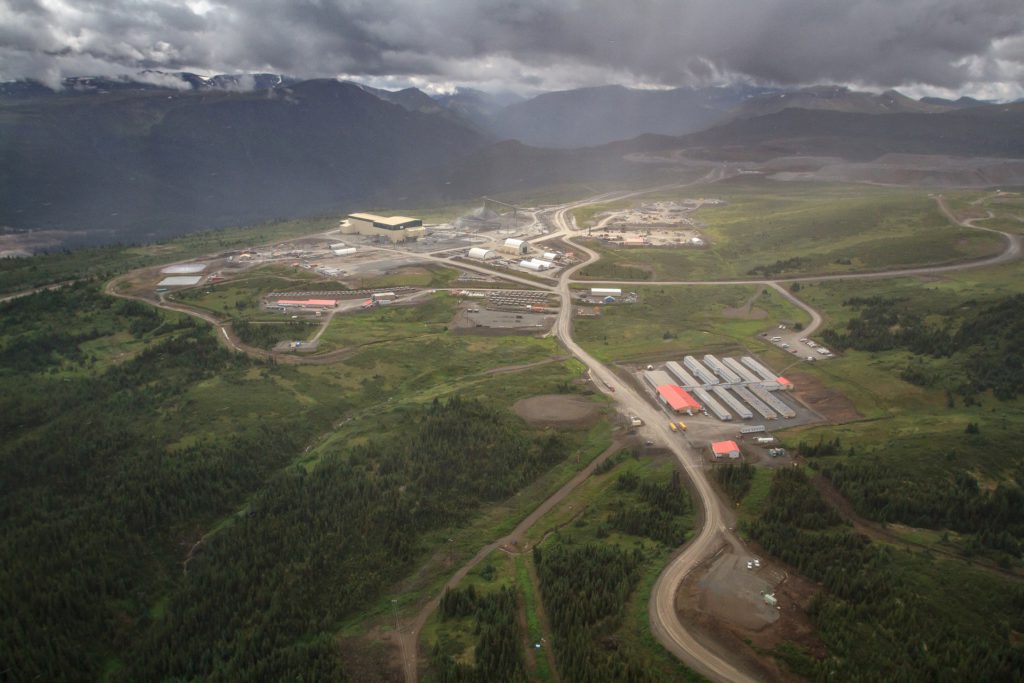
    Kevitsa’s nickel-copper open pit in Finnish Lapland is subjecting Robit down-the-hole (DTH) hammers to extremely abrasive, high-strength host rock, pushing bit wear and hammer fatigue close to design limits. Robit has been trialling heavy-duty DTH configurations with modified carbide button profiles and optimised air pressure settings to maintain penetration rates and hole straightness for production drilling. The work is feeding into revised hammer life predictions and bit selection guidelines for hard, abrasive sulphide orebodies with similar geomechanical conditions.

    Technical Brief

    • Kevitsa open pit lies ~30 km north of Sodankylä in Finnish Lapland, within Archaean basement.

    Our Take

    Kevitsa’s hard nickel–copper ore sits within a small subset of our 474 Mining stories where tool performance, rather than orebody scale or economics, is the primary constraint on productivity, signalling that bit and hammer selection can be a genuine bottleneck in Scandinavian hard-rock operations.

    Among the 131 nickel- and copper-tagged pieces in our database, Finnish Lapland appears less frequently than jurisdictions like Western Australia or Chile, so performance data from Kevitsa gives drill and blast teams a relatively rare benchmark for Arctic, low-temperature hard-rock conditions.

    Because this item is tagged as Projects, Product and Research, it falls into a niche group of 910 tag-matched pieces where OEMs like Robit are testing equipment directly in operating mines, which operators often use to de-risk future fleet procurement or standardise tooling across multiple nickel and copper sites.

    Geotechnical Software for Modern Teams

    Centralise site data, logs, and lab results with GEODB-io, CMRR-io, and HYDROGEO-io.

    No credit card required.

    • Save and export unlimited calculations
    • Advanced data visualisation
    • Generate professional PDF reports
    • Cloud storage for all your projects

    Prepared by collating external sources, AI-assisted tools, and Geomechanics.io’s proprietary mining database, then reviewed for technical accuracy & edited by our geotechnical team.

    Related Articles

    MRIWA’s new chair: implications for mine design, tailings and R&D funding
    Mining
    about 5 hours ago

    MRIWA’s new chair: implications for mine design, tailings and R&D funding

    Dr Vanessa Torres has been appointed chair of the Minerals Research Institute of Western Australia (MRIWA), taking over leadership of the state-funded body that directs minerals R&D investment. MRIWA typically co-funds applied research in areas such as tailings management, orebody characterisation and decarbonisation of mining fleets across Western Australia’s iron ore, gold and battery minerals sectors. Torres’ appointment signals continuity for industry–research collaboration on high-impact geotechnical and processing projects, with funding decisions directly affecting mine design, waste storage strategies and technology trials in operating sites.

    Northern Star’s 2025 outlook: production discipline and capex signals for mine planners
    Mining
    about 5 hours ago

    Northern Star’s 2025 outlook: production discipline and capex signals for mine planners

    Northern Star Resources has reported a difficult December quarter but says it is on track for a stronger second half of the 2025–26 financial year, with production and cost guidance unchanged across its Australian gold operations. Management is banking on improved performance at key assets such as Kalgoorlie and Yandal, supported by ongoing capital spend on underground development and processing upgrades. For mine planners and geotechs, the message is to expect tighter operating discipline rather than major cutbacks, with current mine schedules and longer-term reserve development largely intact.

    Austral Q4 copper beat at Lady Annie: wet-weather heap leach lessons for engineers
    Mining
    about 6 hours ago

    Austral Q4 copper beat at Lady Annie: wet-weather heap leach lessons for engineers

    Austral Resources beat its 2025 Q4 copper production guidance at the Lady Annie heap leach–SXEW operation in northwest Queensland despite record rainfall and flooding that shut nearby mines and cut regional road access. Continuous irrigation of leach pads, maintaining solution management and access to the 30,000tpa SXEW plant, allowed copper cathode output to stay above budget while avoiding major geotechnical instability on stacked heaps. The performance signals robust wet-weather operating procedures and drainage design for future extreme rainfall events in the Mount Isa–Cloncurry district.

    Related Industries & Products

    Mining

    Geotechnical software solutions for mining operations including CMRR analysis, hydrogeological testing, and data management.

    CMRR-io

    Streamline coal mine roof stability assessments with our cloud-based CMRR software featuring automated calculations, multi-scenario analysis, and collaborative workflows.

    HYDROGEO-io

    Comprehensive hydrogeological testing platform for managing, analysing, and reporting on packer tests, lugeon values, and hydraulic conductivity assessments.

    GEODB-io

    Centralised geotechnical data management solution for storing, accessing, and analysing all your site investigation and material testing data.