Geomechanics.io

  • Free Tools
Sign UpLog In
AllGeotechnicalMiningInfrastructureMaterialsHazardsEnvironmentalSoftwarePolicy

Geomechanics.io

Geomechanics, Simplified.

© 2026 Geomechanics.io. All rights reserved.

Geomechanics.io

CMRR-ioGEODB-ioHYDROGEO-ioQCDB-ioFree Tools & CalculatorsBlogLatest Industry News

Industries

MiningConstructionTunnelling

Company

Terms of UsePrivacy PolicyLinkedIn
    Projects
    Failure
    Safety

    Central Java landslides: geotechnical failure lessons for slope engineers

    November 16, 2025|

    Reviewed by Tom Sullivan

    Central Java landslides: geotechnical failure lessons for slope engineers

    First reported on Geoengineer.org – News

    30 Second Briefing

    Heavy rainfall across Indonesia’s Central Java has triggered multiple landslides, with the most severe in Cibeunying village burying at least 35 houses and cutting a key district road. Steep residual soil slopes, shallow colluvial deposits and deforested hillsides failed after several days of intense rain, with local officials reporting tension cracks and minor slips on adjacent slopes now at risk of progressive failure. Emergency works focus on debris clearance, temporary gabion retaining structures and drainage channels, but long-term stabilisation will require detailed geotechnical mapping and slope zoning.

    Technical Brief

    • Initial investigation relies on geomorphic mapping, eyewitness timelines and manual probing; no borehole data yet acquired.
    • Monitoring proposals include simple crack gauges, bamboo stake inclinometers and daily visual inspections by village teams.

    Our Take

    With only a handful of Hazards stories in our coverage, a failure-tagged event in Central Java stands out and is likely to be watched closely by Indonesian regulators already under pressure over hillside development and drainage control.

    For projects work in Indonesia, Central Java and nearby Cibeunying are known for steep, highly weathered volcanic terrains, so this type of failure typically pushes designers towards more conservative cut slopes, benching and surface water management than in sedimentary basins.

    Among the 24 tag-matched pieces on Projects/Failure/Safety, most recent failures have been tied to intense rainfall episodes, suggesting operators in Central Java should treat short-duration storm events as a primary design load case for both temporary and permanent slopes.

    Geotechnical Software for Modern Teams

    Centralise site data, logs, and lab results with GEODB-io, CMRR-io, and HYDROGEO-io.

    No credit card required.

    • Save and export unlimited calculations
    • Advanced data visualisation
    • Generate professional PDF reports
    • Cloud storage for all your projects

    Prepared by collating external sources, AI-assisted tools, and Geomechanics.io’s proprietary mining database, then reviewed for technical accuracy & edited by our geotechnical team.

    Related Articles
    Hazards
    1 day ago

    Mineração Morro do Ipê tailings dam sirens: integration lessons for risk engineers

    Mineração Morro do Ipê (MMI) has installed 19 HÖRMANN Warnsysteme electronic sirens as an automated warning system for communities in the tailings dam impact zone. The sirens are linked to dam monitoring sensors and are configured to trigger automatically in the event of a breach, removing reliance on manual activation during fast‑developing failures. For geotechnical and emergency planners, the project illustrates integration of real‑time instrumentation with public alerting infrastructure as part of Brazilian post‑Brumadinho tailings risk management practice.

    Highway 18 rainfall rockfall: geotechnical lessons and mitigation options
    Hazards
    11 days ago

    Highway 18 rainfall rockfall: geotechnical lessons and mitigation options

    Rainfall-triggered rockfall on Highway 18 in San Bernardino County has blocked lanes and damaged barriers along a steep cut slope, following weeks of intense winter storms that saturated highly fractured granitic and metamorphic rock. Caltrans geotechnical crews report multiple failures from tension cracks and oversteepened slopes above the roadway, with debris reaching the carriageway and impacting existing rockfall fences. Engineers are now assessing options including expanded rock bolting, additional draped mesh, improved surface and subsurface drainage, and revised slope scaling protocols ahead of further atmospheric river events.

    Shap lineside monitoring warning: slope stability lessons for rail engineers
    Hazards
    15 days ago

    Shap lineside monitoring warning: slope stability lessons for rail engineers

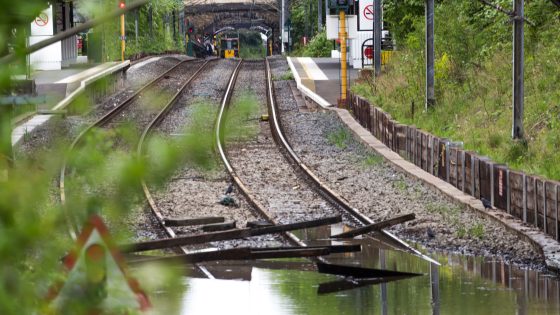
    Lineside monitoring systems on parts of Britain’s rail network may fail to detect embankment or cutting slope movements during extreme rainfall, the Rail Accident Investigation Branch has warned following the 3 November passenger train derailment near Shap, Cumbria. The warning concerns remote condition monitoring equipment installed to trigger alerts for ground instability, which did not prevent the derailment. Geotechnical and asset engineers are being urged to review sensor siting, trigger thresholds and system performance in severe weather, particularly on high-risk slopes.

    Related Industries & Products

    Mining

    Geotechnical software solutions for mining operations including CMRR analysis, hydrogeological testing, and data management.

    CMRR-io

    Streamline coal mine roof stability assessments with our cloud-based CMRR software featuring automated calculations, multi-scenario analysis, and collaborative workflows.

    HYDROGEO-io

    Comprehensive hydrogeological testing platform for managing, analysing, and reporting on packer tests, lugeon values, and hydraulic conductivity assessments.

    GEODB-io

    Centralised geotechnical data management solution for storing, accessing, and analysing all your site investigation and material testing data.