Geomechanics.io

  • Free Tools
Sign UpLog In
Built byBoxcut Studio

Geomechanics.io

Geomechanics, Streamlined.

© 2026 Geomechanics.io. All rights reserved.

Geomechanics.io

CMRR-ioGEODB-ioHYDROGEO-ioQCDB-ioFree Tools & CalculatorsBlogLatest Industry News

Industries

MiningConstructionTunnelling

Company

Terms of UsePrivacy PolicyLinkedIn
    Product
    Sustainability
    Projects

    B&Q offers the K-Briq: circular masonry implications for project teams

    December 11, 2025|

    Reviewed by Tom Sullivan

    B&Q offers the K-Briq: circular masonry implications for project teams

    First reported on The Construction Index

    30 Second Briefing

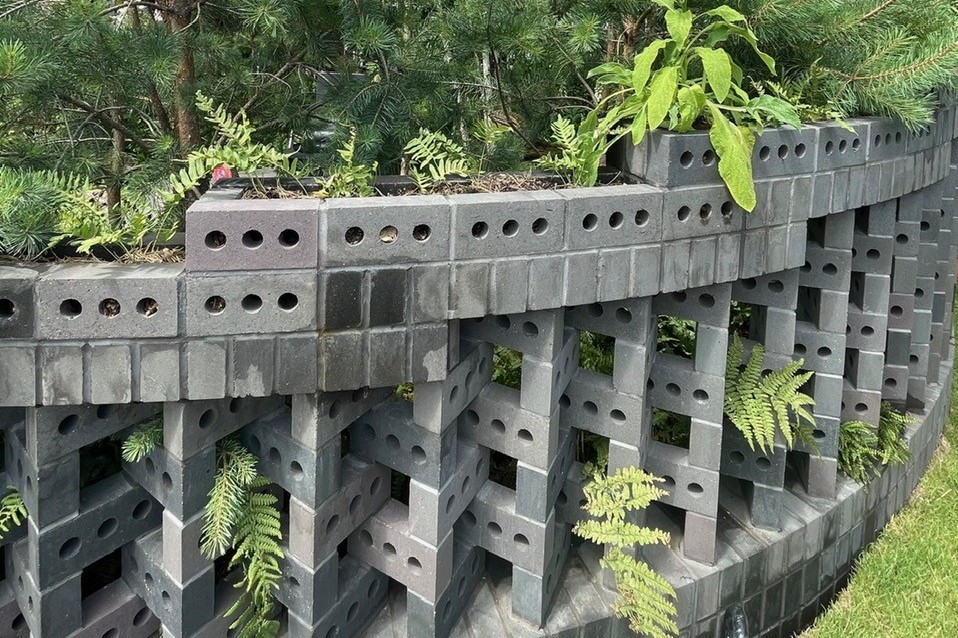
    K-Briq, a masonry unit made from nearly 100% recycled construction and demolition waste, is now sold direct to consumers via B&Q’s diy.com online marketplace. Developed by Heriot-Watt University spin-out Kenoteq, the brick has already been specified by architects for commercial projects and award-winning festival installations, and is now being adopted for domestic renovations and garden walls. Wider retail availability signals growing client pressure for low‑carbon, circular materials in small‑scale builds as well as large commercial schemes.

    Technical Brief

    • K-Briq units are manufactured from nearly 100% recycled construction and demolition waste feedstock.
    • Demand has been driven by architects and designers who previously specified K-Briq on commercial schemes.
    • The same design professionals are now re-specifying the product for their own domestic refurbishments and gardens.
    • Executive director Sam Chapman reports a “remarkable shift” in recent months in consumer-facing interest.

    Our Take

    Among the 12 Materials stories in our coverage, very few involve UK retail chains like B&Q directly stocking circular-economy products, which suggests mainstream distribution for recycled masonry is still at an early stage.

    A brick made from nearly 100% recycled construction and demolition waste positions Kenoteq within the small subset of sustainability-tagged pieces that tackle end-of-pipe reuse, rather than just lowering embodied carbon in virgin materials.

    Having a university spin-out from Heriot-Watt University reach national retail shelves in the United Kingdom may signal to other academic materials labs that there is a viable commercial route for high-recycled-content products, not just for niche demonstration projects.

    Geotechnical Software for Modern Teams

    Centralise site data, logs, and lab results with GEODB-io, CMRR-io, and HYDROGEO-io.

    Cancel at any time.

    • Save and export unlimited calculations
    • Advanced data visualisation
    • Generate professional PDF reports
    • Cloud storage for all your projects

    Prepared by collating external sources, AI-assisted tools, and Geomechanics.io’s proprietary mining database, then reviewed for technical accuracy & edited by our geotechnical team.

    Related Articles

    Niron Magnetics’ $1.8bn Alabama plant: supply chain and design notes for engineers
    Materials
    about 4 hours ago

    Niron Magnetics’ $1.8bn Alabama plant: supply chain and design notes for engineers

    Niron Magnetics will build a $1.8 billion, 1.6-million-square-foot advanced manufacturing campus at the Westgate Super Site in Dothan, Alabama, centred on a 10,000-ton high-volume plant producing rare-earth-free iron nitride permanent magnets. The facility, Niron’s second after a 1,500‑ton‑per‑year plant scheduled for 2027 in Sartell, is expected to add 700 high-wage jobs within five years and use abundant domestic iron and nitrogen feedstocks instead of neodymium. The project, backed by a separate $150 million, 20‑year US defence loan for Minnesota, signals a shift towards geographically diversified, rare-earth-free magnet supply for automotive, defence and AI infrastructure.

    Ecocem’s ACT at Westminster retrofit: low‑carbon concrete lessons for engineers
    Materials
    2 days ago

    Ecocem’s ACT at Westminster retrofit: low‑carbon concrete lessons for engineers

    Ecocem’s ACT low-carbon concrete, which can cut cement-related CO₂ by up to 70% and is compatible with standard batching and placement methods, has been specified by Sisk for the TP Bennett-designed retrofit of the former John Lewis HQ at 171 Victoria Street, Westminster. The scheme will deliver over 200,000 sq ft of Grade A workspace while retaining existing steelwork, concrete and around 500 stainless-steel window frames and glazed units in line with Westminster’s retrofit-first policy. ACT has already been proven on more than 40 European projects, including 9,000m³ at Chessy, France, and is backed by Ecocem’s €220m scale-up programme and a dedicated Dunkirk plant due online in 2027.

    Molten Industries US graphite plant: process, energy and CO₂ lens for engineers
    Materials
    3 days ago

    Molten Industries US graphite plant: process, energy and CO₂ lens for engineers

    Molten Industries has commissioned a 300 t/y demonstration plant in Oakland, California, claimed as the world’s first facility producing battery‑grade graphite from natural gas via methane pyrolysis. The single full‑scale modular reactor converts pipeline natural gas to graphite anode material with reported gas‑to‑graphite yields above 95%, while co‑producing clean hydrogen and eliminating graphitisation furnaces and direct CO₂ process emissions. Molten reports 4× cheaper feedstock and 3× lower electricity use than conventional synthetic graphite, signalling a potential domestic alternative to China‑dominated battery graphite processing.

    Related Industries & Products

    Construction

    Quality control software for construction companies with material testing, batch tracking, and compliance management.

    QCDB-io

    Comprehensive quality control database for manufacturing, tunnelling, and civil construction with UCS testing, PSD analysis, and grout mix design management.

    AllGeotechnicalInfrastructureHazardsEnvironmental