BHP hit with $253m UK legal costs demand: tailings failure lessons for engineers
Reviewed by Joe Ashwell
First reported on MINING.com
30 Second Briefing
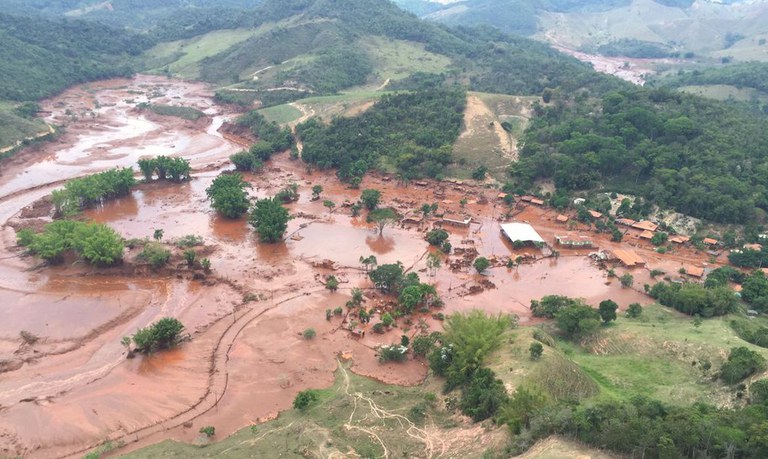
BHP faces a demand for at least £189 million ($253 million) in legal costs in the UK after being found liable for the 2015 Mariana tailings dam collapse at the Samarco iron ore mine in Minas Gerais, which killed 19 people and caused Brazil’s worst environmental disaster. The claim covers legal fees plus about £44 million spent on walk-in centres and call centre staff to communicate with roughly 620,000 affected people, and sits alongside a £36 billion ($48 billion) damages claim set for trial in October 2026. BHP is seeking permission to appeal, calling the costs “shocking” and pushing to defer any ruling on costs until after the damages phase.
Technical Brief
- UK claimants’ cost schedule includes about £44 million for walk‑in centres and call centres for ~620,000 people.
- Overall legal cost demand of at least £189 million is among the largest in British legal history.
- Damages phase in the UK is scheduled for October 2026, with liability already determined in principle.
- BHP is seeking permission to appeal and has asked the High Court to defer final cost rulings.
- Dispute centres on proportionality of claimant law firm Pogust Goodhead’s spending and transparency of cost breakdowns.
- Parallel Australian shareholder class action over the same dam failure saw law firms’ fee share lifted from 15% to 50%.
- For similar tailings failures, investigations typically combine breach back‑analysis, piezometric reconstruction, and independent review of design, construction and operational controls.
- Long‑term remediation and safety management usually require downstream water and sediment monitoring, dam stability reassessment, and upgraded emergency warning and evacuation protocols.
- Scale of legal exposure is likely to drive stricter corporate governance and independent oversight of tailings storage facility safety across large miners.
Our Take
In our database of 383 mining stories, BHP features heavily on the growth side – for example with the US$840 million Olympic Dam copper expansion and the WAIO power-network deal – so a £36 billion damages claim tied to the Samarco iron ore failure sits in sharp contrast to its current capital-allocation narrative.
The scale of the UK claim linked to the Mariana dam failure could influence how BHP prices legal and ESG risk into new iron ore and copper projects, particularly in Brazil and Argentina, where permitting and community consent for tailings and water infrastructure are already among the most scrutinised in South America.
Given projections in our coverage that copper may enter structural deficit from 2026, prolonged legal overhangs for BHP around Samarco could subtly shift its portfolio emphasis toward lower-liability copper assets such as Olympic Dam, while making high-stakes greenfield projects like San Jorge in Mendoza harder to advance without stronger social licence safeguards.
Prepared by collating external sources, AI-assisted tools, and Geomechanics.io’s proprietary mining database, then reviewed for technical accuracy & edited by our geotechnical team.
Related Articles

Related Industries & Products
Mining
Geotechnical software solutions for mining operations including CMRR analysis, hydrogeological testing, and data management.
Construction
Quality control software for construction companies with material testing, batch tracking, and compliance management.
CMRR-io
Streamline coal mine roof stability assessments with our cloud-based CMRR software featuring automated calculations, multi-scenario analysis, and collaborative workflows.
HYDROGEO-io
Comprehensive hydrogeological testing platform for managing, analysing, and reporting on packer tests, lugeon values, and hydraulic conductivity assessments.
GEODB-io
Centralised geotechnical data management solution for storing, accessing, and analysing all your site investigation and material testing data.