BGS Central North Sea sandstone CO₂ study: storage design insights for engineers
Reviewed by Joe Ashwell
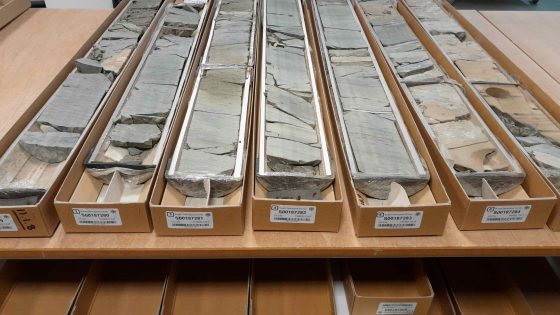
First reported on New Civil Engineer
30 Second Briefing
The British Geological Survey has launched a multi-year programme to map and assess CO₂ storage potential in Triassic and Jurassic sandstone formations beneath the Central North Sea, using legacy hydrocarbon well logs and 3D seismic data. Geoscientists will evaluate porosity–permeability distributions, caprock integrity and pressure limits to define storage units suitable for multi-million-tonne injection linked to UK industrial clusters. Results are expected to guide site selection, well design and monitoring strategies for future offshore carbon storage licences.
Technical Brief
- 3D seismic interpretation will be integrated with well correlations to delineate laterally continuous reservoir–seal pairs.
- Geomechanical modelling will assess in-situ stress regimes and fault reactivation risk under CO₂ injection pressures.
- Caprock evaluation will focus on shale and mudstone units overlying sandstones, including fault juxtapositions.
- Outputs are intended to feed into licence-scale dynamic reservoir simulations and plume migration forecasts.
- Findings are expected to inform offshore well spacing, injector–producer patterns and pressure management strategies.
Our Take
Carbon dioxide storage pieces are still only a handful in our Environmental coverage, so work by the British Geological Survey in the Central North Sea signals that subsurface characterisation for CO₂ is moving from concept to more systematic assessment in the UK.
Using North Sea sandstones for CO₂ storage has strategic implications for the UK, as it can leverage existing offshore infrastructure and skills from hydrocarbons, potentially shortening lead times compared with onshore storage options highlighted in other Environmental research items.
For UK-based civil and marine contractors, BGS-led appraisal of offshore storage capacity suggests future demand for seabed investigation, well re-entry, and monitoring infrastructure, even though no specific project or licence award is attached to this research yet.
Prepared by collating external sources, AI-assisted tools, and Geomechanics.io’s proprietary mining database, then reviewed for technical accuracy & edited by our geotechnical team.
Related Articles
Related Industries & Products
Construction
Quality control software for construction companies with material testing, batch tracking, and compliance management.
Mining
Geotechnical software solutions for mining operations including CMRR analysis, hydrogeological testing, and data management.
CMRR-io
Streamline coal mine roof stability assessments with our cloud-based CMRR software featuring automated calculations, multi-scenario analysis, and collaborative workflows.
HYDROGEO-io
Comprehensive hydrogeological testing platform for managing, analysing, and reporting on packer tests, lugeon values, and hydraulic conductivity assessments.
GEODB-io
Centralised geotechnical data management solution for storing, accessing, and analysing all your site investigation and material testing data.