Geomechanics, Streamlined.
© 2026 Geomechanics.io. All rights reserved.
Yorkshire Water has appointed AtkinsRéalis to its AMP8 framework to deliver major water resource schemes from feasibility and hydraulic modelling through to construction‑ready design, commissioning support and mine water treatment studies. A core element is the Kielder Transfer Strategic Resource Option, investigating transfer of supplies from the 200‑billion‑litre Kielder Water reservoir to the Yorkshire Water and United Utilities regions to build an interconnected national grid‑style system. Additional projects include the Bradford Water Supply Resilience (Chellow 2) pathfinder, South Yorkshire Sources to replace Upper Derwent Valley supplies, and Nottinghamshire Mine Water Treatment for potable use and contamination control.
Robertson Construction Yorkshire & East Midlands has secured a place on Lot 1 of YORhub’s new £1.5bn YORbuild Major Works 2 Framework, covering public sector projects valued between £10m and £30m across the region. The lot is expected to procure complex new-build and refurbishment schemes such as schools, healthcare facilities and civic buildings, where early contractor involvement and integrated design-and-build delivery are typical. For civil and structural teams, this signals a steady pipeline of medium-scale projects requiring coordinated ground investigation, foundation design and materials specification under a common framework structure.
Portakabin has been approved as a supplier to Place Group’s Everything Estates frameworks, giving UK public sector clients direct-award access to its modular building solutions for both temporary and permanent facilities. The framework enables compliant procurement without a full OJEU-style tender, or via rapid mini-competitions, aimed at accelerating projects such as capacity expansions and replacement of ageing estate. For estates, capital and project managers, this offers a faster route to deploy modular classrooms, healthcare units or offices while tightening control over value for money and ROI.
Blackpool Council plans to award Hochtief Data Centre Partner UK Ltd the contract for Silicon Sands, an energy‑efficient data centre and 20,000 sq ft office/R&D hub at Blackpool Airport Enterprise Zone, backed by up to £300m of private investment. The scheme has a 6MW initial electrical supply from SP Electricity North West, with a new 32MVA primary substation under construction, on‑site solar planned, and future links to Irish Sea offshore wind and a district heat network using waste heat from cooling. Proximity to the CeltixConnect‑2 subsea cable, carrying roughly one‑third of US‑UK internet traffic with sub‑0.064s latency, positions the site for AI‑intensive and high‑bandwidth workloads.
Pick Everard, working under the Perfect Circle banner via the SCAPE Consultancy Framework, and specialist contractor Keltbray have completed remediation of the Waterfront East Park site for City of Doncaster Council. The project focused on making previously contaminated or derelict land suitable for redevelopment, with remediation delivered under a public-sector procurement route designed for rapid call-off and cost certainty. For geotechnical and civil teams, the scheme signals further brownfield preparation in Doncaster’s waterfront area, likely preceding higher-load urban development and associated infrastructure works.
Redevelopment of the Crystal Palace National Sports Centre has been approved by the London Borough of Bromley, with Morgan Sindall Construction appointed to deliver the scheme and WOO architects leading the masterplanning. The professional team includes Max Fordham for building services and environmental design, FaulknerBrowns as sports and leisure specialists, Alan Baxter Associates for structural and civil input, and Currie & Brown for cost and project management. The decision clears the way for detailed design of upgrades to the 1960s venue’s ageing structures and MEP systems.
Meeka Metals has intersected broad high-grade gold zones about 200m below the existing Turnberry underground Ore Reserve at its Murchison Gold Project in Western Australia, signalling scope to grow the current Mineral Resource. Diamond drilling returned 52.3m at 3g/t gold from 474.1m depth, indicating strong continuity of mineralisation well beneath the current reserve envelope. For mine planning and geotechnical teams, the deeper intercepts raise questions around future underground access design, rock mass conditions at ~500m depth, and potential extension of decline and ventilation infrastructure.
Core Lithium has appointed former Sirius Resources executive and current Chalice Mining chair Tim Goyder as an independent director and Audit Committee chair, as mining ramps up at its Finniss lithium project on the Cox Peninsula, south-west of Darwin in the Northern Territory. The appointment comes two months after Core restarted open-pit mining at Finniss, which targets spodumene-bearing pegmatites for lithium concentrate production. The move signals a focus on capital discipline and governance as the project advances towards sustained output in a volatile lithium price environment.
Australia’s Chief Scientist Professor Tony Haymet is pushing for deeper Australia–South Korea collaboration on critical minerals, batteries and hydrogen, centred on supply chain resilience and advanced processing technologies. Speaking at the Korea–Australia Future Forum in Seoul, he framed joint work on lithium, rare earths and battery materials as essential to both countries’ energy transition strategies and industrial competitiveness. For miners and processors, this signals potential Korean investment in Australian upstream projects and co-development of midstream refining and battery manufacturing capacity.
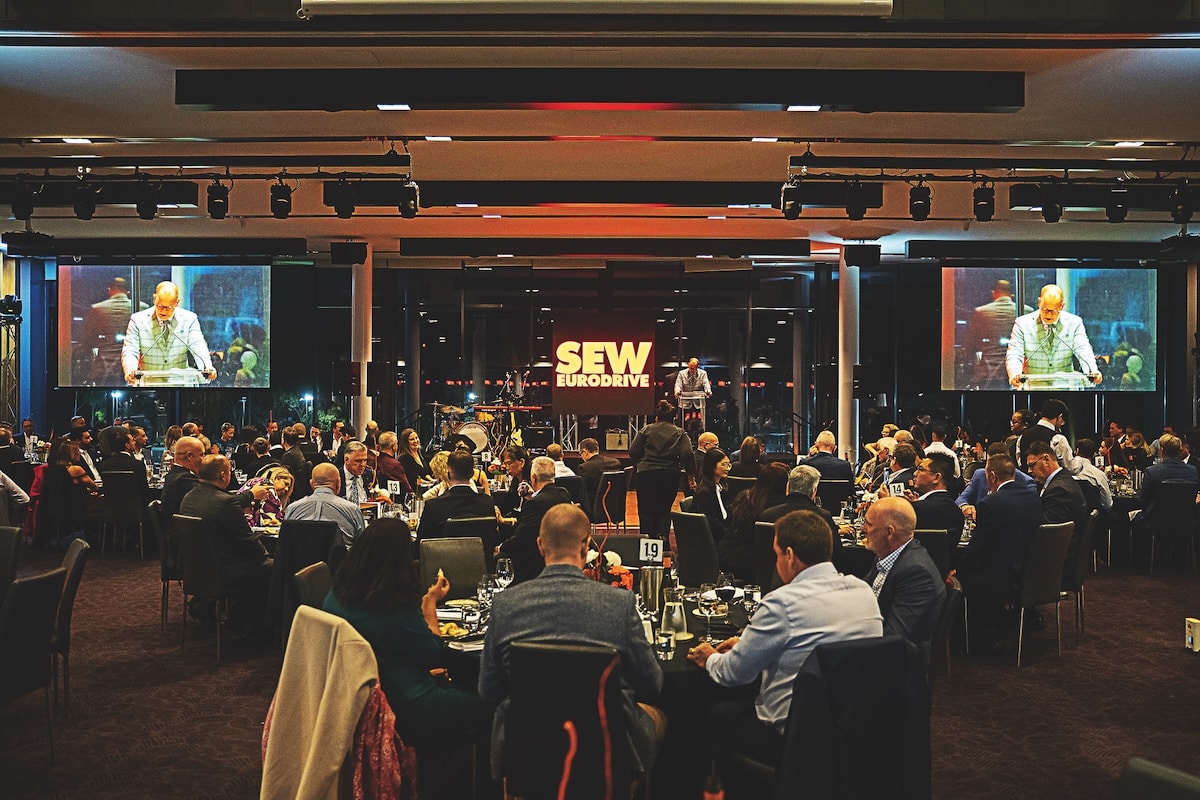
Finalists for the 2026 Australian Mining Prospect Awards have been announced across three individual and 16 group categories, spanning mine safety, environmental management, innovation and productivity. Winners will be named at Fraser’s Kings Park in Perth on 13 September, with categories again backed by major sponsors such as Epiroc, SEW‑EURODRIVE and Flexco. For site leaders and technical teams, the shortlist offers a quick scan of current best practice in areas like autonomous haulage, decarbonisation projects and advanced condition monitoring.
CRC Aeroclean industrial degreaser is now available in a non-flammable formulation, retaining its fast-acting performance on grease, oil and grime while reducing ignition risk around live electrical equipment and hot plant. The solvent blend is designed for use on motors, switchgear and other safety-critical assets where traditional flammable aerosols are restricted, supporting lock-out/tag-out and hot-work controls. Maintenance teams can clean heavily soiled components in situ, cutting the need for full disassembly and reducing downtime on conveyors, crushers and processing lines.
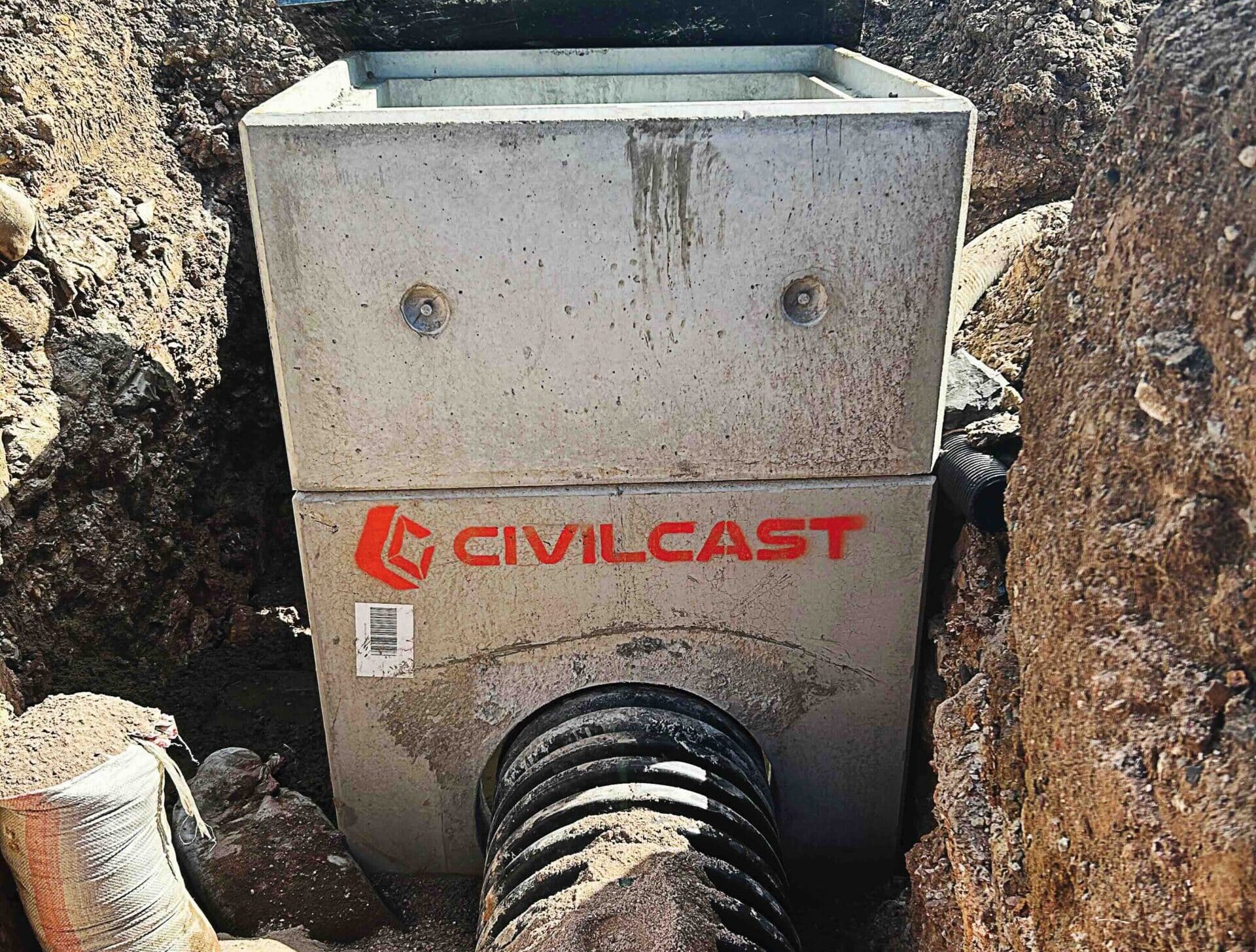
Civilcast is expanding its custom road pit design service, supplying precast pits, lids and access covers tailored to specific load classes, hydraulic capacities and utility layouts for road and drainage projects across Australia. The company works with designers to adjust pit dimensions, step configurations and grate geometries to suit site constraints, including non-standard carriageway widths, verge levels and tie-ins to existing stormwater networks. For civil and geotechnical teams, this allows earlier coordination of pit locations with pavement thickness, subgrade treatment and service corridors, reducing rework during construction.
Glencore has placed a US$250 million order with Finning’s South America business to supply more than 20 large Caterpillar mining trucks, ancillary equipment and technology support for the planned 2026 restart of the Alumbrera copper mine in Argentina. The package, disclosed in Finning’s Q1 2026 results, centres on fleet renewal and digital support rather than life-extension of legacy units. For mine planners and maintenance teams, the scale and timing signal a shift towards a modernised, OEM-supported truck fleet ahead of full production ramp-up.
Marlborough Highways has secured its first Medway Council contract, a £375,000 junction upgrade at the A2 High Street/Mierscourt Road intersection in Rainham, scheduled to start in mid-July during the school summer holidays. The works package covers carriageway planing and resurfacing, drainage and ducting, new kerbs, footway and paving upgrades, plus replacement street furniture, traffic signs and street lighting. Marlborough plans to staff core delivery teams with Kent-based operatives, source materials from local suppliers, and run post-project employability workshops and scheme briefings for a Kent school.
Wates Group has appointed Kevin Grace as commercial director for Wates Construction London, following April’s confirmation of George Mosey as managing director, as part of a reset of its London construction business. Grace joins from Mace Construct, where he was commercial lead on the £1.1bn British Library extension, bringing UK and Australian major-projects experience in commercial management. He will take up the role in October, leading commercial strategy on large-scale, high-value public and private sector schemes across the capital.
Woodalls has expanded its European delivery team, appointing former Unispace leaders Melisa Armocida as project director in France (Paris-based) and Marielena Sardi as project manager in Spain (Madrid-based) to oversee complex workplace, luxury retail and high-end commercial fit-out programmes. Armocida brings more than 15 years’ experience from Unispace, WeWork and JLL delivering multi-country corporate interiors across Europe, the Middle East and Latin America, while Sardi adds eight years’ experience managing Southern Europe workplace projects for multinational clients. The move targets rising demand from US enterprise occupiers seeking consistent pan-European project execution with strong local market knowledge in France and Spain.
Henry Brothers has opened its sixth UK office in Edinburgh, giving the contractor a permanent east coast base to complement its existing Glasgow operation. The firm has been active in Scotland since 1997, recently delivering education projects at Frogston and Aberlady primary schools and defence works at HMNB Clyde, RNAD Coulport, RAF Lossiemouth and the Army Reserve Centre in Dunfermline. Regional director for Scotland Nick McKeown says the capital base will support further UK expansion as the company approaches its 50th anniversary.
Structural timber’s role in accelerating UK housebuilding was pushed at a Palace of Westminster panel chaired by Matt Turmaine MP and Baroness Ritchie, with senior figures from the Structural Timber Association, Egger UK, Lowfield Timber Frames and Places for People addressing major housebuilders and social housing providers. STA CEO Andrew Orriss noted that seven of the UK’s top 15 housebuilders plan to manufacture in timber frame, aligning with DEFRA’s Timber in Construction Roadmap and Net Zero 2050 targets. Timber’s lower embodied carbon and carbon sequestration were positioned as key advantages over traditional materials.
EcoVadis has awarded MKM Building Supplies a Gold medal, placing the independent merchant in the top 5% of 150,000 companies assessed worldwide for environmental, ethical, labour and human rights, and sustainable procurement performance. Key measures include opening its first two BREEAM Excellent certified branches in Cheltenham and Wolverhampton, rolling out electric forklift trucks across the network, and tightening supplier requirements via a strengthened Code of Conduct. For specifiers and contractors, MKM is also widening access to renewable heating technologies, energy‑efficient products and lower‑carbon construction solutions aligned with evolving UK building regulations.
Keon Homes has started construction on 32 new council homes in Wolverhampton’s Heath Town district, marking the second phase of the local authority’s housing programme. The scheme is supported by upgrades to the district heat network, signalling a move towards more centralised, low-carbon heat supply for the estate. For civil and building engineers, the key issues will be integrating new dwellings with existing estate infrastructure and coordinating utility corridors and plant space for the expanded heat network.
Passive dust control retrofits for belt conveyor transfer points are being promoted by Martin Engineering, focusing on sealing the chute enclosure and managing internal airflow so fine particles settle back onto the material stream instead of escaping. The approach relies on properly designed skirting, wear liners and curtain arrangements rather than powered extraction, aiming to reduce spillage, respirable dust and housekeeping demands around loading zones. For brownfield mines, the concept offers a low-energy alternative to baghouses and ducting, but depends heavily on tight sealing and accurate control of entry and exit air paths.
LoopX has signed a three‑year R&D partnership with Vale Base Metals to develop and validate “Physical AI” systems for underground operations, targeting intelligent and autonomous mining fleets. CEO and founder Chao Yu says the work will focus on AI-powered control that can directly interact with physical mining environments, aiming to improve safety and productivity in confined headings and dynamic stopes. For engineers, the deal signals accelerated testing of autonomy algorithms, sensing suites and decision systems in real production drifts rather than only in lab or surface testbeds.
Skills shortages across civil engineering and construction are increasing workplace risk, RoSPA warns in a new report, as experienced supervisors, temporary works coordinators and plant operators are stretched thinner on complex sites. The charity links gaps in competence to poorer control of high‑risk activities such as lifting operations with mobile cranes, work at height on scaffolds and excavations near live services. RoSPA urges contractors and clients to prioritise formal competence assessment, targeted refresher training and tighter supervision ratios rather than relying on inexperienced agency labour to fill vacancies.
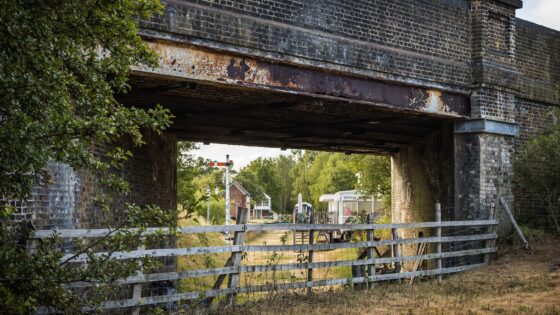
Campaigners have launched a petition against National Highways’ plan to infill a 125-year-old masonry railway bridge in Hertfordshire, attracting around 700 signatures in its first week and branding the works “vandalism”. The structure, part of the Historical Railways Estate, is reportedly earmarked for concrete or granular infill to remove the need for ongoing structural inspections and strengthening. Opponents argue that infilling will preclude future active travel or light rail reuse and want a repair-and-monitor regime instead of permanent burial of the arch barrel and abutments.