Geomechanics, Streamlined.
© 2026 Geomechanics.io. All rights reserved.
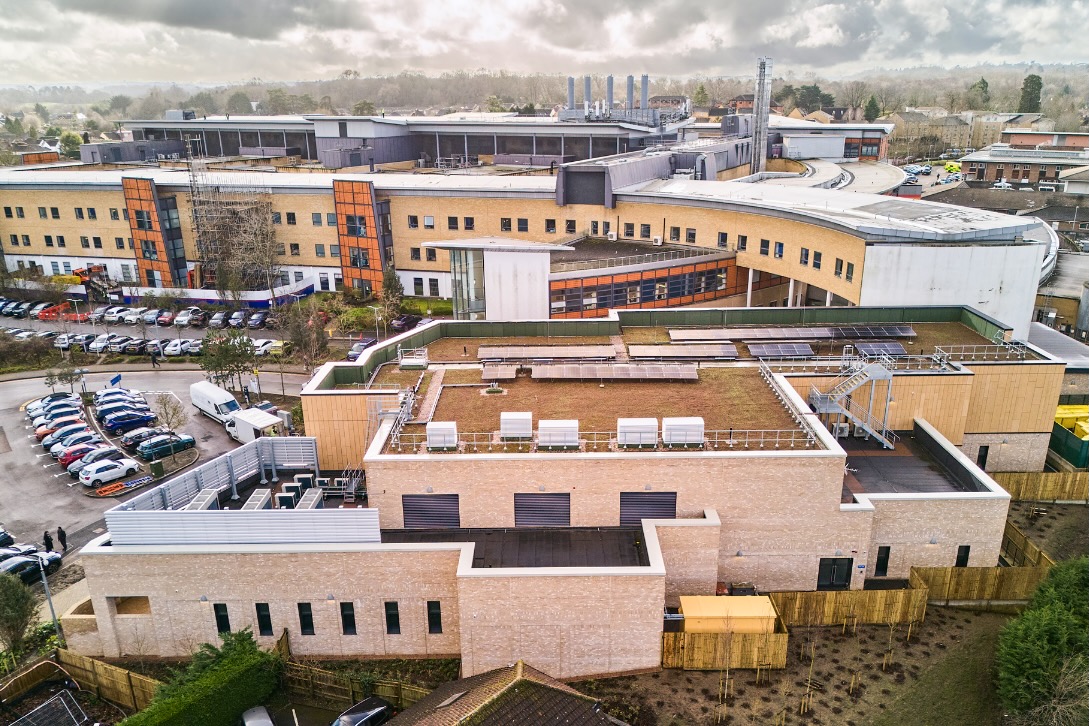
Perega has completed structural design for a new endoscopy centre at Princess Royal University Hospital, delivering first-floor slabs capable of supporting heavy clinical plant, including a large water tank, and integrating surgical pendant arms hung from the first-floor soffit. Floor plates were engineered for tight vibration sensitivity limits to maintain stability during delicate procedures. A 13 m suspended transfer structure using 1.4 m-deep, 2 m-wide concrete beams was installed at ground-floor level to bridge a limited-capacity underground tank, with retaining walls and pile layouts coordinated around multiple buried services.
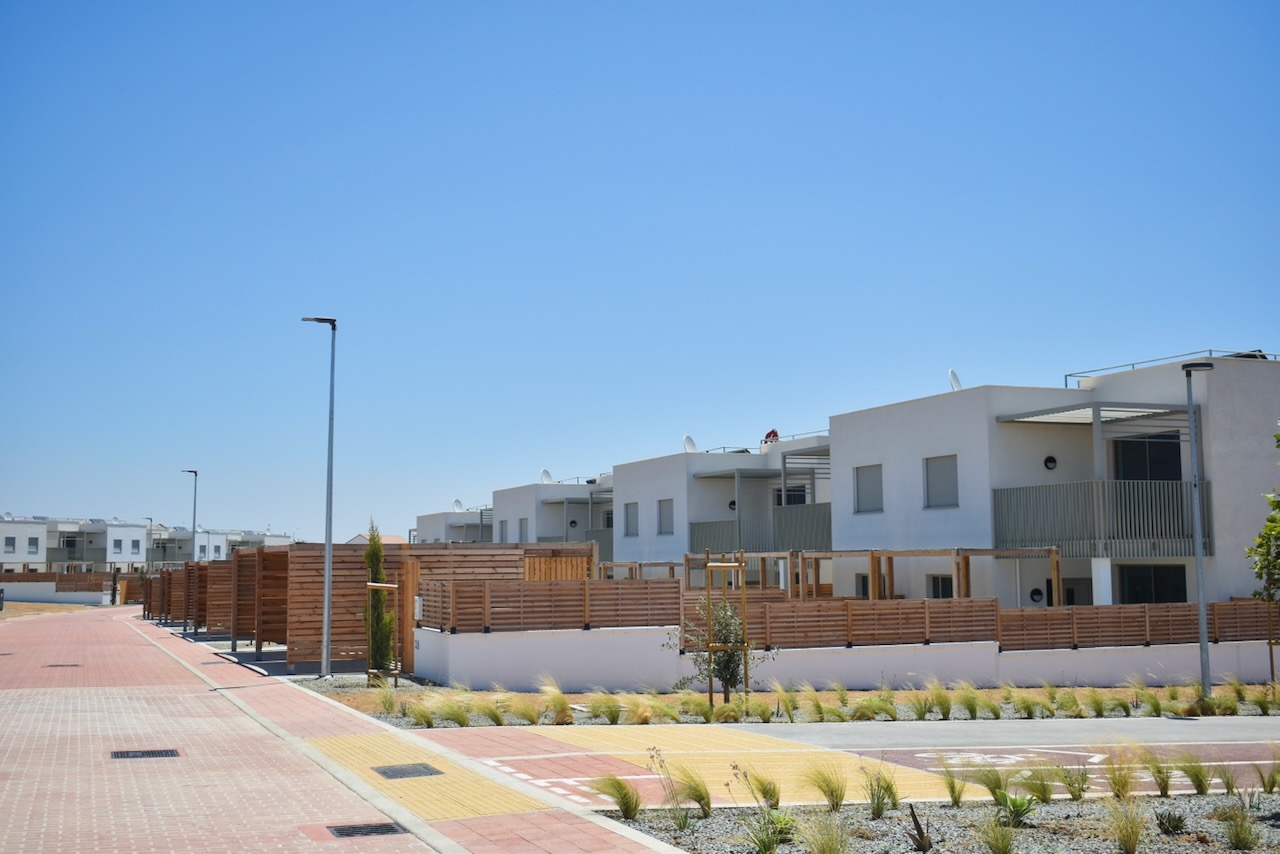
Completion of the first of 138 new service homes at Dhekelia Station in Cyprus by the Lagan Iacovou Joint Venture marks a key delivery milestone for the UK Defence Infrastructure Organisation and Cyber and Specialist Operations Command. The housing programme will replace ageing stock across the garrison with modern, energy‑efficient accommodation designed to UK defence estate standards for year‑round Mediterranean conditions. For civil and building engineers, the scheme signals sustained demand for robust, thermally efficient envelope design, resilient utilities, and low‑maintenance materials in overseas defence infrastructure.
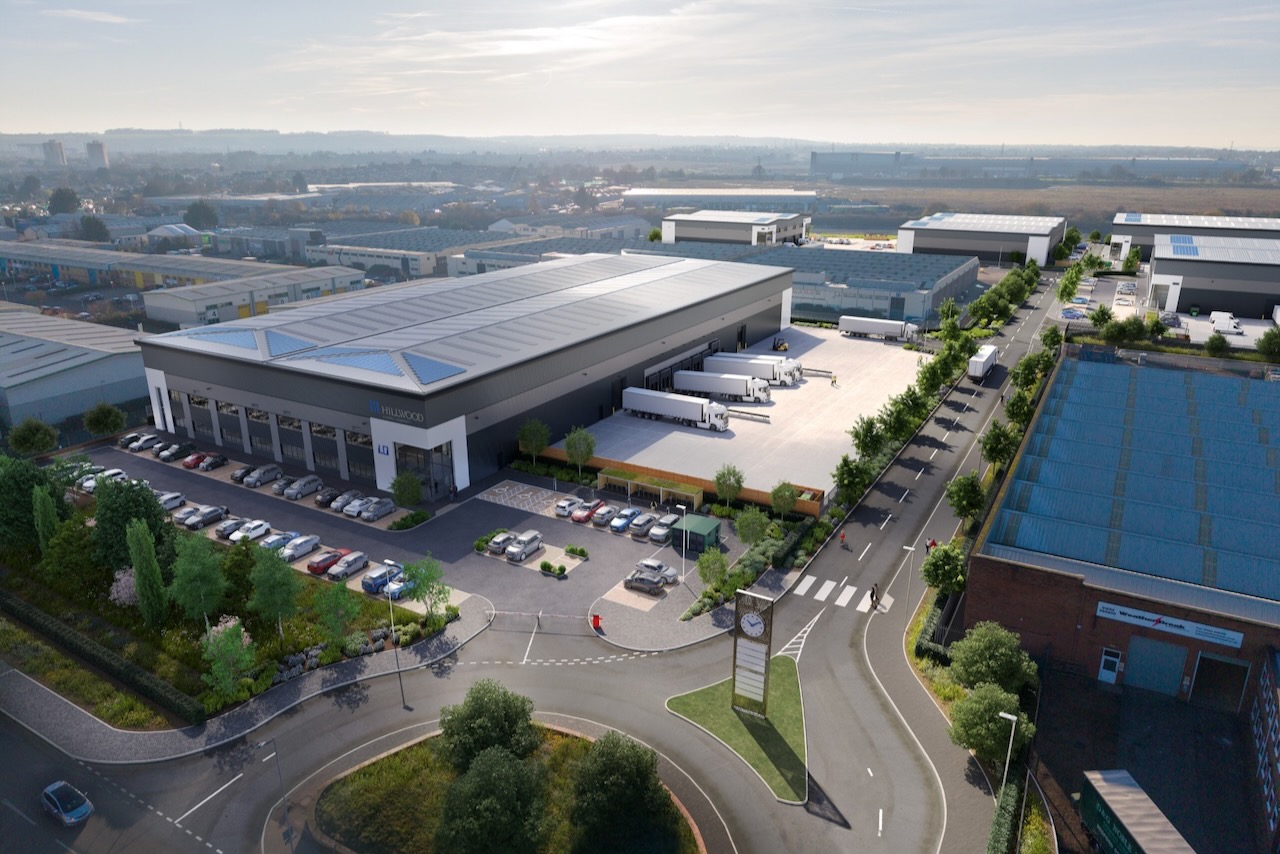
Hillwood Investment Properties has secured a £76.4m development finance facility from Affinius Capital to deliver two speculative logistics schemes in Luton and east London. The Luton project comprises a Grade A, c.286,000 sq ft scheme of eight units in five buildings along the M1 corridor, aimed at institutional specification occupiers with direct access to Central London and the Midlands. In Canning Town (E16), the funding backs a c.43,659 sq ft freehold last‑mile warehouse, with both sites targeting BREEAM Excellent, signalling strong demand for high‑spec urban logistics space.
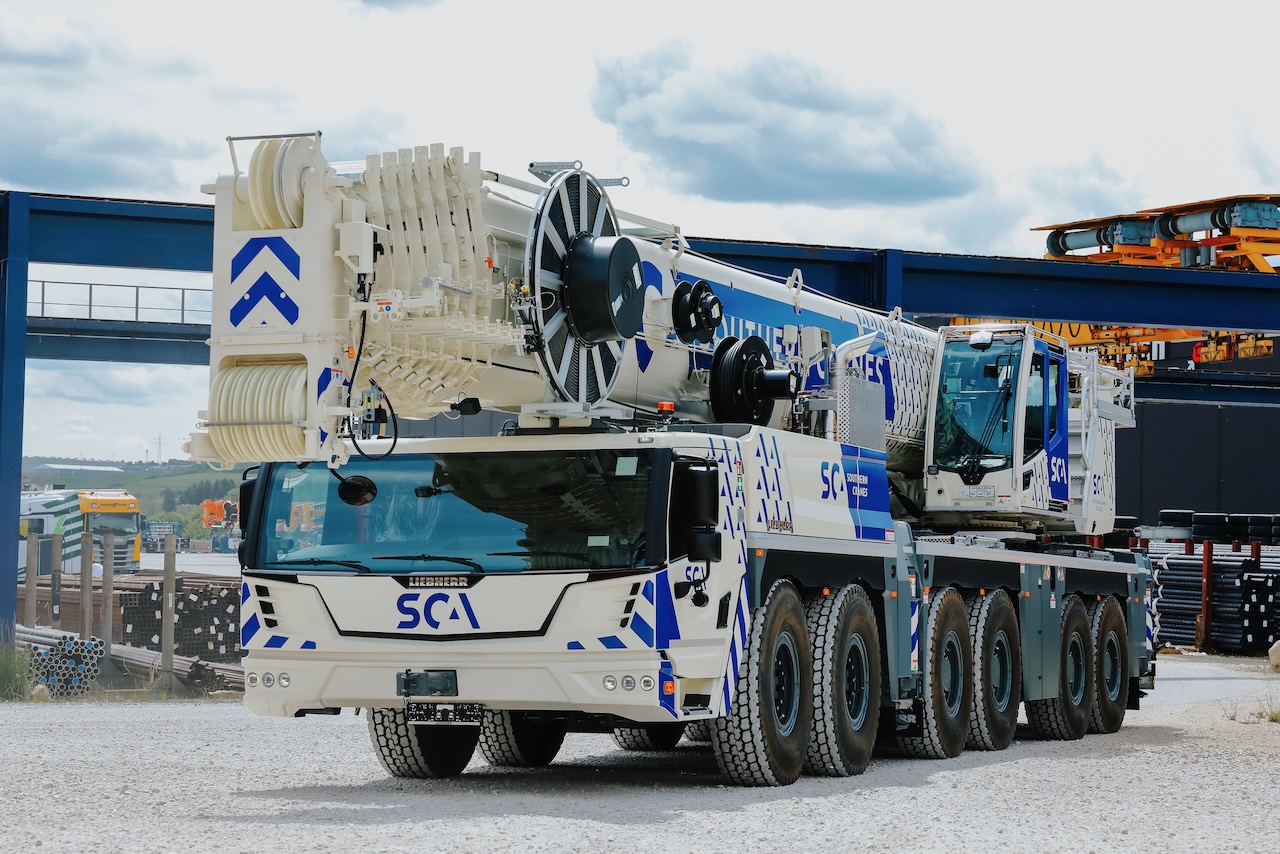
Southern Cranes & Access has added a 300-tonne Liebherr LTM 1300-6.4 with an eight-section 90-metre boom, 120-metre maximum hook height and 94-metre radius, roadable at a 12-tonne axle load, plus LICCON3 controls, VarioBase Plus and VarioBallast for tighter urban sites. A 150-tonne LTM 1150-5.3 brings a 66-metre boom, up to 92-metre hook height using a seven-metre extension, and carries 29 of its 45 tonnes of counterweight under UK STGO rules, cutting support transport. The 150-tonner is already working in London, including a “pin drop” lift at the Southbank Centre’s 75th anniversary.
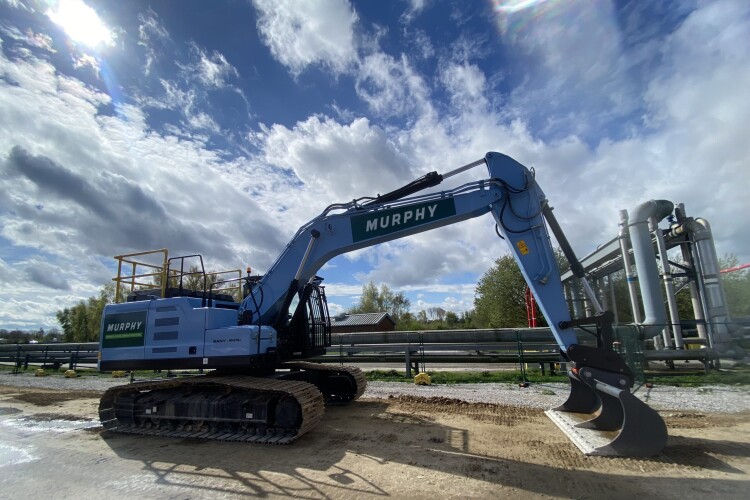
Innovation agency Connected Places Catapult is inviting UK-registered SMEs with deployment-ready diesel-free construction plant or site power solutions to trial them on live Strategic Pipeline Alliance sites with Costain and Anglian Water. Up to four firms will receive up to £60,000 each for four-month demonstrations, plus access to site data, industry experts and tailored commercial support to build quantified evidence of on-site performance. The initiative targets proven alternatives to conventional diesel excavators, generators and ancillary equipment, aiming to de-risk client procurement and accelerate wider fleet transition.
Future Homes Hub has released version 3 of its Whole Life Carbon Assessment tool for new homes, aligned with the RICS Whole Life Carbon Assessment Professional Standard (2nd edition) and incorporating sector-specific defaults, assumptions and methodologies. The 2026 update extends the Conventions to cover site infrastructure, adding standard scopes for site preparation, estate roads, utilities and off-plot works that were previously a “data black hole”. For developers and civil engineers, this enables more comprehensive, comparable embodied carbon reporting across multi-site housing schemes and clearer allocation of infrastructure emissions.
Explosive growth in artificial intelligence is sharply increasing water demand at data centres, where server cooling for every AI prompt can consume vast volumes of water through evaporative and chiller-based systems. New analysis cited by ISOIL Industria points to “hidden” withdrawals at hyperscale facilities, particularly in water‑stressed regions, where cooling towers and adiabatic systems can rival local industrial use. For miners hosting or supplying power to such centres, the findings signal a need for integrated water‑balance modelling, metering and reuse strategies to protect allocations for processing plants and communities.
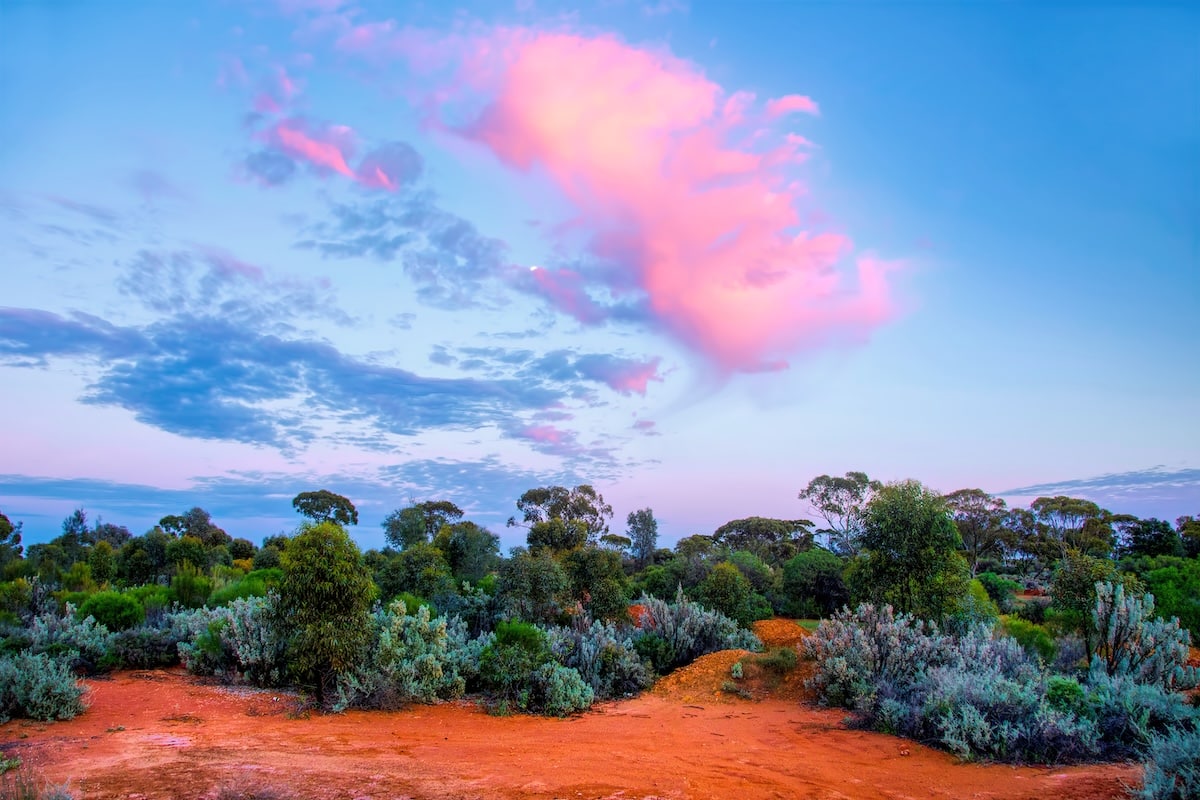
Minerals 260 has advanced its Bullabulling gold project near Coolgardie, Western Australia, into a new phase targeting first gold in late 2028 and growth beyond the current 6.2‑million‑ounce mineral resource estimate. The program combines infill and extensional drilling on the main Bullabulling Trend with regional exploration across newly consolidated tenure to test additional shear‑hosted gold targets. Workstreams now also include mining studies and project approvals to bring the open‑pit operation to production readiness on a similar timeframe to other large-scale WA gold projects.
Emerald Resources’ Dingo Range gold project in Western Australia has secured final works approval from the state’s Department of Water and Environmental Regulation, fully permitting the site for development and operations. The decision clears the last major regulatory hurdle, enabling Emerald to accelerate construction of processing and support infrastructure in the Goldfields region. Project teams can now move from permitting to detailed execution planning, including earthworks, plant installation and water management systems under the approved conditions.
Motion has redesigned a remote coal mine train loadout system with advanced electro-hydraulic control, replacing a mechanically driven gate that produced violent, uncontrolled movement each loading cycle. The new system uses proportional hydraulic valves, position feedback on the gate, and programmable logic control to modulate opening speed and travel, cutting impact loads on the structure and rolling stock. Operators report safer access around the loadout, more consistent wagon fill accuracy, and reduced unplanned downtime from structural fatigue and mechanical failures.
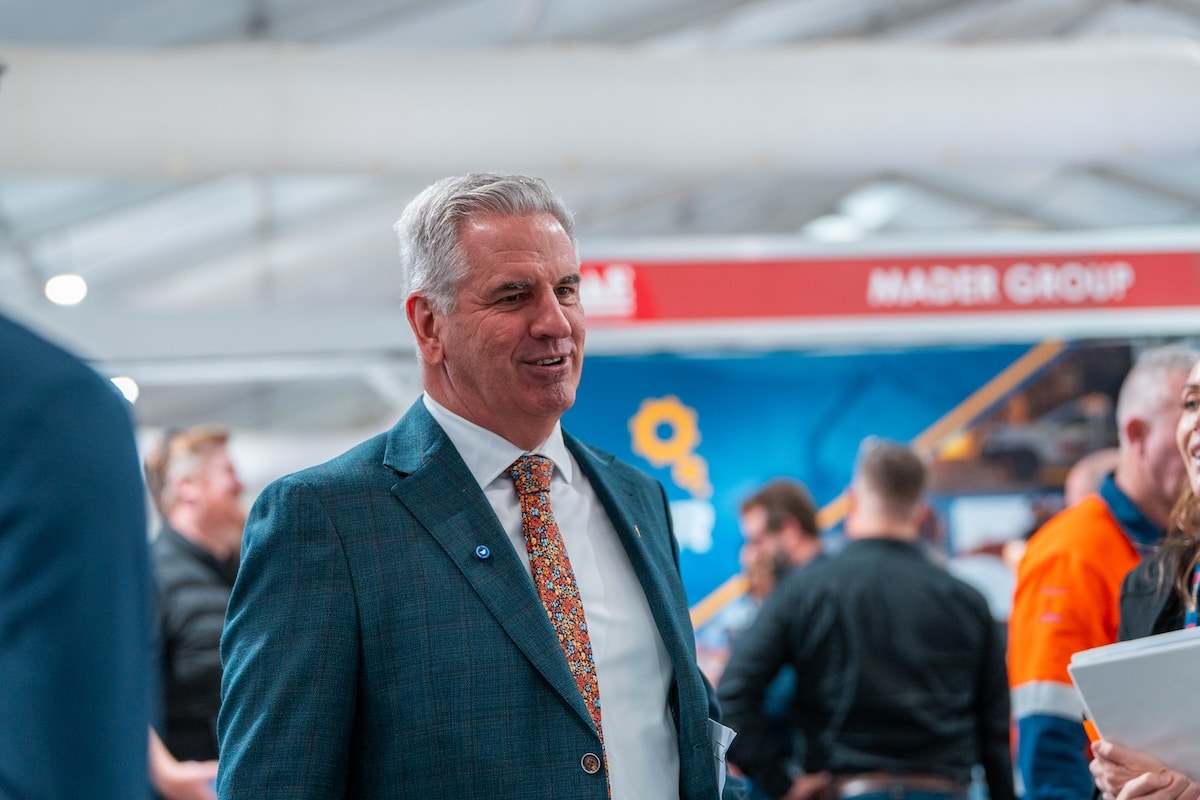
Queensland is ramping up its bid to be a global critical minerals hub, with Resources and Mining Minister Dale Last using the Queensland Mining Expo in Mackay to stress long-term policy stability and regulatory certainty as the state’s key advantage. Last is targeting new investment across copper, vanadium, rare earths and high‑purity alumina, building on existing coal and gas infrastructure, established rail-to-port corridors and regional processing centres. For miners and contractors, the message is that approvals, tenure security and supporting infrastructure will be geared to de-risk multi-decade critical minerals projects.
CRH reported second-quarter revenues of $10.8bn, up 6%, with adjusted EBITDA rising 7% to $2.6bn, driven by 10% revenue growth in its Americas Materials Solutions business and 5% growth in Europe from infrastructure and reindustrialisation demand. The group agreed an $8.5bn acquisition of Arcosa to strengthen its aggregates and critical infrastructure footprint in North America, while completing three non-core divestitures. For contractors and materials suppliers, this signals sustained demand for asphalt, aggregates and concrete, particularly in US and European infrastructure pipelines.
Currie & Brown has appointed Mike Bull as head of infrastructure for England and Wales, with a remit to grow project and programme management work in regions outside London and the South East. Bull brings 23 years’ experience from roles including strategy and programme director at Midlands Connect and leadership positions on the Midlands Rail Hub, HS2 Phase 2b between Manchester and Birmingham, and motorway investment programmes. Currie & Brown signals a push to support clients on investment decisions, risk management and business case development across major transport and network schemes.
The Department of Health and Social Care has named construction partners for 11 new NHS hospitals under the standardised Hospital 2.0 programme, including Graham for Airedale, Willmott Dixon for Royal Cornwall, Laing O’Rourke for Hillingdon, Skanska for James Paget and Queen Elizabeth King’s Lynn, and a Vinci–Sir Robert McAlpine JV for Leighton. Further awards go to Kier for Hinchingbrooke, Sacyr UK for Frimley, Morgan Sindall for Milton Keynes, Bovis for Manchester, and Dragados for West Suffolk. Standardised design and repeatable components are intended to shorten procurement and delivery cycles and give contractors clearer forward workload visibility.
Taylor Wimpey reported a 19.4% drop in adjusted operating profit in the first half of the year, as margins contracted by 2 percentage points despite revenue edging up 1.7% to £1.683bn. The UK housebuilder said it is prioritising tighter cost control across its build programmes and supply chain to protect returns in a flat volume and price environment. Contractors and materials suppliers to Taylor Wimpey can expect continued pressure on unit costs, programme efficiencies and value engineering on new housing and infrastructure-related packages.
The Construction Equipment Association and Hire Association Europe have agreed reciprocal membership, linking CEA’s roughly 150 construction equipment OEMs, component and attachment manufacturers, distributors and service providers with HAE’s 700 hire-sector members, including about 100 OEMs and suppliers. The move formalises existing joint work on theft, asset management and taxation, giving manufacturers, suppliers and hire companies a more unified channel to influence equipment standards, security measures and fiscal policy. For plant owners and hirers, closer coordination could accelerate consistent approaches to asset tracking, anti-theft technologies and lifecycle management across the supply chain.
Namibia’s expanding uranium, gold and copper sector is drawing new investment, and AECI Mining argues that project success will hinge on how efficiently operations manage scarce water and other natural resources. The company promotes integrated blasting, reagent and water-treatment packages tailored to arid conditions, linking emulsion explosives, process chemicals and closed-loop water circuits to cut freshwater intake and improve plant stability. For mine planners and process engineers, the message is to embed water stewardship into early pit design, tailings strategies and plant selection rather than bolt-on compliance later.
Lane Xang Minerals Limited Company has opened the Discovery Deeps 2 (DD2) underground operation at the Sepon gold-copper mine in Lao PDR, advancing its shift from open pit to modern underground mining. DD2 follows earlier underground developments at Sepon and is expected to build on the mine’s 2025 copper output of around 7,000 t, with ore sourced from deeper sulphide zones. The expansion signals longer mine life, more complex ground control and ventilation requirements, and increased demand for skilled underground operators and contractors in the region.
Mining Remediation Authority is preparing a four-year professional services framework worth up to £9.4M to procure construction, environmental and technical support for legacy mining liabilities across the UK. The framework will cover investigation, design and supervision of remediation works such as minewater treatment schemes, ground stabilisation over abandoned workings and management of contaminated spoil. Consultants can expect multi-year call-off contracts focused on risk assessment, detailed geotechnical and hydrogeological modelling, and regulatory support for schemes affecting both surface and subsurface infrastructure.
Plans for the Northfleet Harbourside regeneration in Gravesend, Kent – including 3,500 homes on a 20ha Thames waterfront site – have been refused over concerns residents could face “chronic exposure to toxic lead”. The brownfield site, formerly used for heavy industry, was judged to pose an unacceptable long-term health risk despite proposed remediation measures. The decision signals tougher scrutiny of contamination risk assessments and remediation strategies on large riverside regeneration schemes with legacy industrial pollution.
Ottawa has issued the first mining approval under the amended 2019 Impact Assessment Act for Canada Nickel’s $3.5‑billion, two‑stage Crawford polymetallic project, 40 km north of Timmins, planned to produce 1.6 million tonnes of nickel, 58 million tonnes of iron and 2.8 million tonnes of chrome over at least 41 years. Canada Nickel reports a post‑tax NPV of $2.8 billion, IRR of 17.6%, and $2.5 billion of arranged financing, including $500 million from Export Development Canada and a 10% equity option for Samsung SDI. The project’s in‑process tailings carbonisation aims to geologically sequester about 1.5 million tonnes of CO2 per year by injecting concentrated CO2 into mill tailings.
Agnico Eagle is maintaining its 2026 production guidance of 3.3–3.5 million oz despite a July 1 pit wall movement at the Barnat pit, Canadian Malartic, that permanently removed 370,000 oz from the mine plan and will cut 60,000–80,000 oz from 2026 output. The company produced 856,000 oz in Q2, generated record free cash flow above US$1.3 billion, and ended the quarter with US$3.5 billion in cash and a US$3.3 billion net cash position after US$625 million in dividends and buybacks. Management is advancing five key development projects, including the Hope Bay build-out targeting 450,000 oz/year, while flagging 3%–4% labour inflation and diesel as a potential 2027 cost pressure and accelerating critical safety controls across operations.
Emerita Resources has filed a claim in the Ontario Superior Court seeking an equitable interest and constructive trust over Lithium Ionic’s Bandeira lithium project in Brazil and certain Lithium Ionic securities held by former directors and officers, alleging project rights were diverted from its Falcon lithium project. The dispute follows Ontario Securities Commission proceedings launched in April against former executives of Emerita, Falcon Metals, Lithium Ionic and Brazilian subsidiary MGLIT Empreendimentos, prompting multiple board resignations. With Bandeira’s feasibility study outlining an 18.5‑year mine life and 177,000 t/y of spodumene concentrate, the case directly affects one of Brazil’s most advanced hard‑rock lithium projects.
Cameco’s 49%-owned Westinghouse Electric has confidentially filed a Form S-1 for a US IPO, three years after Cameco and Brookfield Renewable paid about C$11 billion for the AP1000 reactor maker, which now contributes roughly 25% of Cameco’s EBITDA. Analysts at Desjardins value Cameco’s Westinghouse stake at about C$15.1 billion, while Scotia notes the IPO timing is several years earlier than expected and the window could extend to 2029. The move comes as Westinghouse lines up with a US government partnership targeting at least US$80 billion of new AP1000 builds and US$17.5 billion in DOE reactor loans.