Geomechanics, Streamlined.
© 2026 Geomechanics.io. All rights reserved.
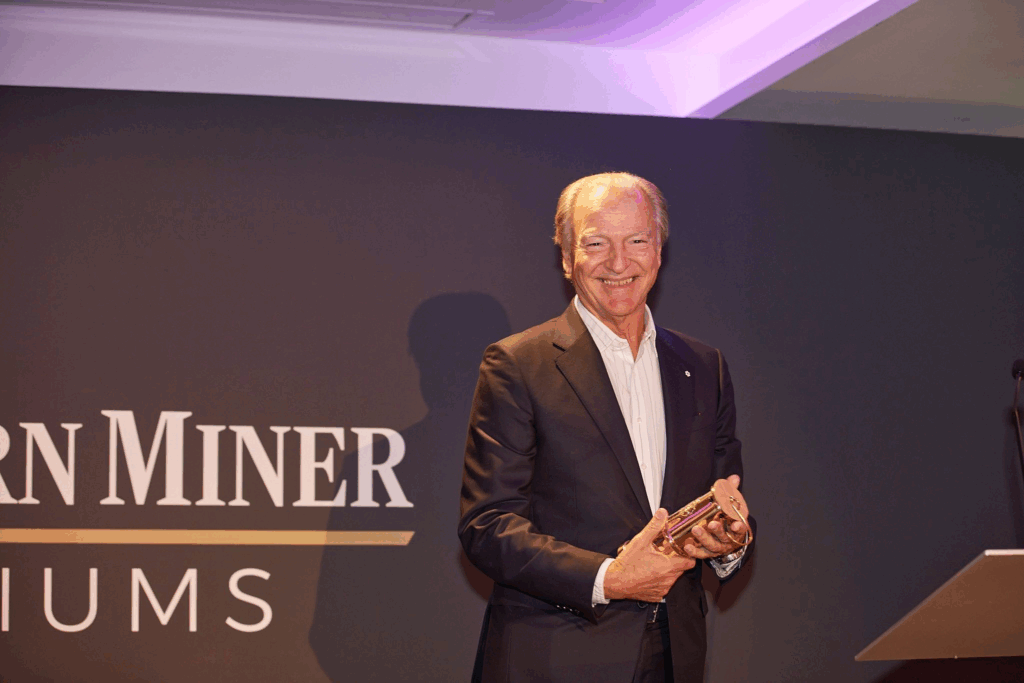
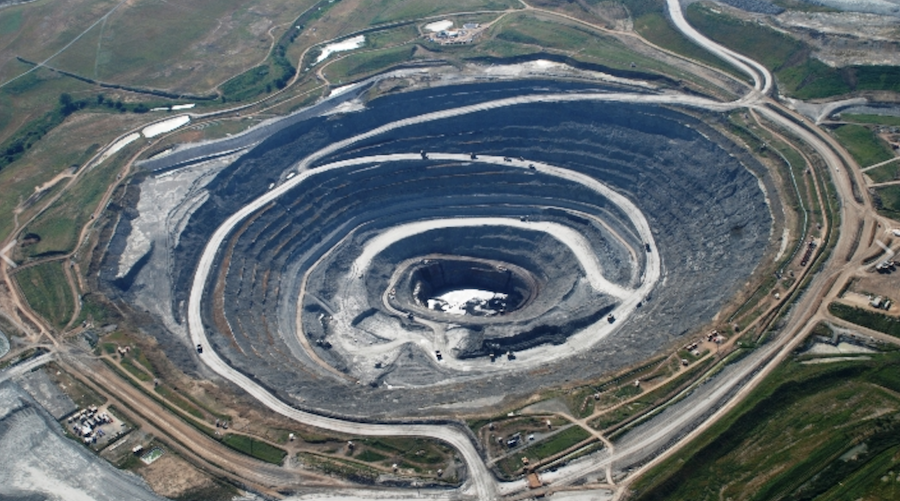
Iamgold COO Bruno Lemelin, named Northern Miner Group’s EY Operator of the Year, has led the Côté open-pit mine in Ontario to commercial production at its 36,000 t/d plant, drawing on 233 Mt at 0.96 g/t for 7.17 Moz over an 18-year life and targeting average output of 365,000 oz/y. Third-quarter production reached 106,000 oz from Côté, Essakane (92,000 oz) and Westwood (23,000 oz), generating US$707 million revenue at an average realised gold price of US$3,492/oz and AISC of US$1,956/oz. Expansion work includes 55 km of drilling at the adjacent Gosselin deposit (4.4 Moz indicated, 3 Moz inferred) to test a “super-pit” concept lifting throughput from 13 Mt/y to up to 20 Mt/y, while Essakane life extension drilling proceeds under Burkina Faso’s tougher 2024 mining code and Côté ramps autonomous haulage and AI-enabled control-room operations.
Copper prices surged again on Friday, with London Metal Exchange contracts hitting a record $12,282/t before the Christmas break and Shanghai Futures Exchange prices briefly touching 100,000 yuan/t (~$14,270/t), creating a sharp premium over New York. Comex March copper climbed more than 5% to $5.903/lb (~$13,000/t), its highest since July’s short squeeze, as 2025 production was hit by accidents at Grasberg, Kamoa-Kakula and Codelco’s El Teniente. BMO now projects an average $12,500/t by Q2 2026, while Goldman Sachs still sees a 160 kt surplus capping prices at $10,000–$11,000/t.
B2Gold is closing 2025 with commercial production at the Goose mine in Nunavut, targeting 4,000 tonnes per day and about 300,000 oz. gold annually, while maintaining Fekola output in Mali at 515,000–550,000 oz. under a split open-pit/underground plan. CEO Clive Johnson is leveraging his Bema Gold experience in remote Russia to manage Goose’s long, seasonal ice-road supply chain and complex permitting under Mali’s 2023 mining code for trucking satellite ore to the Fekola mill. Additional growth options include the Antelope underground discovery at Otjikoto in Namibia (1.75 Mt at 6.91 g/t for ~390,000 oz.) and a 9.9% strategic stake in Snowline Gold’s Valley project in the Yukon.
Gold, silver and platinum hit fresh records on Friday, with spot gold touching $4,540/oz, February Comex futures peaking at $4,584/oz and March silver futures jumping over 9% to $78.30/oz, as palladium surged 13% to above $2,000/oz. Gold is heading for a >70% annual gain, driven by robust central bank buying and ETF inflows, including SPDR Gold Shares (GLD) increasing its holdings by more than 20% and physically backed funds taking in $82 billion (749 tonnes) by 22 December. Silver has rallied 160% in 2025 amid an October short squeeze, ongoing supply dislocations between London and New York vaults, and a pending US Commerce Department probe that could impose tariffs or trade restrictions.
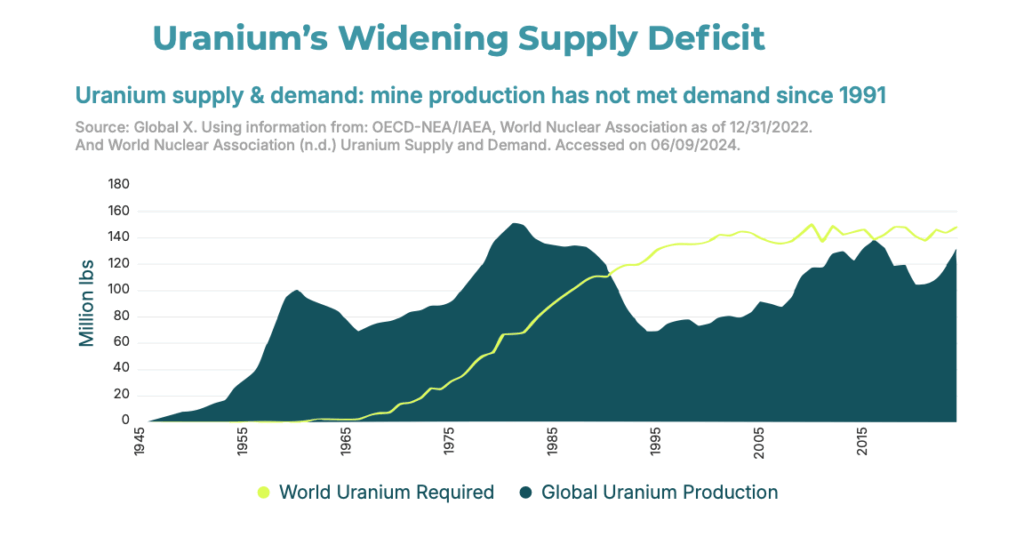
Artificial intelligence–driven power demand from hyperscale data centres is emerging as a structural load on grids, with a Uranium.io survey of 600+ investors showing over 63% expect AI consumption to become a material factor in nuclear planning within a decade. More than 85% of respondents see uranium prices rising into 2026, many citing a US$100–120/lb range and potential spikes to US$135/lb as mined supply is forecast to cover under 75% of future reactor needs. Sprott Asset Management expects a widening supply deficit, with higher long-term contract prices needed to restart idled mines and advance greenfield uranium projects.
PYBAR Mining Services has mobilised to Larvotto Resources’ 100%-owned Hillgrove antimony-gold project in New South Wales, with underground development now underway. The contractor is preparing access and development drives to reopen historic workings at Hillgrove, a high-grade antimony-gold system previously mined via narrow-vein underground methods. Early development performance, ground conditions and water management in these initial headings will strongly influence the mine’s restart schedule, stope design and the sequencing of future drilling and production levels.
Western Gold Resources has approved a formal decision to mine at its 100%-owned Gold Duke Project in Western Australia, moving from pure exploration to near-term production. The project already holds mining approvals over the Eagle, Emu, Golden Monarch and Gold King deposits, allowing WGR to advance directly into detailed mine planning and contractor engagement rather than waiting on permitting. For geotechnical and mine planning teams, the pre-approved multi-deposit layout signals a likely staged open-pit schedule and shared infrastructure strategy across the four pits.
Serial wealth creator and Franco-Nevada co-founder Pierre Lassonde is publicly backing a long-term gold price of US$4,000/oz, drawing on his experience as former Newmont president and architect of the royalty/streaming model. He links the bullish outlook to persistent fiscal deficits, central bank buying and constrained new mine supply, arguing that large greenfield projects face decade-long permitting timelines and rising capital intensity. For miners and project financiers, his view reinforces pressure to secure tier-one ounces and royalty exposure rather than chasing marginal, high-cost developments.
First Quantum Minerals is divesting its Las Cruces copper operation in Spain, with subsidiary Cobre Las Cruces S.A.U. signing a binding agreement to sell the mine to Global Panduro, S.L.U., controlled by Resource Capital Funds, for up to US$190 million plus a profitability-linked earn-out. The deal transfers ownership of the existing open-pit and hydrometallurgical SX-EW plant near Seville, which has produced high-grade copper cathode from secondary sulphides. For engineers, the transaction signals potential changes to mine-life planning, processing flowsheet optimisation and permitting strategy under a new private-equity-backed owner.
First Quantum Minerals has agreed to sell the past‑producing Cobre Las Cruces copper mine in southern Spain to Global Panduro, controlled by Resource Capital Funds, for up to $190 million, with $45 million cash on closing, a $65 million loan note and about $80 million in milestone‑linked deferred payments. The asset includes a high‑grade open‑pit mine and hydrometallurgical plant near Seville that produced copper cathode from 2009–2021 and reprocessed tailings until 2023. Resource Capital plans a polymetallic primary sulphide project targeting copper, zinc, lead and silver, while First Quantum redirects liquidity after Cobre Panama’s shift to preservation and safe maintenance.
Copper prices set fresh records above $12,000/t in London and $5.60/lb in Chicago in 2025, amid outages at Grasberg, El Teniente, Kamoa-Kakula, Quebrada Blanca II and Cobre Panamá, and mounting geopolitical friction over US tariffs and Chinese processing dominance (53.1% of global capacity). Analysts are split, with Goldman Sachs seeing a 160 kt surplus capping 2026 prices at $10,000–$11,000/t, while Bank of America and BloombergNEF project spikes to $15,000/t and a 19 Mt structural deficit by 2050. Technically significant stories include Freeport’s 400 kt sulfide leach push at Morenci, the stalled deep-shaft Resolution Copper project in Arizona, and the proposed $53 billion Anglo–Teck merger that could create a copper complex larger than Escondida’s 1.28 Mt/y output.
Gold rose to a record $4,524.68/oz in early Wednesday trading before easing towards $4,450, capping a year-to-date gain above 70% driven by central bank buying, ETF inflows and safe-haven demand linked to Venezuela tensions and expected US rate cuts. Silver hit an all-time high of $72.70/oz, up more than 150% this year after an October short squeeze and ongoing supply dislocations that have left large inventories concentrated in New York pending a US Commerce Department critical-minerals probe. Platinum climbed past $2,300/oz for the first time in the Bloomberg series, extending a 10-session rally on tight supply and high borrowing costs.
Super Copper’s Cordillera Cobre project in Chile’s Atacama copper belt has secured approval for 26 exploitation concessions from Sernageomin, covering about 6,858 hectares and granting full, permanent mining rights once registration in the Copiapó Mining Registry is complete. The company reports 25 concessions already have formal court resolutions and 15 have legal extracts published in the Official Mining Gazette, with title registration now in progress. CEO Zachary Dolesky says this clears the way to submit a drill programme as soon as results from the latest exploration work are finalised.
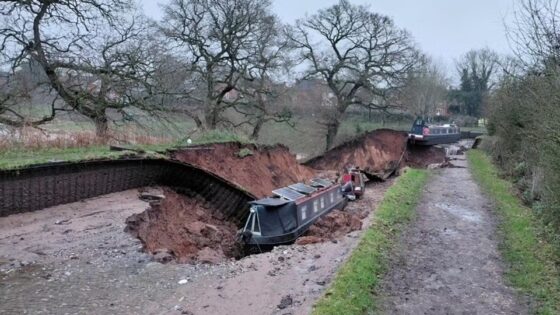
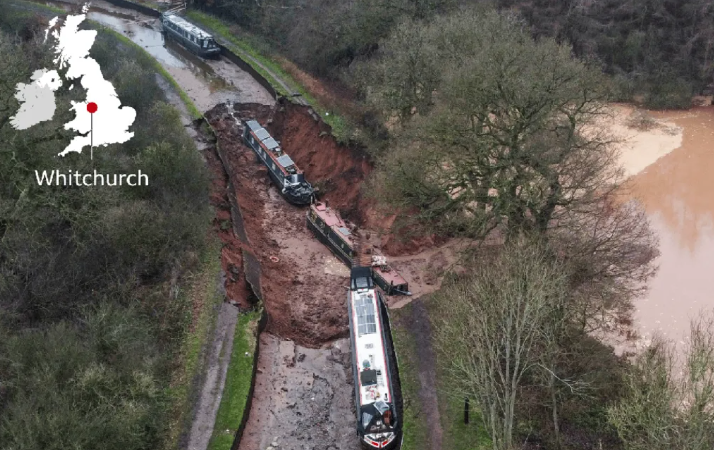
A catastrophic breach on the Llangollen Canal near New Mills Lift Bridge, Whitchurch has drained a long pound and damaged the embankment, despite recent routine inspections reporting no visible defects. Engineers from the Canal & River Trust are now investigating potential failure mechanisms, including internal erosion, leakage paths and historic construction weaknesses in the canal lining and embankment core. The incident raises immediate questions over current visual inspection regimes for ageing UK canal earthworks and whether more frequent intrusive or remote condition monitoring is needed on high-consequence reaches.
A man-made embankment on the Llangollen Canal near Whitchurch, Shropshire, failed in the early hours of Monday, creating a large breach that rapidly drained a several‑kilometre pound and triggered a major incident response. The failure occurred on a raised canal section over low-lying farmland, with water overtopping and eroding the embankment before a full breach developed, flooding adjacent fields and damaging access tracks. Canal & River Trust engineers have isolated the affected reach with stop planks and are assessing embankment stability, seepage paths and repair options under constrained access conditions.
An autonomous Komatsu HD1500 haul truck at Zijin Mining-owned Norton Gold Fields in Western Australia has completed its first fully autonomous test cycle with no safety driver on board, using EACON Mining Technology’s autonomous haulage system (AHS) in partnership with Thiess. The milestone confirms driverless operation from loading to dumping under site conditions, moving a 142 t-class rigid truck on a fixed haul route without human intervention in the cab. For mine planners and fleet engineers, this marks progression from supervised trials to true unmanned haulage, enabling redesign of traffic management, interaction zones, and shift deployment.
Cat® Job Site Solutions is marking 20 years of performance-based support agreements that bundle equipment, technology and services into outcome-focused contracts for mines and quarries. Originating from a 2005 initiative to rethink customer support, the business now structures deals around metrics such as cost per tonne, fuel burn and availability, using tools like MineStar™ Fleet, condition monitoring and dealer-managed maintenance. For geotechnical and mining engineers, this shifts fleet planning and pit design decisions towards lifecycle cost, uptime guarantees and data-driven productivity baselines.
Japan will run a month-long pilot from 11 January to 14 February to continuously lift rare-earth-rich mud from about 6,000 m depth near Minamitorishima Island, targeting 350 t/day via a full integrated deep-sea mining system 1,900 km southeast of Tokyo. The Japan Agency for Marine-Earth Science and Technology will monitor environmental impacts both on the seabed and onboard while operating within Japan’s exclusive economic zone. Dewatering will occur on Minamitorishima using spin-dryer-style equipment to cut mud volume by roughly 80% before shipment to mainland refineries, following ¥40 billion of government funding since 2018.
Copper prices surged to a record $12,159.50/t on the LME, up nearly 40% year-to-date, as mine outages across Chile, Indonesia and Peru combined with looming Trump-era tariff risks to trigger a global bidding war for physical units. Analysts at BloombergNEF warn the market could slip into deficit as early as 2026, with potential shortfalls reaching 19 Mt by 2050 without major new mines and recycling. SiTration CEO Brendan Smith and BNEF’s Kwasi Ampofo both flag refining bottlenecks—China controls over 45% of global refined output—as a critical geopolitical and project-delivery risk for copper developers.
Gold surged to a record just below $4,500/oz and silver traded above $70/oz for the first time, driven by safe-haven flows amid US oil tanker blockades off Venezuela and expectations of further US Federal Reserve rate cuts. Gold is up over 70% year-to-date, its strongest run since 1979, supported by central-bank buying and ETF inflows, with Goldman Sachs projecting $4,900/oz in 2026. Silver has climbed about 140% this year, amplified by October’s historic short squeeze, lingering supply dislocations between London and New York vaults, and a pending US Commerce Department critical-minerals probe.
RoadAid is expanding from Victorian road maintenance into large-scale critical infrastructure and interstate projects, leveraging a combined maintenance and labour hire model for civil crews. The company focuses on proactive road asset upkeep, supplying traffic management, asphalt and spray seal teams, and flexible night-shift labour to Tier 1 and Tier 2 contractors on major corridors. Its emphasis on stable, trained site teams and on-site culture is aimed at reducing rework, improving programme certainty and supporting long-duration pavement and rehabilitation contracts.
Specialised Roading Equipment’s first fixed wing sprayer built specifically for Australia has arrived, offering a purpose-designed alternative to retrofitted units for bitumen and emulsion spraying on highways and regional roads. Developed from SRE’s New Zealand fleet experience, the aircraft integrates calibrated spray bars, automated rate control and GPS-based application management to improve coverage accuracy and reduce overspray. For road agencies and contractors, the move opens options for large-scale seal programmes in remote areas where ground sprayers struggle with access, crew exposure and tight weather windows.
Geoquest Australia is deploying turn-key geotechnical systems to reduce geo-risk and weather-related damage to transport infrastructure under rising sea levels, higher rainfall intensity and more frequent extreme heat and fire events. The company is focusing on sustainably produced ground improvement and erosion control products, including stabilisation solutions for road embankments and coastal assets, to limit scour, slippage and pavement failure during intense storms. For asset owners, the approach points to integrated design–supply packages that combine geosynthetics, drainage and soil reinforcement to extend asset life and cut maintenance interventions.
Sripath has launched ButaPhalt, a new polymer additive for polymer modified bitumen (PMB) blends designed to address long‑standing bonding and durability issues in road surfacings. The formulation is engineered to increase crosslinking connectivity within the binder matrix, improving cohesion between bitumen, polymer and aggregate while also boosting plant production efficiency. For pavement designers and asphalt producers, this signals potential for longer‑life wearing courses, better resistance to rutting and cracking, and fewer processing constraints when specifying high‑performance PMB mixes.