Geomechanics, Streamlined.
© 2026 Geomechanics.io. All rights reserved.
Minaurum Silver has reported an inferred mineral resource at its 100%-owned Alamos project in Sonora of 5.37 million tonnes grading 202 g/t silver, 0.21 g/t gold, 0.43% copper, 0.97% lead and 2.01% zinc, equivalent to 320 g/t AgEq and containing 55.2 million oz AgEq. The estimate, which incorporates smelter and processing deductions more typical of advanced studies, is based on 104 drillholes totalling 35,888 m and 10,194 samples across the Promontorio, Travesia and Europa veins. Mineralisation remains open along strike and at depth, with a 50,000 m Phase II drilling campaign under way to expand the resource beyond three of the 26 identified vein zones.
Munnelly Group reported a 14% rise in turnover to £167m for the year to 31 March 2025, but pre-tax profit edged up only 4% to £1.55m, signalling tight margins in a difficult UK construction market. Cash reserves increased 35% to £7.3m with no third-party borrowings, giving the Hertfordshire-based labour, logistics and site services provider balance-sheet capacity for investment. New chief executive Paul David Munnelly plans continued spend on people, systems and capability, and is openly targeting selective acquisitions across the built environment.
IPAF has issued its three millionth Powered Access Licence (PAL) card since launching MEWP and MCWP operator certification in 1993, with cardholders now spread across more than 60 countries. Annual issuance has grown from about 11,000 operators in the first year to cumulative milestones of one million in 2014, 1.5 million in 2017 and two million in 2020, driven by expansion into markets including the USA and Italy. Smart card and digital PAL formats via the ePAL app now link operator credentials to machine security and telematics, simplifying on-site competence verification for contractors and plant hirers.
Atlas Copco’s B-Air 185-12, billed as the world’s first battery-driven portable air compressor, is now available for UK demonstrations, delivering 5–12 bar at 5.4–3.7 m³/min from a 55 kWh onboard pack with no fuel or grid connection. The 1,500 kg unit uses an electronic pressure regulation system to switch between tasks such as 6 bar hand tools, 10.3 bar sandblasting and 12 bar cable blowing, and is designed to run for a full typical shift. A permanent magnet motor with variable speed and a NEOS Xtreme IP66 inverter claims up to 70% higher energy efficiency than diesel compressors, with lower noise and zero tail-pipe emissions for urban and enclosed sites.
Mears has secured a 10-year, £450m housing maintenance and asset management contract from Birmingham City Council covering 11,500 council homes in the city’s west-central region. The all-encompassing scope includes day-to-day maintenance, gas servicing, heating installation and longer-term improvement programmes, with an option for a five-year extension. Mears plans to build a permanent local delivery base and transfer around 170 staff, signalling sustained demand for building services engineering, compliance upgrades and lifecycle refurbishment across a large, dense urban housing portfolio.
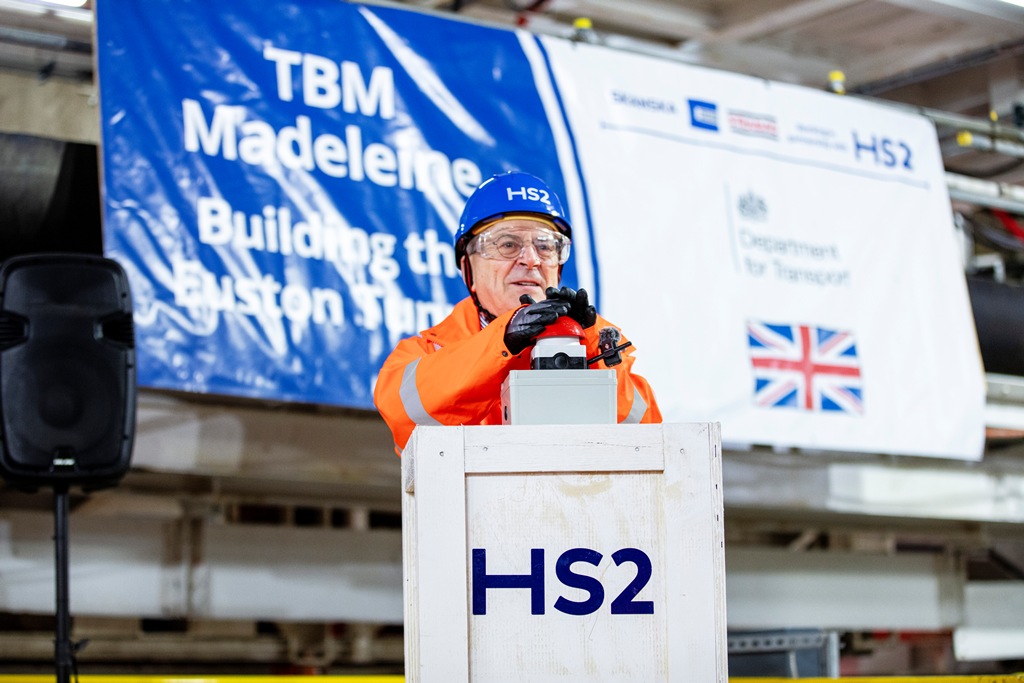
The first of two Herrenknecht tunnel boring machines for HS2’s Euston Tunnel, 1,624‑tonne “Madeleine”, has begun driving the 4.5‑mile twin‑bore section between Old Oak Common and Euston, the fifth and final deep tunnel on the 140‑mile London–Birmingham route. Contractor Skanska Costain Strabag JV will use the 853‑metre Atlas Road logistics tunnel to supply 48,294 precast concrete ring segments and handle more than 1.5 million tonnes of spoil via conveyor to the Willesden Euro terminal depot. Spoil will then be moved by rail for reuse on schemes in Kent, Cambridgeshire and Warwickshire, reducing HGV movements in west London.
UK construction materials suppliers report demand, not supply, as the critical constraint, with UK brick deliveries to November 2025 down 6.1% year-on-year while brick stocks have climbed 14.5% to 542.1 million units. The CLC Material Supply Chain Group, co-chaired by Builders Merchants Federation chief executive John Newcomb and Construction Products Association chief executive Peter Caplehorn, cites concrete volumes falling about 28% nationally over four years and 39% in London over two years, alongside a 1.3% drop in Q4 2025 construction output despite 0.3% UK GDP growth in November. Producers are mothballing sites, delaying capex and cutting jobs, with the group warning that restarting capacity could take up to six months and urging targeted government stimulus focused on housing and residential RMI to avoid long-term structural damage.
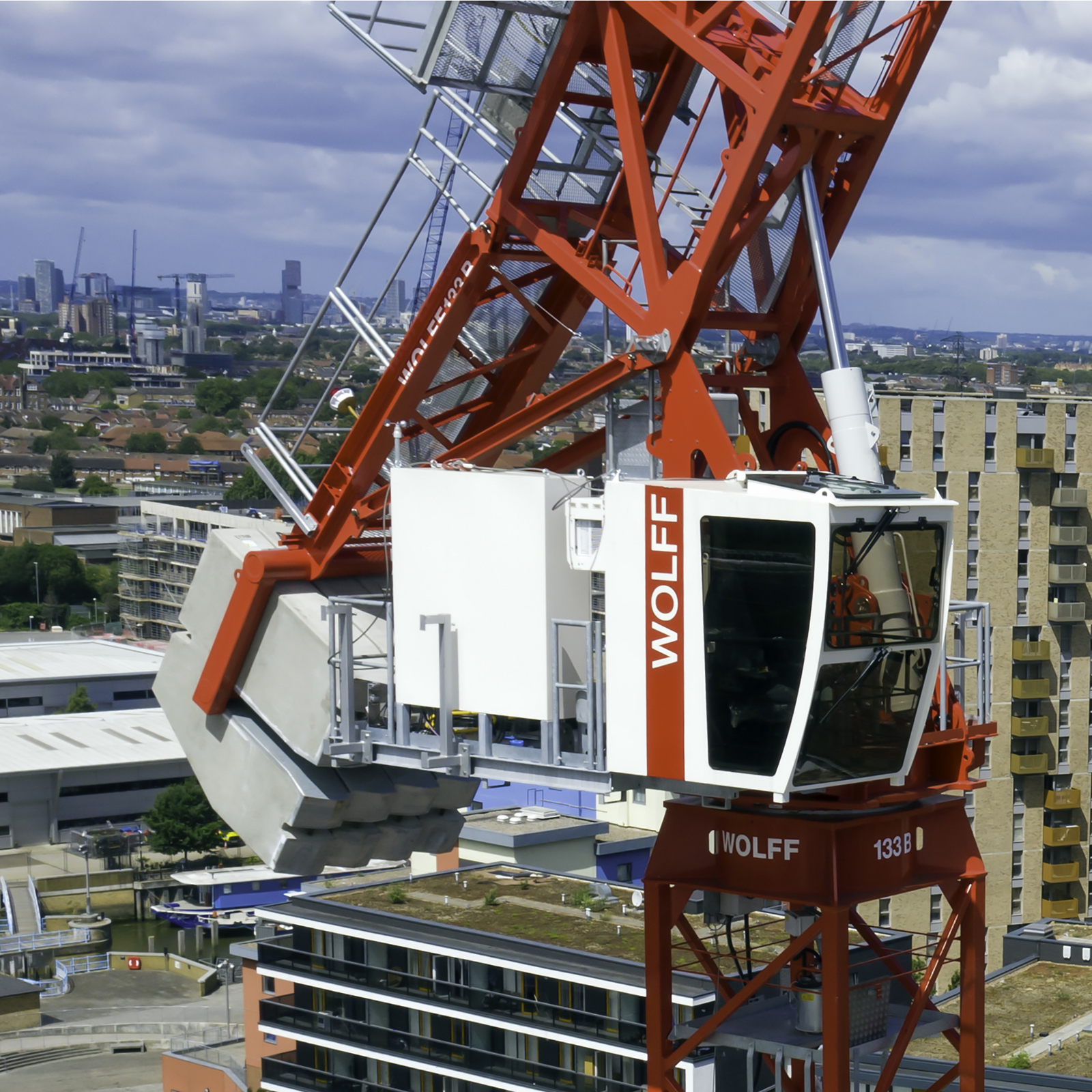
Around 100 Wolffkran UK tower crane operators have begun strike action as the Construction Plant-hire Association blames Labour government tax and regulatory policy for creating a “perfect storm” of weak demand and rising costs. Glenigan data show project starts down about 20% in 2025, civil engineering activity down 56% year-on-year, and main contract awards down 11%, with Gateway 2 delays further stalling high-rise residential work. Wolffkran reports crane utilisation down 26% since 2016, cranes on hire down ~40%, and rental rates cut 20–25%, leaving minimal margin for wage increases.
Tapojärvi has completed a relocatable small-house accommodation complex on leased land immediately adjacent to Agnico Eagle Finland’s Kittilä gold mine, delivered in December as a new model for mine-site housing. The complex consists of six detached houses, each with four bedrooms, designed to be dismantled and moved as project locations change, rather than relying on permanent barracks-style units. Proximity to the pit and plant reduces daily travel time and bussing, with the modular approach giving operators more flexibility in labour deployment and contract durations.
Ivanhoe Electric has signed a definitive collaboration and exploration agreement with Sociedad Química y Minera de Chile (SQM) to search for copper across SQM’s extensive northern Chile concessions, where SQM already produces lithium, potassium nitrate and iodine. The programme will deploy Ivanhoe Electric’s proprietary Typhoon geophysical surveying system, designed for deep, high-power induced polarisation and electromagnetic imaging of concealed sulphide mineralisation. For geophysicists and exploration teams, this signals a large-scale application of Typhoon over brownfield brine and nitrate districts that have seen limited deep copper-focused geophysics.
National Highways has started a £1.8M safety upgrade on a 42km single-carriageway section of the A35 in west Dorset, targeting a corridor with a history of serious collisions and speed-related incidents. Measures will focus on speed reduction and driver guidance, typically involving average speed cameras, improved signing and lining, and localised junction treatments on rural curves and undulating gradients. For designers and contractors, the works will require careful traffic management on a strategic trunk route with constrained verges and limited diversion options.
Skanska UK president and CEO Katy Dowding backs the new government’s infrastructure agenda as “bold” and rates it “10 out of 10” on intent, while warning that delivery certainty will be the real test. She points to long-term, multi-year public sector pipelines and consistent procurement models as critical to stabilising major programmes in transport, healthcare and education. For contractors and consultants, she signals that predictable funding profiles and earlier supply chain engagement will be central to controlling risk, costs and schedule performance.
The first of two tunnel boring machines driving HS2 into central London has begun its 7.2km excavation from Old Oak Common on 27 January, marking the start of the twin-bore approach tunnels towards Euston. The TBM will construct the running tunnels beneath densely built West London, requiring tight control of settlement and ground movements in complex urban geology. For geotechnical and structural teams, key tasks now centre on continuous monitoring of surface assets, segmental lining performance and groundwater behaviour along the alignment.
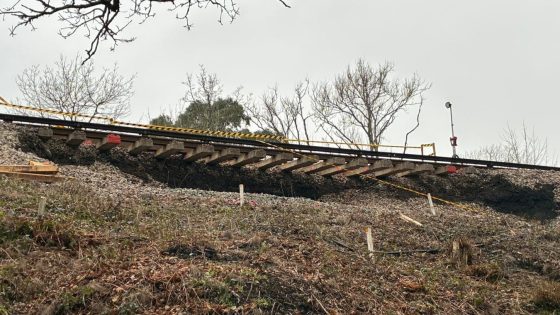
A landslip south of Ockley station in Surrey has stripped away the embankment supporting one of the two Horsham–Dorking tracks, leaving the rail and sleepers cantilevered in mid‑air and forcing full closure of the route until at least mid‑February. Network Rail engineers now face emergency stabilisation of the failed cutting or embankment, reconstruction of the formation, and re‑ballasting before traffic can resume. The incident will focus attention on drainage, slope monitoring and resilience of Victorian earthworks under increasingly intense winter rainfall.
A 500kW high-density hydro demonstrator developed by RheEnergise on the outskirts of Plymouth is now operating at full capacity, using an energy-dense fluid rather than water to increase storage in relatively low-head sites. The closed-loop system is designed to pump the fluid uphill during off-peak periods and generate on demand, targeting smaller elevation differences than conventional pumped storage. For civil and geotechnical teams, the concept points to compact reservoirs, reduced dam heights and new opportunities on brownfield or constrained topography.
Storm Goretti’s impact on North East Yorkshire and Eastern Scotland is reviving concern over how Storm Babet in 2023 stripped and reprofiled beaches, exposing the limits of fixed “hold-the-line” coastal defences. Engineers are being urged to adopt adaptive pathways planning, sequencing measures such as managed realignment, dune and beach nourishment, and periodic crest raising rather than relying solely on hard sea walls and rock armour. The approach hinges on trigger points tied to beach levels, overtopping rates and asset condition, enabling long-term, staged investment under rising sea levels and more frequent extreme storms.
Brightstar Resources plans to turn its Sandstone project in Western Australia into a long-life, district-scale gold hub by consolidating multiple deposits within haulage distance of a central processing plant. The company is targeting higher-grade open pit and potential underground feed to restart and expand production, leveraging existing infrastructure from historic operations at Sandstone. For geotechnical and mine planners, the strategy points to staged cutback designs, regional pit sequencing, and possible plant debottlenecking rather than a single-mine development.
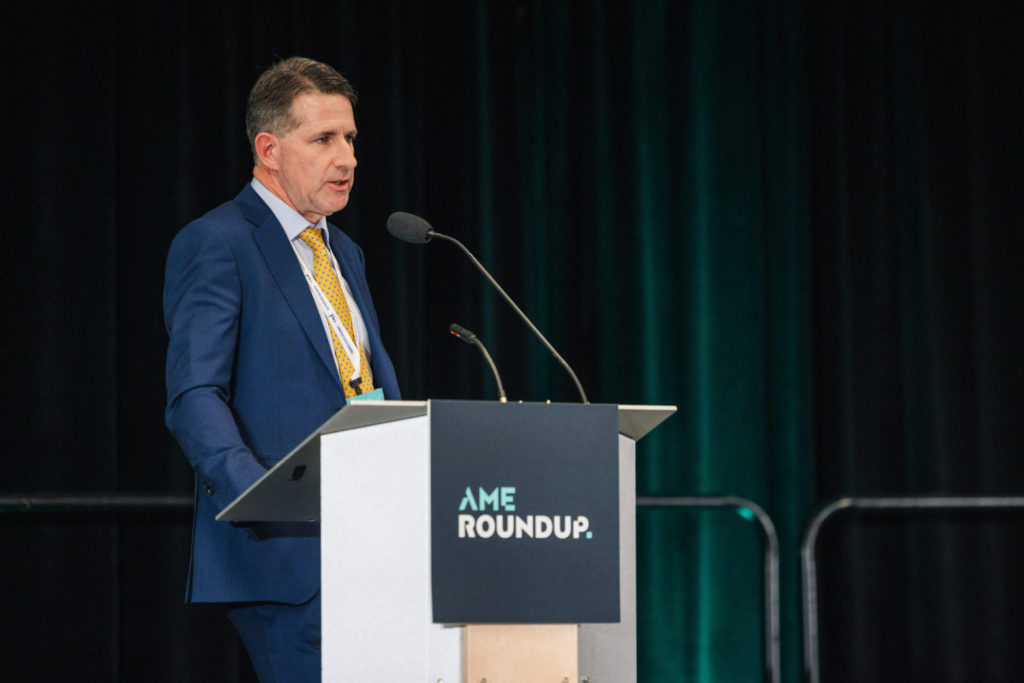
Anglo American’s proposed US$53 billion merger with Teck Resources, now cleared by Ottawa, would create “Anglo‑Teck”, a Vancouver‑headquartered copper major planning US$300 million over five years for exploration and technology in Canada plus a US$100 million global critical minerals research institute. CTO Tom McCulley told AME Roundup that closing the gap between roughly 230 kg and 70 kg of installed copper per capita in developed versus global averages will require installed stocks to rise from about 500 million to over 2 billion tonnes. He detailed deployment of the Spectrum airborne EM–magnetic–radiometric system, low‑temperature SQUID magnetometers and AI‑assisted core logging, alongside community‑designed water infrastructure such as the 60 million m³ Vizcachas dam at Quellaveco.
RheEnergise’s first commercial High-Density Hydro® long-duration energy storage system is now delivering full, predicted output on a continuous basis to Sibelco’s Cornwood kaolin mine in Devon, using an energy-dense fluid rather than water to increase storage capacity on modest head heights. The closed-loop system is integrated directly with the mine’s power demand profile, supporting around-the-clock processing loads and reducing reliance on grid imports at a constrained rural connection. For other UK mine and quarry sites with limited elevation and weak grid capacity, the project provides an early operational reference for sub-surface or brownfield hydro storage deployment.
China’s mining truck battery conversion boom is extending beyond Electric Power Conversions Australia’s E-777 (a converted Caterpillar 777D) as multiple Chinese firms push retrofit packages for mid‑range haul trucks in domestic and export markets. Conversions typically replace diesel powertrains with large lithium‑ion battery packs and high‑torque electric drive systems, targeting 50–100 t class trucks widely used in open‑pit operations. For mine planners and maintenance teams, this signals growing aftermarket options for decarbonising existing fleets without full replacement of chassis or mechanical systems.
Bulk Expo 2026 in Melbourne will convene Australia’s bulk solids handling sector across grain, ore, cement, fertiliser and powder supply chains to tackle capacity, reliability and cost pressures in a “steady demand, tight margins” environment. A new Bulk Handling Technical Conference will run alongside the expo, focusing on conveyor design, transfer chutes, dust control, stockpile management and flow assurance for high-throughput terminals and processing plants. Organisers position the event as a forum for resolving bottlenecks in large-volume materials handling systems rather than showcasing equipment alone.
Nominations have opened for the 2026 Endeavour Awards, billed as Australia’s premier manufacturing awards and run by Manufacturers’ Monthly in collaboration with Australian Manufacturing Week. The program recognises both individual engineers and organisations for innovations in areas such as advanced manufacturing, automation and materials processing that are reshaping domestic production capability. Winners will be announced at an annual gala dinner in May 2026, giving suppliers, fabricators and plant operators a national platform to showcase new processes and technologies.
Pilbara Ports has awarded the contract for Stage 2 of the Dampier Link Bridge in Western Australia, a key connection between the new Dampier Bulk Handling Facility and the existing cargo wharf to support direct shipping services in the Pilbara. The bridge will create a continuous landside link for bulk and general cargo, enabling ship loading from the new facility while maintaining access to the current wharf. Construction staging is designed to keep existing trade operating throughout works, which will be critical for minimising disruption to port throughput.
New Murchison Gold has commenced production at its Crown Prince gold mine with an “extremely smooth ramp up”, reporting initial gold output above internal forecasts and signalling stronger-than-modelled ore grades from early stopes. The Western Australian operation, part of the broader Murchison goldfield, is moving from development into steady-state production with processing plant performance meeting design throughput and recovery assumptions. For mine planners and geotechs, the early overcall on grade and stable plant performance will influence reserve models, stope sequencing, and near-term cashflow for further drilling and underground development.