Geomechanics, Streamlined.
© 2026 Geomechanics.io. All rights reserved.
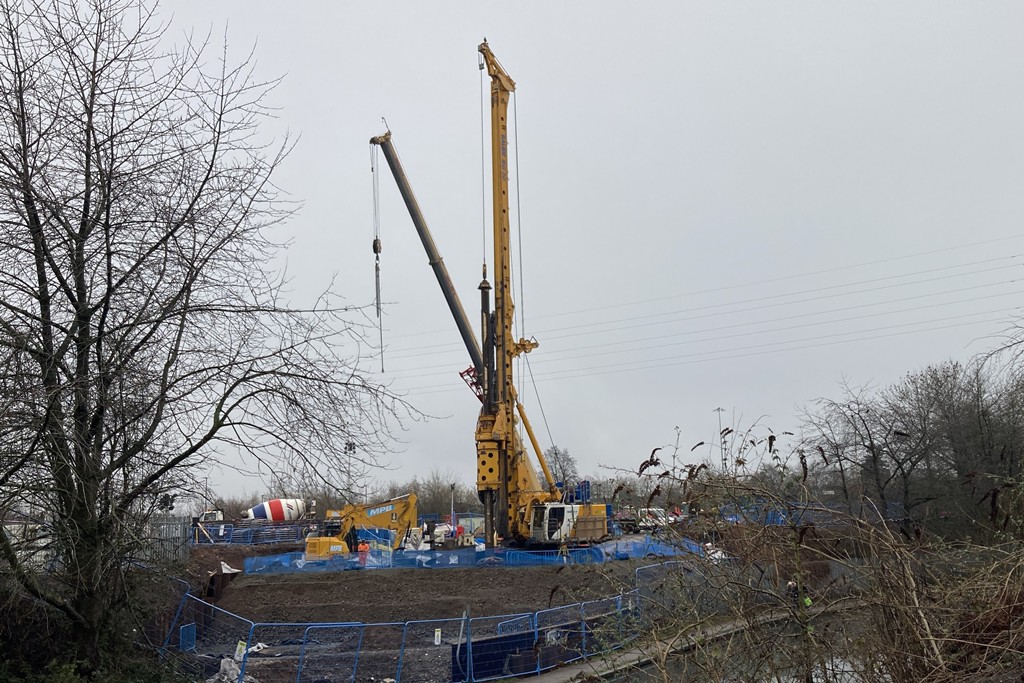
Piling is complete for a new road bridge over the Werribee train line in Altona, Victoria, as part of works to remove the Maidstone Street level crossing. A 140-tonne piling rig has drilled 23 bored piles up to nine metres deep and 1.5 metres in diameter, which have each been filled with reinforced concrete to form the bridge foundations. The works set the geotechnical baseline for the superstructure, with deep foundations designed to control settlement and maintain track and road alignment under traffic loads.
Victoria’s Transport Accident Commission has opened a new $600,000 funding round for community-based road safety projects, targeting local councils, schools and community groups. Grants will support initiatives such as low-cost traffic-calming works, pedestrian and cyclist safety upgrades near schools, and data-led speed management campaigns tailored to local crash patterns. Civil and traffic engineers should note opportunities to trial small-scale infrastructure treatments and behavioural interventions that can later inform larger capital works and network safety programmes.
Geotab has outlined a next-generation telematics roadmap for Australian fleets at Geotab Connect 2026, featuring AI-powered video safety tools designed to analyse driver behaviour and incident risk in real time. The company is also rolling out new in-vehicle hardware and “ruggedised” asset trackers aimed at operating reliably on remote haul roads and construction sites where traditional cellular coverage is limited. For civil and infrastructure contractors, the package targets tighter control of mixed fleets, from heavy trucks to off-highway plant, with improved location, utilisation and safety data.
Proven air filtration protection for mine-site conditions is being targeted with Donaldson’s XHLX80K PowerCore kit, designed specifically for the Toyota Hilux N80 used in light-vehicle fleets on haul roads and in pit operations. The retrofit system replaces the OEM airbox with a high-dust-capacity PowerCore cartridge and sealed housing engineered for fine silica and abrasive dust typical of Australian open-cut mines. For maintenance planners, the kit aims to extend filter life, reduce unplanned engine derates, and standardise filtration performance across mixed-site Hilux fleets.
Metso is promoting a “whole-of-circuit” approach to mineral processing, linking equipment such as vibrating pan feeders, multi-deck screens and high-pressure grinding rolls to optimise throughput and energy use rather than individual unit performance. By integrating digital tools like Metso Metrics and advanced process control with wear monitoring on crushers, mills and screens, the company aims to stabilise feed, reduce recirculating loads and extend liner life. For plant engineers, the message is to redesign and tune circuits as systems, not as isolated machines.
Tutt Bryant Equipment is using long-term partnerships, flexible finance and tailored fleet planning to grow contractors such as Cooper Civil & Crushing, which has just added a Jonsson L120-330 double crusher to its mobile plant. The distributor supports customers from initial machine selection through to parts, service and rebuilds across loaders, crushers, screens and articulated dump trucks, reducing downtime on remote mining and quarry sites. For geotechnical and mining contractors, the model shifts capex towards scalable hire–purchase mixes while standardising support across mixed OEM fleets.
Liebherr will present its “Hands on the future” theme at Conexpo, showcasing new mining and construction technologies alongside digital service solutions. The company is expected to focus on equipment automation, data-driven maintenance and remote monitoring platforms integrated across its excavators, haul trucks and cranes. For mine operators and civil contractors, the exhibit signals continued investment in OEM-provided condition monitoring and lifecycle support, tightening the link between machine telemetry, fleet planning and on-site productivity.
AusIMM has confirmed seven ambassadors for its 2026 International Women’s Day Event Series, including senior leaders from major miners and METS companies who will front events across Perth, Brisbane, Melbourne, Adelaide and Sydney. The series will combine in-person breakfasts and luncheons with live-streamed technical panels, targeting operational, geotechnical and processing professionals from graduate to executive level. Organisers are positioning the programme to tackle retention and progression of women in site-based roles, flexible rostering for FIFO operations, and leadership pathways in underground and processing plants.
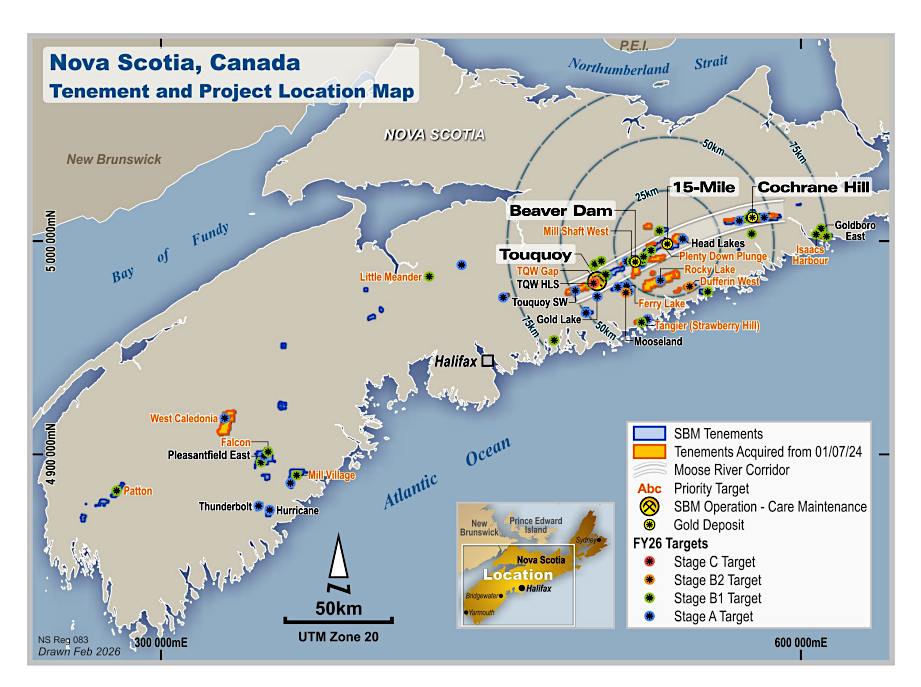
Australia’s St Barbara is launching an aggressive 697 sq. km exploration campaign in Nova Scotia around its planned 15-Mile open pit hub, targeting 56 mesothermal gold prospects along 164 km of anticlines in the Moose River Formation and Goldenville Group, with fieldwork from May using surface sampling and reverse circulation drilling. A prefeasibility study for 15-Mile outlines 103,000 oz/year over 11 years at AISC of $1,188/oz, with a C$283 million Touquoy plant relocation expected to be repaid in about 12 months at $3,000/oz gold. Concurrently, St Barbara is exiting Simberi in Papua New Guinea via a sale of 50% to Lingbao Gold Group and Kumul Mineral Holdings for up to A$470 million to fund a $325–345 million sulphide expansion to 200,000 oz/year.
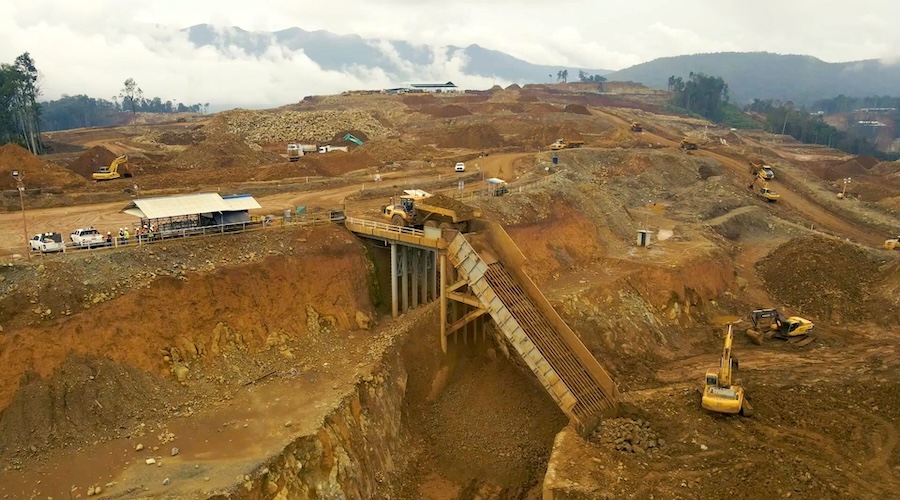
Nickel prices on the LME rose 2% to $17,835/t, extending a >20% rally since mid-December, after Indonesia ordered sharp output cuts at PT Weda Bay Nickel on Halmahera, slashing its ore quota to 12 Mt for 2026 versus 42 Mt in 2025. National nickel ore quotas are set at 260–270 Mt for 2026, well below the 379 Mt target for 2025, as authorities use RKAB permits to manage a surplus from Indonesia’s ~65% share of global supply. Macquarie has lifted its 2026 price forecast 18% to $17,750/t, while Indonesia is also cutting thermal coal quotas by nearly 25% year-on-year.
A confidential 2010 UK government briefing on Helmand province mineral prospects, including uranium, thorium, gold, iridium, marble and possible oil and gas, was emailed by then trade envoy Andrew Mountbatten-Windsor to Jeffrey Epstein, the BBC reports. The document cited “significant high value mineral deposits” and “potential for low cost extraction” in Helmand, where most uranium indications still rely on Soviet-era surveys and early-stage USGS assessments. Any move to develop Afghan uranium would confront major security, infrastructure and safeguards barriers in an already supply‑constrained, geopolitically sensitive uranium market.
Silver surged as much as 6.6% to above $86/oz on Wednesday, recovering about a third of its late-January crash, even as the Silver Institute projects a sixth consecutive annual market deficit in 2026 driven by investment demand rather than industrial offtake. The Institute expects solar and other industrial demand to decline “moderately” as manufacturers seek substitutes at current price levels, while BMO Capital Markets argues inventories remain adequate when measured against actual ornamental and industrial consumption. Physical tightness is acute in China, where speculative buying has left producers and traders unable to meet order backlogs, inflating front‑month contract premiums.
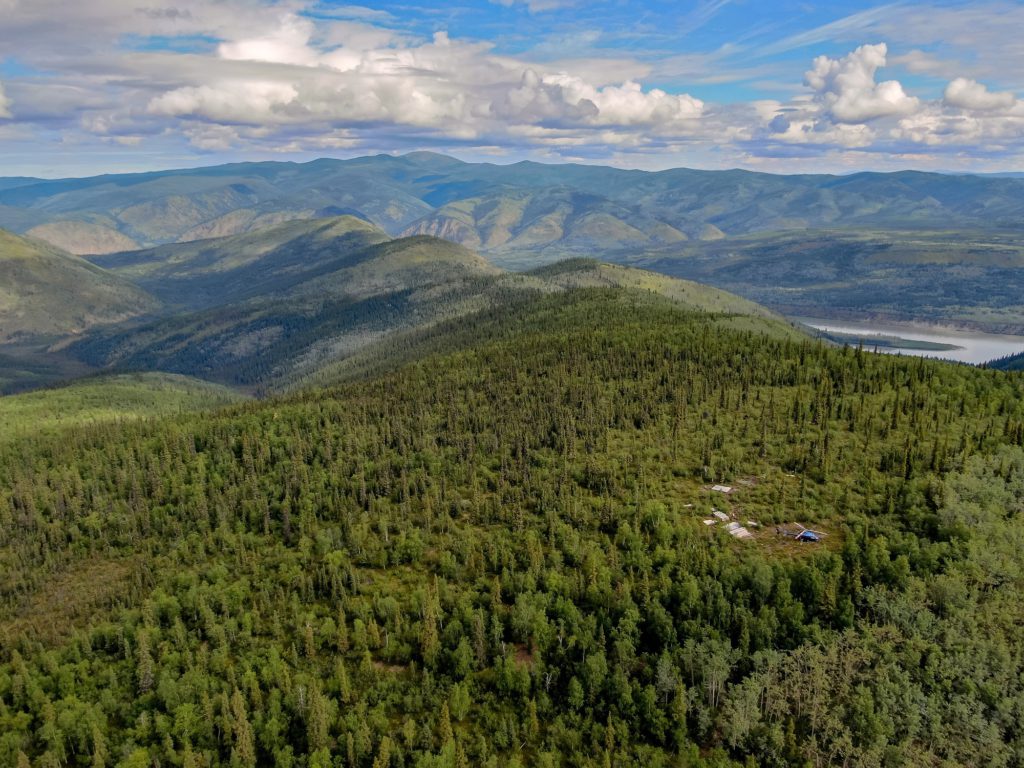
White Gold Corp (TSXV: WGO) will spin out six Yukon critical minerals properties – about 15% of its 3,051 km², 21-property land package – into a separate explorer focused on copper, molybdenum, tungsten, antimony, zinc and bismuth. Key targets Bridget, Isaac, Mascot and Wolf lie in the Dawson Range near the Casino porphyry and include the Bridget Mo-Cu porphyry anomaly, a 3 x 3.5 km zone enriched in tungsten, bismuth and silver that remains largely undrilled. The move, backed by Yukon and federal critical minerals policies, lets White Gold concentrate on its flagship gold project with 1.73 Moz indicated and 1.27 Moz inferred.
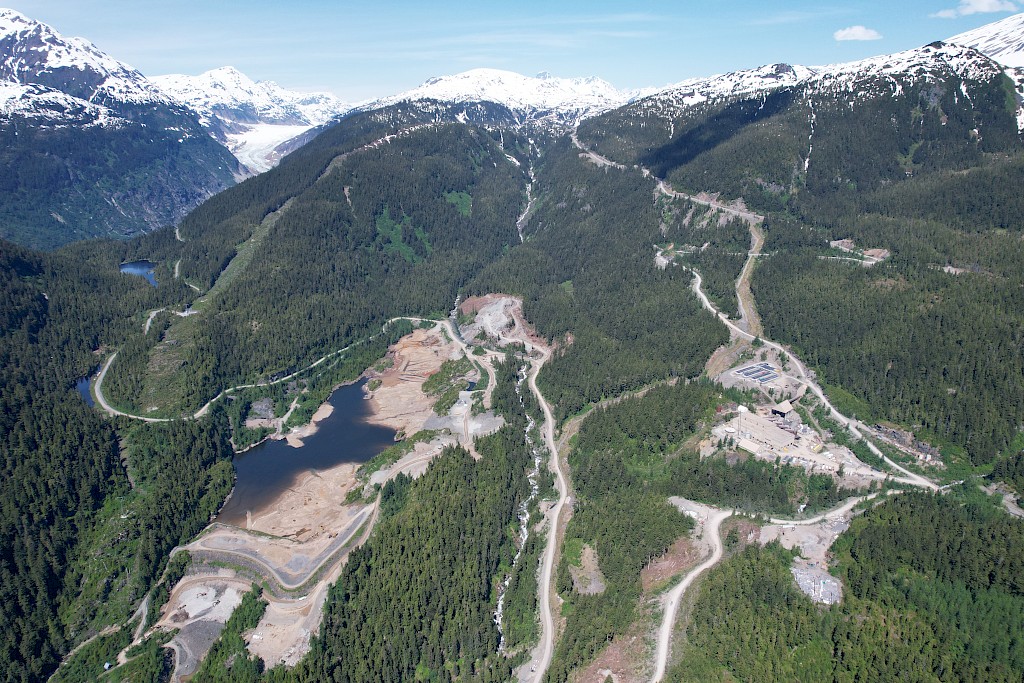
Ascot Resources is rebranding as Cambria Gold Mines and pivoting to a hub-and-spoke plan that will feed its recently built Premier mill with ore trucked from the Red Mountain project, 25 km east of Stewart, British Columbia. Red Mountain hosts 3.19 million tonnes at 7.63 g/t gold (783,000 oz.), is suited to long-hole stoping with existing production-scale underground workings, and is intended to provide most of the mill feed, blended with Premier-Northern Lights and Big Missouri ore. Permitting for the Red Mountain access road, including consultation with the Nisga’a Nation, began in autumn 2025, with construction targeted for this spring, backed by C$175 million in new financing and a restructured Sprott agreement.
CopperTech Metals has formed a strategic partnership with Axiom Group, VBKOM and Fleet Space Technologies to deploy Fleet’s ExoSphere space-enabled, AI-powered geoscience platform at Konkola Copper Mines in Zambia, a 2.9–3.3% Cu operation with about 16 Mt in combined copper reserves/resources and proven cobalt. Axiom will embed ExoSphere and run a high‑resolution 3D seismic survey over the orebody and proximal areas to generate detailed 3D orebody knowledge models and AI‑driven drill targets. The partners aim to shorten exploration learning cycles, cut drill uncertainty and tighten near‑mine resource definition in KCM’s complex geology.
US battery recycler Aqua Metals has signed a term sheet to acquire Utah-based energy storage systems provider Lion Energy, aiming to control the full battery lifecycle from manufacturing and deployment to grid-interactive storage and end-of-life recovery. The deal would combine Aqua Metals’ recycled battery materials, including future supply of up to 1,000 tonnes per year of nickel carbonate to Westwin Elements from 2027, with Lion’s systems, software and manufacturing capability. Shares in Aqua Metals fell 6.9% on the announcement, leaving the company valued at $12.8 million.
Rail engineering consultancies Ayesa Engineering (Spain) and Egis (France) have been appointed to support the Ferrovial Bam Joint Venture in delivering HS2 Track Systems Lots 1–3, part of the £3bn rail systems portfolio. The Ayesa-Egis JV will design and assure complex slab track, tunnel and bridge interfaces, and systems integration across the Track Urban, Open Route Central and Open Route North sections, covering most of the 140‑mile Old Oak Common–Birmingham Curzon Street main line. The move imports Spanish and French high-speed rail practice into HS2 despite Spain’s significantly poorer recent rail safety record than the UK.
Walter Thompson (Contractors) Ltd has secured a £6.3m, 12‑month contract to convert Middlesbrough’s Grade II‑listed 1846 Old Town Hall into more than 7,000 sq ft of office space for digital and creative tenants in the Boho Zone. Works include demolition of a 1970s extension, essential structural interventions to the historic fabric, and full restoration and reactivation of the original clock tower. A new modern marketplace extension is planned as a focal element of the town’s 2028 bicentenary, backed by over £4.5m from The National Lottery Heritage Fund and £1.8m in government funding.
The Royal Society for the Prevention of Accidents (RoSPA) and Speedy Hire are launching a UK-wide occupational safety and health (OSH) skills commission to tackle shortages in competent safety practitioners across construction, infrastructure and industrial sectors. The initiative will convene contractors, plant hire specialists and training providers to map current OSH competencies, identify gaps in areas such as work-at-height, lifting operations and temporary works, and propose structured training pathways. Outcomes are expected to influence site induction standards, certification requirements and procurement criteria for major projects.
Bauer Technologies has secured the specialist piling package for phase two of the £650m Wednesbury to Brierley Hill Midland Metro extension, subcontracted by MPB Structures for Transport for West Midlands’ Midland Metro Alliance. The programme, running into Q3 2026, includes reinforced bearing piles, contiguous piled walls and test piles for embankment stations, abutments, piers and retaining structures, using rotary bored and continuous flight auger techniques to handle variable ground and tight access. Works feature large-diameter bearing piles up to 1,000mm and integrity testing with digital thermal imaging.
Vp has cut its profit forecast for the year to March 2026 to £26–29m (pre-tax, before amortisation and exceptionals) after a “disappointingly muted” January return in construction and slower-than-expected AMP8 water spend, despite reporting £17m adjusted profit in the first six months. The group is shrinking its Brandon Hire Station network from more than 100 branches to 41 and shedding 400 jobs, while also disposing of its 856-strong Mr Cropper pile cropping fleet to Aska Rodgers. New chief executive Alice Woodwark signals that material AMP8-driven revenue growth is now expected in FY27, not this year, implying continued tight plant demand from both general construction and early-stage water frameworks.
Structural steel specialist Severfield has appointed former ISG finance chief Andrew Page as chief financial officer and executive director, effective Monday 16 February 2026, replacing interim CFO Jan Bramall, who has held the role since November 2025. Page previously joined ISG on an interim basis for Cathexis in early 2024 to pursue refinancing before the contractor entered administration that September, and is not generally viewed as responsible for the collapse. His earlier senior finance roles at Centrica, British Energy, FirstGroup and Ocado give Severfield a CFO with listed-company and construction-sector restructuring experience as it pursues a new group strategy.
Ministers are being pressed by the House of Commons transport select committee to spell out how the Railways Bill will actually deliver the government’s long-term rail investment pipeline under Great British Railways, warning that current proposals give only a “partial picture” of future schemes. MPs want clarity on how enhancements, renewals and major projects will be prioritised and funded within GBR’s structure, and how this links to existing control periods and the Integrated Rail Plan. For designers and contractors, the committee flags that opaque governance and funding rules risk delaying project development and supply chain planning.
Engineering and construction firms are using National Apprenticeship Week (9–15 February) to promote structured routes into civil engineering, with contractors, consultants and public-sector clients jointly publicising apprenticeship intakes and training pathways. Initiatives centre on Level 3–6 civil engineering and technician apprenticeships aligned to ICE and IStructE routes, combining site-based experience on live infrastructure projects with day-release or block-release study at FE colleges and universities. Employers are stressing early exposure to design offices, digital tools such as BIM, and geotechnical and structures rotations to address skills gaps on major UK transport and water schemes.