Geomechanics, Streamlined.
© 2026 Geomechanics.io. All rights reserved.
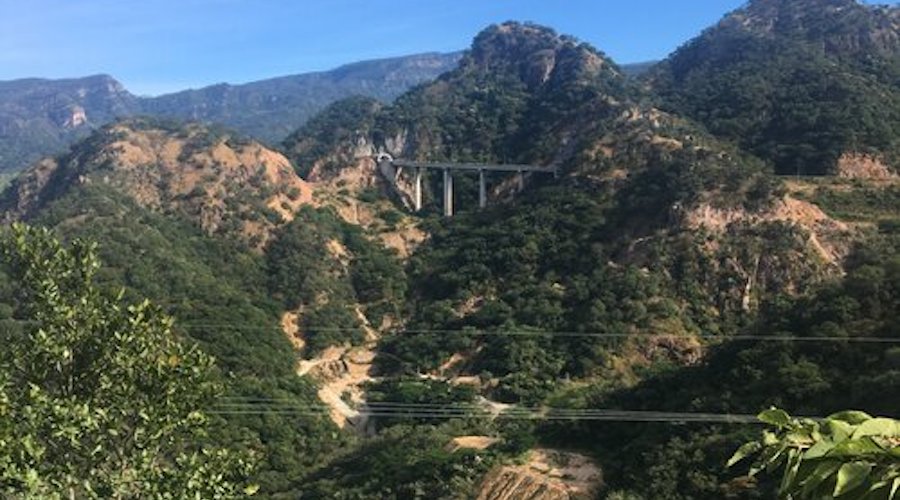
Vizsla Silver is keeping its long-term development plans for the Panuco silver-gold project in Sinaloa after 10 workers were kidnapped on 23 January, at least five killed and five still missing, with site operations suspended but engineering work continuing remotely. Panuco hosts 12.8 million proven and probable tonnes grading 2.01 g/t gold and 249 g/t silver, with a planned 9.4‑year mine life producing 17.4 million silver‑equivalent oz. per year at an AISC of $10.61/oz and over 20 million oz. annually in the first five years. National Bank Financial now expects first production to slip from 2027 to around 2030 and warns security, labour and inflation could add up to $5/t to costs, as more than 1,000 Mexican troops and elite marines remain deployed in the district.
Copper for March delivery fell over 3% in New York to $5.78/lb ($12,740/t) as Earth‑i’s SAVANT index showed 14.3% of global copper smelting capacity inactive in January, the weakest level in nearly a decade and 6.8% above the three‑year average. Active capacity outside China is down 1.2 Mt year‑on‑year, driven by outages at Isabel Leyte (PASAR) in the Philippines, Gresik and Manyar in Indonesia after the Grasberg mud‑rush, and Salvador (Potrerillos) in Chile, while Africa’s inactivity jumped to 28.4%. Spot TCRCs have turned deeply negative near –$45/t and –4.5¢/lb, with Antofagasta’s 2026 benchmark TC/RC with a Chinese smelter settling at $0, effectively wiping out smelter margins and signalling further curtailments unless concentrate supply normalises.
Sandvik is acquiring South African-based ThoroughTec Simulation, an OEM-agnostic mining training simulator specialist with about 200 staff and 2025 revenues of roughly SEK 170 million, to be folded into Sandvik Mining and Rock Solutions’ parts and services division. ThoroughTec’s simulators and training management system will be combined with Sandvik’s digital solutions to deliver data-driven, customised operator training based on real machine performance, targeting higher productivity, improved operator behaviour and lower maintenance costs. The deal, with an undisclosed price, is expected to close in Q2 2026 and be EBITA-margin accretive.
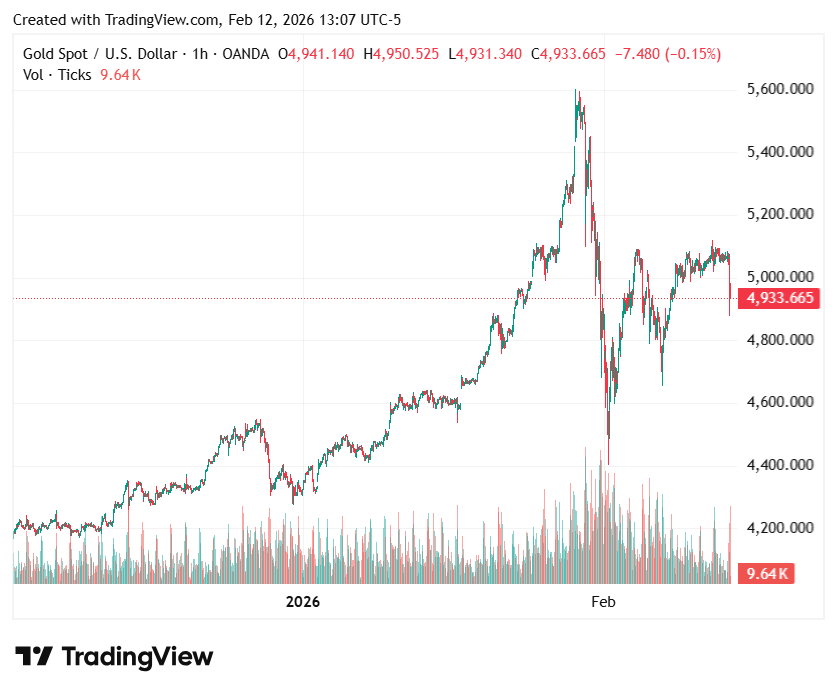
Gold fell back below $5,000/oz on Thursday, dropping as much as 4% to $4,880 before stabilising above $4,900 for a 3% intraday loss, after stronger-than-expected US nonfarm payrolls data showed a 130,000 January jobs gain and unemployment easing to 4.3%. Silver slid nearly 10% as profit-taking on 12‑month gains of about 40% for gold and 160% for silver, plus stop-loss orders clustered below $5,000 and above $5,100, triggered a rapid cascade. Despite January’s historic selloff, bullion remains 17% higher year-to-date, with several banks still projecting up to $6,000/oz on continued central bank and retail demand.
A 13.46m diameter Herrenknecht Mixshield TBM has broken through into the future Balboa station on Panama Metro Line 3 after completing the first-ever TBM undercrossing of the Panama Canal at depths exceeding 60m below sea level. The 5,600kW, 26,616kNm machine, fitted with an accessible cutterhead and more than 4,500 sensors linked via the Herrenknecht.Connected platform, has achieved peak advance of 150 segment rings (about 300m) per month through mixed sandstone, tuff, breccias and basalt. Around 1.5km of the 4.5km twin-track tunnel remains to final breakthrough.
Approval of a £1bn redevelopment will expand Liverpool Street Station’s capacity from today’s 98 million passengers a year towards more than 200 million, responding to a forecast 35% rise to 158 million by 2041. The Network Rail scheme, with Aecom as lead consulting engineer alongside Platform4 and Acme, focuses on improved access, circulation and accessibility while adding new commercial, cultural and public spaces. Design development has been driven by detailed heritage assessments, multi‑disciplinary engineering and formal environmental impact assessments.
Bam UK & Ireland has secured an £18.6m contract to build 120 ensuite bedrooms and four family apartments for clinical staff and students at North Devon District Hospital in Barnstaple, funded from the national New Hospital Programme’s £22.7m allocation. The on-site blocks will use shared kitchen, living and dining spaces and are intended to cut long staff commutes and mitigate local housing shortages that hinder recruitment. As the first phase of the Our Future Hospital redevelopment, the scheme precedes new operating theatres, ICU capacity, diagnostics and women’s and children’s facilities.
Construction has started on The Hive, a £24m co-living development at Kelham Island that will deliver 100 studio apartments with shared kitchens, laundry, gym and yoga studio, office space and a roof terrace by spring 2027, making it Sheffield’s largest purpose-built co-living scheme. Grantside has appointed HBC Construction as main contractor, with Edge as project manager and Cartwright Pickard, Arup, Hoare Lea and Urbana forming the design and planning team. The project is positioned as a high-density, amenity-rich model supporting Sheffield’s target of 20,000 new city-centre homes over the next decade.
Willmott Dixon has begun early works on Swansea University’s four-storey, 2,000 m² National Institute for Sport & Health at Swansea Bay Sports Park, funded through the Swansea Bay City Deal and due to open in 2027 as an R&D hub linking public, private and academic partners. In Gravesend, the contractor and Gravesham Borough Council are starting ground preparation and demolition for the £43m Cascades Leisure Centre, which will feature a 25-metre pool, 17-metre learner pool, aqua play and flumes, six-court sports hall and multi-level soft play, targeting opening in 2028.
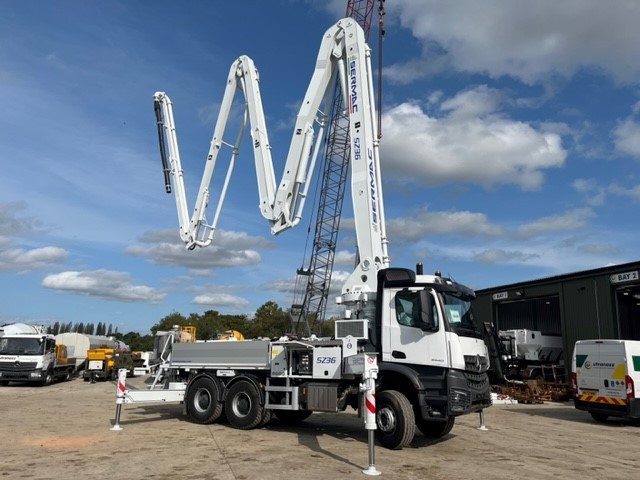
Utranazz has cut prices on its Sermac truck-mounted concrete pump range by about £50,000 while keeping the same specification, output and build quality, directly targeting competition from Chinese-owned brands Cifa (Zoomlion), Putzmeister (Sany) and Schwing (XCMG). The Sermac 4ZR20 on a Mercedes 1827 4x2, 18‑tonne GVW chassis now lists at £255,000, the 5Z36 on a Mercedes Arocs 2643 6x4, 26‑tonne GVW at £350,000, and the 5RZ46 Superlight on a Mercedes Arocs 3246 8x4, 32‑tonne GVW at £425,000. For contractors, the move materially lowers capex for European-engineered pumps without trading off reach or reliability.
Slippage of Mace’s Paddington over-station development start from Q1 to Q2 2026 has been confirmed, with site acquisition for £55m now scheduled for 25th February 2026 but overall completion still targeted for Q3 2028. Joint venture developers Helical and Places for London have secured a £220m development financing facility from Pimco Prime Real Estate to cover both the acquisition and construction. The Grimshaw-designed scheme comprises a 19‑storey, 235,000 sq ft new-build office structure directly above Paddington station’s northern entrance, overlooking the Grand Union Canal.
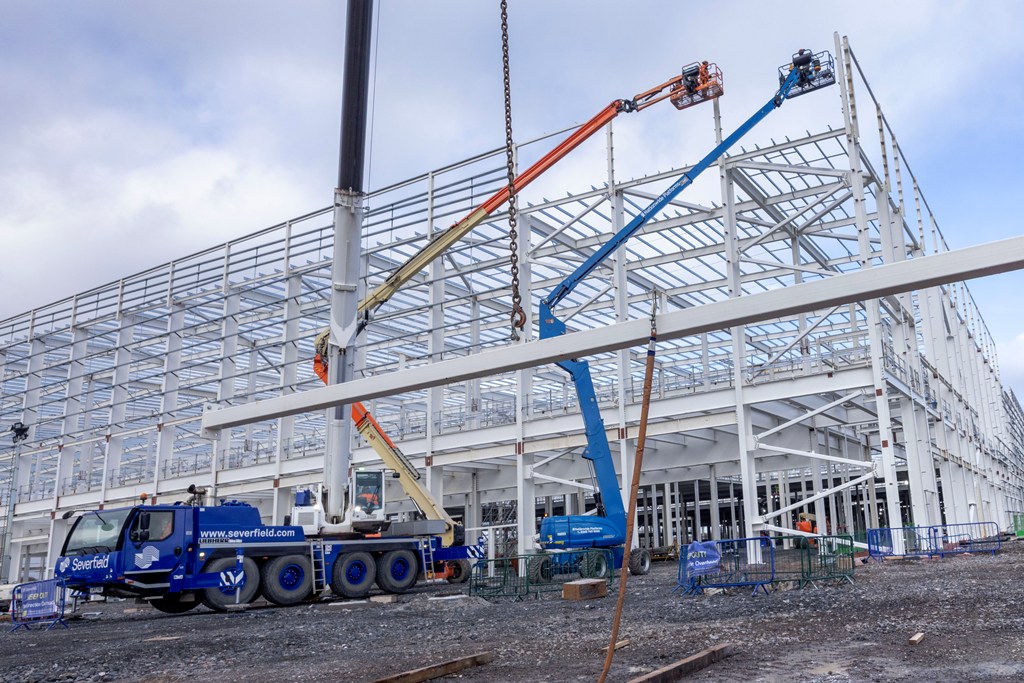
More than 100 GMB members at Severfield’s Lostock, Bolton plant – including welders, platers and machine operators – will stage three strike days from 16–24 February after being offered a 0% pay rise. The action follows an overtime ban and comes as new chief executive Paul McNerney pursues a return to profit after a £17.5m pre-tax loss on £450.9m revenue, linked to weld issues on HS2 and National Highways bridges. Severfield has just completed 23,000 tonnes of structural steelwork for Agratas’ Somerset gigafactory Building One, a 525m × 167m × 34m unit, which is not expected to be affected.
Fourth quarter construction output in Great Britain fell 2.1% quarter‑on‑quarter in Q4 2025, with new work down 2.6% and repair & maintenance down 1.5%, driven by a 3.6% drop in private house‑building. Despite this, annual output for 2025 still grew 1.8% versus 2024, while construction output prices rose 2.7% in the 12 months to December. New orders declined 3.8% (£469m) in Q4, mainly in private commercial and industrial work, as developers cited low planning approvals, rising costs and mounting viability pressures, particularly for SMEs.
Genpower has relaunched the JCB-branded line with the JCB Pro 18V cordless platform, developed tool-by-tool over two years to compete directly with Bosch Blue, DeWalt, Makita and Milwaukee for professional construction, maintenance and agricultural use. The Pro 18V combi drill delivers 160Nm torque via a brushless motor with anti-kickback control and a 13mm ROHM metal chuck, while the Pro 18V grease gun provides up to 10,150psi (700 bar) and 300g/min flow with cartridge and bulk-fill options. All tools share a common 18V Li-ion battery system to standardise site kits and reduce downtime.
Betolar has entered a strategic collaboration with EcoGraf and the Geological Survey of Finland (GTK) at the Epanko graphite project in Tanzania to test whether mine tailings can be reprocessed using Betolar’s metal extraction technology. The process is designed to enhance metal recovery from graphite tailings while generating secondary raw materials suitable for low-clinker binders and other construction products. For mine planners and tailings engineers, this signals potential shifts in tailings characterisation, storage design and long-term geochemical behaviour if waste streams are repurposed as feedstock.
CopperTech Metals has formed a strategic partnership with Axiom Group, VBKOM and Fleet Space Technologies to deploy next-generation geoscience tools at Konkola Copper Mines, one of the world’s highest-grade copper operations run by CopperTech subsidiary KCM. The collaboration will use Fleet Space’s satellite-enabled subsurface imaging and Axiom/VBKOM’s integrated geoscience and mine planning workflows to accelerate 3D understanding of the orebody. Faster subsurface interpretation is aimed at shortening exploration decision cycles and tightening drill targeting around existing high-grade infrastructure.
Schlam Payload has launched Xeroline, a mining truck tray range built using SSAB Zero™ green steel, claimed to be the first truck bodies made from 100% carbon-free steel in mining. The initial Xeroline trays are being supplied to Australian open-pit operations, targeting high-production fleets where payload and wear life are critical. For mine operators, the move offers a direct Scope 3 emissions reduction lever in load-and-haul fleets without changing truck models, while testing the durability and wear behaviour of fossil-free steel in heavy impact, high-abrasion duty cycles.
Fortescue has begun commissioning two Progress Rail battery electric locomotives on its Pilbara iron ore rail network, targeting elimination of about one million litres of diesel consumption per year. The units, supplied by Caterpillar’s rail subsidiary, are described as housing the world’s largest battery systems fitted to locomotives, designed for heavy-haul operations on long-distance ore trains. For mine planners and rail engineers, the project will test high-capacity battery performance, charging logistics and duty cycles under Pilbara heat, gradients and dust conditions.
Sandvik has agreed to acquire South Africa-based ThoroughTec Simulation, a developer of OEM-agnostic mining equipment simulators and a cloud-based training management system, which will be integrated into Sandvik Mining’s Parts and Services division. ThoroughTec’s portfolio covers surface and underground loaders, trucks and drills, allowing site-specific virtual training on actual mine layouts and control systems. The deal signals stronger emphasis on simulator-based operator training, with potential to standardise competency management and reduce in-field training hours across mixed fleets.
Release has signed a seven-year leasing agreement with Tshukudu Metals Botswana, a Sandfire Resources subsidiary, to deploy a 21 MW solar power plant at the Motheo Copper Operations in Botswana. The modular plant will supply a significant share of Motheo’s process power demand, cutting diesel generation and exposure to regional grid constraints. For mine planners and process engineers, the deal signals further integration of long-term, contract-based renewable capacity into African copper operations’ power strategies.
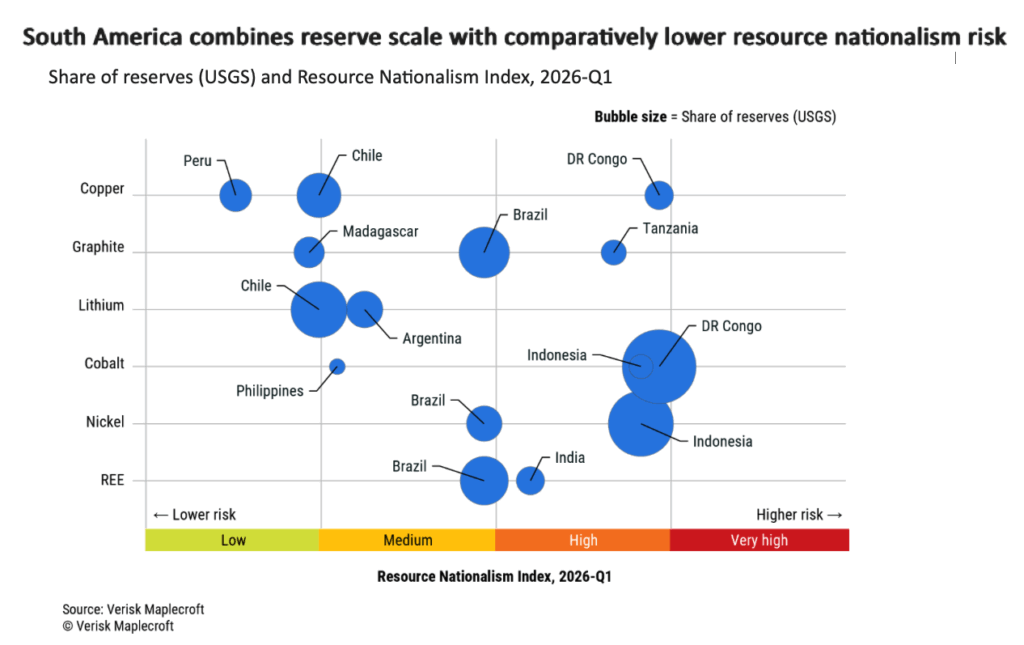
South America is identified by Verisk Maplecroft’s Resource Nationalism Index and Political Risk Data as the most stable option for Western critical mineral diversification, with Argentina, Brazil, Chile and Peru combining large lithium, copper, cobalt, nickel, graphite and rare earth endowments with moderate state intervention. DR Congo, Indonesia and Tanzania sit among the 20 most exposed jurisdictions globally, yet remain unavoidable for some minerals, as shown by the US Strategic Minerals Cooperation Framework with DRC and the EU’s rare earth-linked trade deal with India. Geopolitical Alignment Tool scores place Argentina and the Philippines as close US allies and Chile, Madagascar and India as strategically aligned, making South America a relatively low-risk anchor in a fragmented supply landscape.
Albemarle is idling the last operating train at its Kemerton lithium hydroxide plant in Western Australia and placing the facility into care and maintenance immediately, after already mothballing Train 2 in 2024 and cancelling expansion of Trains 3 and 4. The Kemerton refinery converts spodumene feed from the Greenbushes hard-rock mine, where Albemarle holds both equity and 50% of offtake rights, into battery-grade lithium hydroxide for a Western supply chain. Albemarle expects the shutdown to be accretive to adjusted EBITDA from Q2 2026, with 2026 lithium hydroxide volumes backfilled from other global plants.
Federal funding for New York’s US$16bn Hudson Tunnel Project has been frozen, forcing the Gateway Development Commission to suspend works from 6 February after spending over US$1bn and employing about 1,000 site workers. A Manhattan federal judge has issued a temporary restraining order, giving the administration until 5 p.m. on 12 February to restore reimbursements or appeal, while contractors warn that demobilisation, resequencing and remobilisation will add cost and delay. Sites are now in “safe-pause” mode, with dewatering, ground support and environmental monitoring maintained, and assembly of two Herrenknecht TBMs in New Jersey likely to slip beyond the planned spring 2026 launch without funding certainty.
Hatch has been appointed strategic delivery partner to Maaden across multiple growth projects in Saudi Arabia, tasked with applying portfolio-wide project development and execution models to unlock the kingdom’s “vast mineral wealth”. The collaboration will use standardised, “world‑class” design toolkits and delivery frameworks to drive schedule and cost predictability across Maaden’s pipeline, which spans phosphate, aluminium, gold and base metals. For engineers, the move signals more programmatic front-end loading, tighter value engineering, and greater replication of process plant and infrastructure designs across greenfield and brownfield sites.