Geomechanics, Streamlined.
© 2026 Geomechanics.io. All rights reserved.
Sandvik Mining has launched My Sandvik Geo at CONEXPO-CON/AGG 2026, a cloud-based service that converts surface top-hammer drill data into near real-time geological and geotechnical models of subsurface conditions. The platform ingests parameters such as penetration rate, torque and vibration from connected drill rigs to infer rock hardness, fracture zones and lithological boundaries along each blast hole. Operators can use these insights to adjust blast designs hole-by-hole, refine burden and spacing, and reduce both overbreak and underbreak in production benches.
Mainmark is deploying non-invasive ground improvement methods such as resin injection and slab lifting to extend the life of ageing pavements and rail formations while keeping roads and corridors open to traffic. The company targets issues like differential settlement, voiding beneath concrete slabs and loss of bearing capacity after extreme rainfall, using small-diameter injection points instead of full-depth reconstruction. For asset owners facing constrained capital budgets and decarbonisation targets, this approach reduces excavation, heavy plant use and associated emissions while restoring serviceability within hours rather than days.
No-Dig Down Under will return on 23–24 June 2027 at the Adelaide Convention Centre, bringing the Southern Hemisphere’s flagship trenchless technology conference to South Australia. The event will convene utilities, councils, asset owners, contractors, consultants and suppliers from across Australia and overseas for two days focused on no-dig pipeline installation, rehabilitation and condition assessment. For civil and geotechnical practitioners, the Adelaide venue signals a concentrated programme on trenchless design, ground risk management and asset renewal in dense urban corridors.
Australia’s latest Geoscience Australia stocktake shows a sharp surge in critical minerals, with reported resources of lithium, rare earths, cobalt and nickel consolidating its status as a primary global supplier. The inventory details expanded reserves across multiple basins and hard-rock provinces, reinforcing long-life project pipelines for spodumene, laterite nickel and rare earths processing. For mine planners and investors, the updated dataset tightens competition with other jurisdictions and will influence long-term offtake, downstream refining capacity and infrastructure planning.
Alemlube has launched its AlemQube Series self-bunded fuel tanks for mine and construction sites, offering integrated dispensing options including unmanaged and managed 12/24V and 240V bowser configurations with B.SMART fuel management technology. The steel tanks are designed for on-site diesel storage and refuelling, reducing reliance on external fuel deliveries and supporting continuous operation of mobile plant and haul fleets. For maintenance and operations teams, the key shift is tighter control of fuel usage and reduced refuelling downtime at remote or brownfield locations.
Victoria’s Government has launched a program to expand domestic critical mineral processing, targeting antimony from the Costerfield mine near Heathcote and other Victorian deposits to reduce reliance on Chinese and Russian supply. The initiative focuses on downstream processing capacity rather than new extraction, aiming to convert locally mined antimony into higher-value products such as antimony trioxide and flame-retardant masterbatches. For miners and processors, this signals potential support for new concentrators, refining circuits and offtake arrangements tied to onshore value-adding.
Lynas Rare Earths has secured a 10‑year operating licence for its Kuantan rare earths processing plant in Pahang, Malaysia, locking in long-term capacity for cracking and separation of neodymium-praseodymium and other light rare earth oxides. The approval follows earlier regulatory pressure over low-level radioactive waste from lanthanide concentrate and conditions on waste management and residue storage imposed by Malaysia’s Atomic Energy Licensing Board. The extended licence, combined with a reported profit surge, reduces near-term risk to Lynas’ supply chain while its Kalgoorlie cracking and leaching plant in Western Australia ramps up.
Mining drove a rise in gross operating profits across Australian businesses, with the Australian Bureau of Statistics attributing the increase to both higher mining activity volumes and stronger commodity prices. ABS quarterly business indicators show mining outperformed manufacturing, construction and retail, reversing profit softness seen in several service sectors. For mine operators and contractors, the data signals continued capital availability for brownfield expansions and sustaining projects, but also potential cost pressure as upstream suppliers respond to the sector’s stronger margins.
Cameco has signed a C$2.6 billion ($1.9 billion) long‑term agreement to supply almost 22 million lb of uranium ore concentrate to India’s nuclear reactor fleet between 2027 and 2035, equivalent to about 12% of Cameco’s annual output. The contract, announced in Delhi by Canadian Prime Minister Mark Carney, is priced on market‑related terms using an $86.95/lb reference and follows a previous five‑year supply deal that began in 2015. India currently operates 24 reactors with about 8 GW capacity and plans to expand to 100 GW by 2047, signalling sustained fuel demand in an already tight term market of 116 million lb for 2024‑25.
Blue Moon Metals has acquired Teck American’s past-producing Apex gallium‑germanium mine in Utah in an all‑share deal of about 7 million shares, adding a high‑grade Ga‑Ge‑Cu asset where historical estimates reach 1 million tonnes at 0.087% germanium, 0.033% gallium, 1.8% copper and 41 g/t silver. The company plans to fast‑track technical studies, metallurgical testing and permitting at Apex while integrating it with its permitted Blue Moon zinc‑gold‑silver‑copper project in California, which has an NI 43‑101 resource of 3.65 million indicated tonnes at 13.46% zinc equivalent and a PEA outlining over 10 years of production. Synergies also include routing concentrates through Teck’s Trail smelter in British Columbia and leveraging the Springer tungsten complex in Nevada, which hosts a historical 10.7 million tonnes at 0.45% tungsten and is being positioned as a regional processing hub.
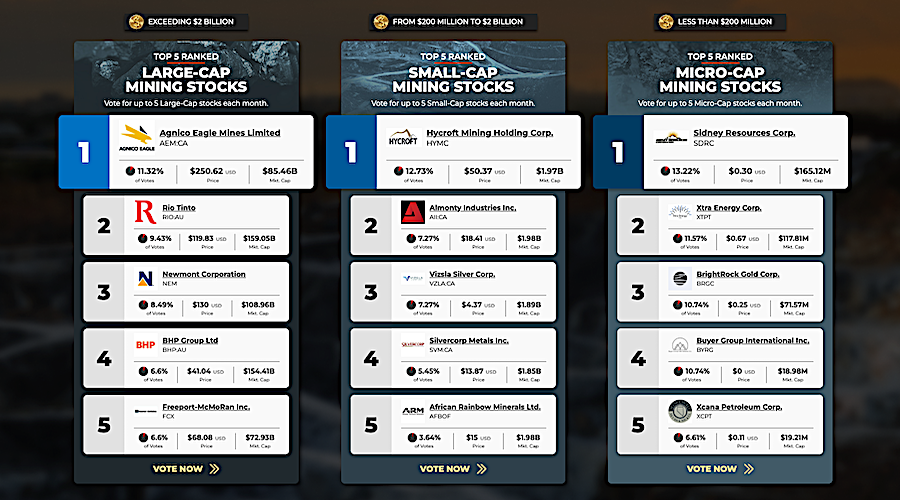
Agnico Eagle, Hycroft Mining Holding and Sidney Resources topped MINING.COM’s February Global Mining Power Rankings, with Agnico securing 11.32% of votes on the back of record 2025 free cash flow, roughly $1.4 billion in total shareholder returns, a 12.5% dividend increase and gold reserves of about 55.4 million oz. Hycroft advanced metallurgical testing and project optimisation at its Nevada gold-silver operation, while Almonty Industries’ Sangdong tungsten mine ramp-up and tight ammonium paratungstate markets drove a share price gain of more than 135% year-to-date. Micro-cap leader Sidney Resources progressed the high-grade Lucky Ben underground gold project towards a maiden mineral resource and continued R&D on laser mining technology in Idaho’s Warren District.
Gold surged as much as 2.9% to a one‑month high above $5,400/oz on Monday after US‑Israeli strikes on Iran killed supreme leader Ali Khamenei, triggering missile retaliation across the Middle East and a flight to safe‑haven assets. Silver dropped nearly 5% to below $90/oz, while partial airspace closures and suspended flights in Dubai temporarily curtailed bullion flows through the UAE, a key conduit between London and Asian buyers. TD Securities, Societe Generale, Bank of America and JPMorgan all reiterated bullish views, with 12‑month gold targets as high as $6,300/oz.
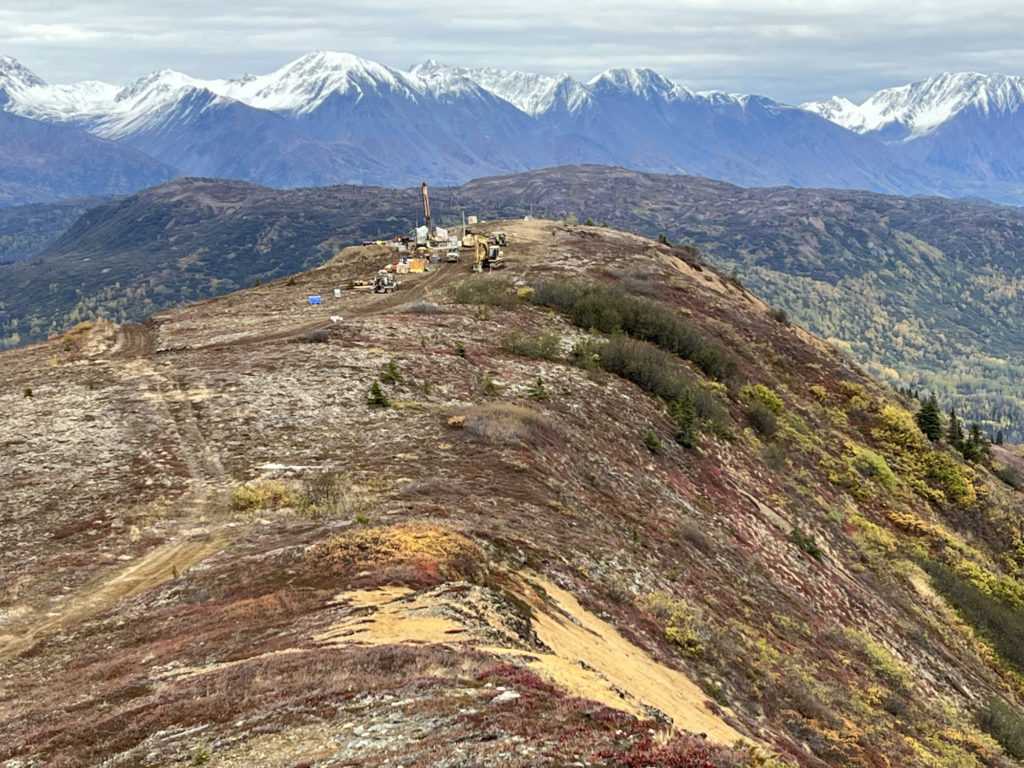
US GoldMining shares jumped up to 25% to US$15.94 after a preliminary economic assessment for the Whistler project in Alaska outlined a US$2 billion after-tax NPV (5% discount), 33% IRR and 2.1-year payback at US$3,200/oz gold, US$4.50/lb copper and US$37.50/oz silver. At current spot prices, the study projects NPV rising to about US$4.9 billion with a 62% IRR and 1.2-year payback, based on a 126,000 t/d open-pit operation over 14.6 years. The plan envisages two years of construction, US$1.28 billion initial capex and total output of 2.6 Moz gold, 6.9 Moz silver and 592 Mlb copper.
Rio Tinto has secured conditional approval for a C$18.95 million non‑repayable contribution from Natural Resources Canada’s Global Partnerships Initiative, adding to C$7 million from Quebec, to advance primary gallium extraction at its 1 Mt/y Vaudreuil alumina refinery in Saguenay–Lac‑Saint‑Jean. Working with Indium Corporation, Rio has already produced first gallium and plans a demonstration plant targeting up to 4 tonnes per year from 2027. A subsequent commercial‑scale plant could reach 40 tonnes annually, about 5% of current global output, creating a new North American gallium source from refinery process streams.
Canada’s critical minerals panel at PDAC 2026 warned that the country must rapidly rebuild domestic downstream capacity, with Canada Nickel CEO Mark Selby criticising the historic “ripping and shipping” model and pointing to the loss of majors like Inco and Falconbridge. Speakers cited new federal tools such as the Major Projects Office and the Canada Growth Fund, which is co-investing in Nouveau Monde Graphite’s Quebec facilities, Foran Mining’s Saskatchewan project and the Thompson nickel complex in Manitoba. Foran’s Dan Myerson argued that delivering a copper mine in under five years should be the new benchmark to trigger midstream and downstream plants.
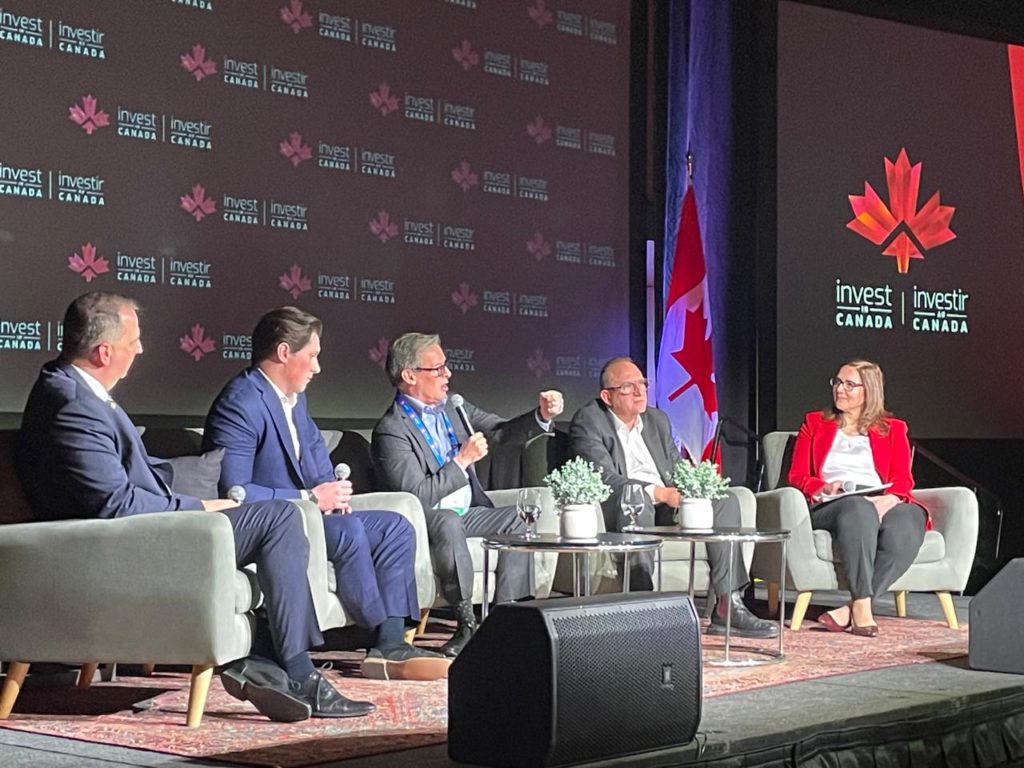
Ottawa has committed up to $17 million each to 30 critical minerals projects worth a combined $12.1 billion, including $16.7 million for First Phosphate’s Bégin-Lamarche LFP cathode material project in Quebec, $2.3 million for Frontier Lithium’s proposed processing plant in northern Ontario, and $7 million for Greenland Resources’ Malmbjerg molybdenum project. Greenland Resources’ scheme is backed by a US$2‑billion, 10‑year offtake with Outokumpu plus a US$275‑million debt LOI from EDC and Nordic ECAs, while Cyclic Materials’ Kingston rare earth recycling Centre of Excellence has secured up to $9.1 million from NRCan and US$25 million from the Canada Growth Fund. Additional moves include up to $64.8 million for international R&D, a Canada–EU project co‑operation LOI with the European Investment Bank, and new raw materials and offtake MoUs involving Leonardo, Panasonic Energy, Neo Performance Materials, Apple and others, signalling strong federal backing for upstream, midstream and recycling capacity.
Rock Tech Lithium and Siemens Canada have signed a non-binding MoU to deploy Siemens’ Digital Twin technology across design, construction and operation of Rock Tech’s planned lithium converter at Red Rock, Ontario, modelled on its fully permitted, shovel-ready Guben converter in Germany. The Red Rock plant is planned for up to 32,000 tonnes per year of lithium carbonate equivalent, enough to supply about 900,000 electric vehicles annually, and would be Ontario’s first lithium conversion facility. Using the Guben blueprint is intended to compress development timelines, cut technical risk and improve capital efficiency for Canada’s midstream critical minerals capacity.
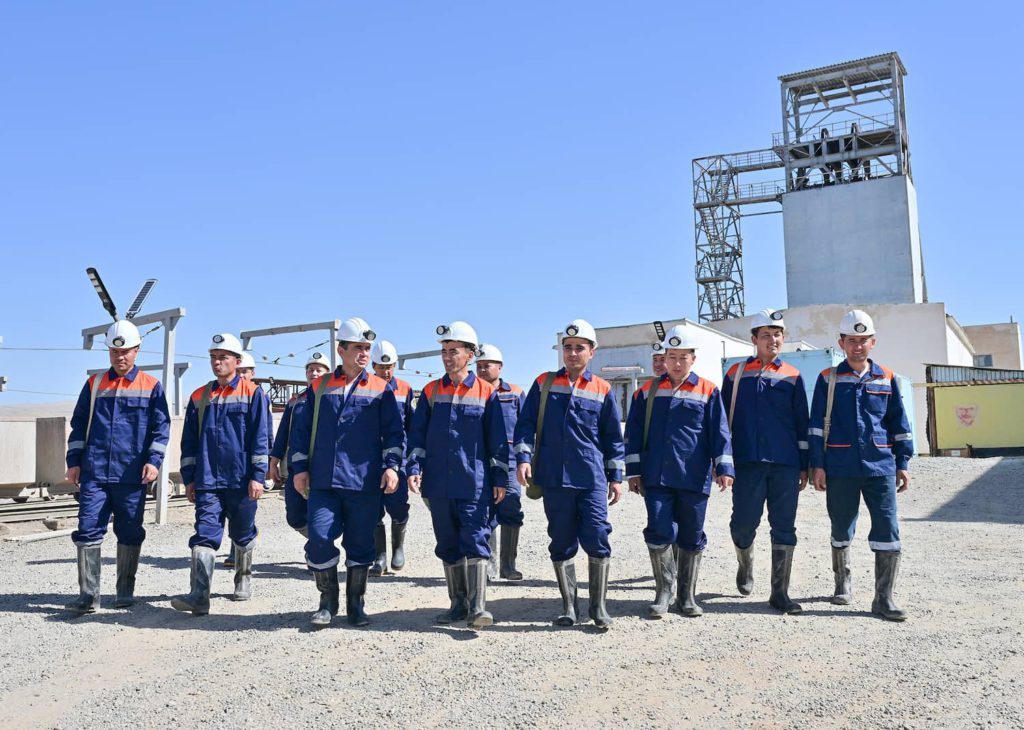
Sustainable Fitch has reaffirmed Navoi Mining and Metallurgical Company’s ESG entity rating at ‘3’ with an overall score of 54/100, up from 51, while upgrading its environmental profile to ‘2’ after the Uzbek gold producer disclosed Scope 2 emissions and set time-bound targets to cut combined Scope 1 and 2 emissions by 10% by 2030 from 2024 levels. The social profile remains at ‘3’ with no reported labour or community incidents and stable employment, while governance stays at ‘2’ on the back of detailed financial reporting and a formal risk and tax compliance framework. For mine planners and project financiers, the rating trajectory and absence of recorded environmental incidents may support access to ESG-linked capital and influence permitting and stakeholder engagement strategies in Uzbekistan.
Liverpool City Council has issued a £120M highways professional services framework tender, scheduled to start in October 2026 and run across its strategic and local road network. The framework is expected to cover design, asset management and technical advisory services for carriageways, footways, structures and associated drainage, likely feeding into future resurfacing, junction upgrades and bridge maintenance packages. Consultants will need capacity for multi-year programming and coordination with existing capital works to manage ageing pavements and structures across the city’s constrained urban network.
UK road authorities are shifting from building new capacity to “orchestrating” existing networks, as British drivers now lose about 80 hours a year to congestion at an estimated annual cost of £8bn. The emerging model combines dynamic lane control, variable speed limits and ramp metering with data from connected vehicles and roadside sensors to smooth flows without major widening schemes. For civil and traffic engineers, this points to investment in digital control centres, resilient ITS infrastructure and asset data integration rather than large-scale new carriageway construction.
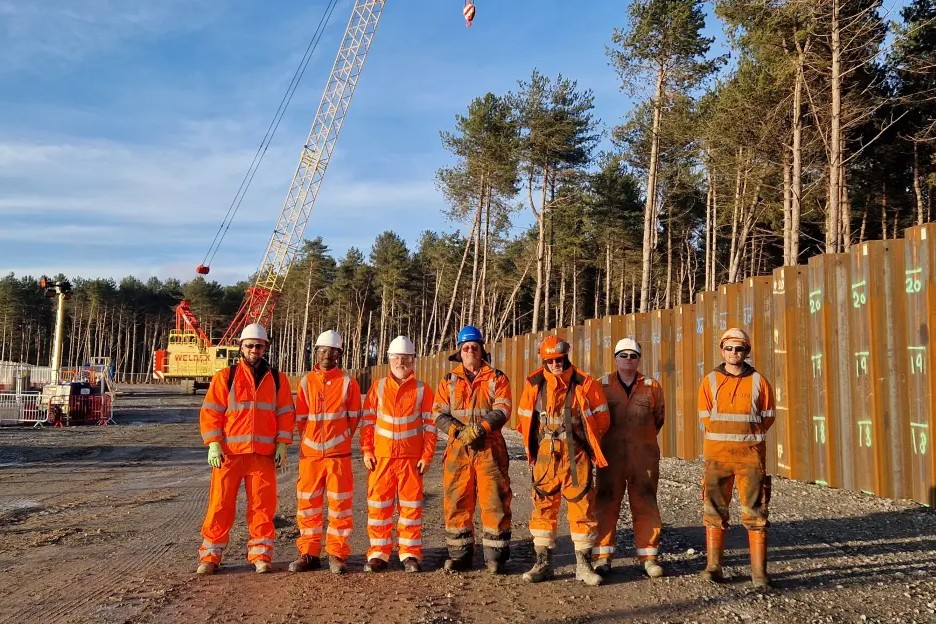
VolkerGround Engineering has completed a major sheet pile installation for the Sizewell C haul road on the Suffolk coast, forming a key ground engineering element linking temporary works areas to the main nuclear construction zone. The works comprise a continuous sheet piled alignment designed to stabilise soft coastal ground and protect the platform for heavy construction traffic, plant and materials movements. For geotechnical and civil teams, this marks a critical enabling stage for subsequent pavement build-up, drainage installation and high-axle-load haul operations into the main site.
West Yorkshire Combined Authority is set to approve the first phase of a £70M scheme for a new Elland station on the Calder Valley line, despite costs having escalated sharply since initial estimates. The initial works focus on rail and active‑travel access, including upgraded walking and cycling links to the proposed station site to integrate with existing local highways and bus services. For designers and contractors, the decision locks in a higher cost envelope and signals that access infrastructure and multimodal connectivity will proceed ahead of full station construction.
Community drop-in sessions will run in March as Transport for NSW advances planning and investigations for the Swan Hill Bridge replacement on the Murray River, following release of a preferred options report in December. Executive Director of Partnerships and Integration South, Cassandra Ffrench, said the sessions will explain shortlisted alignment and structure options and how they interact with existing river navigation, flood behaviour and the current heritage-listed lift-span bridge. Feedback will inform geotechnical investigations, traffic modelling on the Murray Valley and Murray Valley Highway approaches, and staging concepts to maintain cross-border access during construction.
The director of London-based Bebo Construction Limited, Adebanjo Adebayo Talabi, has received a two-year prison sentence suspended for two years, 200 hours’ unpaid work and a six-year director disqualification after admitting three fraudulent Covid Bounce Back Loan applications totalling £150,000. An Insolvency Service investigation found he exaggerated company turnover from about £1,300 loan eligibility to claims of £200,000–£220,000 turnover and secured three £50,000 loans from different banks between August and November 2020. Investigators also found the funds were diverted to personal accounts rather than used for the company’s economic benefit.