PDAC: Canada’s processing push and mine timelines – key takeaways for planners
Reviewed by Tom Sullivan
First reported on MINING.com
30 Second Briefing
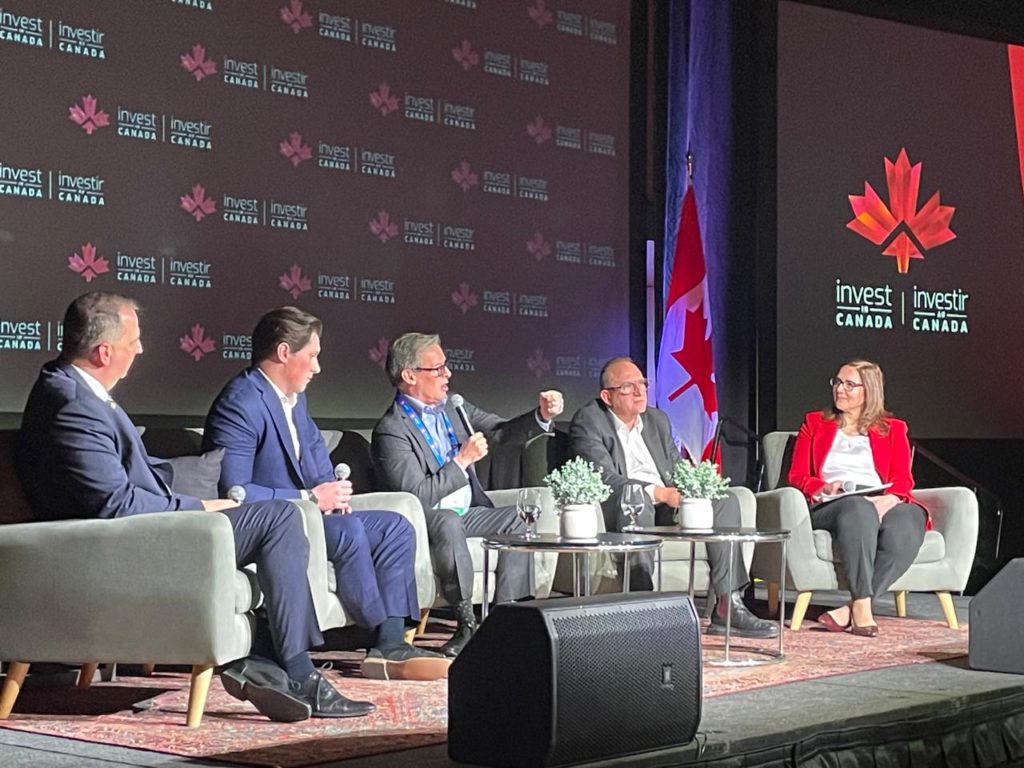
Canada’s critical minerals panel at PDAC 2026 warned that the country must rapidly rebuild domestic downstream capacity, with Canada Nickel CEO Mark Selby criticising the historic “ripping and shipping” model and pointing to the loss of majors like Inco and Falconbridge. Speakers cited new federal tools such as the Major Projects Office and the Canada Growth Fund, which is co-investing in Nouveau Monde Graphite’s Quebec facilities, Foran Mining’s Saskatchewan project and the Thompson nickel complex in Manitoba. Foran’s Dan Myerson argued that delivering a copper mine in under five years should be the new benchmark to trigger midstream and downstream plants.
Technical Brief
- Canada Nickel’s Mark Selby tied loss of Inco, Falconbridge and Rio Algom to reduced domestic processing build-out.
- Ontario’s energy and mines minister Stephen Lecce characterises historic export behaviour as a “ripping and shipping” model.
- Nouveau Monde Graphite’s Patrice Boulanger stressed reliance on deep-sea ports on both coasts for bulk exports.
- Rail and trucking capacity were cited as existing logistics backbones for scaling outbound critical mineral concentrate flows.
- Federal Canada Growth Fund co-investments in Nouveau Monde, Foran and Thompson nickel are intended as de‑risking signals to private capital.
Our Take
In our database of 1093 Mining stories, Canada-focused copper and nickel pieces increasingly flag downstream processing as the bottleneck, suggesting that the PDAC call to “build processing now” reflects constraints already emerging at project financing and offtake stages rather than a purely strategic concern.
The presence of equipment and technology suppliers like Sandvik and Siemens Canada alongside operators such as Nouveau Monde Graphite and Foran Mining signals that OEMs are positioning to lock in long-lead processing and electrification packages early, which can materially influence flowsheet choices for new graphite, lithium and copper builds in Canada.
The reference to legacy assets such as the Thompson nickel mine complex, combined with a 5‑year build horizon for a new copper mine, underlines why brownfield expansions and reprocessing options are likely to feature prominently in Canadian base metals strategies over the next decade, as they can deliver near-term feed for any new domestic refining capacity.
Prepared by collating external sources, AI-assisted tools, and Geomechanics.io’s proprietary mining database, then reviewed for technical accuracy & edited by our geotechnical team.
Related Articles


Related Industries & Products
Mining
Geotechnical software solutions for mining operations including CMRR analysis, hydrogeological testing, and data management.
CMRR-io
Streamline coal mine roof stability assessments with our cloud-based CMRR software featuring automated calculations, multi-scenario analysis, and collaborative workflows.
HYDROGEO-io
Comprehensive hydrogeological testing platform for managing, analysing, and reporting on packer tests, lugeon values, and hydraulic conductivity assessments.
GEODB-io
Centralised geotechnical data management solution for storing, accessing, and analysing all your site investigation and material testing data.