Rock Tech–Siemens Canada lithium converter MoU: design and capex notes for engineers
Reviewed by Joe Ashwell
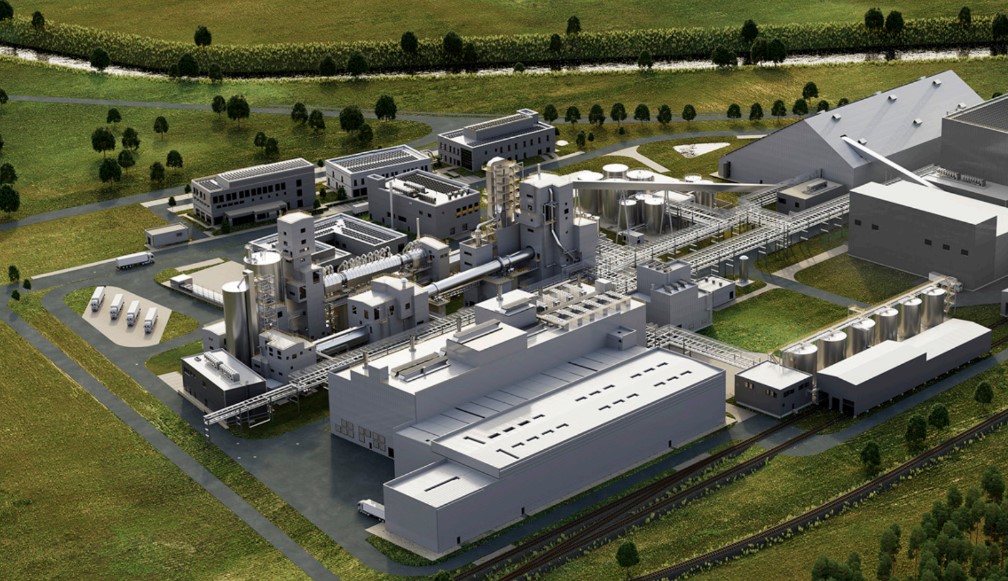
First reported on MINING.com
30 Second Briefing
Rock Tech Lithium and Siemens Canada have signed a non-binding MoU to deploy Siemens’ Digital Twin technology across design, construction and operation of Rock Tech’s planned lithium converter at Red Rock, Ontario, modelled on its fully permitted, shovel-ready Guben converter in Germany. The Red Rock plant is planned for up to 32,000 tonnes per year of lithium carbonate equivalent, enough to supply about 900,000 electric vehicles annually, and would be Ontario’s first lithium conversion facility. Using the Guben blueprint is intended to compress development timelines, cut technical risk and improve capital efficiency for Canada’s midstream critical minerals capacity.
Technical Brief
- Siemens’ Digital Twin suite will be applied across development, construction and operational phases of the Red Rock converter.
- Rock Tech is directly porting the fully permitted, shovel‑ready Guben converter engineering package into the Canadian design.
- The MoU was signed at NRCan’s Canadian Critical Minerals Forum during PDAC in Toronto, signalling federal engagement.
- Partnership explicitly aligns with G7 critical minerals supply chain priorities and formal Canada–Germany raw materials cooperation.
- Red Rock is positioned as the processing anchor for Rock Tech’s Georgia Lake mine, forming a single‑jurisdiction “rock‑to‑hydroxide” corridor.
- Germany’s Federal Ministry for Economic Affairs and Energy has formally endorsed the Rock Tech–Siemens Canada collaboration.
- For similar converter projects, reusing a fully engineered EU‑permitted flowsheet reduces front‑end engineering and permitting iteration risk.
Our Take
Lithium is one of the more densely covered critical minerals in our database, and most recent lithium pieces focus on upstream mining, so Rock Tech’s Guben converter and planned Red Rock converter point to a gradual build‑out of mid‑stream conversion capacity rather than just new raw supply.
Positioning a lithium hydroxide plant in Germany while planning a converter in Ontario gives Rock Tech optionality between EU and Canadian critical minerals policy regimes, which can matter for accessing incentives and de‑risking offtake tied to local battery manufacturing.
The explicit ESG scoring referenced alongside Navoi Mining (NMMC) suggests that independent ESG ratings are increasingly being tracked across our mining coverage; for Rock Tech and Siemens Canada, demonstrating strong ESG performance at Guben and Red Rock will likely be important for qualifying under ‘green’ financing and OEM procurement screens in the lithium value chain.
Prepared by collating external sources, AI-assisted tools, and Geomechanics.io’s proprietary mining database, then reviewed for technical accuracy & edited by our geotechnical team.
Related Articles


Related Industries & Products
Mining
Geotechnical software solutions for mining operations including CMRR analysis, hydrogeological testing, and data management.
Construction
Quality control software for construction companies with material testing, batch tracking, and compliance management.
CMRR-io
Streamline coal mine roof stability assessments with our cloud-based CMRR software featuring automated calculations, multi-scenario analysis, and collaborative workflows.
QCDB-io
Comprehensive quality control database for manufacturing, tunnelling, and civil construction with UCS testing, PSD analysis, and grout mix design management.
HYDROGEO-io
Comprehensive hydrogeological testing platform for managing, analysing, and reporting on packer tests, lugeon values, and hydraulic conductivity assessments.