Devonport out of special measures: safety and project lessons for engineers
Reviewed by Joe Ashwell
First reported on The Construction Index
30 Second Briefing
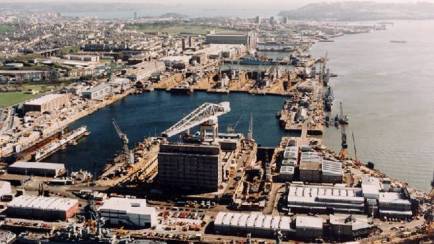
Devonport Royal Dockyard Limited has been taken out of the Office for Nuclear Regulation’s “enhanced attention” regime after 12 years, returning the Plymouth nuclear dockyard to routine regulatory oversight. ONR cited sustained improvements in leadership, organisational capability, decision-making and internal assurance, addressing earlier safety issues linked to ageing facilities, construction activities and control of work. The regulator now judges DRDL to have sufficient capability and capacity to maintain safety performance across both major construction works and submarine maintenance, but will continue targeted monitoring to ensure gains are sustained.
Technical Brief
- ONR’s “enhanced attention” regime functioned as a long-term special measures framework for Devonport’s nuclear-licensed site.
- Regulatory focus was triggered by safety shortcomings specifically in construction and submarine maintenance workstreams.
- Ageing facilities were a named causal factor, implying legacy structures and systems required upgraded safety management.
- Organisational capability and control-of-work deficiencies were central to ONR’s original intervention scope.
- ONR applied an “enabling regulatory approach”, working closely with DRDL rather than only using punitive enforcement.
- Leadership, decision-making and internal assurance systems were explicitly cited as areas requiring, and now showing, measurable improvement.
- Routine regulatory attention still includes targeted ONR monitoring, so safety performance must be demonstrably sustained, not one-off.
Our Take
Within our 734 Infrastructure stories, nuclear-regulated facilities like Devonport Royal Dockyard Limited feature far less frequently than transport or water assets, so ONR’s removal of enhanced attention here is a relatively rare example of a long-running UK safety oversight regime being normalised.
A 12‑year period under enhanced regulatory attention signals that any future major modification or life‑extension works at the Plymouth site will likely face close design scrutiny from ONR, even if formal ‘special measures’ have ended, which project teams should factor into programme and contingency planning.
Compared with other UK safety‑tagged infrastructure pieces in our database, Devonport’s case stands out for its duration, suggesting that DRDL’s recent improvements may now serve as a reference model for safety culture and asset‑management upgrades at other high‑hazard defence and energy sites.
Prepared by collating external sources, AI-assisted tools, and Geomechanics.io’s proprietary mining database, then reviewed for technical accuracy & edited by our geotechnical team.


