Geomechanics.io

  • Free Tools
Sign UpLog In

Geomechanics.io

Geomechanics, Streamlined.

© 2026 Geomechanics.io. All rights reserved.

Geomechanics.io

CMRR-ioGEODB-ioHYDROGEO-ioQCDB-ioFree Tools & CalculatorsBlogLatest Industry News

Industries

MiningConstructionTunnelling

Company

Terms of UsePrivacy PolicyLinkedIn
    Product

    Polypipe Aylesford automation: process, quality and staffing shifts for engineers

    March 6, 2026|

    Reviewed by Tom Sullivan

    Polypipe Aylesford automation: process, quality and staffing shifts for engineers

    First reported on The Construction Index

    30 Second Briefing

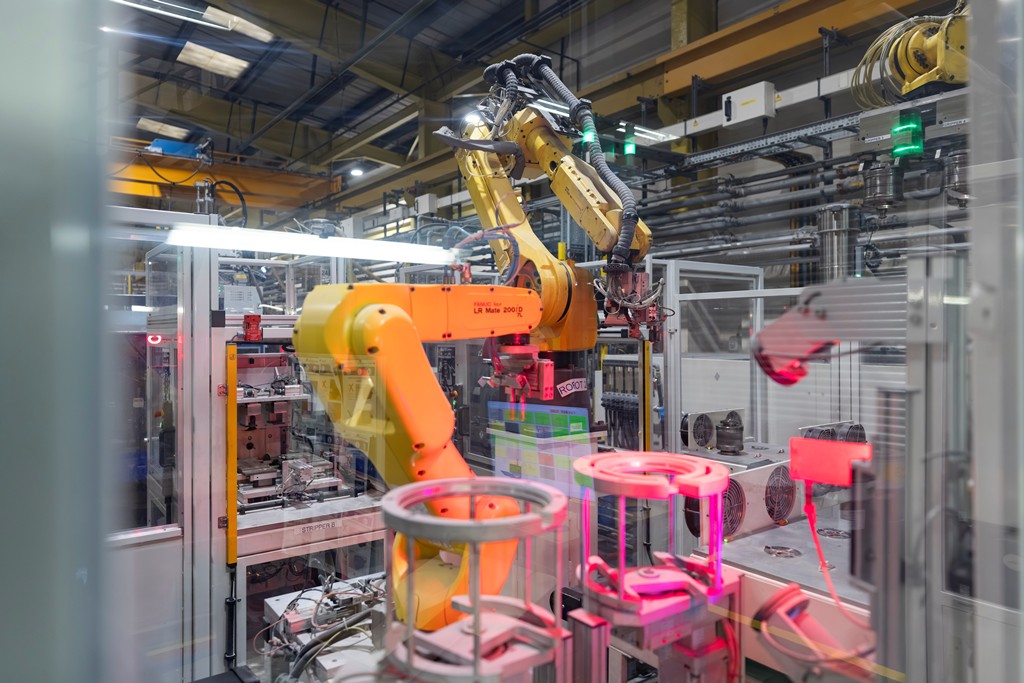
    Plastic pipe manufacturer Polypipe Building Services has invested £1.5m in automation, £3m in moulding machinery and £2.5m in extrusion technology at its 24-hour, five-day Aylesford plant, moving key lines to fully automated operation. Six-axis and Cartesian robots now handle production and packaging, while an IV4 AI vision camera counts parts and flags dimensional variation, ovality and moulding defects before dispatch. Operator loading has shifted from one operator per machine to typically one per four machines, with staff redeployed and further automation planned in the fabrication department.

    Technical Brief

    • Automation strategy is explicitly framed to offset labour shortages while still increasing production capacity.
    • Fully automated lines are concentrated in “key areas” of the factory, not yet site-wide.
    • AI-driven inspection is integrated into quality assurance to enforce drainage pipe dimensional and defect criteria.
    • Robotic and AI systems are credited with reducing waste through improved production consistency and defect detection.
    • Workforce impact is managed via redeployment, with no significant redundancies reported despite higher throughput.
    • An automation apprentice has been recruited, with further engineering team expansion planned to support new systems.
    • Next automation phase targets the fabrication department, currently reliant on manual prefabricated pipe system manufacture.

    Our Take

    Running the Aylesford facility on a 24/5 cycle with a shift from a 1:1 to 1:4 operator-to-machine ratio signals that Polypipe Building Services is targeting labour productivity gains that could buffer UK manufacturing margins against wage inflation and skills shortages.

    The combined £7m-plus spend on automation, moulding and extrusion at the Aylesford production site suggests Genuit Group is anchoring high-volume fabrication capacity in the UK rather than offshoring, which may appeal to infrastructure clients prioritising local content and shorter supply chains.

    Within our 38 Materials stories, most Product-tagged items focus on new formulations or low-carbon offerings; this kind of process automation investment by Polypipe is less common and indicates a push to compete on cost and lead time rather than purely on product differentiation.

    Geotechnical Software for Modern Teams

    Centralise site data, logs, and lab results with GEODB-io, CMRR-io, and HYDROGEO-io.

    No credit card required.

    • Save and export unlimited calculations
    • Advanced data visualisation
    • Generate professional PDF reports
    • Cloud storage for all your projects

    Prepared by collating external sources, AI-assisted tools, and Geomechanics.io’s proprietary mining database, then reviewed for technical accuracy & edited by our geotechnical team.

    Related Articles
    New materials in road construction: design and QA takeaways for engineers
    Materials
    about 6 hours ago

    New materials in road construction: design and QA takeaways for engineers

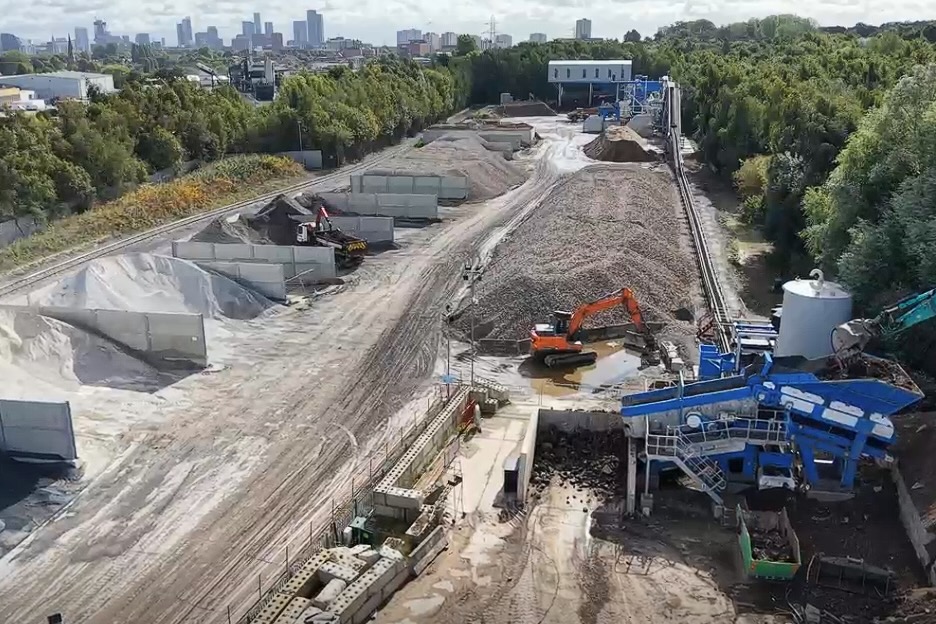
    Modern highway construction is shifting towards low-carbon materials such as geopolymer concrete, high-recycled-content asphalt and bio-based binders to cut embodied CO₂ and improve performance under higher traffic loads and more intense rainfall. Designers are trialling warm-mix asphalt to reduce laying temperatures by 20–40°C and using secondary aggregates from construction and demolition waste to limit quarrying and landfill. Key challenges include variable material quality, limited long-term durability data, gaps in standards and specifications, and the need to adapt pavement design methods and site quality control.

    Voya Energy’s $35M aluminium fuel system: design and scale notes for engineers
    Materials
    2 days ago

    Voya Energy’s $35M aluminium fuel system: design and scale notes for engineers

    Clean tech startup Voya Energy has secured US$35 million, led by Energy Impact Partners with backing from John Doerr and others, to commercialise aluminium-based metal fuel generators for large off-grid users such as data centres and industrial plants. The system uses low‑grade scrap aluminium pellets in a proprietary metal‑air cell with custom electrolyte, producing electricity electrochemically with no on-site combustion or air emissions and operating independently of the grid. Current designs target up to 2 MW per 20‑foot containerised generator with a separate 10‑foot fuel module holding about 100 MWh, scaling to roughly 100 MW and 10 GWh per acre.

    Interface 5600 2-Axis Axial Torsion Load Cell: test rig gains for engineers
    Materials
    4 days ago

    Interface 5600 2-Axis Axial Torsion Load Cell: test rig gains for engineers

    The Interface 5600 2-Axis Axial Torsion Load Cell combines compressive force and torsional moment measurement in a single flange-mount transducer, capturing both at the same point for demanding test and measurement rigs. Its compact, multi-axis design reduces fixture complexity compared with separate axial and torque sensors, freeing space around test specimens and simplifying alignment. For mining equipment OEMs and materials labs, the unit supports more accurate characterisation of drill strings, couplings and rotating components under combined loading.

    Related Industries & Products

    Construction

    Quality control software for construction companies with material testing, batch tracking, and compliance management.

    Mining

    Geotechnical software solutions for mining operations including CMRR analysis, hydrogeological testing, and data management.

    QCDB-io

    Comprehensive quality control database for manufacturing, tunnelling, and civil construction with UCS testing, PSD analysis, and grout mix design management.

    AllGeotechnicalInfrastructureHazardsEnvironmental