Geomechanics, Streamlined.
© 2026 Geomechanics.io. All rights reserved.
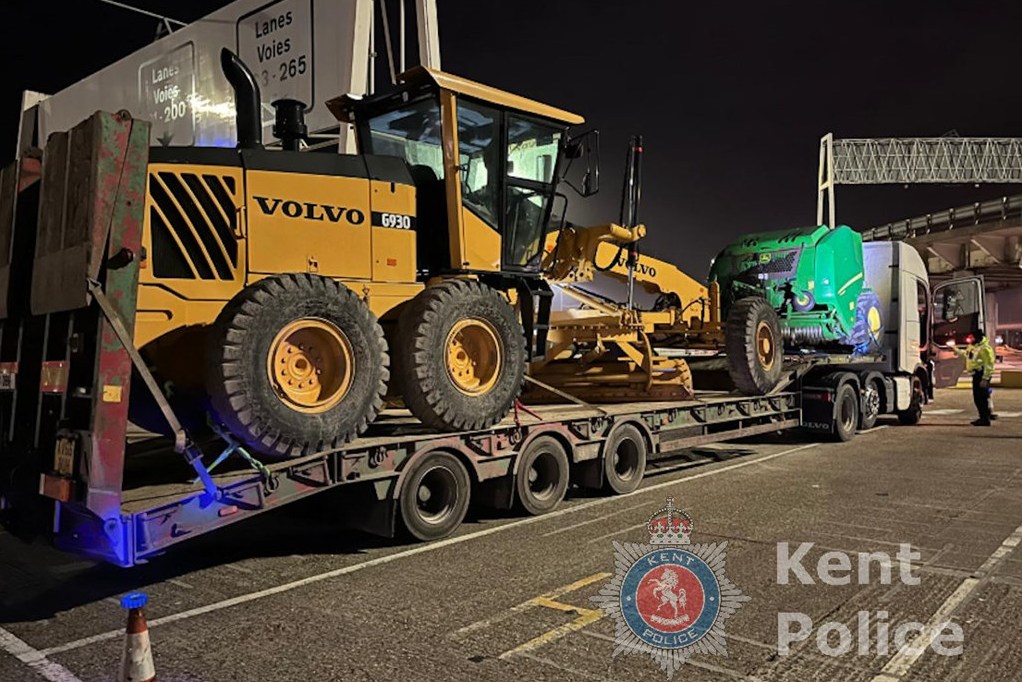
Kent Police’s Rural Task Force, working with Port of Dover Police, NaVCIS and the National Construction & Agricultural Theft Team, has recovered around £200,000 of stolen plant and farm machinery at the Port of Dover. Seizures over two days included a Volvo G930 grader valued at about £150,000, a John Deere baler, an excavator and trailer, a woodchipper, diagnostic equipment and a VIN‑altering tool. Three men aged 31, 43 and 44 were arrested on suspicion of handling stolen goods, with all bailed while enquiries continue.
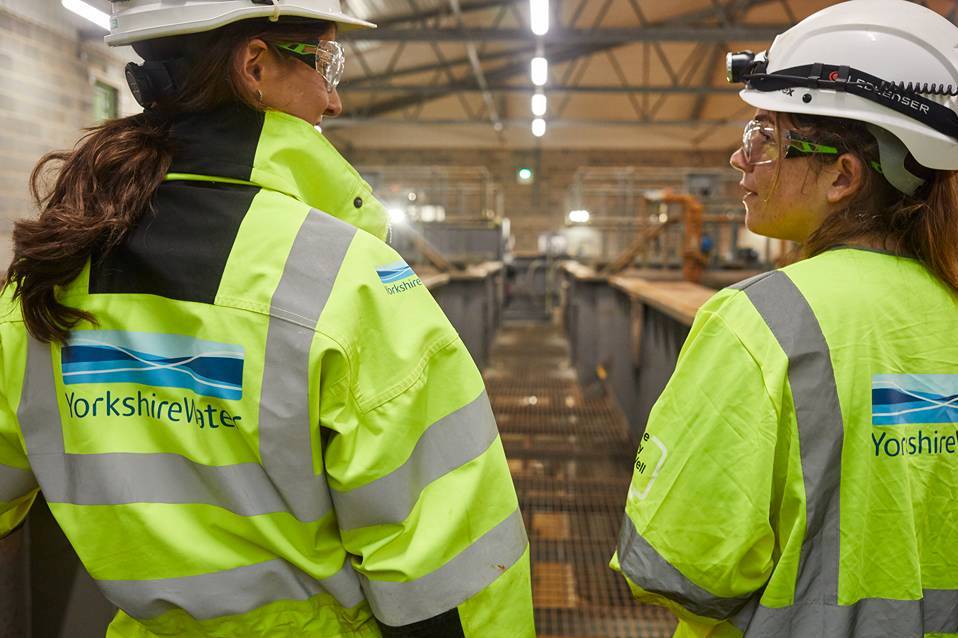
Swedish investor EQT Infrastructure will acquire a 42% stake in Kelda Holdings, parent of Yorkshire Water, alongside existing shareholders GIC of Singapore on 42% and Australia’s TCorp on 16%, with completion targeted by June 2026 subject to regulatory approvals. EQT, which has already deployed over £10bn of equity in UK businesses, will back Yorkshire Water’s £8.3bn multi-year investment programme to upgrade water and wastewater infrastructure across the region. Management frames the deal as providing long-term capital and board expertise to support operational performance improvements and sector reform.
Cardiff’s £100M Crossrail tram‑train scheme is moving into its first construction phase, with Cardiff Council appointing Graham as principal contractor for the new link between Cardiff Central and Cardiff Bay. The initial section will convert the existing heavy rail spur into a tram‑train corridor, requiring track upgrades, new overhead line equipment and modified signalling to interface with Network Rail infrastructure. Early works will focus on segregated running where possible and junction remodelling at Cardiff Central to accommodate higher‑frequency, lighter vehicles.
Reviving the UK construction sector sits at the centre of the government’s economic strategy, with a wave of planning reforms, accelerated infrastructure approvals and public capital spending aimed at unlocking stalled housing, transport and energy schemes. Delivery risks stem from chronic skills shortages in civils trades and site engineering, inflation-driven tender price volatility, and limited capacity in key supply chains such as precast concrete and steel fabrication. For contractors and consultants, the message is to prioritise productivity gains through MMC, digital design and alliancing contracts if they want to capture this pipeline at viable margins.
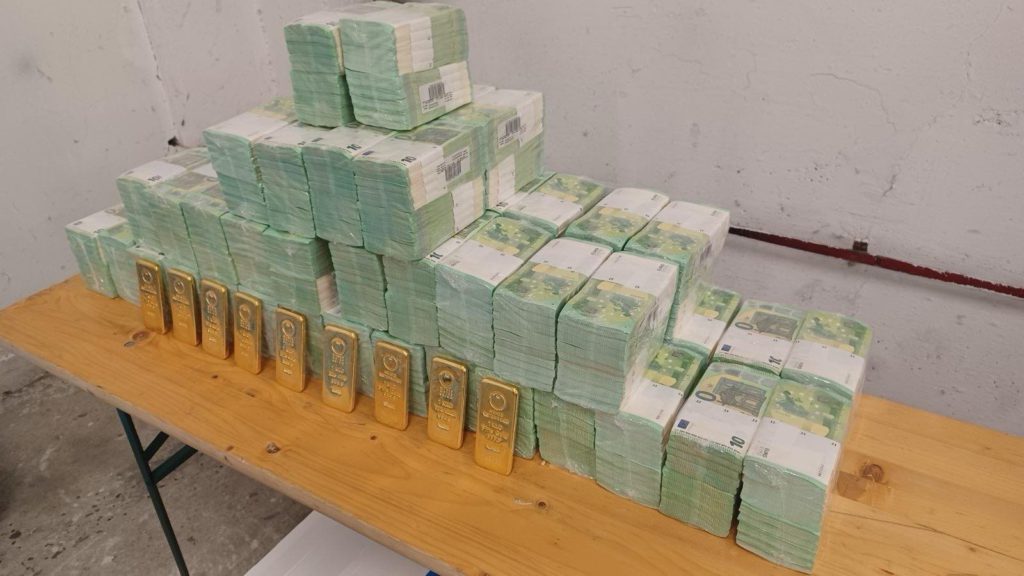
Hungary has detained seven Ukrainian nationals and seized about $40 million, €35 million and 9 kg of gold bars (roughly $1.5 million) from two armoured vehicles travelling from Austria to Ukraine in what officials called the “Ukrainian gold convoy operation”. Foreign minister Péter Szijjártó linked the funds to a “Ukrainian war mafia”, noting that since January Ukrainians have moved an estimated $900 million, €420 million and 146 kg of gold through Hungary, triggering a money-laundering probe with counter‑terrorism involvement. Kyiv says the detainees are Oschadbank staff conducting a routine interbank transfer because Ukraine’s airspace is closed, and has opened criminal proceedings against Hungary for “illegal deprivation of liberty”.
XCMG has signed a memorandum of understanding with Chilean copper major Codelco in Santiago on 3 March, following Codelco Chairman Máximo Pacheco’s visit to XCMG’s Xuzhou manufacturing base in February. The agreement, signed by XCMG Vice President Liu Jiansen and Codelco Chief Procurement Officer Mauricio Acuña, centres on expanding supply of large-scale mining equipment and support services to Codelco’s open-pit and underground copper operations. For engineers, the deal signals intensifying competition with established OEMs on haul trucks, loaders and drilling fleets in high-altitude Andean conditions.
MetalQuest Mining’s Lac Otelnuk project in northern Quebec hosts 4.9 billion tonnes of proven and probable reserves grading 28.7% Fe, with a 2015 feasibility study outlining an 11.6 km by 2.8 km open pit, post-tax NPV of US$5.24 billion (8% discount), IRR of 13% and capital costs of about US$14.2 billion. The study forecasts 68.5% Fe concentrate with 0.02% P and 2.95% SiO₂, positioning it for DRI-based low-emission steelmaking using Quebec hydro power. Infrastructure remains the critical constraint, with a previously proposed 755 km concentrate slurry pipeline to Sept-Îles now likely to be replaced by road and rail, and MetalQuest seeking a major partner ahead of a new feasibility targeted for 2030.
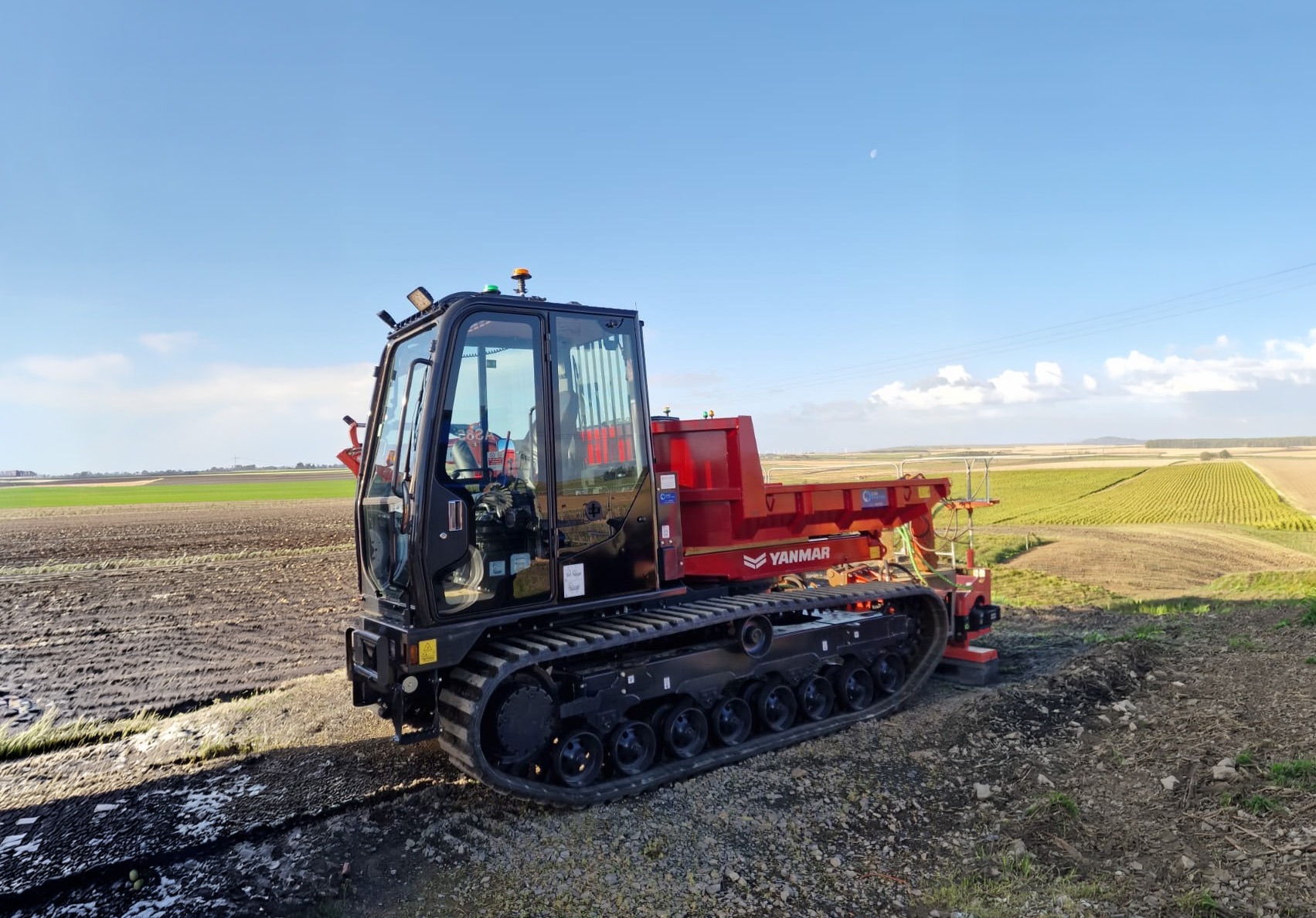
Gow Plant Hire is deploying two Yanmar C50R-5ATV tracked carriers (6,390kg operating weight, 3,800kg payload) to move fencing materials, aggregates, drilling support kit and backfill across soft, high-ground wind farm sites in the Scottish Highlands. The hydrostatic transmission and 180° rotating skip are being used to maintain traction on temporary access tracks and unload accurately without repositioning on narrow corridors. Supplied by dealer Field and Forest Ltd in Broxburn, the units have been in service since October 2024 on fencing and ground investigation works linked to Scotland’s NPF4-driven onshore wind expansion.
Thiess, together with MACA and RTL Mining and Earthworks, has visited Norton Gold Fields’ Mulgarrie operation near Kalgoorlie, where an autonomous haulage system (AHS) trial using EACON Mining Technology’s retrofitted trucks is under way. The trial, run with Norton Gold Fields (owned by Zijin Mining Group), is testing retrofit autonomy on an existing truck fleet rather than deploying factory-built autonomous units. For mine operators, successful validation would support lower‑capex conversion of conventional haul trucks to AHS across similar Australian gold and bulk operations.
Transport for Greater Manchester has launched a £150M programme of Metrolink works in 2026 to increase capacity and resilience across the Bee Network’s 103km light rail system and 99 stops. The package is expected to include track renewals on heavily trafficked corridors, overhead line and signalling upgrades, and targeted depot and stabling enhancements to support higher-frequency services. Engineers will need to manage works around live operations, with possession planning and temporary speed restrictions critical to maintaining timetable reliability during construction.
Ageing, overloaded wastewater networks that are stalling new housing schemes can often gain capacity through smarter screening rather than new trunk sewers, with optimised inlet screens reducing ragging, headloss and unplanned spills at treatment works. By improving bar spacing, screen geometry and automated cleaning regimes at key pinch points, operators can increase effective hydraulic capacity in existing pipes and wet wells while cutting pump blockages and storm overflow activations. For civil engineers, this shifts early-stage design towards network audits, hydraulic modelling and targeted screen upgrades before committing to major pipeline construction.
Arup has appointed Tony Gee as strategic partner for the next design phase of the Coventry Very Light Rail (CVLR) programme, which is developing a low-mass, battery-powered tram system intended to run on shallow, prefabricated slab track to minimise utility diversions. The partnership will focus on detailed civil and trackform design for future route sections beyond the initial Coventry city centre demonstrator, including integration with existing highways and tight urban geometry. For civil and geotechnical teams, the work will test repeatable foundation solutions and modular track systems that can be installed with limited possession windows and constrained excavation depths.
Cornish Lithium has secured planning permission from Cornwall Council’s mineral planning authority to drill for lithium at its Copper House site near Burncoose and Redruth, progressing from exploration towards potential pilot-scale production. The consent allows test drilling and associated surface infrastructure on a historically mined area, targeting lithium-bearing geothermal brines within the Cornubian granite. For civil and geotechnical teams, the project signals upcoming work on drill pad construction, groundwater management and monitoring, and integration of mineral operations with existing local infrastructure and environmental constraints.
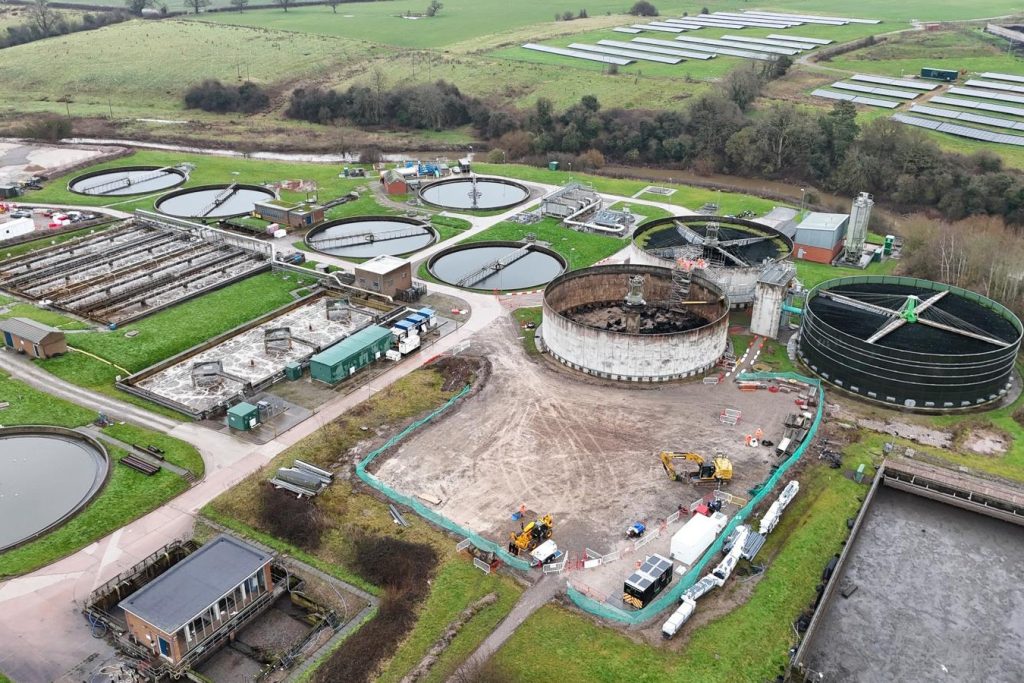
United Utilities has started a £34.4M upgrade of the Crewe wastewater treatment works, where Costain is refurbishing biological filters using techniques adapted from industrial cooling systems. The approach is expected to extend filter asset life and improve process performance without full replacement, reducing on-site civil works and programme risk. For designers and contractors, the scheme signals growing crossover between process plant cooling technologies and refurbishment strategies for ageing wastewater infrastructure.
Glencore mining engineer Arabella Dow describes how early exposure to mine sites, including open-cut coal operations in New South Wales, and structured vacation programmes led her into a technical production role overseeing drill-and-blast and short-term scheduling. She points to persistent barriers such as limited female amenities underground, ad hoc parental leave arrangements on remote FIFO rosters, and a lack of women in senior technical and statutory positions. Dow argues that visible female engineers in front-line roles and formal mentoring networks are critical to retaining women through the graduate-to-superintendent career transition.
AMEC has urged the Federal Government to tackle workforce shortages and infrastructure bottlenecks in Australia’s critical minerals sector, warning that current road, rail and energy constraints are delaying new projects. The submission calls for targeted investment in regional power and transport corridors serving remote exploration and mining hubs, alongside streamlined approvals and stronger community engagement frameworks. For project engineers, the message is that permitting timelines, grid access and haulage capacity may become as decisive as ore grades in determining project viability.
Mapping of Australia’s vanadium resources by University of Sydney PhD student Marliana Widyastuti is using soil geochemistry and machine‑learning analysis of legacy datasets to pinpoint prospective deposits for steel alloys and vanadium redox flow batteries. The work integrates multi‑element soil surveys, mineralogical characterisation and spatial statistics to distinguish vanadium hosted in titanomagnetite, shales and laterites across different regolith profiles. Outcomes are expected to guide targeted drilling, refine grade–tonnage estimates and de‑risk exploration in under‑sampled terrains.
Michelle Radley, general manager of Rio Tinto’s Dampier Ports, outlines how she is reshaping leadership culture across the iron ore export hubs of Parker Point and East Intercourse Island ahead of International Women’s Day. She focuses on frontline engagement with stevedores, maintenance crews and marine pilots, and on building more diverse supervisor pipelines in a traditionally male-dominated port environment. For mining engineers and port planners, her approach signals stronger emphasis on people-centred operational decision-making alongside throughput, berth utilisation and shiploading performance.
Australia has again ranked among the world’s top mining investment destinations, with multiple Australian jurisdictions placed near the top of global competitiveness tables for policy stability, geological prospectivity and permitting performance. International rankings cite low sovereign risk, established infrastructure around major iron ore, coal and critical minerals hubs, and a mature regulatory framework for mine approvals and rehabilitation bonds. For project developers, this signals continued favourable conditions for financing large-scale open-pit and underground expansions, particularly in battery metals and high-grade iron ore districts.
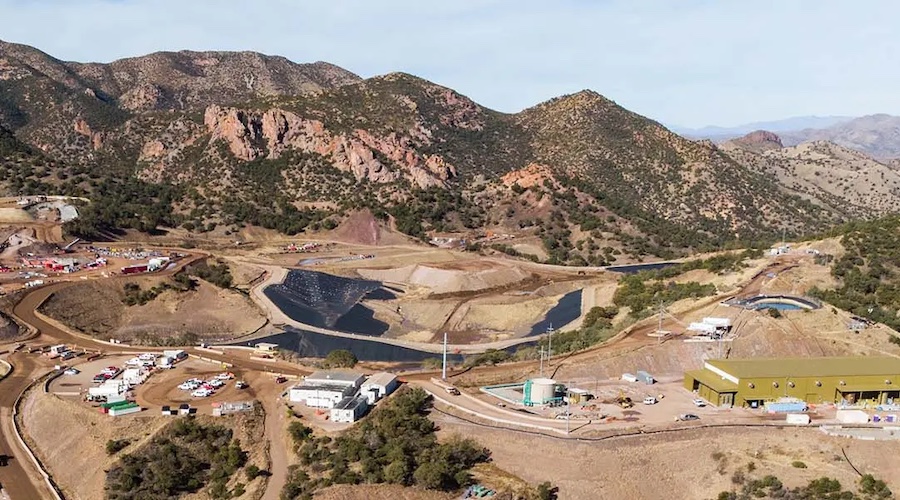
South32’s Hermosa zinc-silver project in Arizona has advanced towards US federal approval after the US Forest Service issued a Final Environmental Impact Statement and Draft Record of Decision supporting development on Coronado National Forest land, including a primary access road, secondary dry-stack tailings facility and part of a 138 kV transmission line to be built by UniSource Energy Services. The preferred alternative is designed to avoid traffic near Patagonia, minimise land disturbance on a roughly 750-acre surface footprint, and use about 90% less water than many regional mines, while incorporating nearly 140 additional conservation, mitigation and monitoring measures. A 45-day objection period plus a possible 45-day resolution phase precede a Final Record of Decision expected in July, with Hermosa projected to support up to 900 jobs at peak production.
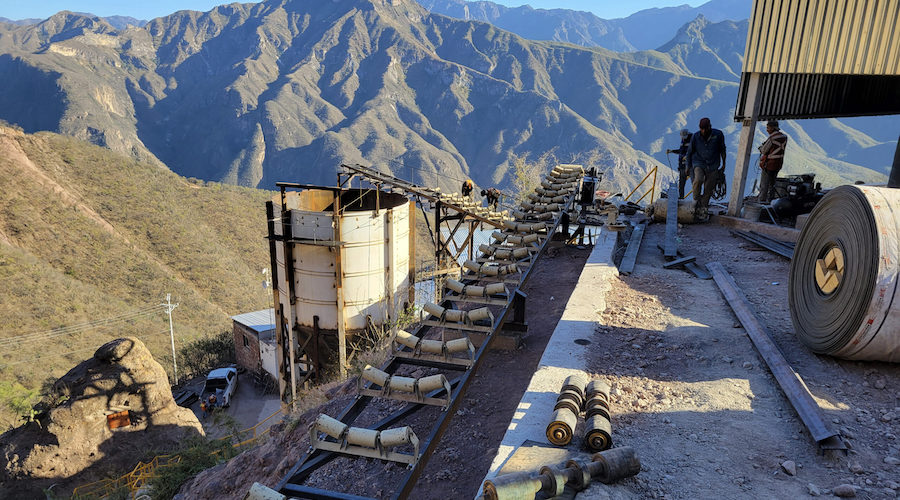
Luca Mining has intersected high-grade mineralisation below existing workings at its Tahuehueto underground mine in Durango, with DDH26-SU-01 cutting 7.6 m at 14.27 g/t gold, 46.64 g/t silver, 0.33% Cu, 2.57% Pb and 1.19% Zn from 80.9 m, and DDH26-SU-03 returning 13.2 m at 6.66 g/t gold from 42.7 m. The new zones lie about 30 m below Level 23, which already hosts underground infrastructure, and grades are several times the current ~4 g/t AuEq head grade from the 1,000 t/d mill commissioned in 2025. Luca has increased the 2026 exploration budget at Tahuehueto by 40% to $3.5 million, with 47 drill holes totalling roughly 10,400 m completed so far across the Creston and Santiago vein targets, where brecciated quartz–sulphide veins remain open down plunge.
Oklahoma is positioning itself as a critical minerals processing hub rather than a mining state, anchored by Emirates Global Aluminium’s proposed US$4 billion primary aluminium smelter at the Port of Inola on the McClellan–Kerr Arkansas River system and backed by surplus low‑cost power from wind and natural gas. USA Rare Earth is building a vertically integrated rare earth magnet plant in Stillwater with about US$1.6 billion in public and private funding, while Stardust Power (NASDAQ: SDST) is advancing a lithium refinery in Muskogee with Sumitomo offtake and key permits secured. The cluster targets defence and aerospace demand around Tinker Air Force Base and other installations, aiming to plug the “missing middle” between raw mineral supply and finished components.
United States Antimony has secured approval to uplist from NYSE American to the New York Stock Exchange under ticker UAMY, with trading to start on 11 March and its share price jumping about 10%, valuing the company at US$1.4 billion. The Texas-based producer has also received US$27 million in US Defense Department funding to expand antimony extraction and refining, centred on a Montana smelter rated at 5 million lb/year of antimony metal. The company plans a fully integrated supply chain by adding ore extraction in Alaska for defence, battery and flame-retardant markets.
SANY is using CONEXPO 2026 to showcase an AI Service Assistant and remote-control systems aimed at keeping large excavators, rigid trucks and quarry loaders operating closer to design performance. The AI platform supports predictive maintenance and fault diagnosis across mixed fleets, while remote-control kits allow operators to run machines from offsite control rooms in high-risk areas such as highwalls, stockpile edges and crusher feed zones. For mine and quarry owners, the focus is on reducing unplanned downtime and extending component life rather than adding new iron.