Geomechanics, Streamlined.
© 2026 Geomechanics.io. All rights reserved.
Northern Powerhouse Rail (NPR) needs tighter alignment with national and local growth strategies and clearer joint working between Whitehall and northern authorities if it is to realise its promised economic uplift, the National Audit Office has warned. The watchdog questions current governance and delivery arrangements for the multi‑billion‑pound rail upgrade, which spans key city pairs across the North and interfaces with existing main lines and urban transport plans. For engineers, the warning signals potential uncertainty around phasing, scope definition and integration with local rail and station redevelopment schemes.
An independent panel has allowed five objecting water companies to recover only 17% of the additional revenue they sought from customers following challenges to Ofwat’s 2025–30 price control. The ruling materially constrains bill-funded capital programmes for network renewal, treatment works upgrades and resilience schemes, potentially forcing rephasing or downsizing of major pipeline, storage and wastewater projects. Contractors and consultants can expect tighter cost scrutiny, value engineering pressure and possible deferral of non-regulatory enhancement works across the AMP8 period.
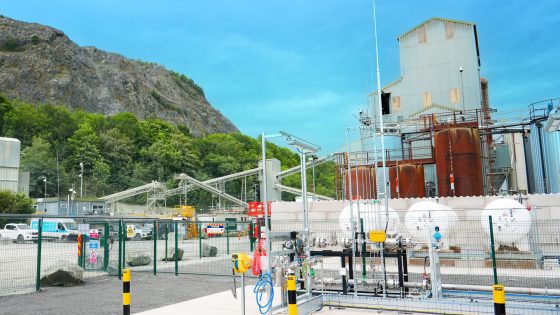
Hydrogen has been used by Heidelberg Materials UK to decarbonise asphalt production on an industrial scale for the first time in the UK, replacing conventional fossil fuel combustion in the drying and heating phase of the mixing process. The trial, conducted in a full-scale asphalt plant rather than a laboratory rig, demonstrates that hydrogen burners can maintain production temperatures and binder performance within standard specification limits. For pavement designers and contractors, this signals emerging scope to cut Scope 1 emissions from asphalt plants without changing mix designs or laying procedures.
National Highways has completed a major restoration of the 19th-century Riddings Viaduct, stabilising the disused masonry structure to secure its long-term integrity while retaining key heritage features such as its original brick and stone detailing. Works focused on structural repairs to the arches and piers, targeted masonry repointing and waterproofing to reduce water ingress, and strengthening of the deck to manage future loading and environmental deterioration. The project provides a reference for balancing conservation requirements with modern structural safety interventions on ageing rail viaducts.
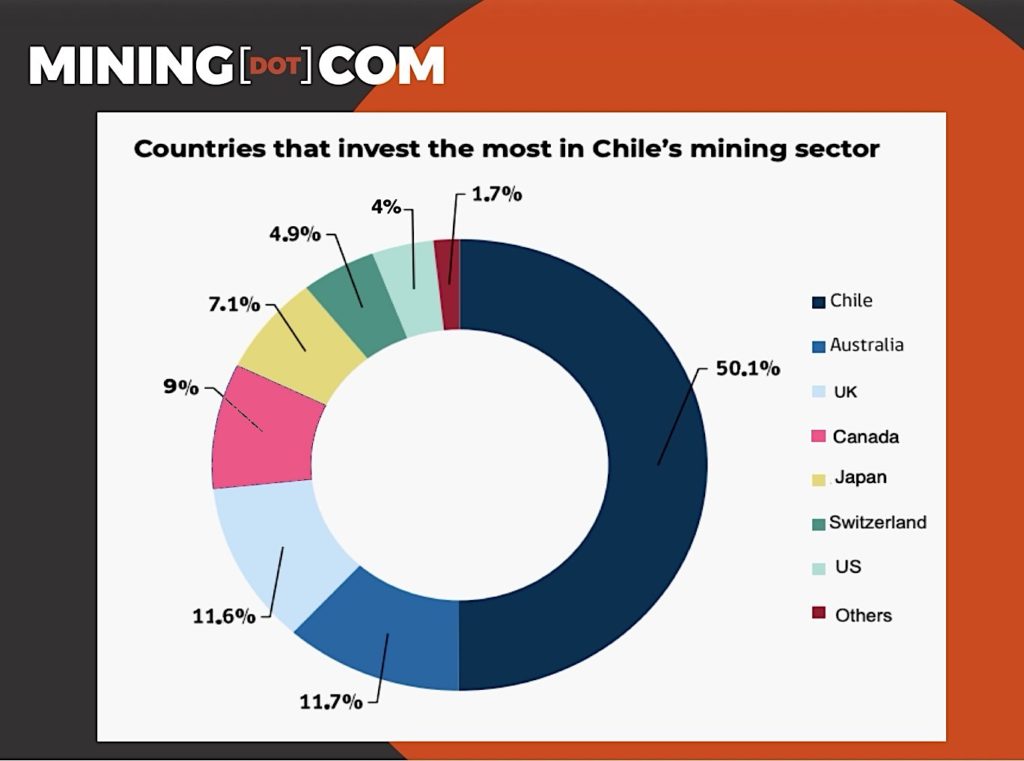
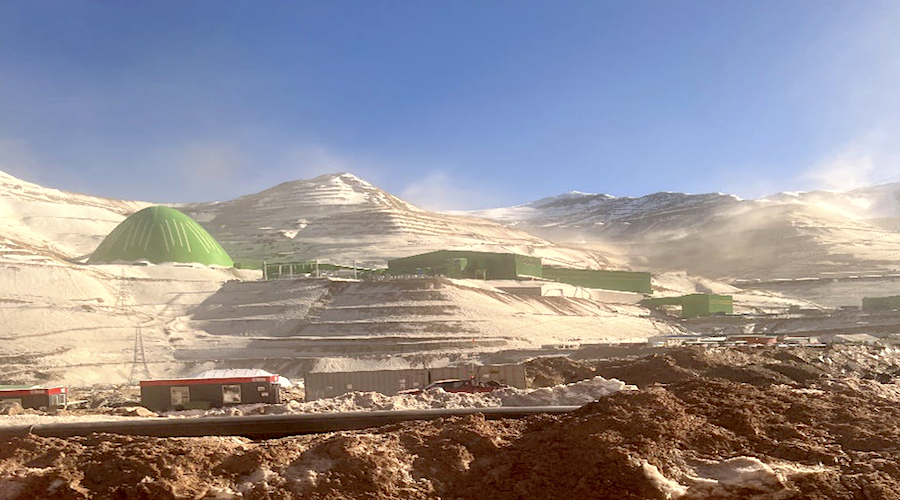
Chile’s new president José Antonio Kast has merged the Mining and Economy ministries under agronomist Daniel Mas, prompting concern from industry groups that a sector generating 11–12% of GDP is losing technical focus just as projects face “cursed” permitting processes requiring 500+ approvals. Copper output fell 2% in 2025 and Cochilco now sees production peaking mid-decade before sliding towards about 4.4 Mt by 2034 unless stalled projects advance. At the same time, Chile is pushing a 14‑mineral critical strategy and new lithium JVs such as Codelco–SQM’s Nova Andino Litio and Codelco–Rio Tinto at Maricunga amid tighter state control and volatile copper prices around $13,098/t.
Resource nationalism and security stockpiles are reshaping metals markets, with Indonesia capping 2025 nickel ore output at about 200 million tonnes and the US launching Project Vault, a US$12 billion critical minerals stockpiling programme, while Canada commits C$2.5 billion under a Defence Production Act-style framework. China still refines roughly 60% of global lithium and cobalt and produces about 69% of rare earths and 83% of tungsten, pushing buyers to prioritise NATO alignment, energy reliability and governance over pure cost. Canada’s advantage in stability, tax incentives such as the Mineral Exploration Tax Credit (to March 2027) and deep mining finance is narrowing unless operators accelerate electrification, automation and digital operations.
EACON is adding 12 more RTE136 battery-electric autonomous haul trucks to China Baowu Steel Group’s Taihe iron ore mine, expanding what it describes as a zero-emission AHS deployment in a metallic ore operation. The new trucks integrate with EACON’s existing autonomous haulage system, using high-precision positioning and fleet management to coordinate fully electric haulage on established iron ore routes. For mine planners and electrical engineers, the scale-up signals growing requirements for pit power distribution, fast-charging infrastructure, and traffic control tailored to BEV-AHS fleets.
SpectraFlow Analytics has secured an order for a SpectraFlow Crossbelt Analyzer at Daye Non-Ferrous Metal Group’s Ausmelt TSL copper smelter in Huangshi, China, one of the world’s five largest raw copper producers. The online analyser will measure concentrate chemistry directly on the conveyor, enabling tighter control of the Ausmelt TSL furnace feed mix in real time. For process engineers, this supports more stable bath conditions, improved sulphur and flux balance, and reduced reliance on intermittent grab sampling.
XCMG has delivered its first large XDE260 diesel-electric AC-drive mining trucks to Australia, marking the Chinese OEM’s entry into the country’s ultra-class haul truck segment. The XDE260, typically configured for around 240–260 t payloads and used in large open-pit operations, positions XCMG against established competitors such as Caterpillar 793/Komatsu 830E in high-production iron ore and coal mines. For mine planners and maintenance teams, the move signals another OEM option for fleet standardisation, parts support, and diesel-electric haulage strategies in Australian conditions.
Thiess plans to retrofit a Caterpillar 793D haul truck with a FLANDERS hybrid diesel‑electric kit as part of its 2025 Sustainability Report roadmap, targeting lower emissions from ultra‑class fleets while acknowledging that net zero‑capable propulsion for large trucks is not yet commercially ready. The FLANDERS system, previously used to boost productivity and cut fuel burn on large excavators and drills, will be adapted to the 793D’s existing electric drive to recover and reuse braking energy. For mine operators, the trial offers a near‑term retrofit option to reduce diesel consumption and validate hybrid performance on a widely used 220–240 t class truck.
Battery-powered mobile pump systems are emerging as an alternative to mains- and diesel-driven units on mine dewatering lines as Tsurumi trials containerised battery storage with its electric submersible pumps. The concept targets reduced local emissions, lower noise for underground and near-community operations, and greater flexibility where grid access is limited or generator logistics are costly. For engineers, the key questions now centre on achievable duty cycles, kW draw versus battery capacity, and integration with existing pump control and monitoring systems.
Work is commencing on upgrading Toowoomba–Athol Road, a key freight and commuter link between Toowoomba and Queensland’s south‑west that now carries a growing mix of heavy vehicles and urban traffic from rapidly expanding Westbrook and Wyreema. The project focuses on safety and capacity planning along this rural–urban corridor, where increasing freight volumes and commuter flows are stressing the existing two‑lane geometry and intersections. Outcomes will guide future widening, intersection treatments and pavement strengthening to support higher traffic loads and reduce crash risk.
Consultation on England’s revised National Planning Policy Framework (NPPF) closed today, with engineers and planners warning the draft offers “all bark and no bite” on issues such as mandatory housing targets and delivery of nationally significant infrastructure. Critics argue the text weakens enforceable requirements on local plans, five-year housing land supply and brownfield-first development, while adding vague language on design quality and net zero. Concerns centre on greater scope for local refusal of dense schemes near transport hubs, potentially constraining urban regeneration and delaying major transport and energy projects.
Treotham has installed an igus roller chain energy supply system for a Shark Bay, Western Australia operation where mobile machines travel long distances, cutting drag forces by up to 75 per cent compared with conventional cable carriers. The polymer roller chain runs in a low-friction trough with integrated rollers, allowing longer travel strokes with reduced drive power and lower wear on cables and hoses. For mine operators, the system offers scope to downsize drive motors, extend maintenance intervals on travelling equipment and improve reliability on long conveyor and reclaimer runs.
ESS Engineering is rolling out practical conveyor control strategies to cut fugitive material loss and unplanned downtime on high‑throughput belt systems. The company is focusing on correctly sized and positioned primary and secondary belt cleaners, skirting and sealing systems, and improved transfer‑chute design to reduce carryback, spillage and dust at loading and discharge points. For mine operators, the approach targets lower maintenance at height, reduced clean‑up around conveyor structures, and more stable belt tracking and idler life.
ALLU screening and crushing buckets supplied by Total Rockbreaking Solutions are being used in Australian quarrying and mining operations to convert oversize and waste rock into saleable aggregate and fill. By processing byproduct in-situ on loaders and excavators rather than hauling it to fixed plants or waste dumps, sites can recover usable fractions, cut transport and tipping costs, and reduce stockpiled waste volumes. The approach is particularly relevant for brownfield pits with limited space and variable feed, where mobile, attachment-based processing can extend resource life.
Thiess executive general manager Rae O’Brien has been named Exceptional Woman of 2026 at the Queensland Resources Council and Women in Mining and Resources Queensland awards, recognising her leadership across large open-cut coal and metals operations. O’Brien has overseen multi-year productivity and safety programmes at Thiess, including deployment of autonomous haulage fleets and advanced fleet-optimisation analytics on east coast sites. Her recognition signals continued industry emphasis on senior female leadership in mine planning, contractor management and technology-enabled production improvement across Queensland’s major resource projects.
Lynas Rare Earths has extended its supply and funding agreement with Japan Australia Rare Earths (JARE) to 2038, locking in long-term offtake for Japanese customers and continued support for its Mt Weld mine and downstream processing assets. The deal secures financing flexibility through JARE’s existing loan facilities while underpinning feedstock for Lynas’ cracking and leaching plants in Kalgoorlie and Kuantan. For rare earths project developers, the move signals sustained Japanese backing for non-Chinese NdPr and heavy rare earth supply chains.
Mongolia is demanding earlier profit payments and an increase in its effective take to about 60% from the $18 billion Oyu Tolgoi copper-gold project, where it holds 34% via Erdenes Mongol and currently receives no dividends until a multi‑billion‑dollar Rio Tinto loan is repaid. The push comes despite Rio waiving $2.4 billion of debt in 2022 and follows a separate Mongolian lawsuit over about $450 million in alleged tax underpayments for 2021–22. With copper output up 61% last year and Oyu Tolgoi slated to be the world’s fourth‑largest copper mine by 2030, any fiscal changes could materially alter project cash-flow models and country risk assumptions.
Critical Metals has approved a $30 million programme to accelerate drilling, infrastructure, engineering design and metallurgical work at its Tanbreez heavy rare earth project in Greenland, one of the world’s largest known rare earth deposits. Development is being supported by a multi-use storage and pilot facility in Qaqortoq and a fully integrated mobile assay laboratory providing real-time geochemical data for drill core and processing samples. First ore is targeted for Q4 2028–Q1 2029, with concentrate exports by Q3 2029 and offtake agreements already covering about 75% of expected concentrate output.
Lundin Mining will spend $215 million to lift its stake in Chile’s Caserones open-pit copper-molybdenum mine to 75% and acquire 31% of the nearby Los Helados copper-gold deposit plus a 0.62% NSR royalty from JX Advanced Metals, with completion targeted for April. Caserones produced 132,881 tonnes of copper in 2025 at a cash cost of $2.17/lb, and Lundin expects the deal to add up to 7,000 tonnes of attributable copper in 2026 and generate immediate free cash flow. Los Helados, 17 km south of Caserones, hosts 2.1 billion tonnes indicated at 0.4% Cu, 0.15 g/t Au and 1.5 g/t Ag, and Lundin is evaluating trucking higher-grade ore to the existing Caserones plant to displace lower-grade feed.
Electra Battery Materials has signed a new term sheet with LG Energy Solution to supply 60% of cobalt sulphate output from its Temiskaming Shores refinery in Ontario through 2029, with an option to extend three years. The $250 million plant, 500 km north of Toronto, is targeting early commissioning in Q4 2026 and a one-year ramp-up to full capacity of 6,500 tonnes per year of battery-grade cobalt sulphate, backed by a newly approved $73 million construction budget. Once operating, it is expected to be North America’s first cobalt refinery and one of only two major facilities outside China, which currently supplies about 90% of global cobalt sulphate.
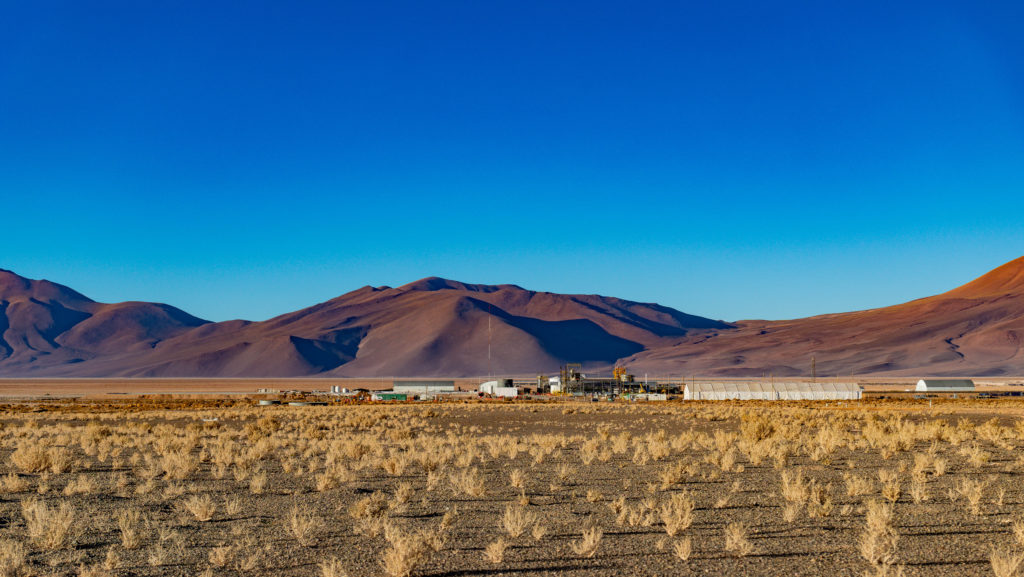
Rio Tinto has shipped its first 200 tonnes of lithium carbonate from the Rincon brine project in Salta, Argentina, to Shanghai, marking the start of exports from a planned 60,000 t/y battery-grade operation. The project will ramp from a 3,000 t/y starter plant to a 57,000 t/y expanded plant due online in 2028, with full capacity targeted within three years and an expected 40-year life at about 53,000 t/y. Rio has secured a US$1.175 billion loan package from IFC, IDB Invest, Export Finance Australia and JBIC towards the US$2.5 billion expansion capex.
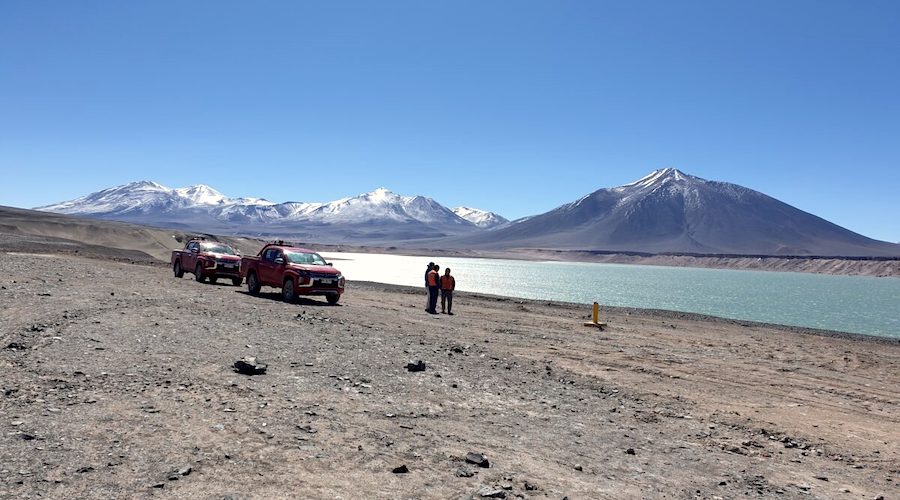
CleanTech Lithium has agreed a 40‑year special operating contract (CEOL) with Chile’s mining ministry for the Laguna Verde brine project, covering 153 km² from exploration through to closure and giving direct contractual backing from the Chilean state. Laguna Verde holds a JORC‑compliant resource of 1.9 million tonnes at an average 174 mg/L lithium carbonate, with a 2023 scoping study outlining 20,000 tpa LCE over 30 years and a pre‑feasibility study due this quarter. The CEOL, one of only a few granted in Chile and still subject to Comptroller General ratification, materially reduces tenure risk for project financing and process design decisions.