Riddings Viaduct restoration: design and durability lessons for bridge engineers
Reviewed by Tom Sullivan
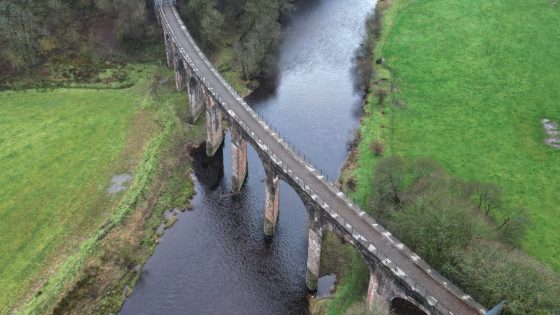
First reported on New Civil Engineer
30 Second Briefing
National Highways has completed a major restoration of the 19th-century Riddings Viaduct, stabilising the disused masonry structure to secure its long-term integrity while retaining key heritage features such as its original brick and stone detailing. Works focused on structural repairs to the arches and piers, targeted masonry repointing and waterproofing to reduce water ingress, and strengthening of the deck to manage future loading and environmental deterioration. The project provides a reference for balancing conservation requirements with modern structural safety interventions on ageing rail viaducts.
Technical Brief
- National Highways acted as asset owner and client, coordinating works on the disused Riddings Viaduct.
- Heritage requirements meant construction sequencing and temporary works had to avoid intrusive alteration to original fabric.
- Disused status removed rail traffic loading, so safety design focused on long-term stability and falling‑debris risk.
- Project provides a live case for integrating heritage consents with modern CDM and structural safety obligations.
Our Take
Within the 714 Infrastructure stories in our database, National Highways appears most often in relation to ageing bridges and viaducts, signalling that asset-life extension on legacy structures like Riddings Viaduct is becoming a core part of its capital and maintenance profile.
The Safety and Sustainability tags here align with a cluster of UK infrastructure pieces where structural rehabilitation is preferred over replacement, which typically reduces embodied carbon and disruption but demands more advanced inspection, temporary works, and heritage-sensitive construction methods.
For practitioners, the Riddings Viaduct work sits in the same risk envelope as other masonry or mixed-material viaduct refurbishments in our coverage, where managing live-load constraints and access over rail or water has driven wider adoption of remote condition monitoring and staged strengthening strategies.
Prepared by collating external sources, AI-assisted tools, and Geomechanics.io’s proprietary mining database, then reviewed for technical accuracy & edited by our geotechnical team.
Related Articles


Related Industries & Products
Construction
Quality control software for construction companies with material testing, batch tracking, and compliance management.
Mining
Geotechnical software solutions for mining operations including CMRR analysis, hydrogeological testing, and data management.
QCDB-io
Comprehensive quality control database for manufacturing, tunnelling, and civil construction with UCS testing, PSD analysis, and grout mix design management.