Geomechanics, Streamlined.
© 2026 Geomechanics.io. All rights reserved.
Austmine and AusIMM, with innovation hubs Expande (Chile), Peru Mining Innovation Hub and CEMI (Canada), have named six finalists for the GRX26 Global Open Innovation Colab challenge “Critical Disruptors: From Discovery to Recovery”. The competition, to be staged at the Global Resources Innovation Expo (GRX26), targets technologies that close gaps from critical mineral exploration through to extraction and recovery. Outcomes are expected to focus on deployable solutions for orebody characterisation, processing efficiency and recovery improvements that can be trialled across multiple jurisdictions.
Metso is expanding its bulk material handling network with a new regional hub in Cape Town, providing African mines and ports with local engineering support for conveyors, shiploaders and stacker-reclaimers. The centre will give customers closer access to Metso’s advanced automation technologies for BMH systems, including digital monitoring and control platforms aimed at improving throughput and equipment availability. For project teams, the hub should shorten design and commissioning cycles for large materials handling systems and reduce reliance on Europe-based engineering resources.
MMD Group has acquired full intellectual property rights from Anglo American for TraxIQ, a system-level material handling solution designed to optimise truck, shovel and in-pit crushing plant interactions across mine sites. Control logic and data integration in TraxIQ coordinate loading units, conveyors and semi-mobile crushers to reduce queuing, idle time and surge bin overloads, improving utilisation of high-capex assets. For geotechnical and mine planners, wider deployment could change haul road design, crusher station siting and stockpile geometry to suit more tightly managed material flow.
McHale Komatsu has secured an agreement to supply a large Komatsu mining fleet to Tungsten West PLC for the restart of the Hemerdon tungsten and tin mine in Devon, one of the world’s largest tungsten resources. The deal supports redevelopment of the open-pit operation, which previously used large-scale truck–shovel mining and extensive waste stripping. For geotechnical and mine planners, the new fleet specification will influence haul road geometry, pit slope performance under renewed traffic loading, and scheduling for high-volume tungsten and tin ore movement.
Glencore Technology is expanding deployment of its Jameson Cell into rougher flotation duties, using its high-intensity downcomer design to boost throughput and recovery in both brownfield debottlenecking and greenfield concentrators. The compact cell footprint allows replacement of multiple conventional mechanical cells, freeing floor area and reducing associated structural steel and piping. For plant designers and metallurgists, this signals growing scope to retrofit rougher banks for higher volumetric efficiency without major civil works or additional flotation lines.
First Quantum Minerals and Hitachi Construction Machinery have commissioned the world’s first ultra-large battery electric mining truck, a fully electric Hitachi EH4000, at the Kansanshi copper-gold mine in Zambia. The truck operates without a diesel engine, using a large-format battery system and electric drive to cut on-site fuel consumption and associated CO₂ emissions. Deployment at Kansanshi provides a full-scale test bed for trolley-assist integration, high-current charging infrastructure and duty-cycle optimisation on ultra-class haul routes.
Sydney’s M1 metro line is adding 166 extra services per week across the city in response to ongoing fuel supply pressures, boosting peak and weekend rail capacity. The uplift targets busy commuter periods on the driverless, high-frequency line, which already runs trains at short headways typical of modern automated metros. For civil and rail engineers, the move signals continued operational preference for maximising existing fixed-rail capacity rather than short‑term road upgrades when energy supply risks affect road traffic.
SIMEX’s PL2000 planer and ART 1000 asphalt repair hot box are being paired by Total Rockbreaking Solutions as a compact package for milling and reinstating asphalt in Australian roadworks. The PL2000, mounted on a skid-steer loader, cold planes existing pavements to a controlled depth and width, while the ART 1000 stores and heats up to 1000 litres of asphalt mix for immediate patching. The combination targets small to medium rehabilitation jobs where full-size profilers and pavers are impractical, tightening work windows and reducing multiple plant movements.
JLG is expanding its Australian and New Zealand footprint as a “one‑stop shop” for road and civil contractors, adding AUSA dumpers and rough‑terrain forklifts to its established access equipment line. With branches in Sydney, Brisbane, Port Macquarie, Adelaide, Melbourne and Perth, the company now covers elevated work platforms, telehandlers and compact site haulage from a single supplier. For project teams, the integrated fleet simplifies plant sourcing, transport and maintenance planning across road construction and broader infrastructure works.
The Federal Government has committed an extra $30.2 million for Queensland road safety works under the national Black Spot Program, targeting 44 high‑risk locations. The program allocates $150 million annually for engineering treatments such as new or upgraded traffic signals, roundabouts, protected turn lanes and improved signage and line‑marking at crash‑prone sites. For designers and road authorities, the funding signals continued support for low‑cost, high‑impact geometric and traffic control upgrades rather than major capacity expansions.
Terrain Minerals has reported strong reverse circulation drilling results at its Lightning gold prospect in Western Australia, indicating the mineralised system extends beyond the previously defined footprint. The company is testing multiple stacked lodes along strike and at depth, with recent holes intersecting continuous sulphide-bearing quartz veining and visible gold in several zones. Results will guide follow-up step-out drilling to refine the geometry of the high-grade shoots and support an initial resource model for the broader Bundarra project area.
Record quarterly output from Evolution Mining’s Mungari gold operation has driven the company into a net cash position for the March quarter, reversing prior net debt. The Western Australian site, centred on the Frog’s Leg and White Foil underground and open-pit mines and a conventional CIL processing plant, lifted production and reduced unit costs sufficiently to generate surplus free cash flow. For mine planners and process engineers, the result signals further optimisation potential in underground stoping schedules, mill throughput and recovery at an already mature asset.
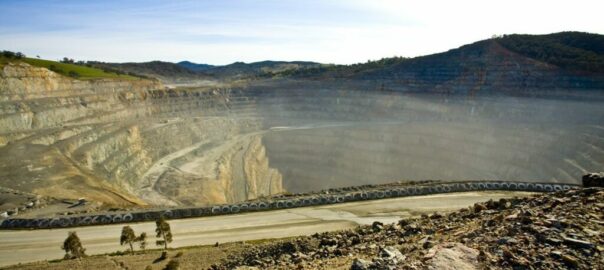
Suspended underground operations at Newcrest’s Cadia gold mine near Orange following a magnitude‑4.5 earthquake have put the site’s emergency response and geotechnical controls under scrutiny. The event triggered immediate withdrawal of personnel from the underground panels, inspections of ground support and ventilation circuits, and checks on critical infrastructure linking the block cave to the Cadia open pit. For mine operators, the incident reinforces the need for robust seismic monitoring, clear trigger‑action response plans, and rapid re‑entry protocols in seismically active districts.
Chalcopyrite, the dominant copper iron sulphide in most porphyry and VMS deposits, is being re‑examined as a route to cleaner copper production through alternative leaching and electrochemical pathways that avoid traditional high‑temperature smelting. Researchers are focusing on low‑temperature oxidative leach systems, including chloride and bioleach circuits, to accelerate chalcopyrite dissolution and cut SO₂ emissions and slag volumes. For mine operators and metallurgists, successful deployment would shift flowsheets towards heap or in‑situ leaching, change tailings mineralogy, and reduce reliance on large concentrate transport and smelter capacity.
Brightstar Resources has signed a strategic agreement with Aquirian Limited to provide drilling and energetics services for its Goldfields Hub gold project in Western Australia’s Eastern Goldfields. The deal brings in Aquirian’s integrated drill and blast capability, including explosives supply and blast design, across Brightstar’s planned open pits around the Menzies and Laverton areas. For mine planners and geotechs, the partnership signals early standardisation of blast parameters and powder factors across multiple deposits, which should simplify slope performance monitoring and downstream fragmentation control.
The Get It Right Initiative’s two-year pilot with Kier, BAM Nuttall, VolkerStevin and Taylor Woodrow trained 4,575 staff across 25 projects to reduce design and construction errors, including clash detection failures. Backed by £361,306 of CITB funding, the ‘train the trainer’ model created in-house GIRI-approved providers, delivering group sessions of 12 at an average cost of £79 per person. Trainees identified £92.6m in potential error costs, giving a calculated return of £256.48 saved for every £1 spent on training.
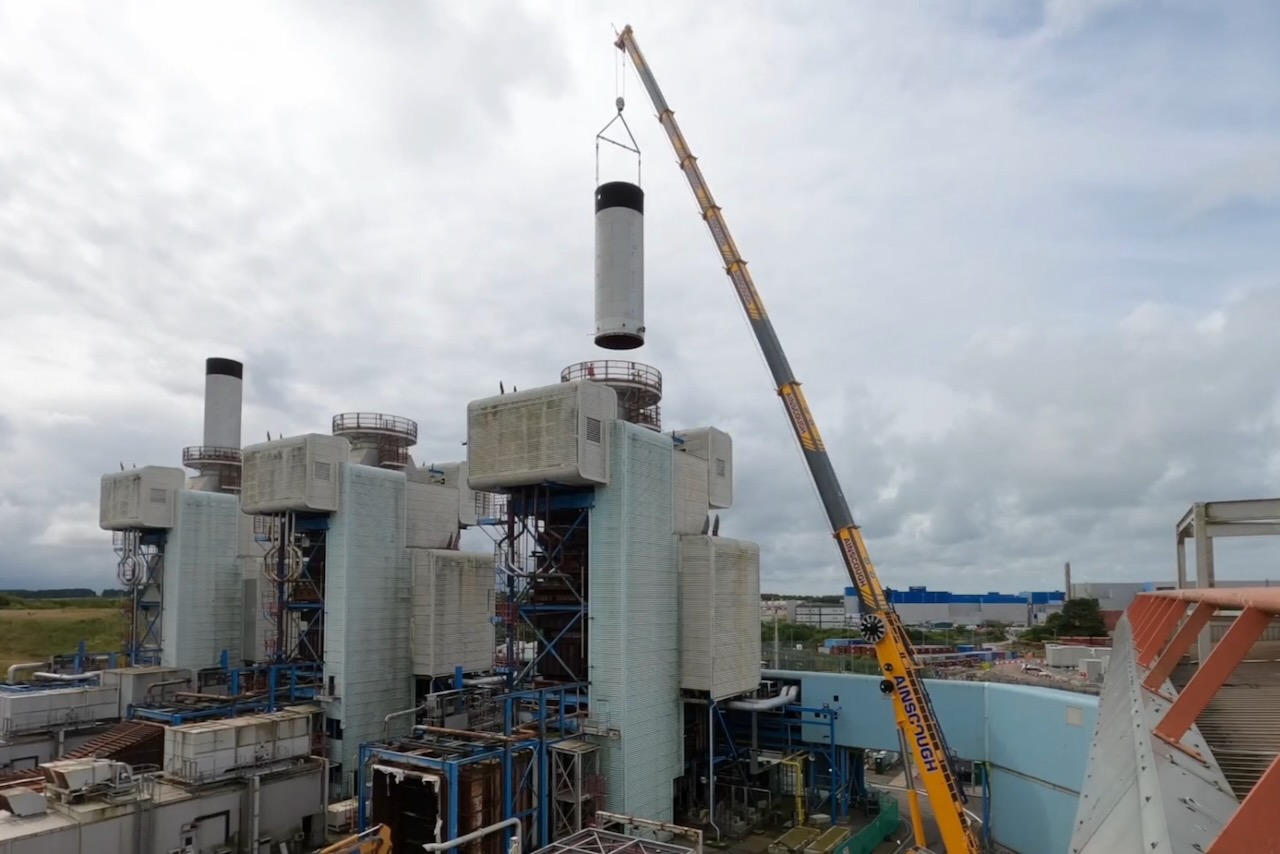
Removal of disused chimney stacks at Sellafield’s Fellside combined heat and power plant has been completed using a tandem lift by Ainscough Crane Hire as part of the site’s decommissioning and hazard reduction programme. A 300‑tonne Liebherr LTM1300‑6.3 acted as the main crane with a 130‑tonne LTM1130‑5.1 used first to install lifting gear, then to tail, rotate to horizontal and set down the stacks. Detailed lift planning and load calculations were required to avoid impact on adjacent nuclear containment structures in the highly regulated environment.
Digital material management platform MukAway has signed a nationwide partnership with major groundworks contractor MV Kelly, which operates across hundreds of live residential sites, to expand its UK network for reusable construction materials. The deal increases the platform’s density of active users and real-time transactions between contractors, housebuilders, civil engineers, recycle yards and wash plants, improving options for on-site reuse and off-site redistribution of aggregates and spoil. MukAway will shortly add a “merchant facility” so MV Kelly and others can source primary and recycled aggregates and manage hazardous, non-reusable materials within the same procurement platform.
Scott's Hire has placed a 100-machine order with Gunn JCB, comprising 80 Loadall telehandlers with 6–8 m lift heights and 20 X Series excavators including the 131X, 145XR and 245XR models. The deal expands a fleet that has taken 500 JCB units over 20 years, signalling continued demand from contractors for modern, high-spec plant with strong residual values. Operations manager Marc Jackson cites reliability, site safety performance and local manufacture in Staffordshire as key factors in the procurement decision.
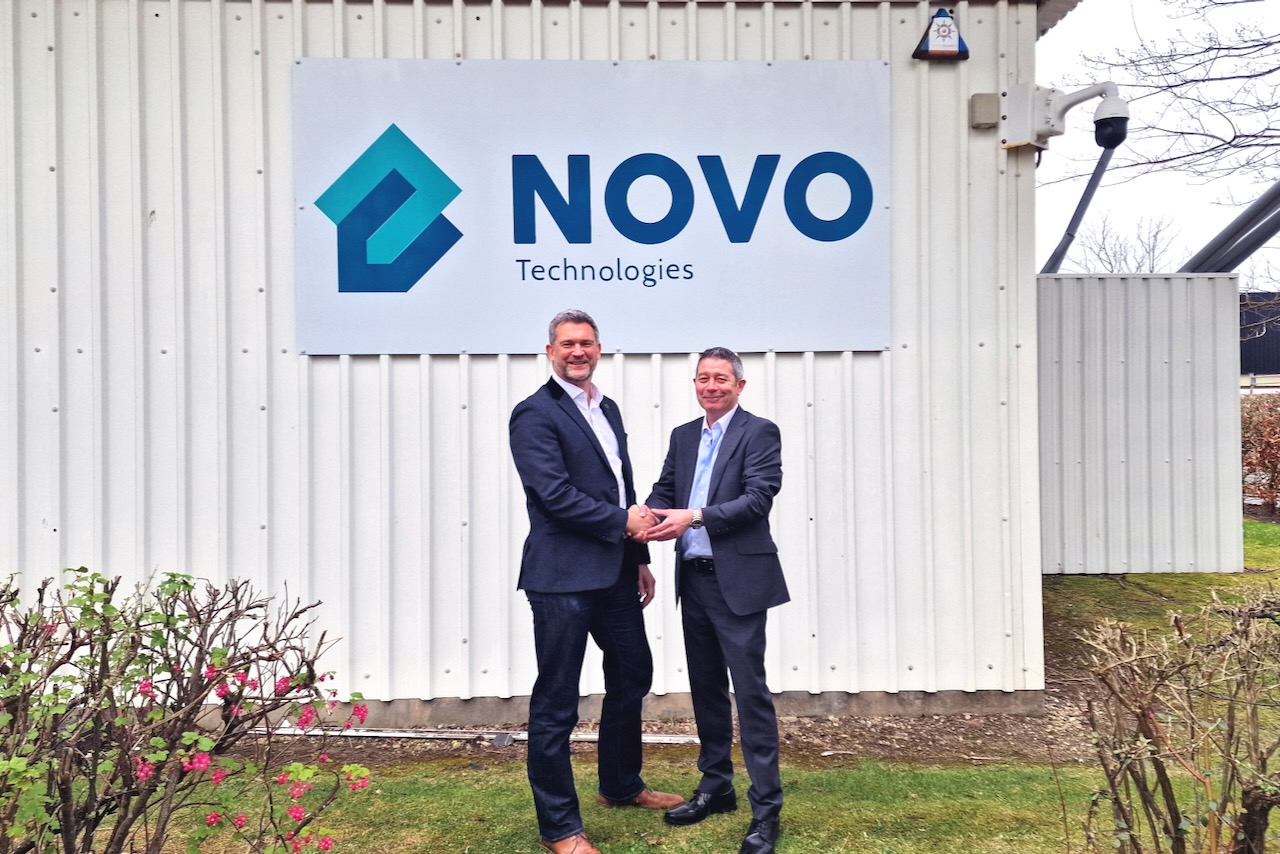
Vinci Energies has acquired UK-based wireless infrastructure specialist Novo Technologies, adding 71 staff and end-to-end mobile network delivery capability for carriers and enterprise clients across the UK. The deal is positioned as a three-year strategic move to expand Vinci’s wireless infrastructure delivery for digitally enabled sites and field operations, alongside its existing perimeter and energy services. Novo’s managing director Matt Wynne says access to Vinci’s scale will support larger, more complex telecoms projects aligned with the UK’s national wireless connectivity ambitions.
Graham has secured six lots on Sovereign Network Group’s 12-lot new-build framework, which underpins delivery of 25,000 homes across the South of England. The contractor will deliver schemes in London & East on Lots 2 (£15m–£45m) and 3 (above £45m), and in the South on Lots 6 (£15m–£45m) and 7 (above £45m), plus West region Lots 10 (£15m–£45m) and 11 (above £45m). For consultants and contractors, this signals a substantial pipeline of residential-led regeneration work with strong emphasis on sustainability and complex estate redevelopment.
BS 7671 has been updated with a new chapter on stationary secondary batteries, setting design and installation requirements for power conversion equipment, bidirectional and hybrid inverters, and protective devices capable of handling two‑way energy flow for vehicle‑to‑home and vehicle‑to‑grid use. The amendment also tightens rules on battery siting, ventilation and fire‑risk mitigation, and introduces new sections on Power over Ethernet for LED lighting and small appliances, and earthing for ICT equipment, alongside revised guidance for medical locations. The ECA has issued parallel guidance and events to help contractors interpret Amendment 4 and maintain compliant low‑carbon and EV‑ready installations.
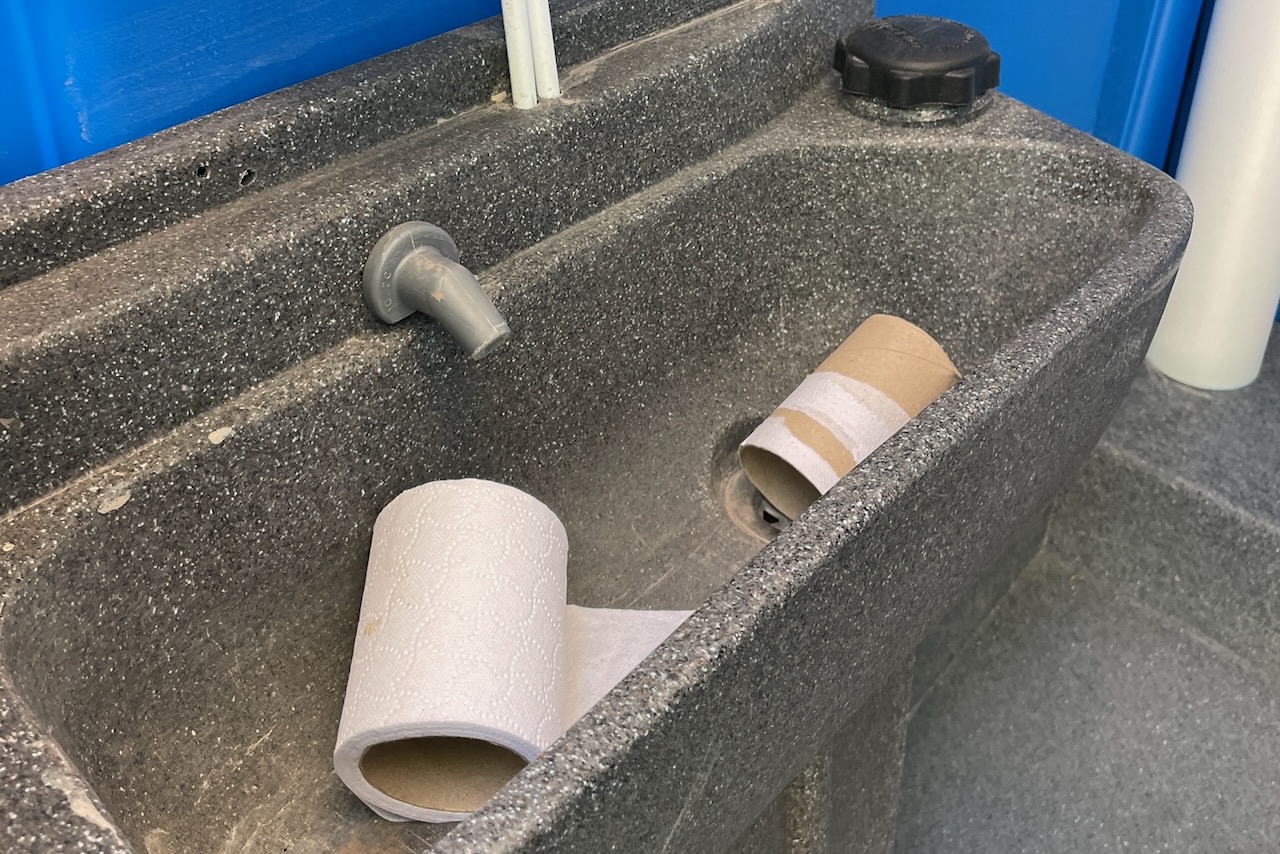
Ling Developments Limited has been fined £15,858 plus £3,858 costs after an HSE inspection at The Crest site in Telford found toilets without hot or warm water and rest areas that did not meet Construction (Design and Management) Regulations welfare standards. Inspectors issued two improvement notices and noted this was the fourth recorded breach of the same legislation by the Wombourne-based contractor. The case signals HSE’s continued readiness to prosecute where basic welfare provisions—hot and cold or warm water, adequate tables and seating, and facilities for preparing and eating meals—are repeatedly ignored.
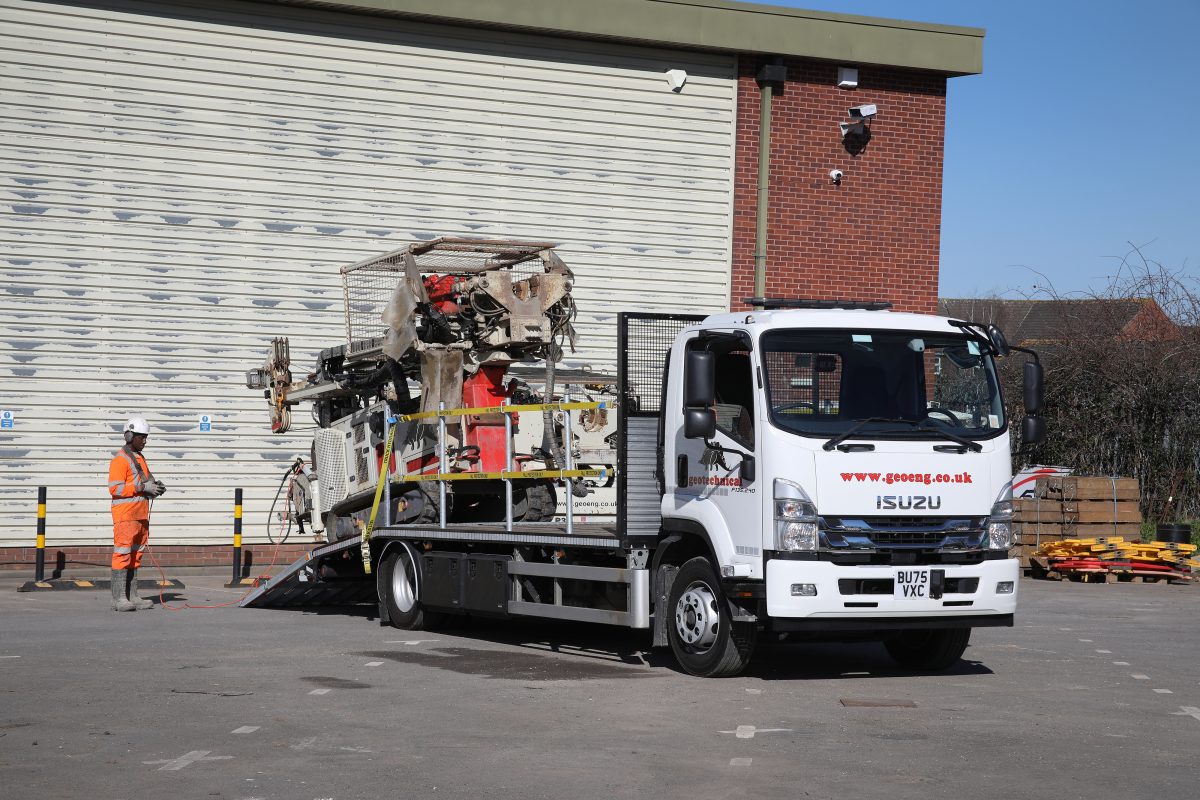
Geotechnical Engineering has replaced its previous 7t light commercials with four 13.5t Isuzu F-Series trucks, supplied via Aquila Truck Centres and fitted with bespoke Truck Hydraulics beavertail bodies. Each vehicle uses a three‑metre ramp to keep load angles below 20°, allowing safer loading of heavier, more sophisticated plant and drilling rigs while increasing payload capacity per trip. The move standardises on Isuzu drivelines already used in much of the firm’s plant, aiming to cut transport cycles and maintenance complexity on ground investigation projects.