NAO on Northern Powerhouse Rail: governance and delivery lessons for project teams
Reviewed by Joe Ashwell
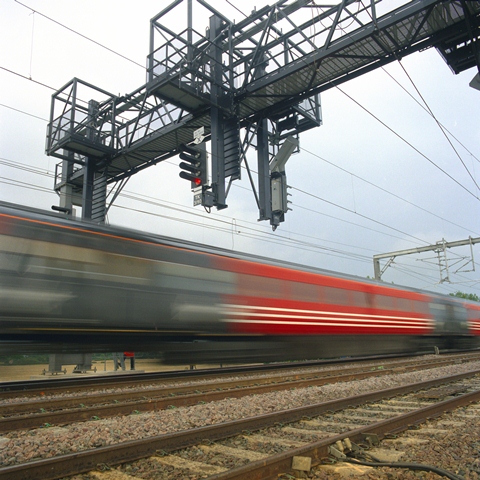
First reported on The Construction Index
30 Second Briefing
The National Audit Office has warned that the Department for Transport still has substantial work to do to deliver Northern Powerhouse Rail, first proposed in 2014 and repeatedly reshaped by successive governments. Reviewing the programme between October 2025 and February 2026, the NAO says DfT has improved clarity but must better align the evolving rail corridor plans with national and local growth strategies across northern England. Effective joint governance between central and local authorities and systematic learning from earlier major rail schemes are flagged as critical to programme success.
Technical Brief
- Repeated scope changes by successive governments complicate corridor safeguarding, land acquisition sequencing and early enabling works.
- Longstanding east–west rail under-capacity in northern England constrains timetable planning and limits diversionary route resilience.
- NAO’s call for alignment with local growth plans affects station siting, park-and-ride layouts and freight interfaces.
- Effective joint working between DfT and combined authorities will influence risk allocation in future design-and-build contracts.
- Learning from earlier major rail schemes is expected to inform geotechnical investigation strategies and value-engineering of structures.
- For other UK megaprojects, the case illustrates how unstable political scope drives rework in optioneering and reference designs.
Our Take
In our Infrastructure coverage, the National Audit Office rarely features on major rail schemes, so its focused 2025–26 review of Northern Powerhouse Rail signals that DfT’s governance and value-for-money case for long-term investment in northern England will likely face closer scrutiny than typical project-level audits.
Because Northern Powerhouse Rail was first proposed in 2014, the NAO’s planned review window a decade later suggests it will be assessing not just current delivery but also the cumulative impact of policy shifts since George Osborne’s original ‘Northern Powerhouse’ agenda, which may expose inconsistencies between successive governments’ regional transport priorities.
The related NAO/New Civil Engineer piece from 11 March 2026 stresses alignment with local growth strategies, which implies that DfT’s future business cases for NPR will probably need stronger, evidence-backed integration with city-region economic plans in northern England to pass Treasury and NAO tests.
Prepared by collating external sources, AI-assisted tools, and Geomechanics.io’s proprietary mining database, then reviewed for technical accuracy & edited by our geotechnical team.
Related Articles


Related Industries & Products
Construction
Quality control software for construction companies with material testing, batch tracking, and compliance management.
CMRR-io
Streamline coal mine roof stability assessments with our cloud-based CMRR software featuring automated calculations, multi-scenario analysis, and collaborative workflows.
HYDROGEO-io
Comprehensive hydrogeological testing platform for managing, analysing, and reporting on packer tests, lugeon values, and hydraulic conductivity assessments.
GEODB-io
Centralised geotechnical data management solution for storing, accessing, and analysing all your site investigation and material testing data.