Geomechanics, Streamlined.
© 2026 Geomechanics.io. All rights reserved.
Balfour Beatty, M Group, Morgan Sindall Infrastructure, Murphy and Omexom Taylor Woodrow have secured a £1.2bn National Grid Electricity Transmission Partnership phase focused on increasing overhead line capacity across the UK network. The framework will centre on new and uprated OHL assets, including tower upgrades and conductor replacement, to move more power from new generation hubs into demand centres. Contractors will need to manage live-grid interfaces, constrained wayleaves and foundation works around existing steel lattice towers, with programme delivery likely to drive demand for specialist OHL plant and experienced lines crews.
Regulator says additional scrutiny was not required over Hinkley Point C bullying concerns, rejecting an MP’s claim that oversight of the 3.2GW EPR nuclear project in Somerset had been intensified because of workplace culture issues. The Office for Nuclear Regulation maintains that its existing safety and quality assurance regime for Hinkley Point C, including routine inspections of civil works and nuclear island construction, was sufficient without a specific bullying-related intervention. For contractors and designers on UK nuclear sites, the dispute signals that behavioural and HR concerns will be managed largely through existing licence conditions rather than separate technical scrutiny.
A joint venture contractor on HS2 has been fined £400,000 after a 20 t tipper truck left the edge of an excavation ramp, leaving the driver with multiple serious injuries. The incident involved a temporary earthworks access ramp where the truck overran the unprotected edge and rolled into the excavation. The case signals renewed scrutiny of haul road and ramp design, edge protection, and traffic management on major UK infrastructure sites, particularly for heavy earthmoving plant.
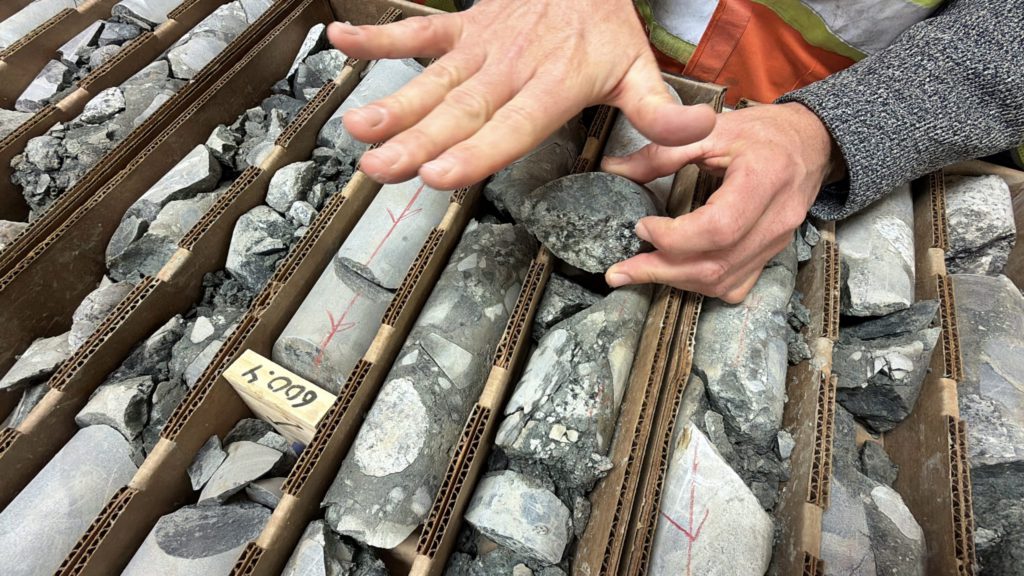
Revival Gold has extended the Joss underground sulphide zone at the Beartrack-Arnett project in Idaho to about 850 m depth, adding 240 m of vertical extent, with key intercept BT26-254D returning 147.2 m at 2.37 g/t Au from 808 m, including 5.9 m at 14.89 g/t and 4.7 m at 9.31 g/t. All eight 2026 pierce points hit the Panther Creek shear zone, supporting an inferred resource of 6.75 Mt at 4.05 g/t (877,000 oz) with true widths of 2–20 m over 1.2 km strike, open at depth. Analysts now see potential for a higher-grade underground start at Joss ahead of the Beartrack-Arnett heap leach restart, which is currently scoped for 65,300 oz/y over eight years at $1,248/oz AISC and $109 million initial capex.
First Majestic Silver has secured construction permits for two new underground portals at the Santa Elena mine in Sonora, enabling about 800 m of decline development at the high-grade Santo Niño discovery and 1,300 m of underground development at Navidad from H2 2026, backed by an extra US$12 million in 2026 capex. Infill drilling includes 10.87 m at 77 g/t Ag and 1.52 g/t Au at Santo Niño and 14.89 m at 28 g/t Ag and 3.5 g/t Au at Navidad, from 26,904 m and 7,704 m of drilling respectively. A scoping study favours dedicated underground access, with Santo Niño reached via a new portal near the processing plant and Navidad accessed both from its own portal and the existing Ermitaño workings, targeting higher-grade feed and extended mine life.
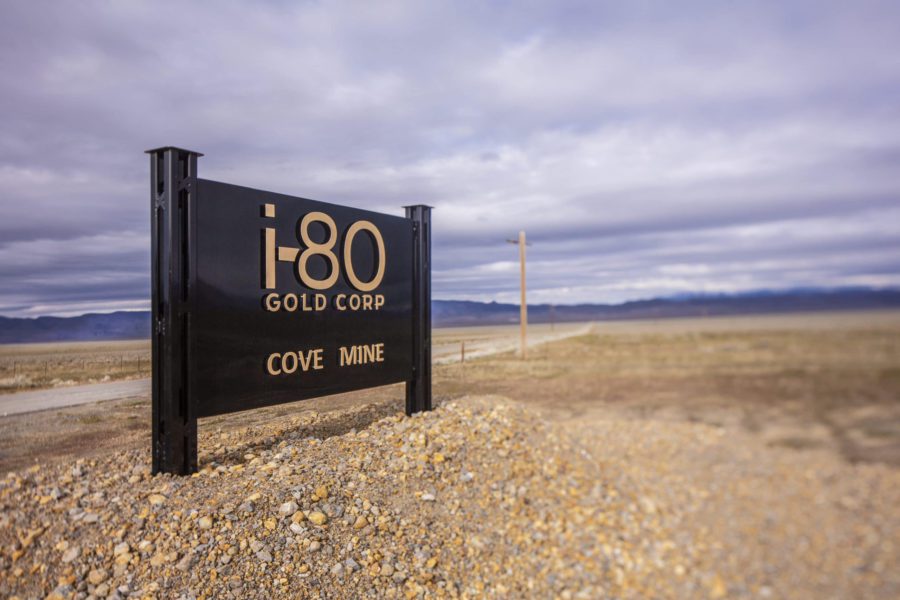
i-80 Gold has paid Vox Royalty US$4.8 million in shares (3.45 million at US$1.39) to terminate a 2016 offtake covering up to 40,000 oz/year of refined gold from the Granite Creek and Ruby Hill operations in Nevada through 2028. The move removes fixed-margin offtake on its first producing underground mine at Granite Creek and the planned Archimedes open pit at Ruby Hill, ahead of commissioning the refurbished Lone Tree processing complex in Phase 1 of its Nevada build-out. i-80 says the change will allow more flexible timing of gold sales and potential stockpiling against future price conditions.
Sulphuric acid is emerging as a key price signal in copper, with Chinese smelters importing 392,000 tonnes of unroasted pyrite in the first four months of 2026 and acid prices reportedly rising fivefold in 2.5 years, adding an estimated US$1.5 billion to smelter margins in 2025. A dry tonne of feed with 30% sulphide sulphur can yield about 0.87 tonnes of saleable acid, making sulphur content a material revenue driver when spot treatment charges turn deeply negative. This shift could trigger sulphur- or acid-linked concentrate contracts and exposes leach-dependent producers such as Chile to strategic acid supply risk.
Blue Lagoon Resources has declared commercial production at its Dome Mountain gold-silver mine in northern British Columbia after sustaining more than 100 tonnes per day for 30 days, targeting a ramp-up to 150 tonnes per day and 15,000 oz gold in the next 12 months via toll milling at Nicola Mining’s Merritt plant. The structurally hosted quartz-carbonate Boulder vein averages about 9 g/t gold, with a 2022 resource of 798,000 tonnes at 8–10 g/t gold (measured and indicated) plus inferred material at a 3.5 g/t cut-off, and remains open along strike and down dip. Cash flow of about $4.5 million from concentrate sales is intended to self-fund dense 25-metre-spaced drilling on the 215 sq. km property towards a 1-million-ounce resource, avoiding on-site mill and tailings construction and limiting equity dilution.
Fortune Minerals and the Tłı̨chǫ government have secured up to C$50 million from Natural Resources Canada’s First and Last Mile Fund to build an access road across Tłı̨chǫ private lands, linking the Nico cobalt-gold-bismuth-copper project to the territorial highway near Whatì, about 50 km south of the deposit. The road, now fully permitted by the Wek’èezhìı Land and Water Board, is critical to a logistics chain moving 180 tonnes/day of concentrate from 4,650 tonnes/day of ore to rail at Enterprise and then ~1,000 km to a hydrometallurgical plant in Lamont County, Alberta. Removing this infrastructure gap supports an updated feasibility study targeting a 20-year operation producing about 8,780 t/y cobalt sulphate, 47,000 oz/y gold and 1,700 t/y bismuth products.
Kazakhstan is racing to digitise a vast Soviet-era geological archive, with 1960s seismic data still stored on magnetic tape that can only be read on perhaps three surviving machines using playback needles no longer manufactured since the Brezhnev era. The National Geological Service aims to convert millions of pages of hand-drawn, non-standardised maps into polygons, vectors and points for AI-driven targeting of critical minerals, while also restating Soviet GKZ-classified reserves into KAZRC, JORC or NI 43‑101, with only about 143 of 400–500 major deposits converted so far. More than US$17 billion in recent US–Kazakh trade and investment deals, plus a new memorandum with Saudi Arabia, signal that access to this “pre-paid exploration” data is becoming a key competitive factor for mid-tier and junior explorers.
Integra Resources’ updated feasibility study for the Florida Canyon heap leach mine in Nevada lifts proven and probable reserves 74% to 1.1 million oz at 0.31 g/t, raises planned output to 82,000 oz gold per year over eight years, and boosts the 5% NPV to US$601 million using a US$4,200/oz price. All-in sustaining costs climb 43% to US$2,331/oz with recovery steady at 62%, but post-tax free cash flow is projected at US$800 million, averaging US$90 million annually. Integra is drilling 42,500 metres around the existing operation to grow resources and fund its DeLamar gold-silver project in Idaho.
Democratic Republic of Congo has shifted from price-taker to price-setter in cobalt by imposing ARECOMS-managed export quotas and planning state stockpiles of cobalt, coltan and germanium. Cobalt prices have climbed from about $21,000/t in early 2025 to just over $56,000/t, with Kinshasa forecasting $2.3 billion in fiscal revenues this year versus an estimated $617 million without intervention. Advisory input from Vectus Global and new investment moves such as Virtus Minerals’ acquisition of Chemaf signal tighter supply discipline and a push for higher value-added partnerships.
Trump’s Department of Energy has issued an emergency order compelling Tri-State, Platte River Power Authority, Salt River Project, PacifiCorp and Xcel’s Public Service Company of Colorado to keep Craig Station Unit 1 available for dispatch by the Southwest Power Pool, despite its planned closure at end‑2025. The directive, in force until 26 September, follows two earlier emergency orders in December 2025 and March 2026 and comes as DOE cites 17 GW of coal capacity retained in 2025. NERC’s 2025 Long-Term Reliability Assessment flags the WECC‑Rocky Mountain region’s ageing thermal fleet and supply-chain constraints as key outage risks.
Delivery of locomotives to Camalco Cameroon S.A marks a key step in Canyon Resources’ mine-to-port logistics build-out for the Minim Martap bauxite project. The rail units will underpin dedicated ore haulage from the mine in Cameroon to port export facilities, supporting the planned production ramp-up and reducing reliance on road trucking. For engineers, the move signals that bulk materials handling, rail integration and port interface design are now on the project’s critical path.
ExxonMobil has finalised a supply agreement with Teck for Esso Ethos+ Renewable Diesel R100 in Canada and completed the first delivery to Teck’s Highland Valley Copper (HVC) operations in British Columbia. The 100% renewable diesel will be produced by Imperial Oil’s Strathcona refinery, which is being upgraded to manufacture bio-based fuels for heavy-duty applications such as mine haul trucks and support fleets. For mine operators, the deal signals growing availability of drop-in low-carbon fuels compatible with existing diesel engines and fuel infrastructure.
NRW Holdings’ Golding Contractors has secured about A$195 million of work via two contracts covering an Equipment Hire and Services Agreement with OneSteel Manufacturing (Administrators Appointed) at the South Middleback Ranges iron ore mine in South Australia and a services contract at a metallurgical coal mine in Queensland. The EHSA structure points to Golding supplying and operating mining fleets under long-term hire, rather than pure schedule-of-rates contracting. For geotechnical and mine planners, the dual-commodity exposure suggests continued demand for bulk earthworks, drill-and-blast, and haulage capacity across both iron ore and coking coal operations.
Eurasian Resources Group’s Aluminium of Kazakhstan unit has commissioned BAUER rotary drilling equipment at open pit No. 4 of the Vostochno-Ayatskoye Krasno-Oktyabrskoye bauxite mine to trial what is described as the world’s first vertical bauxite extraction project. The system uses vertical rotary drilling rather than conventional bench blasting and truck–shovel methods, aiming to access deeper ore zones within the existing pit footprint. For geotechnical and mine planners, the approach could alter pit slope design, drilling patterns and ground support requirements if adopted at scale.
Sandvik has secured a SEK 175 million order from LKAB to supply crushing and screening equipment for the new iron ore sorting plant at Malmberget, booked in Q2 2026. The package includes cone crushers, double-deck screens and vibrating feeders, forming the core of the primary and secondary sizing circuit. For plant designers and process engineers, the deal signals continued reliance on high-capacity, fixed crushing lines for Nordic underground iron ore operations rather than modular or fully mobile alternatives.
Volvo Construction Equipment has delivered the first A30 Electric articulated haulers globally to Norwegian contractor LNS (Leonhard Nilsen & Sønner AS) for deployment on a Hafslund hydroelectric power project. The battery-electric A30 units will operate in tunnelling and haulage roles traditionally handled by diesel A30G trucks, eliminating local exhaust emissions in underground headings and reducing ventilation demand. For mine and tunnel designers, the move signals growing OEM support for zero‑emission haulage fleets in confined infrastructure and hydropower works.
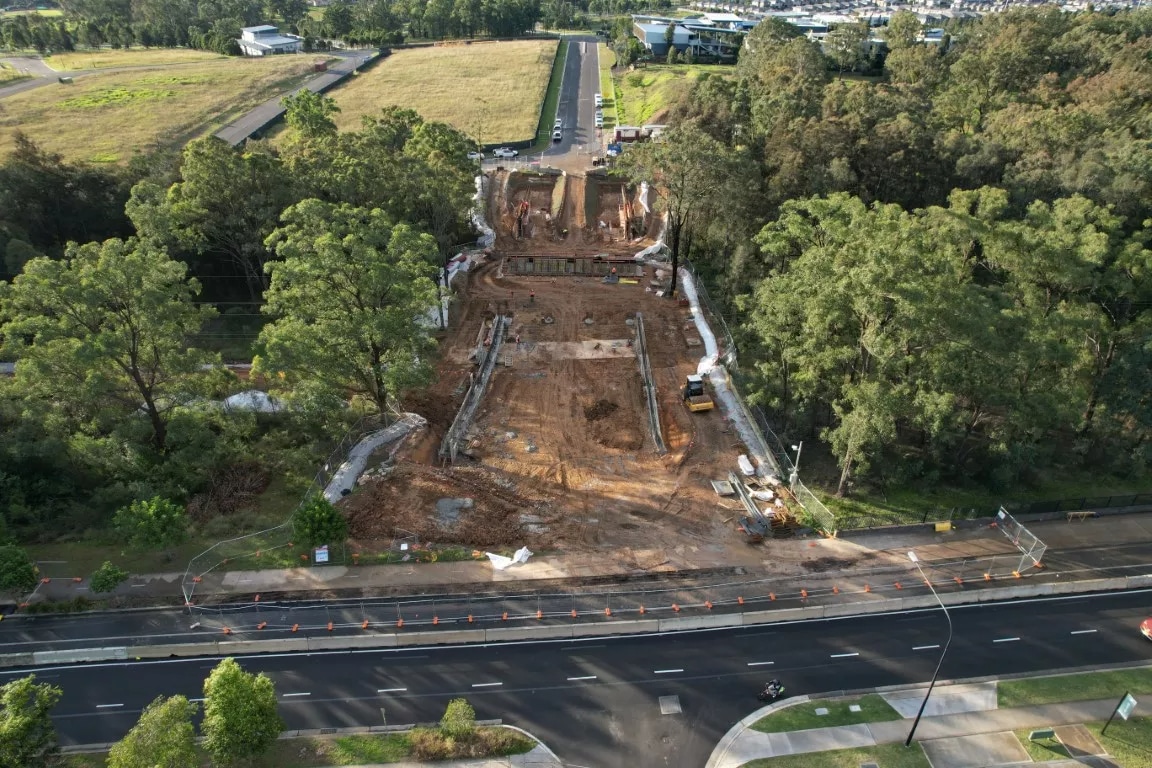
Georgiou has secured an $11.6 million contract from Blacktown City Council to build the Pelican Road Bridge in Schofields, New South Wales. The project centres on a 36‑metre‑long road bridge over Eastern Creek, creating a new vehicular crossing within one of Western Sydney’s fastest‑growing residential corridors. For civil and geotechnical teams, the job will involve creek-span foundations and floodplain interface works in a rapidly urbanising catchment, with construction staging likely constrained by adjacent local roads and existing services.
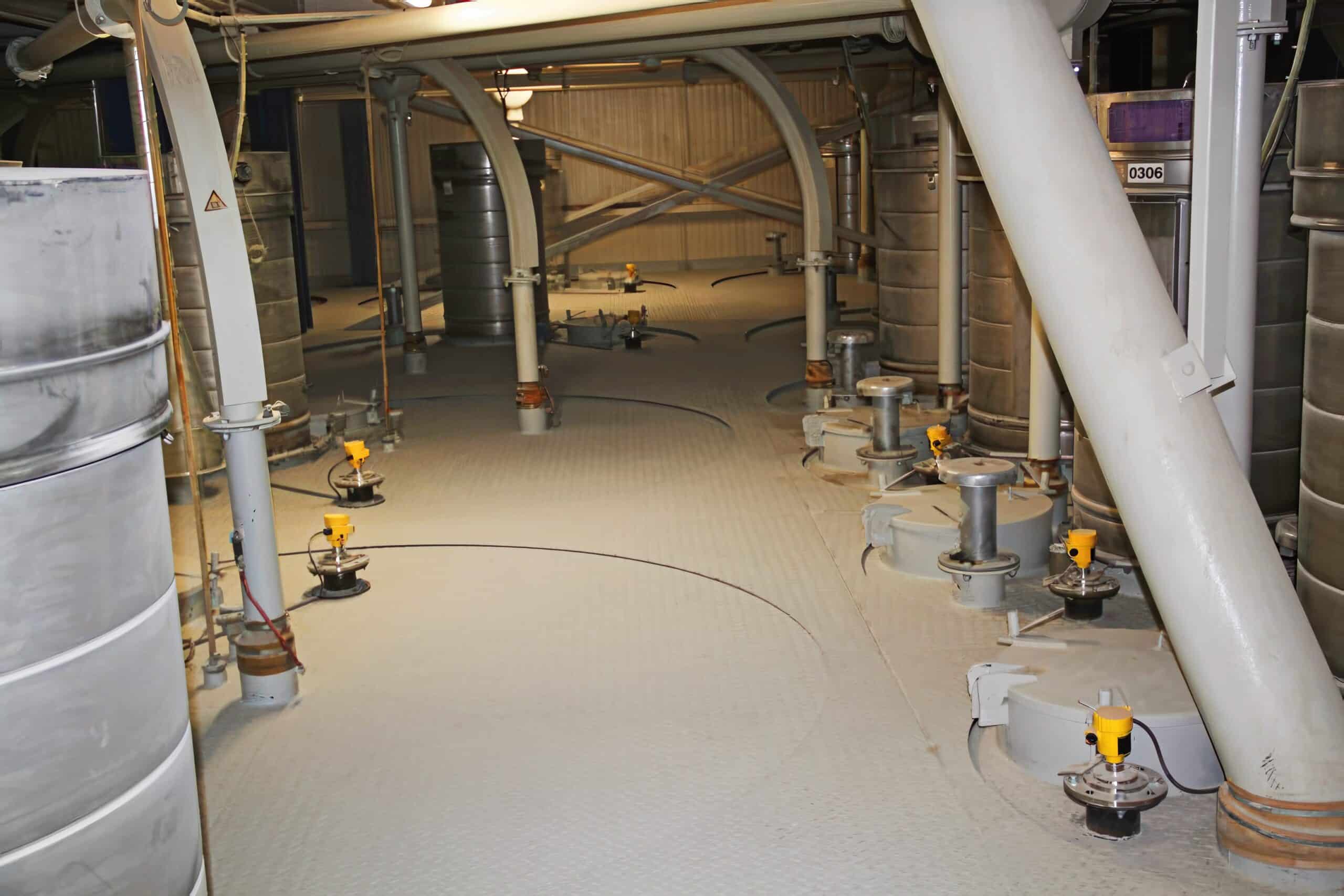
VEGAPULS non-contact radar level sensors have replaced traditional silo weighing systems at Sto’s building materials plant to monitor raw material and finished product stocks in real time. Each silo is now fitted with a VEGAPULS unit mounted on the roof, providing continuous level measurement unaffected by dust, material build-up or varying bulk densities that previously distorted load-cell readings. The upgrade is aimed at tightening inventory control and supporting punctual deliveries of cementitious and other construction materials to infrastructure projects.
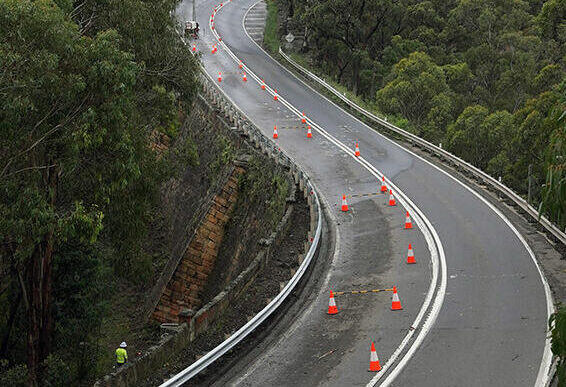
Seymour Whyte has been awarded the contract to build a new durable crossing at Mitchells Causeway on the Great Western Highway at Victoria Pass, restoring the key freight and commuter link between the Blue Mountains and Central West. The New South Wales Government has committed $50 million to upgrade detour routes that have carried traffic since sections of the highway were closed on 12 March, signalling ongoing reliance on temporary alignments until the new structure is in place. For designers and contractors, staging, flood resilience and heavy vehicle load performance on the new crossing will be critical.
Recently completed upgrades at Quito’s Mariscal Sucre International Airport in Ecuador deliver higher-capacity airside and landside infrastructure while targeting lower whole-life carbon and faster build times. Works reportedly focused on optimising construction sequencing in a high-altitude, seismically active setting and integrating more efficient pavements, terminal systems and energy use. For civil and geotechnical teams, the project offers a reference for phasing major airfield works under live-operations constraints and for embedding sustainability metrics into design and construction planning.
Pothole-related breakdowns reported to the RAC in February averaged 225 per day, more than five times the 2025 daily average of 43, signalling rapid deterioration of UK carriageway surfaces. The spike points to accelerated fatigue and ravelling in asphalt layers under repeated freeze–thaw and heavy axle loads, with defects progressing from fretting to full-depth potholes before scheduled maintenance cycles. For highway engineers, the figures reinforce the need to reassess intervention thresholds, drainage performance and resurfacing frequencies within constrained local authority budgets.