Geomechanics.io

  • Free Tools
Sign UpLog In

Geomechanics.io

Geomechanics, Streamlined.

© 2026 Geomechanics.io. All rights reserved.

Geomechanics.io

CMRR-ioGEODB-ioHYDROGEO-ioQCDB-ioFree Tools & CalculatorsBlogLatest Industry News

Industries

MiningConstructionTunnelling

Company

Terms of UsePrivacy PolicyLinkedIn
    Projects
    Sustainability
    Product

    Marlborough’s lower carbon streets in Barnet: material choices and lessons for engineers

    June 25, 2026|

    Reviewed by Joe Ashwell

    Marlborough’s lower carbon streets in Barnet: material choices and lessons for engineers

    First reported on The Construction Index

    30 Second Briefing

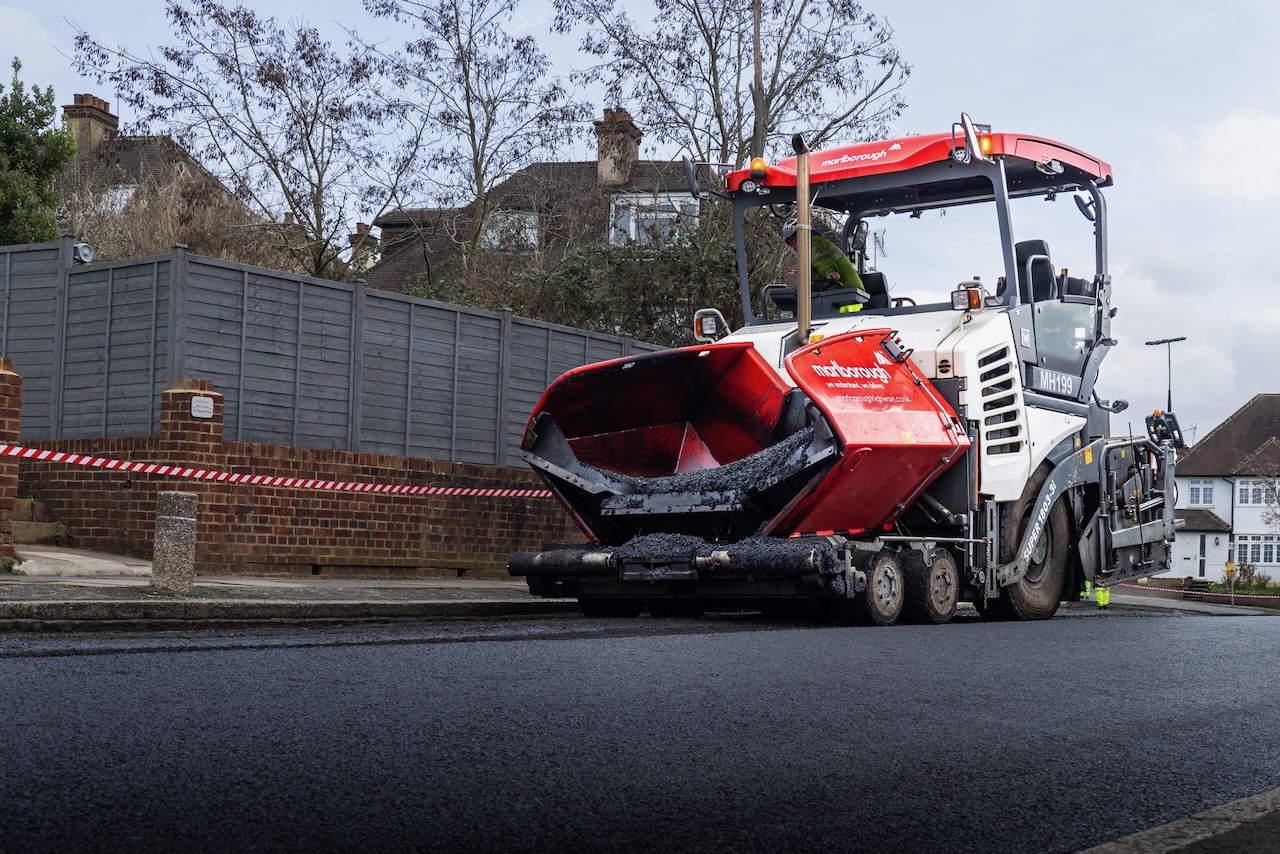
    Marlborough Highways has resurfaced three live streets for Barnet Council in six days using Holcim SuperLow asphalt and ACLA, a carbon-negative aggregate alternative from Low Carbon Materials, as part of the borough’s BarNET ZERO programme. ACLA was incorporated in the binder course to cut embodied carbon while maintaining carriageway performance, supported by electric rollers, electric disc cutters and electric vans on a 100% renewable tariff, with HVO-powered plant used where electrification was not viable. The scheme cut the estimated carbon footprint from 62.34t CO₂e to as low as 4.49t CO₂e, with most savings coming from material selection rather than plant changes.

    Technical Brief

    • ACLA, from Low Carbon Materials, functions as a carbon-negative aggregate substitute within asphalt mixes.
    • Holcim SuperLow asphalt was specified for both binder and wearing courses across all three streets.
    • Works were executed on live streets without altering the traffic management programme or network operation.
    • Marlborough coordinated Holcim UK and Low Carbon Materials within a single supply chain to meet Barnet’s brief.
    • Carbon assessment distinguished savings from asphalt specification versus those from plant and transport modifications.
    • Electric vans were explicitly supplied on a 100% renewable electricity tariff, closing the loop on site logistics.
    • HVO-fuelled plant was retained only where no viable electric or lower-carbon option was available.
    • Barnet’s routine resurfacing is being aligned with its borough-wide 2042 net zero target, influencing future specifications.

    Our Take

    Marlborough Highways’ work with Barnet Council sits alongside its renewed £15m‑per‑year term maintenance deal with Southend‑on‑Sea City Council, suggesting its low‑carbon street model could be replicated at scale across multiple UK authorities.

    Holcim UK’s role here aligns with its ECOPact and runway projects in Birmingham and at London Luton Airport, signalling that its lower‑carbon asphalt and concrete offerings are now being deployed from major infrastructure down to small‑scale urban resurfacing.

    Within our 45 Materials stories, Holcim UK appears frequently in sustainability‑tagged pieces, and the deep cut in estimated t CO2e on these Barnet streets reinforces its positioning as a preferred supplier for councils targeting net‑zero dates such as Barnet’s 2042 goal.

    Geotechnical Software for Modern Teams

    Centralise site data, logs, and lab results with GEODB-io, CMRR-io, and HYDROGEO-io.

    No credit card required.

    • Save and export unlimited calculations
    • Advanced data visualisation
    • Generate professional PDF reports
    • Cloud storage for all your projects

    Prepared by collating external sources, AI-assisted tools, and Geomechanics.io’s proprietary mining database, then reviewed for technical accuracy & edited by our geotechnical team.

    Related Articles

    Paebbl’s Rebond 300 cement alternative: performance and design notes for engineers
    Materials
    about 4 hours ago

    Paebbl’s Rebond 300 cement alternative: performance and design notes for engineers

    Paebbl has launched Rebond 300, a near‑white, carbon negative cement alternative with a footprint of -149kg CO2 per tonne that can replace up to 30% of conventional cement in standard mixes. The SCM-based binder delivers up to 40% reduction in embodied carbon at typical replacement ratios, a 10x improvement over Paebbl’s first‑generation material, while remaining compatible with existing ready‑mix and precast workflows. The Rebond Series is formulated to work across a family of silicate minerals and uses lower clinker process temperatures, reducing heat demand and permanently storing CO2.

    Decarbonising the cement sector: carbon accounting guidance for designers
    Materials
    3 days ago

    Decarbonising the cement sector: carbon accounting guidance for designers

    Decarbonising the cement sector hinges on cutting process emissions from limestone calcination and fuel combustion in high-temperature kilns, which together make cement one of construction’s largest embodied carbon sources. The piece centres on how robust carbon accounting frameworks, including project-level whole-life carbon assessments and product-level Environmental Product Declarations (EPDs), can expose the relative impacts of clinker content, alternative fuels and SCMs such as fly ash or GGBS. For designers and contractors, consistent accounting is critical to comparing low-clinker cements, specifying lower-carbon mixes and evidencing compliance with client net zero targets.

    Martin Engineering N2 ACI system: control and reliability notes for kiln engineers
    Materials
    7 days ago

    Martin Engineering N2 ACI system: control and reliability notes for kiln engineers

    Martin Engineering has introduced the N2 Air Cannon Intelligence (ACI) System, turning conventional air cannons in cement kilns and other high-temperature process lines into monitored, connected assets. Wireless N2 sensors mounted on each cannon feed real-time pressure, firing and cycle data to a central gateway, allowing operators to detect misfires, blocked valves and suboptimal firing sequences without manual inspection. For materials handling and process engineers, this enables tighter control of build-up removal on preheaters, riser ducts and clinker coolers, reducing unplanned shutdowns and compressed air waste.

    Related Industries & Products

    Construction

    Quality control software for construction companies with material testing, batch tracking, and compliance management.

    CMRR-io

    Streamline coal mine roof stability assessments with our cloud-based CMRR software featuring automated calculations, multi-scenario analysis, and collaborative workflows.

    HYDROGEO-io

    Comprehensive hydrogeological testing platform for managing, analysing, and reporting on packer tests, lugeon values, and hydraulic conductivity assessments.

    GEODB-io

    Centralised geotechnical data management solution for storing, accessing, and analysing all your site investigation and material testing data.

    AllGeotechnicalMiningInfrastructureMaterialsHazardsEnvironmentalSoftwarePolicy