Vale’s Manitoba nickel complex sale: project and offtake lens for mine planners
Reviewed by Joe Ashwell
First reported on MINING.com
30 Second Briefing
Vale is transferring 81.1% control of the Thompson nickel complex in northern Manitoba to Exiro Nickel, a new vehicle backed by Exiro Minerals, Orion Resource Partners and the C$15 billion Canada Growth Fund, which will inject up to $200 million, while Vale retains 18.9% and an offtake agreement for nickel concentrate. The complex comprises two underground mines, an adjacent mill and exploration ground along the 135 km Thompson nickel belt, producing 12,000 tonnes of finished nickel in 2025, up 21% year-on-year. Closing is targeted by end-2026, with Vale operating the site until completion and the new owners prioritising mine development, exploration and infrastructure upgrades.
Technical Brief
- Transaction closing is targeted by end-2026, with regulatory and government authorisations still required.
- Vale retains day-to-day operational control of the underground mines and mill until completion of closing.
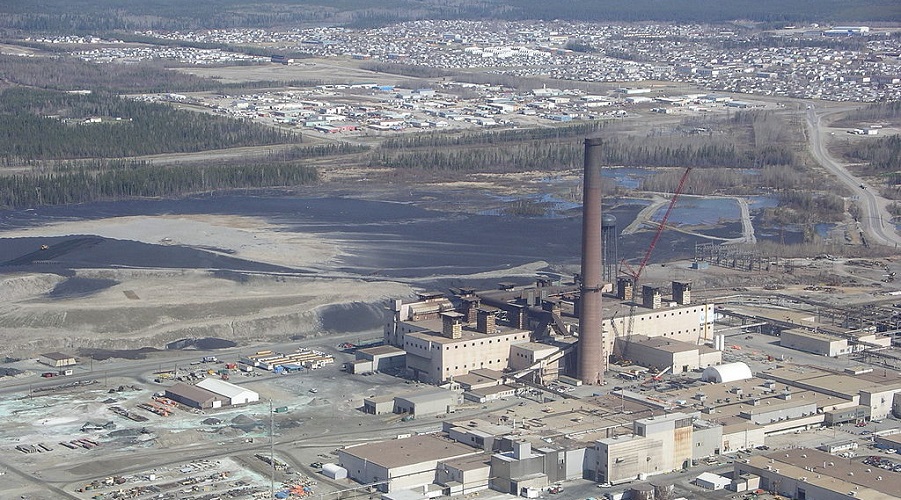
- The complex comprises two operating underground mines feeding an adjacent concentrator-style mill at Thompson.
- Exploration tenure spans the 135 km-long Thompson nickel belt, giving substantial brownfields and regional drill targets.
- The orebody was originally discovered by Inco in 1956, predating Vale’s C$17 billion Inco acquisition in 2006.
- Workforce stability is explicitly referenced as a transaction objective, indicating continuity of existing mining and processing crews.
- Canada Growth Fund notes Thompson as part of its mining investment portfolio, signalling state-backed support for critical minerals supply chains.
Our Take
Within our recent nickel coverage, most Canadian items have centred on early-stage exploration or permitting, so a brownfield complex like Thompson with two operating underground mines and an existing mill stands out as one of the few near-term supply sources that can respond quickly to critical minerals policy signals.
The presence of the C$15 billion Canada Growth Fund alongside Orion Resource Partners at Thompson suggests that future capital for Canadian nickel and copper assets may increasingly blend public climate-transition vehicles with private mining finance, which could lower the cost of deep mine-life extension or shaft rehabilitation work in mature belts.
Vale retaining an 18.9% stake in the Thompson nickel complex, while focusing new investment in Latin America, implies it is keeping optionality on Canadian critical minerals exposure without bearing full sustaining-capex risk, a pattern also seen in other large-diversified producers in our Mining corpus when reallocating capital between high- and mid-cost jurisdictions.
Prepared by collating external sources, AI-assisted tools, and Geomechanics.io’s proprietary mining database, then reviewed for technical accuracy & edited by our geotechnical team.
Related Articles



Related Industries & Products
Mining
Geotechnical software solutions for mining operations including CMRR analysis, hydrogeological testing, and data management.
Construction
Quality control software for construction companies with material testing, batch tracking, and compliance management.
CMRR-io
Streamline coal mine roof stability assessments with our cloud-based CMRR software featuring automated calculations, multi-scenario analysis, and collaborative workflows.
HYDROGEO-io
Comprehensive hydrogeological testing platform for managing, analysing, and reporting on packer tests, lugeon values, and hydraulic conductivity assessments.
GEODB-io
Centralised geotechnical data management solution for storing, accessing, and analysing all your site investigation and material testing data.