SKRI ‘phytocapture’ at Raygorodok: dust control performance insights for mine engineers
Reviewed by Tom Sullivan

First reported on MINING.com
30 Second Briefing
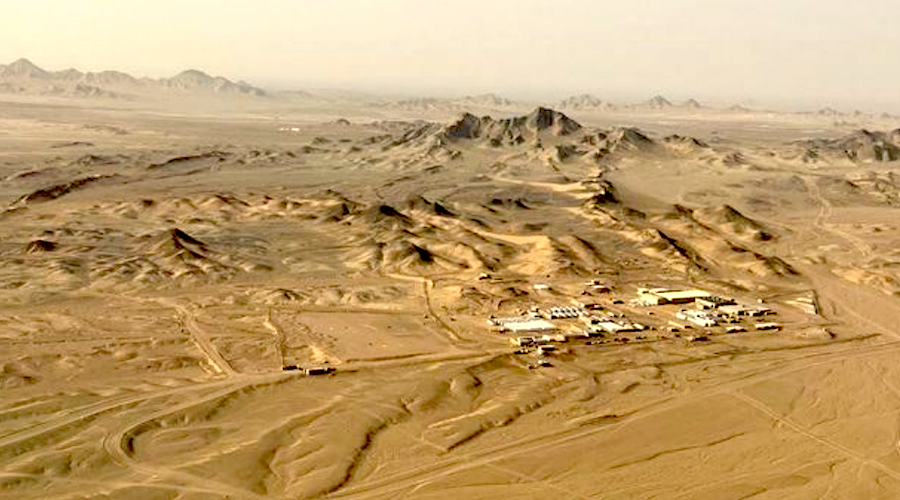
China’s Zijin Mining is expanding RG Gold’s Raygorodok operation in Kazakhstan with a $500 million processing plant while deploying SKRI’s ‘phytocapture’ system, planting over 100,000 Scots pines across more than 20 hectares about 1.7 km downwind of the open pit. Supercomputer modelling using regional wind-rose data sets tree species and spacing to form multilayered vegetative barriers, not simple landscaping. SKRI reports particulate-matter reductions above 40%, with the forest belt expected to capture roughly one-third of dust emissions as mining advances towards the barrier.
Technical Brief
- SKRI’s phytocapture method uses supercomputer modelling of regional wind-rose data to optimise barrier geometry.
- Species selection is constrained to native vegetation, with Scots pine chosen plus continuous grass cover for soil stabilisation.
- The vegetative barrier is engineered as a multilayered system, explicitly differentiated from aesthetic landscaping.
- SKRI reports >40% reduction in particulate-matter concentrations at existing phytocapture installations, per RG Gold’s General Counsel.
- Phytocapture has been deployed at several Kazakh gold mines, indicating replicability across multiple open-pit operations.
- UNECE recognised SKRI’s phytocapture as best practice under the Convention on the Transboundary Effects of Industrial Accidents, giving it regulatory weight.
- Project framing is aligned with ESG standards and UN-style sustainable development goals, embedding dust control into corporate risk management.
Our Take
The 40% particulate reduction claimed for the Raygorodok ‘phytocapture’ barrier is at the upper end of dust-control performance in our Mining database, where most gold operations rely on water sprays and chemical suppressants with less predictable long‑range effects.
Zijin Mining’s US$1.2 billion acquisition of RG Gold in 2025, combined with a US$500 million processing plant, suggests that demonstrating UNECE-aligned dust mitigation in Kazakhstan could be strategically important for Zijin’s social licence as it scales gold output in Russia and Central Asia.
Covering more than 20 hectares with Scots pine belts positioned 1.7 km downwind indicates that land allocation for green infrastructure is becoming a material design parameter for large gold projects in Kazakhstan, which planners will need to integrate alongside tailings and waste-rock footprints.
Prepared by collating external sources, AI-assisted tools, and Geomechanics.io’s proprietary mining database, then reviewed for technical accuracy & edited by our geotechnical team.
Related Articles

Related Industries & Products
Mining
Geotechnical software solutions for mining operations including CMRR analysis, hydrogeological testing, and data management.
Construction
Quality control software for construction companies with material testing, batch tracking, and compliance management.
CMRR-io
Streamline coal mine roof stability assessments with our cloud-based CMRR software featuring automated calculations, multi-scenario analysis, and collaborative workflows.
HYDROGEO-io
Comprehensive hydrogeological testing platform for managing, analysing, and reporting on packer tests, lugeon values, and hydraulic conductivity assessments.
GEODB-io
Centralised geotechnical data management solution for storing, accessing, and analysing all your site investigation and material testing data.